The Cell Cycle and Mitosis (Grade 10 NSC Matric Life Sciences): Revision Notes
📚Revision Notes
The Cell Cycle and Mitosis
Introduction to cell division
Cell division is one of the most fundamental processes in all living organisms. Through a carefully controlled process called mitosis, cells are able to replicate themselves, producing two identical daughter cells from one parent cell. This process is absolutely essential for life as we know it.
Without mitosis, single-celled organisms would not be able to reproduce, and multicellular organisms would not be able to grow, develop, or repair damaged tissues. However, when mitosis becomes uncontrolled, it can lead to serious problems like cancer.
Note
The precise control of cell division is what distinguishes normal healthy growth from dangerous conditions like cancer. This control system ensures cells only divide when and where they should.
Understanding the cell cycle
The cell cycle is the complete series of events that occurs in a cell from the time it is formed until it divides to produce two new daughter cells. This cycle is divided into two main phases: interphase and the mitotic phase.
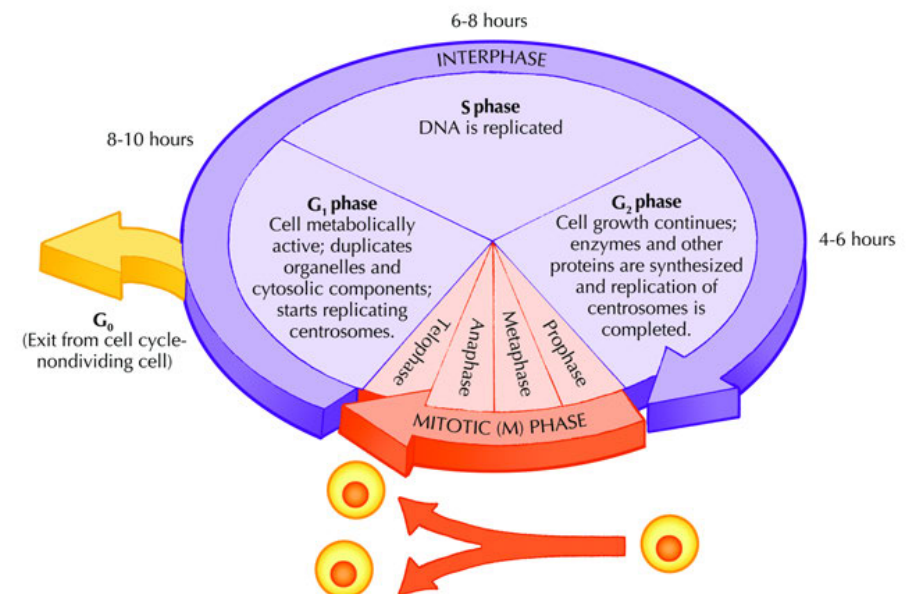
The cell cycle is not just a simple process of splitting in half. It involves careful preparation, DNA replication, and precise division to ensure that each new cell receives exactly what it needs to survive and function properly.
Note
Think of the cell cycle like preparing for and running a marathon. Most of the time is spent in preparation (interphase), with the actual race (mitosis) being relatively short but requiring all that preparation to succeed.
Interphase: The preparation phase
Interphase is by far the longest part of the cell cycle, accounting for approximately 90% of the total time. During this phase, the cell grows larger, carries out its normal functions, and most importantly, prepares for division.
Interphase is divided into three distinct stages:
G1 phase (Gap 1)
This phase occurs immediately after cell division when the new daughter cells have separated. During G1 phase:
- Cells contain only one copy of their DNA
- The cell grows in size and volume
- Normal cellular functions are carried out
- Proteins required for DNA replication are synthesised
- Cells can remain in this phase for extended periods
Important
Some cells may exit the cell cycle entirely during G1 and enter a phase called G0. These cells stop dividing permanently (like nerve cells) or temporarily until they receive signals to re-enter the cycle. This is why damaged nerve cells often cannot be replaced.
S phase (Synthesis)
The S phase is when the magic of DNA replication happens:
- Each chromosome is carefully copied to produce an identical duplicate
- By the end of S phase, the cell has twice as much DNA as it started with
- The replicated DNA exists as pairs of chromatids joined together at a region called the centromere
- This ensures each daughter cell will receive a complete set of genetic instructions
G2 phase (Gap 2)
During G2 phase, the cell continues to prepare for division:
- The cell continues to grow and increase in size
- Proteins needed for chromosome condensation and mitosis are produced
- Organelles like mitochondria and chloroplasts are duplicated
- The cell checks that DNA replication was completed successfully
The mitotic phase: Division time
The mitotic phase (M phase) is when the actual cell division occurs. This phase consists of two tightly coordinated processes: mitosis (nuclear division) and cytokinesis (cytoplasm division).
1. Prophase: Chromosomes become visible
During prophase, several important changes occur to prepare the cell for division:
- The loose chromatin in the nucleus condenses and shortens to form visible chromosomes
- Each chromosome consists of two identical chromatids joined at the centromere
- The nuclear membrane begins to break down and disappear
- In animal cells, centrioles move to opposite ends of the cell
- Spindle fibres begin to form between the poles of the cell
Note
The transformation from loose chromatin to condensed chromosomes is like packing loose clothing into tight, organised suitcases - it makes the genetic material much easier to move around accurately during division.
2. Metaphase: Lining up for division
Metaphase is characterised by precise chromosome alignment:
- Chromosomes line up along the equator (middle) of the cell
- Each chromosome is attached to spindle fibres through its centromere
- This alignment ensures that each daughter cell will receive exactly one copy of each chromosome
- The cell checks that all chromosomes are properly attached before proceeding
Important
The cell has a built-in checkpoint during metaphase. If even one chromosome is not properly attached to spindle fibres, the cell will halt division until the problem is fixed. This prevents genetic errors.
3. Anaphase: Chromosomes separate
During anaphase, the sister chromatids finally separate:
- The spindle fibres contract and shorten
- Sister chromatids are pulled to opposite poles of the cell
- Once separated, each chromatid is now called a daughter chromosome
- This ensures each end of the cell has identical sets of chromosomes
4. Telophase: Two nuclei form
Telophase essentially reverses the changes that occurred during prophase:
- Daughter chromosomes arrive at the cell poles
- New nuclear membranes form around each set of chromosomes
- Chromosomes begin to uncoil and return to the chromatin state
- Spindle fibres disappear
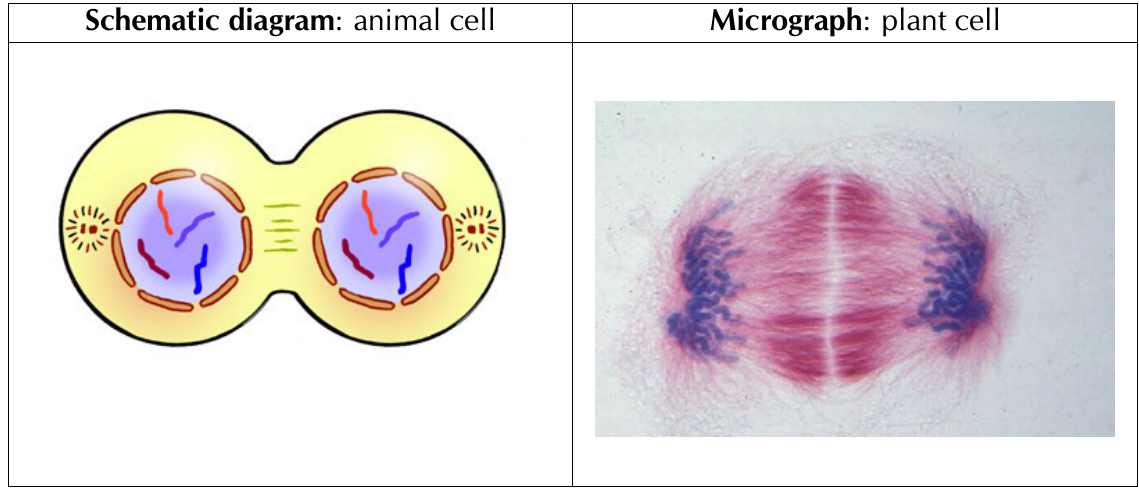
5. Cytokinesis: Splitting the cytoplasm
Cytokinesis is the final step where the cell's cytoplasm divides:
- In animal cells: The cell membrane pinches inward from all sides, forming a constriction that eventually separates the cell into two
- In plant cells: A new cell wall called the cell plate forms across the middle of the cell, dividing it in two
The end result is two genetically identical daughter cells, each with the same DNA content as the original parent cell.
The vital roles of mitosis
Mitosis serves several crucial functions in living organisms, making it one of the most important biological processes:
Growth and development
Mitosis allows organisms to grow from a single fertilised cell into complex multicellular beings:
- A human starts as one cell and develops into an organism with trillions of cells
- All these cells are produced through repeated rounds of mitosis
- Different cells can then specialise to form various tissues and organs
Note
Consider this amazing fact: every single cell in your body (except reproductive cells) contains exactly the same DNA as the original fertilised egg you developed from. Mitosis ensures this genetic consistency across all your tissues.
Cell replacement and repair
Our bodies are constantly replacing old, damaged, or worn-out cells:
- Skin cells are replaced approximately every 2-3 weeks
- Red blood cells live for only about 4 months
- Cells lining the digestive system are replaced every few days
- This constant renewal keeps our bodies functioning properly
Tissue regeneration
Some organisms have remarkable abilities to regenerate lost body parts through mitosis:
- Starfish can regrow lost arms
- Lizards can regenerate their tails
- Plants can grow new branches and roots
- Even humans can regenerate liver tissue to some extent
Asexual reproduction
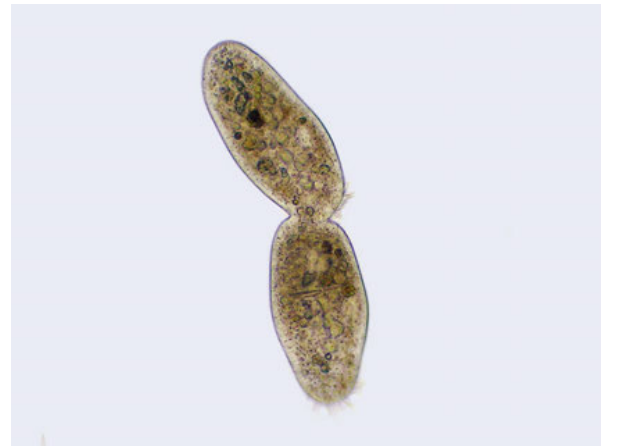
Many organisms use mitosis as their primary method of reproduction:
- Single-celled organisms like bacteria reproduce through binary fission (a form of mitosis)
- Some plants reproduce through budding or fragmentation
- This produces offspring that are genetically identical to the parent
Remember!
Summary
Key Points to Remember:
- The cell cycle consists of interphase (G1, S, G2 phases) and the mitotic phase (mitosis + cytokinesis)
- Interphase accounts for about 90% of the cell cycle and is when the cell grows and replicates its DNA
- Mitosis has four main stages: prophase, metaphase, anaphase, and telophase, followed by cytokinesis
- Mitosis produces two genetically identical daughter cells from one parent cell
- Mitosis is essential for growth, repair, cell replacement, and asexual reproduction in living organisms