Cell Structure and Function (Grade 10 NSC Matric Life Sciences): Revision Notes
📚Revision Notes
Cell Structure and Function
Cell theory
The cell theory was developed in 1839 by scientists Schleiden and Schwann to explain the relationship between cells and living organisms. This fundamental theory forms the basis of our understanding of life and consists of three main principles:
Important
The Three Principles of Cell Theory:
- All living things are made of cells and their products - Every organism, from the smallest bacteria to the largest elephant, is composed entirely of cells
- New cells are created by old cells dividing into two - Cells reproduce themselves through a process of division
- Cells are the basic building blocks of life - Cells are the smallest units that can be considered truly alive
The modern understanding of cell theory has expanded to include additional concepts:
- The activity of an organism depends on the total activity of independent cells working together
- Energy flow occurs in cells through the breakdown of carbohydrates during respiration
- Cells contain DNA, which carries the hereditary information necessary for creating new cells
- The contents of cells from similar species are basically the same
Cells are remarkable structures that serve as the fundamental units of all living things. Your body contains several billion cells organised into over 200 different types, each with hundreds of specialised functions. While some cellular functions are essential for all life (like cellular respiration), others are highly specialised for specific tasks (such as photosynthesis in plants).
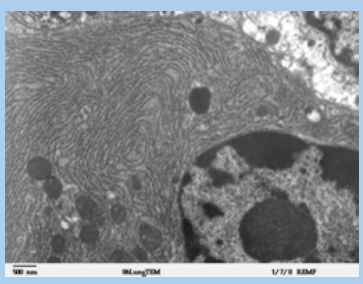
Cell structure overview
Understanding cell structure requires examining the ultrastructure of cells - the detailed internal organisation visible only under high magnification. This intricate architecture allows cells to carry out their complex life processes efficiently.
Cell wall
The cell wall is a rigid, non-living layer found outside the cell membrane in plants, bacteria, and fungi. This structure provides essential support and protection that animal cells achieve through different means.
Note
Unlike animal cells, plant cells have a rigid cell wall that provides structural support. This is why plants can grow tall without a skeleton, while animals need internal structural systems.
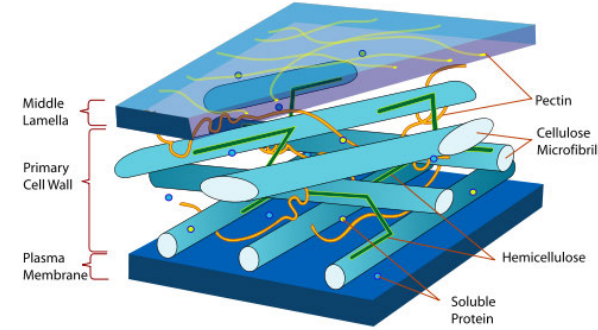
Structure of the plant cell wall
Plant cell walls consist of three distinct layers, each serving important functions:
Middle lamella: This thin layer separates adjacent plant cells and acts like biological cement. It's made primarily of pectin, a sticky substance that holds neighbouring cells together.
Primary cell wall: Located inside the middle lamella, this flexible layer is mainly composed of cellulose fibres. It allows the cell to grow and expand while maintaining structural integrity.
Secondary cell wall: Found alongside the cell membrane in mature plant cells, this thick, tough layer contains cellulose held together by lignin, a waterproof substance. This layer provides maximum mechanical support and is only found in cells that need extra strength.
Functions of the cell wall
The cell wall serves several crucial functions for plant survival:
- Protection and support: The main function is protecting the inner parts of the plant cell while giving the entire plant a uniform, regular shape and providing structural support
- Permeability: The cell wall is completely permeable to water and mineral salts, allowing efficient distribution of nutrients throughout the plant
- Cell communication: Special openings called plasmodesmata contain strands of cytoplasm that connect adjacent cells, enabling molecular communication between plant cells
Cell membrane
The cell membrane (also called the plasma membrane) is a vital structure that controls what enters and exits every cell. This selective barrier consists of a double layer of lipids called a phospholipid bilayer.
Structure: the fluid mosaic model
The cell membrane's structure is best explained by the fluid mosaic model, proposed by Singer and Nicolson in 1972. This model describes the membrane as a flexible structure with various protein and carbohydrate components moving freely within it.
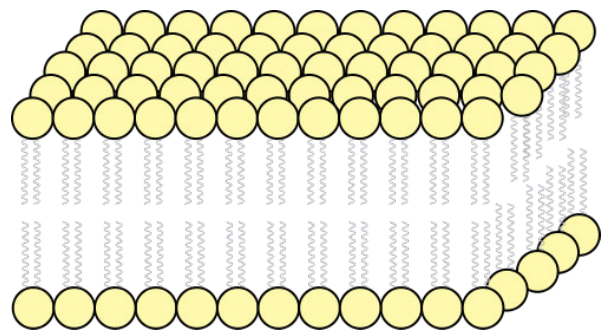
The phospholipid bilayer forms naturally due to the unique properties of phospholipid molecules:
- Hydrophilic heads: The polar (charged) heads are water-loving and point outward towards the watery environments inside and outside the cell
- Hydrophobic tails: The non-polar fatty acid tails are water-hating and point inward, away from water, forming the membrane's core
Note
Think of phospholipids like tiny magnets with one end attracted to water (hydrophilic head) and one end repelled by water (hydrophobic tail). This natural arrangement creates a protective barrier around the cell.

Components and functions
The cell membrane contains several important components, each with specific roles:
| Component | Structure | Function |
|---|---|---|
| Phospholipid bilayer | Two layers of phospholipids with polar heads and non-polar tails | Creates a semi-permeable barrier that protects the cell's internal environment while controlling substance movement |
| Membrane proteins | Large proteins embedded within or attached to the membrane | Act as carrier proteins controlling the movement of specific ions and molecules across the membrane |
| Glycoproteins | Proteins with attached carbohydrate chains on the external surface | Enable cell-to-cell recognition and communication |
| Glycolipids | Phospholipids with carbohydrate chains on the external surface | Serve as recognition sites for specific chemicals and facilitate cell-to-cell attachment |
Important
The cell membrane is selectively permeable, meaning it carefully controls which substances can pass through. This selective nature allows the membrane to maintain optimal conditions inside the cell while managing processes like nutrient uptake, waste removal, and cellular communication.
Movement across cell membranes
Cells constantly need to exchange materials with their environment to survive. Various transport mechanisms allow substances to move across the cell membrane, each suited to different types of molecules and cellular needs.
Diffusion
Diffusion is the natural movement of substances from regions of high concentration to regions of low concentration. This process occurs down a concentration gradient and is a passive process - meaning it requires no energy input from the cell.
Note
Definition of Diffusion: Movement of substances from a region of high concentration to low concentration.
Key characteristics of diffusion:
- It's a passive process requiring no energy
- It can occur across living or non-living membranes
- It works in liquid or gas mediums
- Small molecules like oxygen, carbon dioxide, and water can dissolve in the lipid bilayer and diffuse directly through
Examples of substances that move by diffusion include oxygen (entering cells for respiration), carbon dioxide (leaving cells as waste), and water molecules.
Osmosis
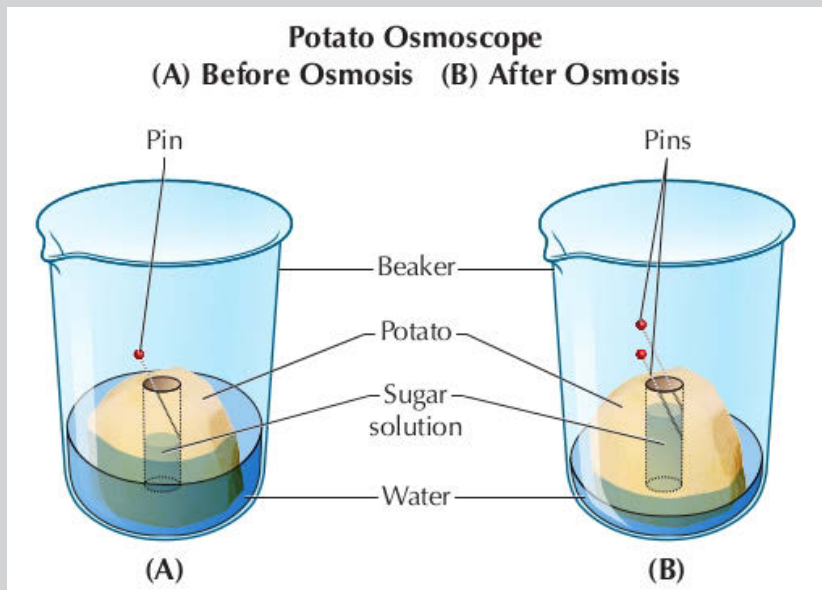
Osmosis is a special type of diffusion involving water movement. It occurs when water moves from a region of high water potential to a region of low water potential across a semi-permeable membrane.
Important
Definition of Osmosis: Movement of water from a region of higher water potential to a region of lower water potential across a semi-permeable membrane.
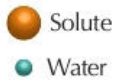
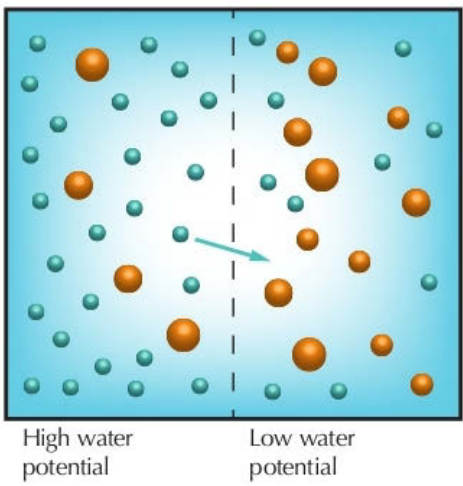
Understanding water potential
When the concentration of dissolved substances (solutes) is low, the water concentration is high - this creates high water potential. Conversely, when solute concentration is high, water concentration is low - creating low water potential. Water always moves from high to low water potential during osmosis.
As water enters a cell through osmosis, it creates pressure called osmotic pressure. This process is vital for plant and animal survival.
Effects of different solutions on cells
The concentration of the solution surrounding a cell dramatically affects the cell's behaviour:
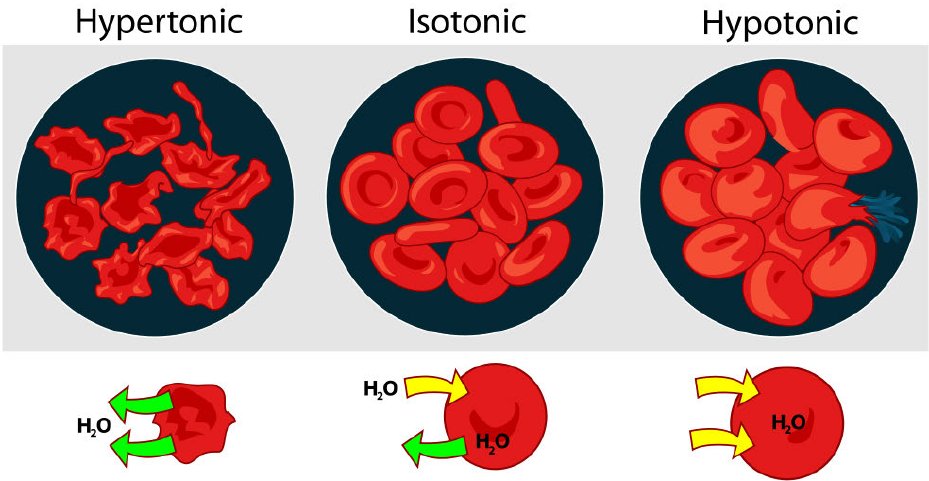
| Solution Type | Concentration | Effect on Cells |
|---|---|---|
| Hypertonic | High solute concentration, low water potential | Water leaves the cell, causing it to shrink and shrivel |
| Isotonic | Equal concentration inside and outside the cell | No net water movement - cell maintains normal size |
| Hypotonic | Low solute concentration, high water potential | Water enters the cell, causing it to swell and potentially burst |
Example
Memory Aid for Tonicity:
- HyperTonic = Tiny cells (water leaves, cells shrink)
- HypoTonic = Huge cells (water enters, cells swell)
- Isotonic = Same size (no net water movement)
In biological systems, osmosis plays crucial roles. Plants use osmosis to absorb water from soil and transport it to leaves. In animals, the kidneys use osmotic processes to maintain proper water and salt levels in the blood and body.
Facilitated diffusion
Facilitated diffusion is a specialised form of diffusion that uses carrier proteins to transport specific substances across the membrane. This process still moves substances down their concentration gradient (high to low concentration) but requires special protein channels.
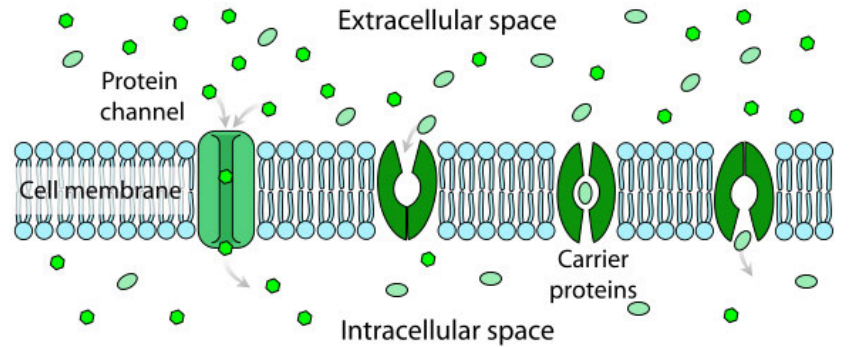
How facilitated diffusion works:
- Specific molecules bind to carrier proteins
- The binding causes the protein to change shape
- This shape change releases the molecule on the other side of the membrane
- The process only occurs across living biological membranes containing the appropriate carrier proteins
Examples of substances transported by facilitated diffusion include glucose and amino acids - polar molecules that cannot pass directly through the lipid bilayer.
Active transport
Active transport is fundamentally different from the previous processes because it moves substances against their concentration gradient - from areas of low concentration to areas of high concentration. This "uphill" movement requires energy input.
Important
Definition of Active Transport: Movement of substances against a concentration gradient, from a region of low concentration to high concentration using an input of energy.
Key features of active transport:
- Requires energy in the form of ATP (adenosine triphosphate)
- Uses specific carrier proteins
- Can move substances into or out of the cell
- Essential for maintaining concentration gradients
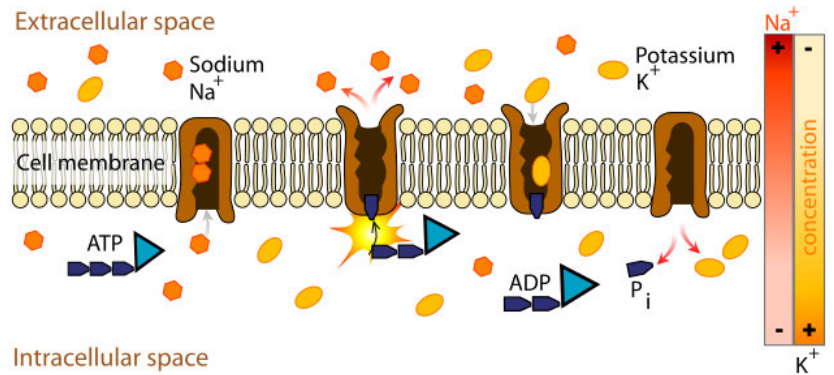
Example
Worked Example: Sodium-Potassium Pump
The sodium-potassium pump is a classic example of active transport:
- The pump uses ATP energy
- It moves sodium ions OUT of the cell (against their gradient)
- It moves potassium ions INTO the cell (against their gradient)
- This maintains electrical and chemical gradients essential for nerve function
Cell organelles
Cell organelles are specialised structures within cells that perform specific functions, much like organs in your body. Understanding that structure and function are closely related helps explain how each organelle contributes to the cell's survival.
Cytoplasm
The cytoplasm is the jelly-like substance that fills the cell between the cell membrane and the nucleus. This watery medium consists of up to 90% water and contains dissolved nutrients and waste products.
The cytoplasm's main functions include:
- Holding cellular organelles in place
- Providing a medium for chemical reactions
- Allowing materials to move around the cell
- Maintaining cell shape and structure
Note
The cytoplasm acts as the cell's internal highway system, allowing organelles to communicate and materials to reach where they're needed most efficiently.
Summary
Key Points to Remember:
- Cell theory establishes that all living things are made of cells, which are the basic units of life
- Plant cells have rigid cell walls made of cellulose that provide support and protection, while animal cells rely on flexible cell membranes
- The fluid mosaic model explains how cell membranes consist of phospholipid bilayers with embedded proteins that control substance movement
- Transport across membranes occurs through passive processes (diffusion, osmosis) that require no energy, and active processes that use ATP
- Understanding tonicity (hypertonic, isotonic, hypotonic) helps predict how cells will respond to different solution concentrations