Vitamins (Grade 10 NSC Matric Life Sciences): Revision Notes
📚Revision Notes
Vitamins
What are vitamins?
Vitamins are special organic compounds that your body needs to function properly, but only in small amounts. Think of them as essential helpers that keep your body running smoothly. Since your body cannot make most vitamins on its own, you must get them from the food you eat, making them crucial components of a balanced diet.
These remarkable substances serve various important roles in your body. Some vitamins work as coenzymes, which means they assist enzymes in speeding up chemical reactions that are vital for life processes. Others help control your metabolism or regulate how your cells and tissues grow and develop.
Note
Understanding vitamins is essential because deficiency in any vitamin can lead to serious health problems, while a balanced intake supports optimal body function and disease prevention.
The main types of vitamins and their functions
Understanding the different vitamins and what they do can help you make better food choices and recognise the importance of a varied diet.
Vitamin A - the vision vitamin
Vitamin A plays a crucial role in maintaining healthy eyesight, particularly helping your eyes function properly in low light conditions. Your body relies on this vitamin to keep your vision sharp and clear.
Best food sources: You can find vitamin A in liver, carrots, and eggs. These foods provide your body with the building blocks needed for good eye health.
Important
Deficiency Alert: A lack of vitamin A leads to night blindness, making it difficult to see in dim lighting conditions. This is one of the most recognisable vitamin deficiency symptoms.
Vitamin B group - the energy and nerve vitamins
The B vitamins are actually a family of several related vitamins that work together to support your body's energy production and nervous system function. This group includes vitamins B1, B3, B6, B9, and B12, each with specific roles in processing carbohydrates, proteins, lipids, and nucleic acids. They also help with neurotransmitter production, nerve function, and red blood cell formation.
Best food sources: Grains, potatoes, and bananas are excellent sources of various B vitamins.
Example
Multiple Deficiency Diseases:
Different B vitamin deficiencies cause different problems:
- B1 deficiency → beriberi (affects nervous system and heart)
- B3 deficiency → pellagra (causes skin problems and digestive issues)
- B6, B9, and B12 deficiencies → various forms of anaemia (reduced red blood cell production)
Vitamin C - the metabolism helper
Vitamin C works alongside important enzymes in your body to keep metabolic processes running efficiently. This vitamin is particularly important for maintaining healthy tissues and supporting various chemical reactions in your cells.
Best food sources: Citrus fruits like oranges and lemons are packed with vitamin C.
Important
Historical Disease: Vitamin C deficiency causes scurvy, a disease that results in bleeding gums and other serious health problems. This was once common among sailors on long voyages.
Vitamin D - the bone strengthener
Vitamin D helps your body absorb essential minerals like calcium and phosphate from your digestive system. This process is crucial for building and maintaining strong, healthy bones.
Best food sources: Unlike other vitamins, your body can actually make vitamin D when your skin is exposed to sunshine. This makes sunlight your primary source of this important vitamin.
Note
Vitamin D is unique among vitamins because it can be synthesised by your body rather than obtained only from food sources. Just 10-15 minutes of sunlight exposure daily can provide adequate vitamin D for most people.
What happens if you don't get enough: A lack of vitamin D causes rickets, leading to soft bones, bowed legs, and widened wrists.
Vitamin E - the protector vitamin
Vitamin E serves as a powerful antioxidant in your body, protecting your cells from damage caused by harmful substances. This protective function helps maintain a healthy immune system and supports various bodily functions.
Best food sources: You can find vitamin E in margarine, soybean oil, fortified cereals, condensed cow's milk, cheese, and orange juice.
What happens if you don't get enough: Vitamin E deficiency can lead to a weakened immune system, anaemia, and problems with nerve conduction.
Visual guide to vitamin sources
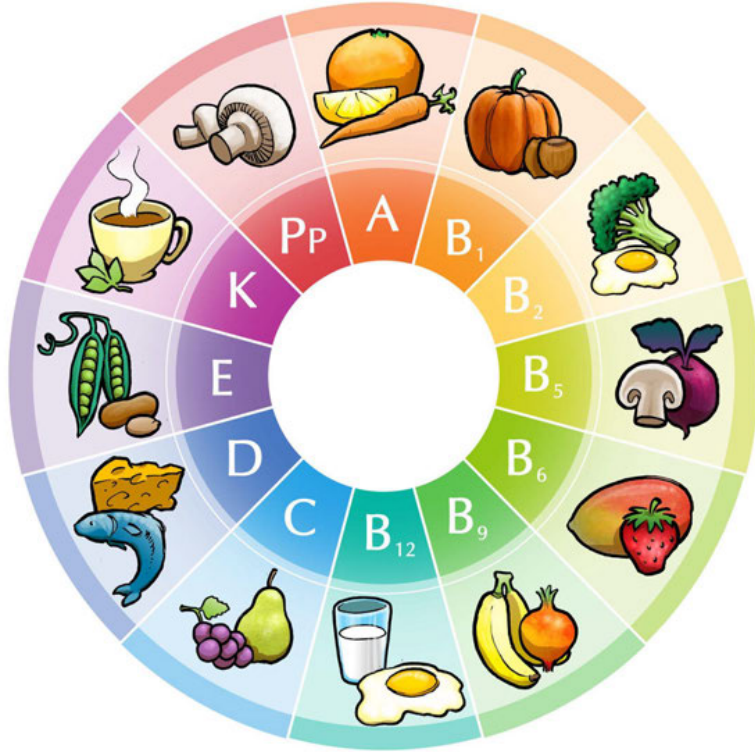
This colourful wheel shows you exactly which foods contain different vitamins, making it easier to plan meals that give you all the nutrients you need. Each section connects a specific vitamin with its natural food sources, helping you remember where to find these essential nutrients.
Note
Use this visual guide as a quick reference when planning meals. Aim to include foods from different sections to ensure you're getting a variety of vitamins in your diet.
Exam tips
- Remember that vitamin deficiency diseases have specific names - learn the connection between each vitamin and its deficiency disease
- Pay attention to food sources - examiners often ask which foods contain specific vitamins
- Understand that some vitamins work as coenzymes, helping speed up important chemical reactions
- Note that vitamin D is unique because your body can make it from sunlight exposure
- Learn the symptoms of major deficiency diseases like scurvy, rickets, and night blindness
Summary
Key Points to Remember:
- Vitamins are organic compounds needed in small amounts for proper body function
- Each vitamin has specific roles - from maintaining vision (A) to supporting metabolism (B and C) to strengthening bones (D) and protecting cells (E)
- Getting vitamins from a varied diet prevents serious deficiency diseases like night blindness, scurvy, and rickets
- Vitamin D is special because your body can produce it when exposed to sunlight
- B vitamins work as a group to support energy production and nerve function