Transpiration (Grade 10 NSC Matric Life Sciences): Revision Notes
📚Revision Notes
Transpiration
What is transpiration?
Note
Definition: Transpiration is the process by which plants lose water vapour through tiny pores called stomata found mainly on the undersides of leaves.
This water loss happens when liquid water inside the plant changes to water vapour and escapes into the atmosphere. While this might seem like a waste of precious water, transpiration is actually essential for plant survival and is often described as a "necessary evil" that plants must endure to function properly.
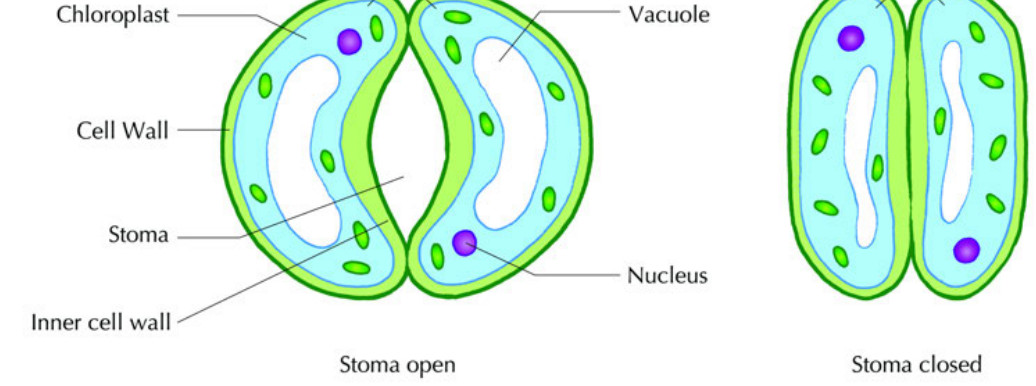
The process occurs when water absorbed by the roots travels up through the plant and eventually evaporates from the leaf surfaces through the stomata. These stomata can open and close using specialised guard cells that control the rate of water loss.
Why is transpiration important?
Despite causing water loss, transpiration serves three crucial functions that make it vital for plant health:
1. Cooling the plant
When water evaporates from leaf surfaces, it removes heat energy from the plant, similar to how sweating cools down our bodies. This cooling effect is particularly important during hot weather when plants might otherwise overheat and suffer damage.
2. Creating transpirational pull
As water evaporates from the leaves, it creates a pulling force that helps draw more water up from the roots through the xylem vessels. This mechanism, called transpirational pull, works like a natural pump system that ensures water and dissolved minerals reach all parts of the plant, even the tallest branches.
3. Providing structural support
Water inside plant cells creates turgor pressure - the pressure of water pushing against cell walls. This pressure keeps plant cells rigid and firm, providing structural support to keep the plant upright. Young plants and those without woody stems particularly rely on this water-based support system.
Note
Two main forces drive water movement in plants: transpirational pull (caused by water evaporation) and root pressure (caused by water being absorbed by roots from the soil). Capillary action also plays a role, with water molecules sticking to each other and to xylem walls, helping water rise through narrow tubes.
Factors affecting transpiration rate
The speed at which plants lose water through transpiration depends on several environmental conditions. Understanding these factors helps us predict when plants will need more water and how they adapt to different climates.
Temperature
Higher temperatures increase transpiration rate in two important ways. First, warm air can hold more water vapour than cold air, creating a steeper concentration gradient between the moist air inside leaves and the drier outside air. Second, warmer temperatures cause water molecules to move faster, speeding up the evaporation process from leaf surfaces.
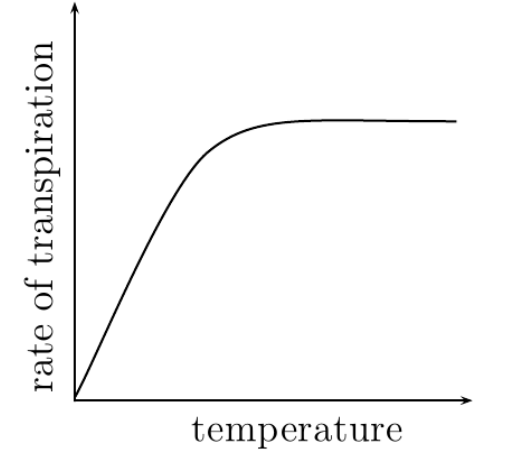
The graph shows how transpiration rate increases with temperature, but eventually levels off when other factors become limiting.
Light intensity
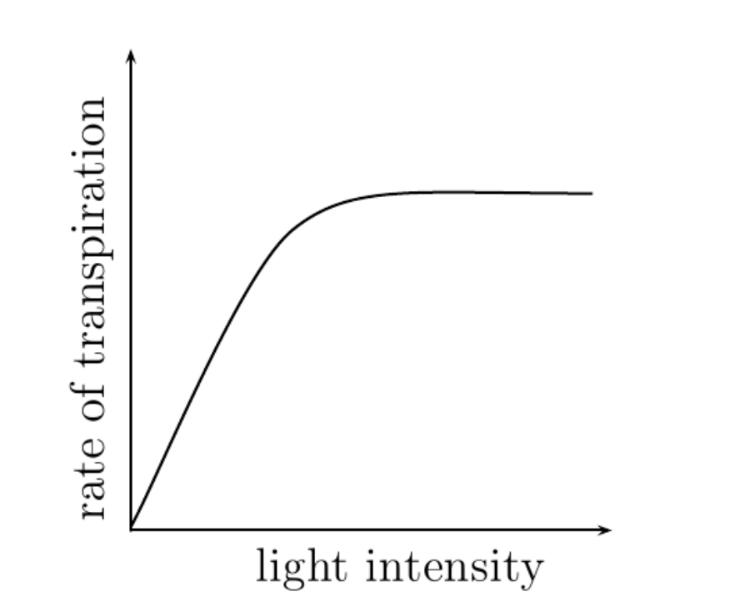
Bright light affects transpiration through its connection to photosynthesis. When light intensity is high, plants photosynthesise more actively, producing glucose in the guard cells. This glucose lowers the water potential inside guard cells, causing them to absorb more water and become more turgid. Turgid guard cells open the stomata wider, allowing more water vapour to escape.
Humidity
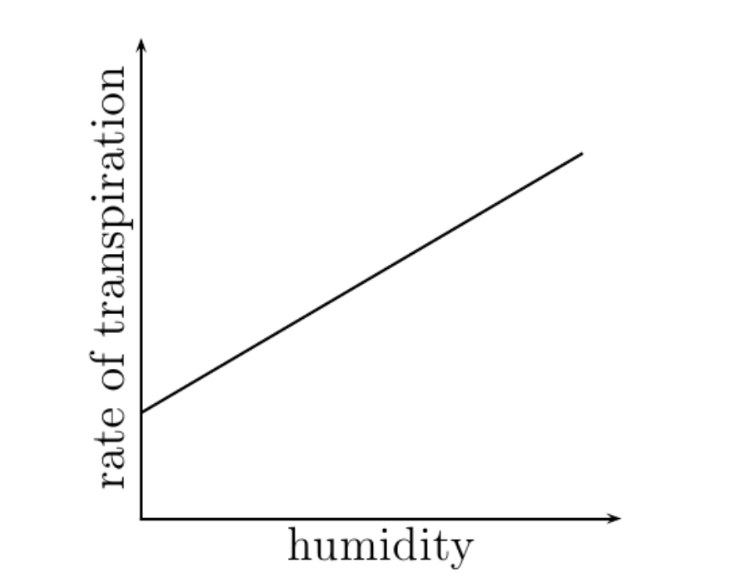
Humidity refers to the amount of water vapour already present in the air. Water always moves from areas of high concentration to areas of low concentration. When the air is very humid (lots of water vapour), there's only a small difference between the moisture inside leaves and outside air, so transpiration occurs slowly. However, when the air is dry (low humidity), water vapour moves rapidly out of the plant because of the steep concentration gradient.
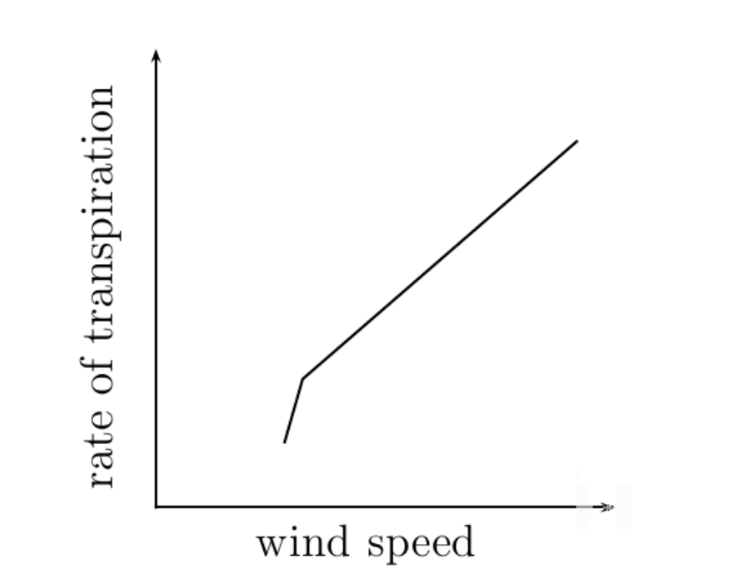
Wind
Moving air removes the layer of moist air that naturally builds up around leaves during transpiration. Without wind, this moist layer reduces the concentration gradient and slows down further water loss. When wind blows this moisture away, it maintains the concentration difference between the leaf interior and external air, keeping transpiration rates high.
Measuring transpiration
Scientists use a device called a potometer to measure how quickly plants lose water through transpiration. A potometer works by measuring how fast a plant takes up water to replace what it loses through transpiration.
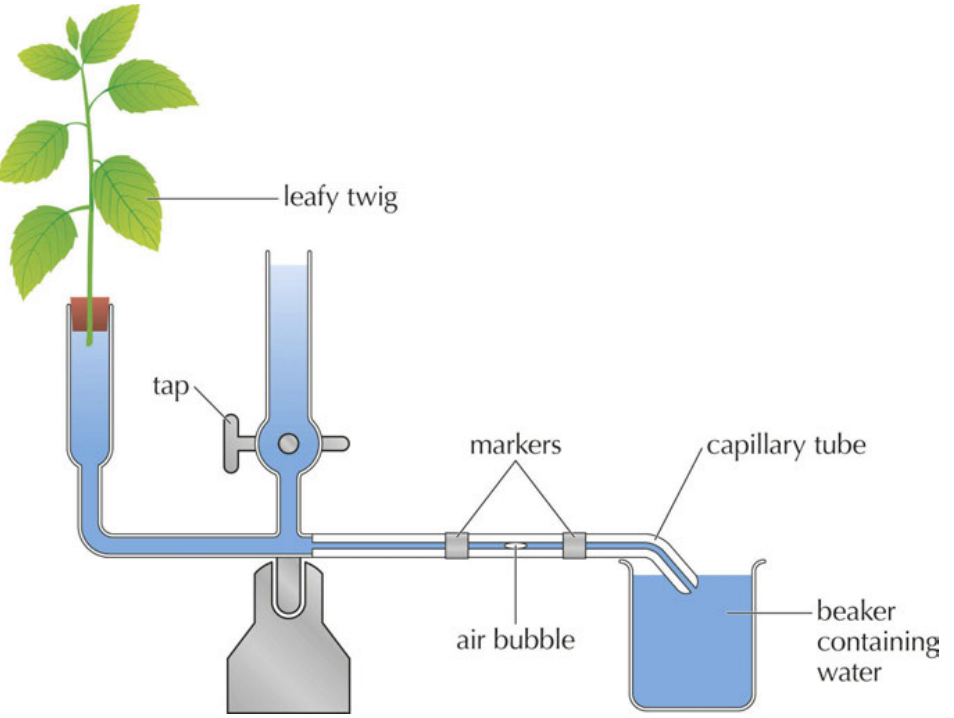
The potometer consists of a leafy plant shoot connected to a water-filled glass tube with measurement markings. As the plant transpires, it draws water up through the system, causing an air bubble in the tube to move along the scale. The faster the bubble moves, the more quickly the plant is transpiring.
Key investigation: Environmental effects on transpiration
Example
Worked Example: Investigating Environmental Effects on Transpiration
Equipment needed:
- Drinking straws, leafy shoots, vaseline, marking pen, play dough, plastic bags, elastic bands, ruler
Method:
- Cut plant stems underwater at an angle to prevent air bubbles entering the xylem
- Insert the stem into a water-filled straw and seal with vaseline
- Mark the initial water level
- Place the setup under different conditions (warm/sunny, windy, covered with plastic bag, or shady)
- Measure water level changes every 10 minutes for one hour
- Compare results between different environmental conditions
Expected Results: This investigation reveals that plants transpire fastest in warm, bright, windy conditions and slowest in cool, humid, still conditions.
Plant adaptations to reduce water loss
Plants living in dry environments have evolved clever structural adaptations to minimise transpiration while still allowing essential gas exchange for photosynthesis:
Position of stomata
Most plants have more stomata on the undersides of leaves, which are cooler and shadier than the upper surfaces. This positioning reduces unnecessary water loss from the hottest part of the leaf.
Sunken stomata
Desert plants called xerophytes often have stomata positioned in small pits or depressions. These sunken stomata create pockets of humid air that reduce the concentration gradient and slow down water loss.
Thickened cuticle
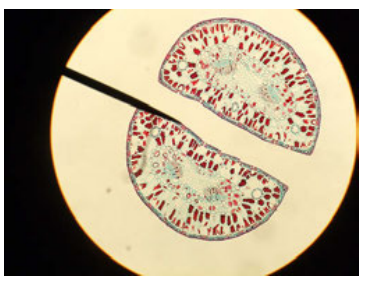
Many plants in dry climates develop thick, waxy coatings called cuticles on their leaf surfaces. This waxy layer acts like a waterproof barrier, preventing water loss through the leaf surface itself.
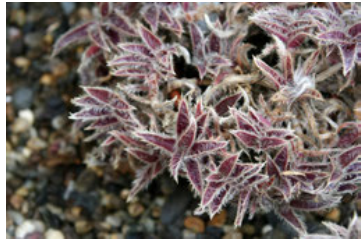
Hairy leaves
Tiny hairs on leaf surfaces trap a layer of moist air close to the leaf, reducing the water concentration gradient. The hairs also make leaves more reflective, reducing heat absorption and creating a cooling effect.
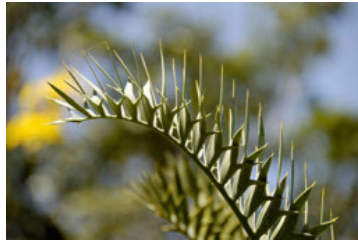
Reduced leaf size and spines
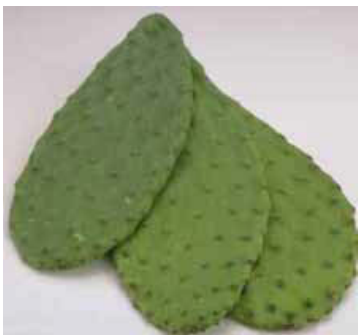
Smaller leaves have less surface area for water loss. Some plants take this to the extreme by replacing leaves entirely with spines, which have very thick cuticles and minimal surface area.
Leaf arrangement and rolling
Some plants arrange their leaves vertically or in rosette patterns to reduce sun exposure during the hottest parts of the day. Others can roll their leaves into tubes, trapping humid air inside and reducing transpiration.
Wilting and guttation
Wilting
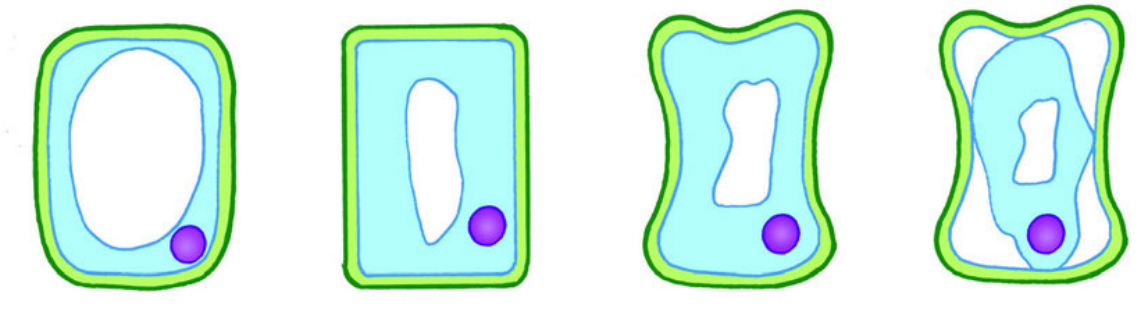
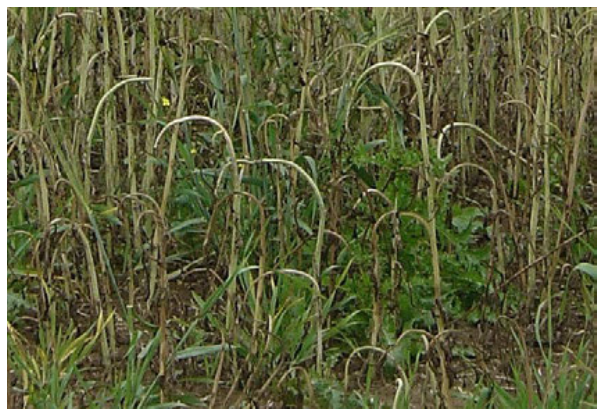
Wilting occurs when plants lose water faster than they can absorb it from the soil. When plant cells lose water, they become flaccid (floppy) instead of turgid (firm). The cell contents shrink away from the cell walls, causing the entire plant to droop and lose its structural support.
Important
Common Causes of Wilting:
Plants may wilt due to:
- Drought conditions (insufficient soil moisture)
- Low temperatures (preventing water uptake)
- High soil salt concentration (causing water to move out of roots)
- Waterlogged soil (preventing root respiration)
- Disease affecting the water transport system
Guttation
Guttation is the process where plants "ooze out" water droplets along the edges or tips of leaves. Unlike transpiration, guttation produces liquid water rather than water vapour, and occurs through special structures called hydathodes rather than stomata.
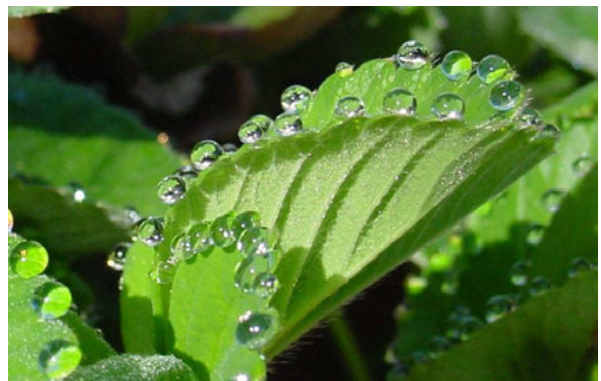
Guttation happens when:
- Soil moisture levels are very high
- Transpiration is slow (typically at night or early morning)
- Root pressure builds up, forcing water out through hydathodes
| Guttation | Transpiration |
|---|---|
| Occurs early morning and at night | Occurs during hot daytime |
| Takes place through hydathodes | Takes place through stomata |
| Water lost in liquid form | Water lost as vapour |
| Caused by root pressure | Caused by high water potential |
| Water droplets found on leaf margins | Mainly occurs on lower leaf surfaces |
Advantages and disadvantages of transpiration
| Advantages of transpiration | Disadvantages of transpiration |
|---|---|
| Cools the plant down | Excessive water loss causes wilting |
| Assists transport of water from soil | |
| Important for water movement through xylem | |
| Regulates cell sap concentration | |
| Distributes salts and minerals throughout plant |
Summary
Key Points to Remember:
- Transpiration is the loss of water vapour through stomata - it's essential for cooling, water transport, and structural support
- Four main factors affect transpiration rate: temperature, light intensity, humidity, and wind - remember "TLHW"
- Plants can adapt to reduce water loss through sunken stomata, thick cuticles, hairy leaves, and modified leaf structures
- Wilting occurs when water loss exceeds water uptake, causing loss of turgor pressure
- Guttation produces liquid water droplets through hydathodes, unlike transpiration which produces water vapour through stomata