Money (Grade 11 NSC Matric Economics): Revision Notes
📚Revision Notes
Money
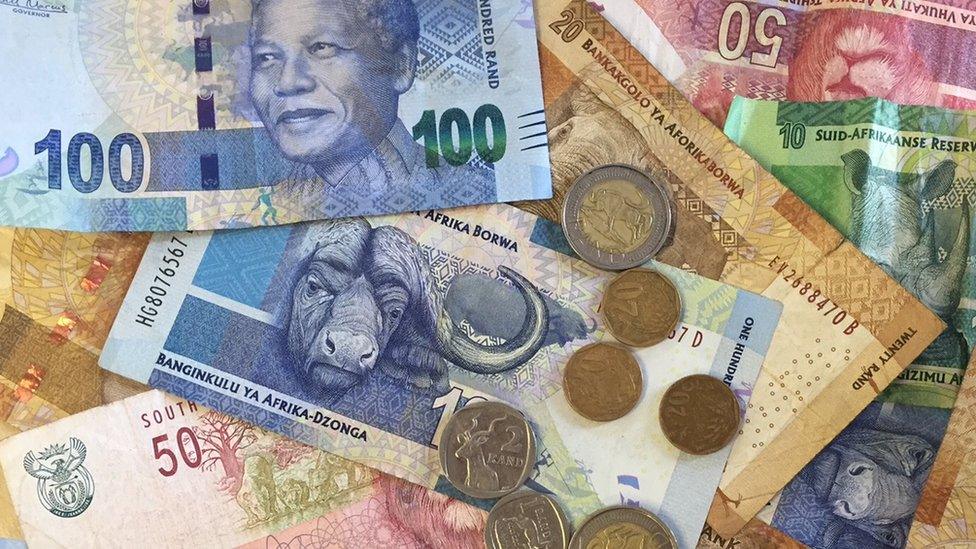
Money is a fundamental part of our economic system. Understanding what money is, how it works, and what forms it can take helps us grasp how modern economies function. In South Africa, money plays a crucial role in daily transactions, from buying groceries to paying for services.
Note
Understanding money is essential for navigating the modern economy. Whether you're earning an income, making purchases, or saving for the future, knowing how money works gives you the tools to make better financial decisions.
What is money?
Money is any item that is widely used and accepted when people exchange goods and services. In simple terms, it's what we use to buy things and conduct business. Economists recognise that money comes in different forms, and it must have certain characteristics to work effectively in an economy.
Characteristics of money
For something to function properly as money, it needs to have several important features. These characteristics ensure that money can be used reliably and efficiently in all types of transactions.
Important
The Seven Essential Characteristics of Money
All seven characteristics must be present for something to function effectively as money. If any characteristic is missing, that item cannot serve properly as currency in an economy.
Uniformity: Money needs to look the same throughout a country. Each R10 note should be identical to every other R10 note, making it easy to recognise and use.
General acceptance: People within a country or region must be willing to accept it as payment. In South Africa, everyone accepts the Rand, but you couldn't use it in Europe where they use Euros.
Durability: Money must be able to withstand regular handling and use. Coins and notes are designed to last a long time, even when they pass through many hands.
Divisibility: We need to be able to break money down into smaller amounts. This is why we have different denominations - R1, R2, R5, R10, R20, R50, R100, and R200 notes and coins. This allows us to pay exact amounts for different purchases.
Manageability: Money should be easy to carry around and use. Imagine if we still used large stones as money - they would be far too heavy and impractical!
Value and scarcity: Money must have worth, and there shouldn't be too much of it available. If money were too common or easy to produce, it would lose its value. This is why only the South African Reserve Bank can print Rand notes.
Stability: The value of money should remain relatively steady over time. When money's value changes too quickly (through inflation or deflation), it creates problems for the economy.
Functions of money
Money serves three primary purposes in our economy. These functions explain why money is so essential for economic activity.
Medium of exchange: Money provides a convenient way to pay for goods and services. Instead of bartering (swapping goods directly), we use money to make transactions smoother and easier. When you buy bread, you pay with money rather than trying to exchange something else you own.
Example
Practical Example: Money as a Medium of Exchange
Without money, if you wanted bread from a baker, you would need to offer something the baker wants in exchange. If you're a teacher, you can't easily trade lessons for bread! Money solves this problem - you earn money by teaching, then use that money to buy bread. The baker accepts your money because they can use it to buy what they need.
Unit of account: Money gives us a standard way to measure and compare the value of different items. We can say a shirt costs R200 and a phone costs R2000, which helps us understand their relative worth. This measuring function allows businesses to keep accounts and calculate profits.
Store of value: Money allows us to save purchasing power for the future. Rather than spending all your income immediately, you can save money and use it later. This function only works well when money maintains its value over time.
Note
The three functions of money work together to make economic activity efficient. As a medium of exchange, money facilitates trade. As a unit of account, it helps us measure value. As a store of value, it enables saving and future planning.
Types of modern money
Economists identify three main types of money used in modern economic systems. Each type has different characteristics and plays a distinct role.
Commodity money
Commodity money refers to items that have intrinsic value in themselves. The value of the commodity is what gives it worth as money. Historically, gold and silver coins served as commodity money because the precious metals themselves were valuable. People accepted gold coins not just as money, but because the gold itself could be used for other purposes like jewellery or manufacturing.
In most modern countries, including South Africa, commodity money has been largely replaced by other forms. However, some people still invest in gold as a store of value during uncertain economic times.
Fiat money
Fiat money is currency that has little or no value as a physical commodity, but derives its worth from government decree and public acceptance. The paper and ink used to print a R100 note cost only a few cents, yet we accept it as being worth R100 because the government declares it legal tender and everyone agrees to accept it.
Example
Understanding Fiat Money: The R100 Note
A South African R100 note is made from paper and ink worth only a few cents. Yet, you can use it to buy R100 worth of goods. Why? Because:
- The South African Reserve Bank officially issues it
- The government declares it legal tender
- Everyone in society trusts and accepts it
- We all agree it represents R100 in purchasing power
This acceptance based on trust, rather than the material's value, is what defines fiat money.
This system works well as long as:
- The government maintains control over money supply
- People continue to have confidence in the currency
- Inflation remains under control
Bank money
Bank money represents the credit that banks provide to their account holders. When you have money in your bank account, you don't actually have physical cash sitting there - you have a credit entry that the bank owes you.
Transactions using cheques drawn on bank deposits involve bank money. Modern technology has expanded this concept significantly. You can now transfer money electronically from one bank account to another without ever handling physical notes or coins. When you use internet banking, a debit card, or a mobile payment app, you're using bank money.
Note
The Rise of Bank Money
Bank money has become the dominant form of money in modern economies. Most transactions today - from online shopping to salary payments - involve bank money rather than physical cash. This shift has made transactions faster, more convenient, and easier to track.
This form of money has become increasingly important in modern economies. In fact, most transactions today involve bank money rather than physical cash. The term "modern money" often refers specifically to these electronic transfers that happen without any physical currency changing hands.
Money-associated instruments
Several financial instruments help us use money more effectively in daily life. These tools make transactions more convenient and secure.
Note
Common Money Instruments in Daily Use
Cheques: Written instructions to your bank to pay a specific amount to someone else from your account. While less common today, cheques are still used for certain transactions.
Debit cards: Cards linked directly to your bank account that allow you to make purchases or withdraw cash. The money comes straight out of your account balance.
Credit cards: Cards that allow you to borrow money from a bank up to a certain limit. You pay back the borrowed amount later, usually with interest if not paid quickly.
Electronic money (e-money): Digital money that exists only in electronic form. This includes mobile money services, online payment systems, and cryptocurrencies. E-money makes transactions faster and more convenient.
Stabilising the value of money
Maintaining stable money value is crucial for a healthy economy. In South Africa, this responsibility falls to the South African Reserve Bank (SARB), which is the country's central bank.
The role of SARB
When inflation rises too high, money loses its value too quickly. This means prices increase rapidly, and people can buy less with the same amount of money. The SARB takes action to control inflation and protect the value of the Rand.
Important
Why Inflation Control Matters
When inflation is too high, money loses its purchasing power rapidly. What costs R100 today might cost R110 next month. This instability makes it difficult for people to save, for businesses to plan, and for the economy to grow sustainably. The SARB's role in controlling inflation is therefore critical for economic stability.
Interest rate management: The SARB's primary tool is adjusting interest rates. When inflation becomes too high, the SARB increases interest rates. Higher interest rates make borrowing money more expensive for individuals and businesses.
Reducing demand: When credit becomes more costly, people and businesses borrow less money. This reduced borrowing leads to decreased spending in the economy. Lower overall demand helps slow down price increases and brings inflation under control.
Encouraging careful lending: Higher interest rates also encourage banks to be more selective when granting loans. Banks become more cautious because they want to ensure borrowers can repay loans at the higher rates. This careful approach helps prevent excessive credit growth that can fuel inflation.
Inflation targeting: The SARB uses inflation targeting as its main strategy for maintaining price stability. The bank aims to keep inflation within a specific target range (currently 3-6% per year in South Africa). By setting this target and adjusting monetary policy to achieve it, the SARB provides certainty and confidence to the economy.
Note
How SARB's Actions Affect You
When the SARB raises interest rates:
- Your home loan repayments increase
- Credit cards become more expensive to use
- Savings accounts earn higher returns
- Businesses invest less, which can slow job creation
- Inflation gradually comes down, protecting your money's value
These trade-offs show why the SARB must carefully balance inflation control with economic growth.
This monetary policy approach helps ensure that:
- The Rand maintains its purchasing power
- Businesses can plan for the future with confidence
- Savings retain their value over time
- Economic growth remains sustainable
Summary
Key Points to Remember:
-
Money must have seven key characteristics: uniformity, general acceptance, durability, divisibility, manageability, value with scarcity, and stability.
-
Money serves three vital functions: it acts as a medium of exchange for buying goods and services, provides a unit of account for measuring value, and serves as a store of value for saving.
-
Modern economies use three types of money: commodity money (valuable in itself), fiat money (paper currency backed by government), and bank money (electronic credits and transfers).
-
Various instruments help us use money: including cheques, debit cards, credit cards, and electronic money systems that make transactions more convenient.
-
The SARB protects money's value: by adjusting interest rates to control inflation, making credit more expensive when needed, and using inflation targeting to maintain price stability in South Africa.