Export-Led Development (Grade 11 NSC Matric Geography): Revision Notes
📚Revision Notes
Export-Led Development
What is export-led development?
Export-led development represents a strategic economic approach that developing countries use to accelerate their growth and "catch up" with more developed nations. This strategy focuses on building wealth through a systematic increase in exports, which requires countries to make deliberate investments in key sectors of their economy.
Note
The Two-Phase Export-Led Development Process:
Phase 1: Countries invest heavily in industry, manufacturing capabilities, and education systems to create specialized products that can compete in international markets.
Phase 2: The profits generated from these exports are then reinvested into social services and physical infrastructure, creating a positive cycle of development.
Countries that export more goods typically have access to greater financial resources, which allows them to fund development programs more effectively. This leads to improved social, economic, and demographic indicators for their populations compared to countries that focus primarily on domestic markets.
The Asian Tigers - A remarkable success story
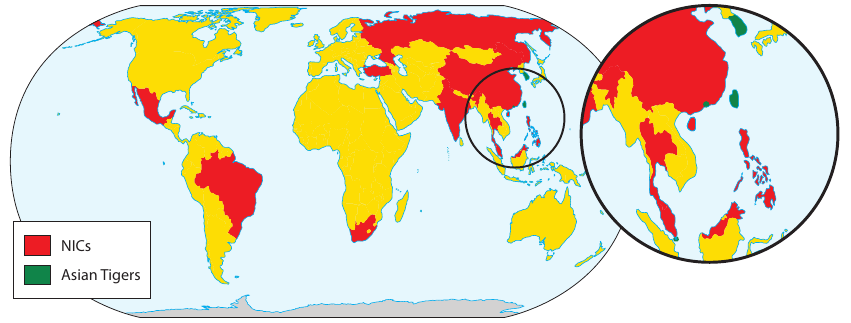
The most celebrated examples of successful export-led development are known as the Asian Tigers. These four countries - Hong Kong, Singapore, Taiwan, and South Korea - managed to completely transform their economic status between the 1960s and 1990s, evolving from developing nations into developed economies.
Taiwan's transformation: The "Taiwanese miracle"
Example
Case Study: Taiwan's Export-Led Development Success
Taiwan's journey provides an excellent illustration of how export-led development can work effectively. Starting as a former Japanese colony, Taiwan had several key advantages:
- Well-established agricultural sector
- Quality infrastructure
- Literate population
- Strategic use of American aid during the 1950s
The government implemented policies that shifted focus from agriculture to labor-intensive, export-oriented manufacturing, creating jobs and leading to more equitable wealth distribution.

During the following decades, the Taiwanese government reinvested capital earned from agricultural exports into building infrastructure and supporting industrial development in rural areas. The export focus moved from basic food processing to more sophisticated industries like textiles and electronics manufacturing.
Taiwan's technological advancement
The 1980s and 1990s marked Taiwan's transition into high-technology sectors. Trade barriers decreased significantly, and the country entered what became known as its science-and-technology phase. This period saw the establishment of research institutions and science parks, with the Hsinchu Science and Industrial Park becoming a prime example, housing over 400 high-technology companies.
These companies specialized in semiconductors, computers, telecommunications, and advanced electronics. By 2001, high-technology products represented more than half of Taiwan's total exports. The country continued investing heavily in Information and Communications Technology (ICT), which includes various communication devices, computer systems, and related applications.
Taiwan's success was also built on significant investment in human capital. Education spending increased from 2% of GDP in 1955 to 5.2% by 1988. The government implemented flexible education policies ensuring the workforce developed skills needed for the evolving economy, with particular emphasis on engineering and natural sciences at tertiary level.
By 2011, Taiwan had achieved remarkable results: GDP per capita reached $37,900 (ranking 27th globally), and exports totaled $325.1 billion (ranking 19th worldwide). The country's exports included sophisticated products like electronics, machinery, metals, textiles, plastics, chemicals, and precision instruments.
Learning from failure: Zambia's struggles
Not all attempts at export-led development succeed, and Zambia provides an important contrasting case study that highlights potential pitfalls.
Zambia's initial approach
At independence in 1964, Zambia's economy was heavily dependent on copper mining, which provided 90% of export earnings. The government decided to diversify the economy by reducing this copper dependency through increased industrialization and rural area development.
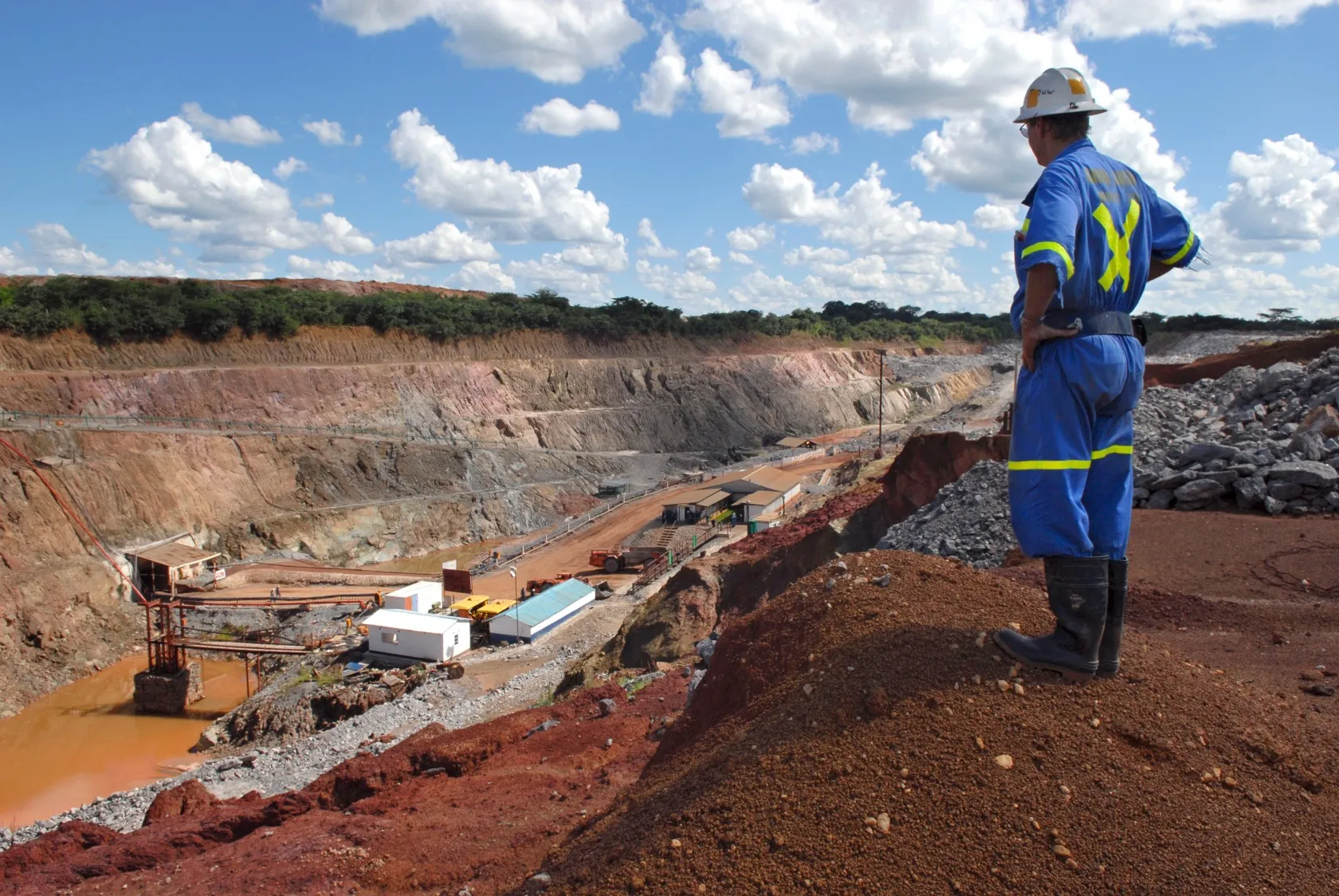
The strategy involved nationalizing key sectors including mining, energy, transport, tourism, finance, agriculture, trade, manufacturing, and construction. Initially, this approach showed promise with increased growth rates, but the implementation proved problematic.
Why Zambia's strategy failed
Important
Critical Factors Behind Zambia's Failed Export-Led Development:
- Over-nationalization: The nationalization process became very expensive, and the planned transition away from copper dependency never materialized
- Poor financial planning: The government failed to save during profitable periods when copper prices were high
- Corruption and inefficiency: High levels of state intervention created corruption and discouraged private investment
- Lack of competitiveness: New industries proved inefficient and uncompetitive due to heavy government subsidies
- External challenges: Competition from Zimbabwe and South Africa, declining copper prices, and drought-reduced agricultural output

During the 1980s, the government tried implementing International Monetary Fund and World Bank recommendations to stimulate the economy, but these efforts had limited success due to uncompetitive exports, unemployment, and mounting external debt.
By 2011, Zambia's development indicators reflected these challenges: GDP per capita was only $1,600 (ranking 195th globally), and exports totaled $9.008 billion (ranking 99th worldwide), primarily consisting of copper, cobalt, electricity, tobacco, flowers, and cotton.
Newly industrialized countries (NICs)
Many developing nations continue pursuing export-led development strategies, and some have achieved considerable success. These countries are collectively called Newly Industrialized Countries (NICs), representing nations that have experienced rapid economic growth since 2000.
Characteristics of successful NICs
Note
Key Characteristics of Successful NICs:
Countries that have successfully implemented export-led development strategies typically share several important features:
- High levels of social freedoms and civil rights that support innovation and entrepreneurship
- Political stability that creates favorable conditions for long-term investment
- Regional political leadership that helps establish trade relationships
- Economic transition from agriculture-based systems toward industry and manufacturing
- Open economic policies that allow engagement in free trade with multiple nations
- Presence of national corporations operating internationally
- Strong foreign investment from developed countries
- Significantly reduced poverty rates among their populations
Modern challenges for export-led development
Contemporary countries attempting to follow the export-led development path face several challenges that weren't present when the Asian Tigers achieved their success.
Economic factors affecting success
The Asian Tigers succeeded partly due to favorable timing. Their exported products were essential to the technological revolution occurring at the time, trade barriers were being reduced globally, and large consumer markets in the USA and Western Europe created high demand for their products.
Current obstacles
Important
Modern Challenges for Export-Led Development:
Today's developing nations must navigate a more complex global environment:
- Less favorable global economic conditions compared to the Asian Tigers' era
- Environmental sustainability requirements that must be considered in industrial development plans
- Greater global competition because many countries now produce similar products
- Market saturation concerns as target markets in Western Europe and the USA may be reaching capacity
- Increased complexity in global supply chains and trade relationships
Despite these challenges, many developing countries have achieved rapid growth in recent decades, demonstrating that export-led development remains a viable strategy when implemented thoughtfully and adapted to current global conditions.
Summary
Key Points to Remember:
-
Export-led development works in two phases: First, invest in industry, manufacturing, and education to create competitive export products. Second, reinvest export profits into social services and infrastructure.
-
The Asian Tigers succeeded through strategic timing and smart policies: They focused on high-demand products, invested heavily in education, maintained political stability, and adapted their strategies as global markets evolved.
-
Human capital investment is crucial: Countries like Taiwan invested heavily in education and skills development, ensuring their workforce could meet the demands of increasingly sophisticated industries.
-
Not all attempts succeed: Zambia's experience shows that poor implementation, over-reliance on single commodities, and excessive government intervention can derail export-led development strategies.
-
Modern countries face new challenges: Today's NICs must navigate environmental concerns, increased global competition, and potentially saturated target markets that didn't exist when the original Asian Tigers developed.