Mass Movements and Human Responses (Grade 11 NSC Matric Geography): Revision Notes
📚Revision Notes
Minimising the Effects of Mass Movements
Understanding the foundation for prevention
Before we can effectively prevent mass movements, we need to understand what causes them in the first place. When people recognize the factors that lead to slope instability, they can develop targeted strategies to reduce or prevent the devastating impact of landslides, rockfalls, and other mass movements.
Human activities often create conditions that make slopes unstable and prone to failure. Understanding these human-induced causes is crucial because it allows us to modify our behavior and implement preventive measures.
Note
The key to successful mass movement prevention lies in the relationship between cause and effect. By identifying specific human activities that destabilize slopes, engineers and planners can design targeted interventions that address the root causes rather than just the symptoms.
Major human causes that require prevention strategies
There are five primary ways human activities contribute to mass movements, each requiring specific prevention approaches:
Slope steepening occurs when people cut into hillsides for road construction or building development. This activity removes natural support at the base of slopes, making them unstable. The removal of supporting material at the bottom of a slope creates an imbalance that can lead to catastrophic failure.
Vegetation removal significantly weakens slope stability because plant roots normally bind soil particles together. When forests are cleared or natural vegetation is removed, the soil loses this natural binding system, making it much more susceptible to sliding and erosion during rainfall or other triggering events.
Construction on upper slopes creates problems in two main ways. First, it adds significant weight to the upper portions of slopes, increasing the downward pressure and stress on the entire slope system. This additional load can push an already marginal slope beyond its stability threshold.
Increased water seepage from construction activities creates the second major problem with hillside development. Construction not only adds mass to slopes but also often increases the amount of water infiltrating into the soil. This excess water lubricates loose particles and acts as a lubricant, allowing soil and rock materials to slide more easily over each other.
Ground vibrations from earthquakes, mining operations, or heavy vehicle traffic can trigger mass movements by loosening already unstable soil, stones, or rock formations. These vibrations act like the final push that causes materials that were barely holding together to suddenly give way.
Important
These five human causes - slope steepening, vegetation removal, construction weight, water seepage, and ground vibrations - are interconnected. Often, a single development project can contribute to multiple causes simultaneously, creating a compounding effect that dramatically increases mass movement risk.
Prevention strategies and techniques
Mass movements can be prevented by making slopes more stable through various engineering and natural approaches. These prevention methods directly address the causes we've identified and work to counteract the factors that lead to slope failure.
Covering steep slopes with concrete and wire mesh prevents rock falls by creating a protective barrier. The wire mesh catches smaller rocks before they can gain momentum, while the concrete provides a stable surface that resists weathering and erosion.

Building retaining walls helps stabilize slopes by providing structural support where natural support has been removed. These walls need to be properly reinforced and designed to handle the tremendous forces that unstable slopes can generate.
Using rock bolts in highly fractured rock formations helps hold slope materials together by creating artificial connections between rock layers. This technique is particularly effective when dealing with naturally fractured bedrock that might otherwise separate and slide.
Installing drainage pipes addresses the water seepage problem by allowing groundwater to drain out of slopes in a controlled manner. By reducing water pressure within the slope, these drainage systems help maintain slope stability during wet periods.
Flattening or terracing oversteepened slopes reduces the angle of inclination, which decreases the gravitational forces trying to pull materials downslope. This approach works by creating a more stable slope profile that can better resist failure.
Introducing vegetation with strong root systems helps hold soil layers together naturally. Deep-rooted plants create an underground network that binds soil particles and helps absorb excess water that might otherwise destabilize slopes.
Note
The most effective prevention strategies often combine multiple techniques. For example, a comprehensive slope stabilization project might include drainage systems, retaining walls, and revegetation working together to address different aspects of slope instability.
Engineering solutions and monitoring systems
Modern mass movement prevention relies heavily on sophisticated engineering solutions and early warning systems. These approaches combine physical barriers with advanced technology to provide comprehensive protection.
Rock barring involves systematically removing loose and dangerous rocks from hillsides before they can fall naturally. This proactive approach eliminates potential hazards before they can threaten people or infrastructure below.
Half tunnels provide protection in areas where full tunnel construction isn't feasible. These structures are built into cliff faces with one side open, allowing roads to pass through while providing overhead protection from rockfalls.
Protection canopies are specialized structures built over roads in high-risk areas. These reinforced coverings can withstand the impact of falling rocks and debris, allowing traffic to continue moving safely even during periods of increased mass movement activity.
Advanced traffic management systems use modern technology including CCTV cameras, radar traffic detectors, and weather monitoring stations. These systems can detect dangerous conditions and automatically activate road closure alarms when conditions become unsafe for travel.
Important
Modern prevention strategies rely on both passive protection (physical barriers) and active monitoring (early warning systems). The combination of these approaches provides multiple layers of safety that can protect people even when individual systems might fail.
Case study: Chapman's Peak Drive renovation
Example
Worked Example: Comprehensive Mass Movement Prevention
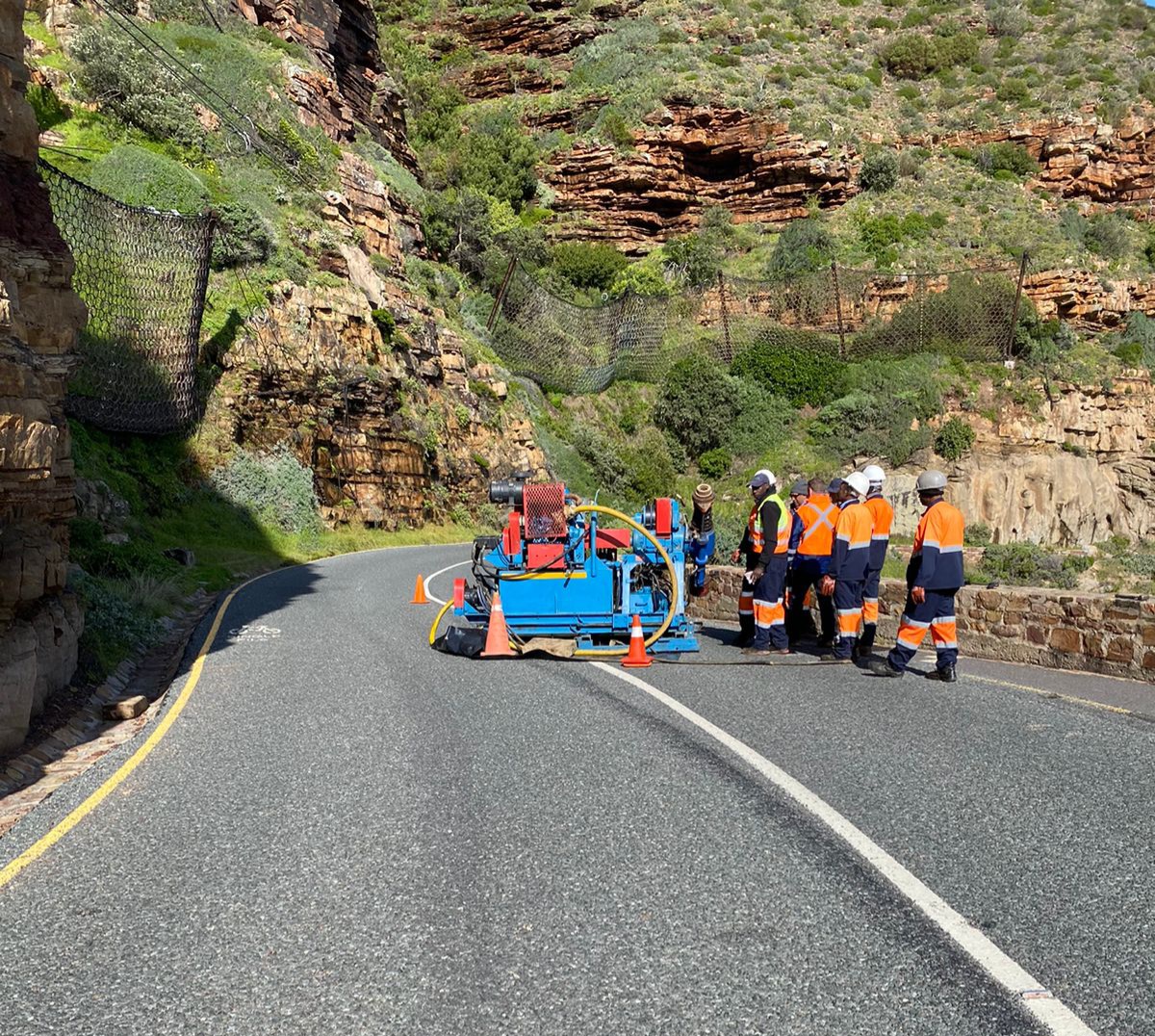
Chapman's Peak Drive provides an excellent example of comprehensive mass movement prevention in action. This scenic coastal route was closed in January 2000 due to safety concerns, but was successfully renovated using multiple prevention strategies working together.
Step 1: Risk Assessment and Planning The renovation project implemented five major safety measures that demonstrate how different prevention techniques can be combined effectively.
Step 2: Implementation of Prevention Strategies
- Rock barring operations systematically removed loose and dangerous rocks from the mountain slopes above the road. This eliminated immediate hazards and reduced the risk of future rockfalls threatening travelers below.
- Catch fence installation created a network of interlocking wire rings designed to trap rocks as they fall. These fences were anchored into the rock with steel wire ropes and extended 1.6 kilometers along different sections of the route, providing comprehensive protection against falling rocks.
- Half tunnel construction involved building a 155-meter tunnel at the base of Chapman's Peak. This tunnel was designed with the sides open to maintain ocean views while providing a protective roof over the roadway.
- Concrete protection canopies were installed at two critical locations where sandstone cliffs extended more than 400 meters above the road. These massive structures arch over the roadway and can intercept rockfalls while deflecting debris safely into the sea below.
- Advanced monitoring systems included CCTV cameras, radar detectors, and weather stations connected via fiber optic cables to a central monitoring desk. These systems can detect dangerous wind speeds and rainfall intensity, automatically activating road closure alarms when conditions become hazardous.
Step 3: Results This comprehensive approach demonstrates how understanding the causes of mass movements leads to effective prevention strategies that can successfully protect both people and infrastructure in high-risk areas.
Summary
Key Points to Remember:
-
Prevention starts with understanding - knowing what causes mass movements allows us to develop targeted strategies to address specific risk factors
-
Multiple techniques work better together - combining engineering solutions like retaining walls and drainage with natural methods like vegetation creates more effective protection
-
Human activities often create the problems - slope steepening, vegetation removal, construction weight, water seepage, and vibrations are all preventable causes we can address
-
Technology enhances traditional methods - modern monitoring systems and early warning capabilities make traditional engineering solutions much more effective
-
Real-world success is possible - projects like Chapman's Peak Drive show that comprehensive prevention strategies can successfully protect people and infrastructure in high-risk areas