Granite Domes and Tors (Grade 11 NSC Matric Geography): Revision Notes
📚Revision Notes
Granite Domes and Tors
Introduction
Granite domes and tors are distinctive landforms that develop from massive igneous rocks, particularly granite. These formations result from specific weathering and erosion processes that shape the landscape over long periods. Understanding how these features form helps us appreciate the complex interactions between rock structure, weathering processes, and time in creating our planet's diverse topography.
Note
These granite landforms demonstrate how the same parent rock material can create dramatically different landscape features depending on the dominant weathering processes and environmental conditions involved in their formation.
Granite domes
Granite domes are large, curved rock formations that bulge upward from the surrounding landscape, creating distinctive convex-shaped outcrops. These impressive geological features can reach significant heights and cover extensive areas, making them prominent landmarks in many regions around the world.
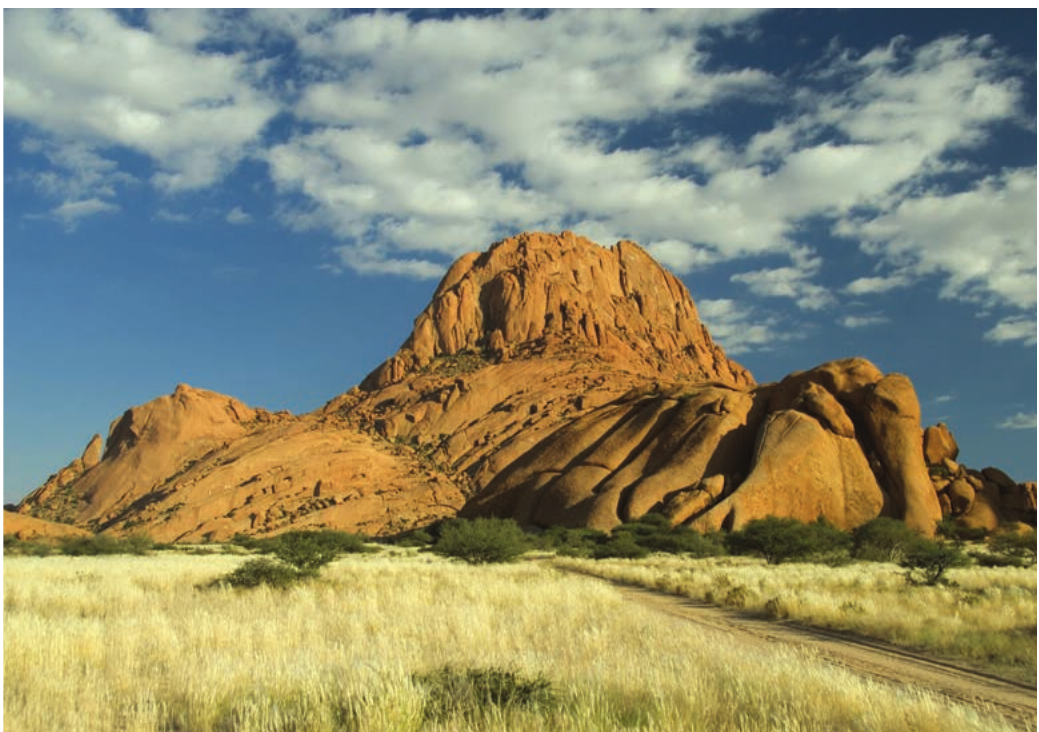
The formation of granite domes follows a systematic process that begins deep beneath the Earth's surface. When granite initially forms as an igneous intrusion like a batholith or lopolith, it remains buried under tremendous pressure from the overlying rock layers. This pressure keeps the granite compressed and prevents it from expanding.
As geological time passes, the overlying rocks gradually erode away through various weathering processes. This erosion progressively reduces the pressure acting on the buried granite intrusion below. With less weight pressing down, the granite begins to expand and develop joints that run parallel to the surface above it.
Important
Critical Formation Process: Once the granite finally becomes exposed at the Earth's surface, it becomes particularly vulnerable to a process called exfoliation. During exfoliation, the granite sheds thin, curved sheets of rock that peel away from the main mass, similar to how layers of an onion separate.
This continuous peeling process gradually sculpts the characteristic smooth, domed shape that gives these formations their name. The expansion and joint development create weaknesses in the rock structure that weathering processes can exploit, leading to the gradual removal of outer layers and the emergence of the distinctive curved profile we observe in granite domes today.
Tors
Tors represent a different type of granite landform, appearing as distinctive piles of rounded rocks that seem to balance precariously on top of each other. These formations typically rise only a few meters above the surrounding landscape and rarely exceed 15 meters in height, making them much smaller features than granite domes.
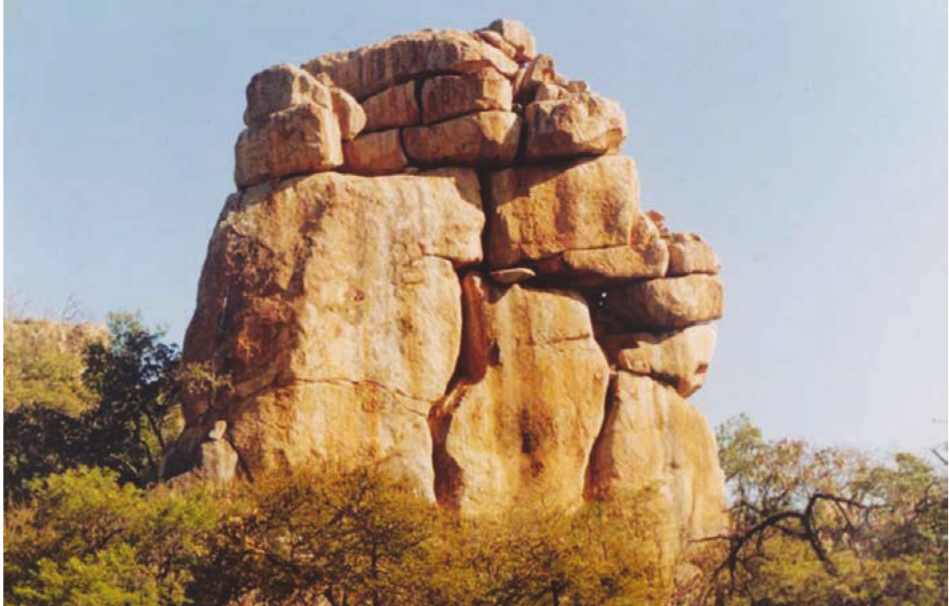
The development of tors involves a fascinating five-stage process that occurs both underground and at the surface. This formation process demonstrates how chemical weathering can create distinctive landforms even before the rock becomes exposed to surface conditions.
Example
Formation Process: The Five Stages of Tor Development
Stage 1: Tors develop within well-jointed igneous rock, typically granite, while it still lies buried beneath other rock layers. During the initial cooling of the magma deep within the Earth's crust, thermal contraction creates mainly vertical joints throughout the granite mass.
Stage 2: As overlying rocks gradually erode away through natural weathering processes, the pressure on the granite decreases significantly. This pressure reduction allows the granite to expand slightly, creating additional horizontal joints throughout the rock mass.
Stage 3: When the granite approaches close to the Earth's surface, it comes into contact with groundwater that can penetrate both the vertical and horizontal joint systems.
Stage 4: This groundwater contains dissolved chemicals that react with minerals in the granite, particularly feldspar. The chemical reaction between hydrogen in the water and feldspar minerals causes underground chemical weathering, producing tiny clay particles called kaolin.
Stage 5: When the granite becomes fully exposed at the Earth's surface, wind and rainfall wash away the fine clay particles, leaving behind the resistant core stones as balanced piles of rounded rocks.
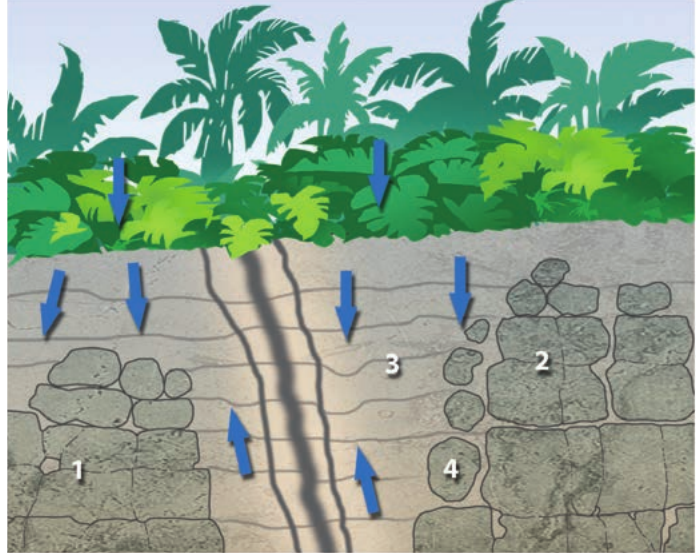
As this underground chemical weathering continues along the joint systems, it creates rounded masses of more resistant granite called core stones. These core stones form in the spaces between joints where the granite remains relatively unaffected by chemical weathering, while the surrounding rock along the joints becomes increasingly weathered and weakened.
Note
The term "core stones" refers to the solid, relatively unweathered blocks of granite that survive the chemical weathering process. These become the individual rounded boulders that characterize tor formations once the surrounding weathered material is removed.
Key differences and processes
Understanding the distinction between granite domes and tors helps clarify how different weathering processes create varied landforms from similar parent rock material. While both features develop from granite, their formation mechanisms and final appearances differ significantly.
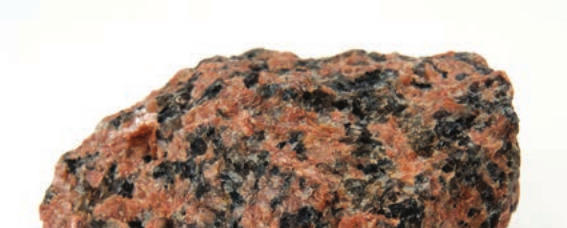
Granite domes primarily form through physical processes involving pressure release and exfoliation, creating large, smooth, curved surfaces. The expansion of granite after pressure release and the subsequent peeling away of rock sheets creates their characteristic bulbous appearance.
Tors, in contrast, develop primarily through chemical weathering processes that occur underground before the rock becomes exposed. The interaction between groundwater and granite minerals along joint systems creates the rounded core stones that eventually form the distinctive balanced rock piles.
Important
Key Distinction: Both formation processes highlight the importance of joints in granite. These natural fractures, which develop during the cooling of magma, provide weak points that weathering processes can exploit. Whether through the development of exfoliation sheets in domes or chemical weathering pathways in tors, joints play a crucial role in shaping these distinctive granite landforms.
The scale of these features also differs significantly. Granite domes can cover extensive areas and rise hundreds of meters above the surrounding landscape, while tors typically remain much smaller features that rarely exceed 15 meters in height and may not even appear on detailed topographic maps.
Summary
Key Points to Remember:
- Granite domes are large, convex-shaped rock formations created primarily through pressure release and exfoliation processes when overlying rocks erode away
- Tors are smaller piles of rounded rocks formed through underground chemical weathering along joint systems, followed by surface exposure and clay removal
- Joints in granite play a crucial role in both formation processes - they develop during magma cooling and provide pathways for weathering
- Chemical weathering underground creates the rounded core stones that become tors, while physical weathering through exfoliation shapes granite domes
- Both features demonstrate how the same parent rock (granite) can create dramatically different landforms depending on the dominant weathering processes involved