Causes of Drought and Desertification (Grade 11 NSC Matric Geography): Revision Notes
📚Revision Notes
Causes of Drought and Desertification
What causes drought?
Understanding the causes of drought is complex, and scientists are still working to fully explain why droughts happen. However, research shows clear connections between drought and both short-term climate changes and long-term climate change patterns.
El Niño and La Niña events and drought
El Niño and La Niña events are major climate patterns that affect weather around the world. During these events, sea surface temperatures and air pressure in the western and eastern Pacific Ocean become either much higher or much lower than normal conditions.
Note
When temperatures differ significantly from typical values, scientists call these differences anomalies. Temperatures above average are positive anomalies, while temperatures below average are negative anomalies.
These temperature and pressure anomalies don't just stay in the Pacific Ocean - they actually change atmospheric circulation patterns near the equator and in other regions too.
As air movement patterns shift, some places experience changes in where air rises and sinks. This directly affects whether an area receives rainfall or experiences dry conditions. While scientists don't completely understand what triggers these temperature and pressure anomalies, growing evidence shows they're frequently linked to drought conditions in various parts of the world.
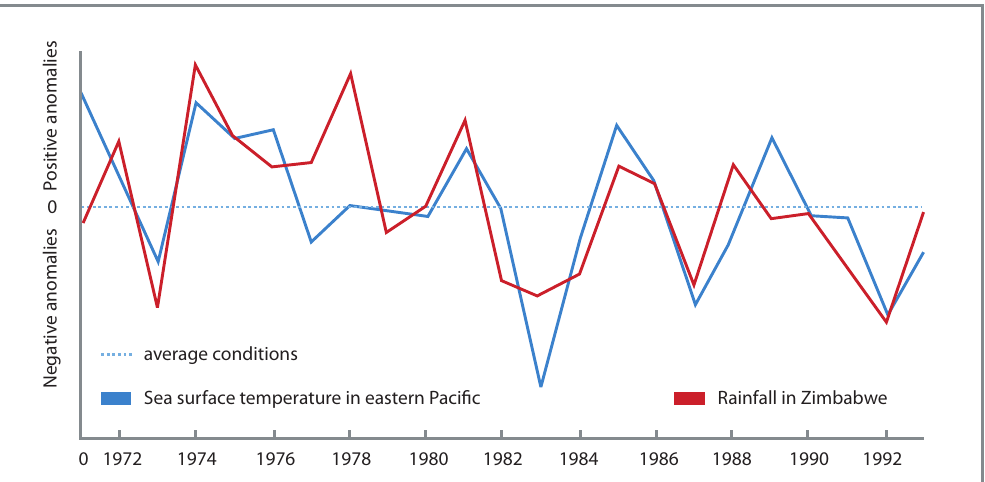
This graph demonstrates the relationship between Pacific Ocean temperature changes and rainfall patterns in Zimbabwe over a 20-year period, showing how these distant climate systems can influence each other.
Global warming and drought
Climate scientists have identified two main ways that global warming contributes to drought conditions:
Important
Two Main Ways Global Warming Causes Drought:
Reduced rainfall patterns: Some regions will likely receive less precipitation in the future compared to current levels. As global climate systems shift, traditional rainfall patterns may change, leaving certain areas with insufficient water supplies.
Increased evaporation rates: Rising global temperatures lead to higher evaporation rates from soil, water bodies, and vegetation. In areas where rainfall stays the same or decreases, this increased water loss through evaporation creates drier conditions.
Already dry regions face particularly serious risks of severe water shortages as evaporation rates accelerate.
What causes desertification?
Desertification happens when there's a long-term imbalance between how much resources people need and what's actually available in a region. This process involves both physical environmental factors and human activities working together over time.
The root cause is simple: when demand for resources becomes greater than supply, it can damage the environment and lead to desertification. Some factors increase demand for resources (like population growth), while others reduce what's available (like drought conditions). Understanding both types of factors helps explain why desertification occurs.
Note
The Desertification Process
Desertification typically follows a pattern where multiple factors combine to create environmental degradation. Climate change can reduce rainfall and increase temperatures, leading to drier conditions. At the same time, human activities like overgrazing, poor farming practices, and deforestation remove protective vegetation cover.
When vegetation disappears, soil becomes exposed to wind and rain, making it more likely to erode. This creates a cycle where land becomes less fertile and less able to support plant growth, eventually leading to desert-like conditions.
Case study: the Sahel region
Note
The Sahel is a semi-arid region located along the southern edge of the Sahara desert. This area provides an excellent example of how multiple factors combine to cause desertification.
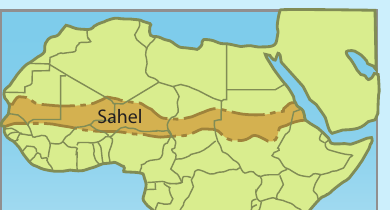
Natural environment of the Sahel
In normal years, the Sahel receives between 150mm and 450mm of rainfall, typically concentrated in just a few months. The natural vegetation consists of savannah grasslands with scattered trees, which can be quite lush during wet years.
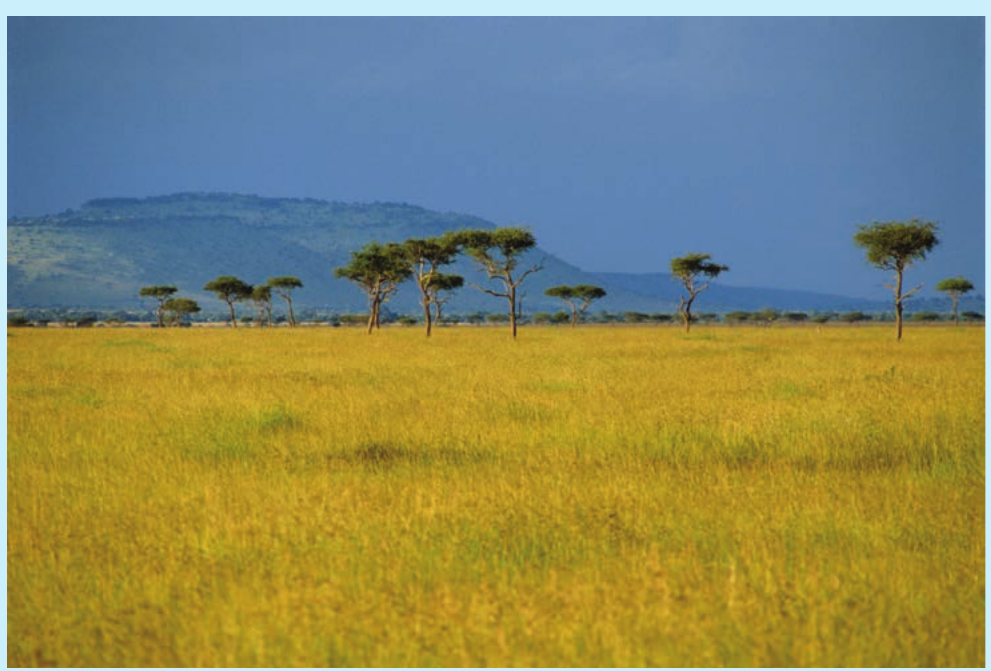
Factors contributing to Sahel desertification
Several interconnected factors have led to environmental degradation in the Sahel:
Climate-related factors: The region has experienced many years of below-average rainfall since the late 1960s. This has resulted in loss of natural vegetation, leaving bare soil exposed to erosion and reducing soil fertility.
Population pressures: The population is growing very rapidly, roughly doubling every 20 years. Both natural population increase and immigration of refugees contribute to this growth, creating increased demand for food, water, and fuel resources.
Livestock management: During wetter years, livestock numbers increase significantly. However, in dry years, there isn't enough grazing land to support all these animals. Overgrazing strips away protective grass cover, leading to soil erosion.
Agricultural practices: As food demand increases, people are forced to use land that isn't really suitable for farming to grow crops for local use and export. This reduces soil fertility over time.
Important
Poor farming methods: Many farmers use unsustainable practices, such as planting the same crops year after year in the same location. These methods exhaust soil nutrients and increase erosion risk.
Fuel needs: Many people depend on wood for cooking, heating, and building materials. This leads to deforestation, which removes protective vegetation and contributes to soil erosion.
Historical factors: Colonial boundaries disrupted traditional nomadic herding patterns. Previously, herders could move their animals to better grazing areas and away from drought-affected regions. Now political borders prevent this movement, forcing many nomads to settle permanently in villages where their herds put continuous pressure on local grasslands.
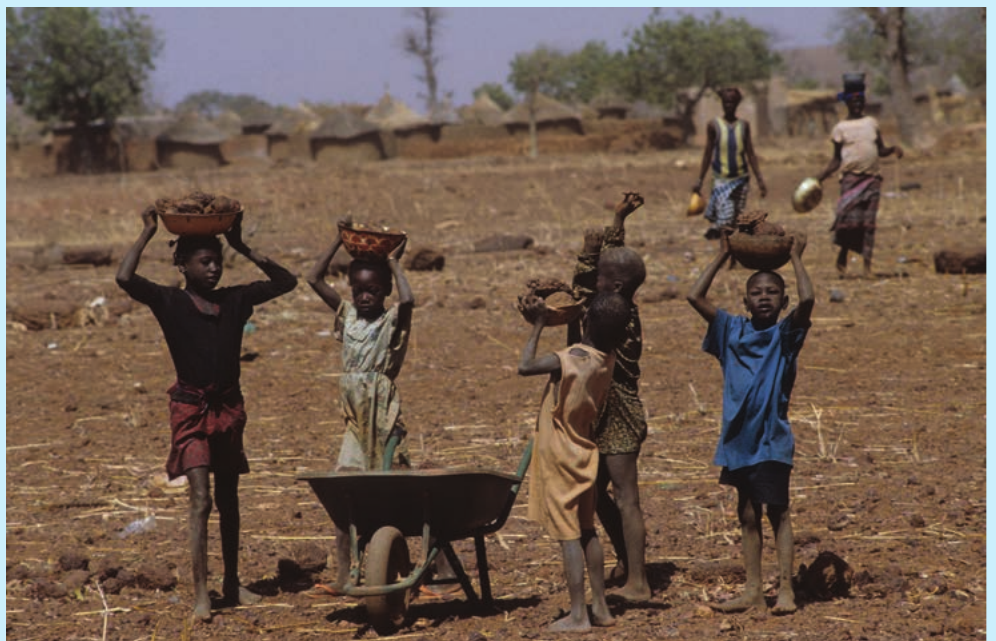
This image shows the reality of life in the drought-affected Sahel, where communities must adapt to increasingly challenging environmental conditions.
Summary
Key Points to Remember:
- Drought has multiple causes: Both short-term climate patterns (El Niño/La Niña) and long-term global warming contribute to drought conditions
- Global warming affects drought in two ways: by reducing rainfall in some areas and increasing evaporation rates everywhere
- Desertification results from imbalance: When demand for resources exceeds what's available, environmental degradation occurs
- Multiple factors work together: Climate change, population growth, poor farming practices, and other factors combine to cause desertification
- The Sahel demonstrates complex causation: This region shows how physical and human factors interact over time to create environmental problems