The Impact of the Second World War (Grade 11 NSC Matric History): Revision Notes
📚Revision Notes
The Impact of the Second World War
How the outbreak of World War II helped USA's economic recovery
The relationship between World War II and America's economic recovery reveals how global conflict can transform a nation's economic fortunes. This transformation demonstrates the complex interplay between international events and domestic economic policy.
Roosevelt's economic challenges in the late 1930s
By 1937, President Roosevelt believed that the American economy had nearly recovered from the Great Depression. However, his decision to reduce New Deal spending and balance the federal budget created unexpected consequences.
Important
Roosevelt's budget cutting led to a second phase of economic depression, demonstrating that the economy had not actually recovered as much as Roosevelt had hoped. This policy mistake shows how premature withdrawal of government stimulus can derail economic recovery.
The situation remained difficult until America entered World War II, which would prove to be the catalyst for genuine economic recovery.
Pre-war developments and rising tensions
During the mid-1930s, several important developments shaped America's approach to the growing international crisis:
Note
The following developments created a complex political environment where Roosevelt had to balance international threats with domestic isolationist sentiment:
- Hitler's threat became clear - It was obvious that Germany was heading towards causing another major war
- Roosevelt's international approach - Following Wilson's ideas about internationalism, Roosevelt recognised the Soviet Union and hoped that diplomatic relations would open up trade opportunities, though this proved unsuccessful
- American isolationism - The American public remained firmly isolationist and strongly opposed becoming involved in European conflicts
- Roosevelt's dilemma - Although Roosevelt believed that American involvement in a European war was inevitable, he struggled to push through policies that acknowledged this reality
The neutrality acts: America's attempt to stay out of war
Between 1935 and 1937, Congress passed three Neutrality Acts designed to keep America out of European conflicts. These acts represented America's determined effort to avoid the mistakes that had led to involvement in World War I.
Note
Each successive Neutrality Act became more restrictive, reflecting growing congressional determination to maintain American neutrality despite increasing international tensions.
Neutrality Act of 1935:
- Prohibited the shipment of American weapons to any country involved in war
- Declared that American citizens travelling on ships belonging to warring nations did so at their own risk
Neutrality Act of 1936:
- Extended the provisions of the 1935 Act for another 14 months
- Forbade all loans or credits to countries involved in warfare
Neutrality Act of 1937:
- Made the previous two laws a permanent part of American national policy
- Prohibited American ships from transporting passengers or articles to warring nations
- Banned American citizens from travelling on ships belonging to countries at war
- However, it allowed the President to create a list of non-military goods (such as grain) that America could sell to countries at war
Even the permitted trade was strictly regulated - countries had to pay cash and transport any goods bought from America on their own ships.
World War II and economic transformation
When Germany invaded Poland in 1939, the situation changed dramatically for America, setting in motion the economic transformation that would end the Great Depression.
Immediate impact:
- America began providing the Allies with war materials, which significantly increased production and created more employment opportunities
- By 1940, when America started drafting men into the armed forces, unemployment decreased substantially
Pearl Harbor and full involvement:
-
Japan's bombing of Pearl Harbor in 1941 forced America to declare war on Japan
-
Germany's recognition of its alliance with Japan led to America declaring war on Germany as well

Important
Economic consequences of full war involvement:
- The American economy shifted completely towards producing war goods
- Government spending increased far beyond New Deal levels
- The economy revived dramatically, achieving pre-Depression levels of employment and prosperity
- This demonstrated that massive government spending could effectively combat economic depression
The impact of the USA's capitalist crisis on the world
The Great Depression that began in America spread globally, affecting different countries in various ways due to the interconnected nature of the world economy. This global spread revealed how economic crises could transcend national boundaries in an increasingly connected world.
How the crisis spread internationally
The economic connections between America and other countries meant that the Depression could not remain contained:
Note
The international economic system of the 1920s had created dependencies that made countries vulnerable to American economic problems:
- European dependence on American loans - Europe's economic recovery after World War I had depended heavily on loans from the United States
- Speculation-based economies - Many businesses and industries in Europe, like those in America, had grown through speculation rather than real production, making them vulnerable when stock markets crashed
- Banking crisis of 1931 - When American banks began withdrawing funds from Europe, European currencies collapsed and many European banks failed
- Investment drought - As investment funds dried up, creditors either went bankrupt or drastically reduced production
Different countries' responses to the crisis
Countries around the world responded to the Depression in markedly different ways, reflecting their different political systems and economic structures:
Example
Contrasting National Responses to the Great Depression
Soviet Union (USSR):
- Successfully escaped the Depression through Stalin's "Socialism in One Country" policy
- Built an industrial society under communist control while cutting economic ties with most other countries
- Achieved rapid industrial growth without outside capital investment
- Avoided serious unemployment problems
- Maintained steadily rising production rates
Latin America:
- These countries depended heavily on exporting primary products like agricultural goods and raw materials
- Already experiencing economic difficulties in the 1920s due to more efficient farming methods and technology causing supply to exceed demand
- When prices fell during the Depression, governments stockpiled their products rather than selling at low prices
- However, they had depended on loans from America and Europe, so when these were recalled, stockpiles had to be released and incomes fell drastically
Germany and Japan:
- Both countries responded to the economic crisis by developing militaristic governments
- Adopted increasingly aggressive foreign policies that eventually led to World War II
USA and Britain:
- The crisis resulted in significant government intervention in their economies
- Led to the creation of welfare systems to support unemployed and struggling citizens
- Developed managed economies where government played a larger role in economic planning
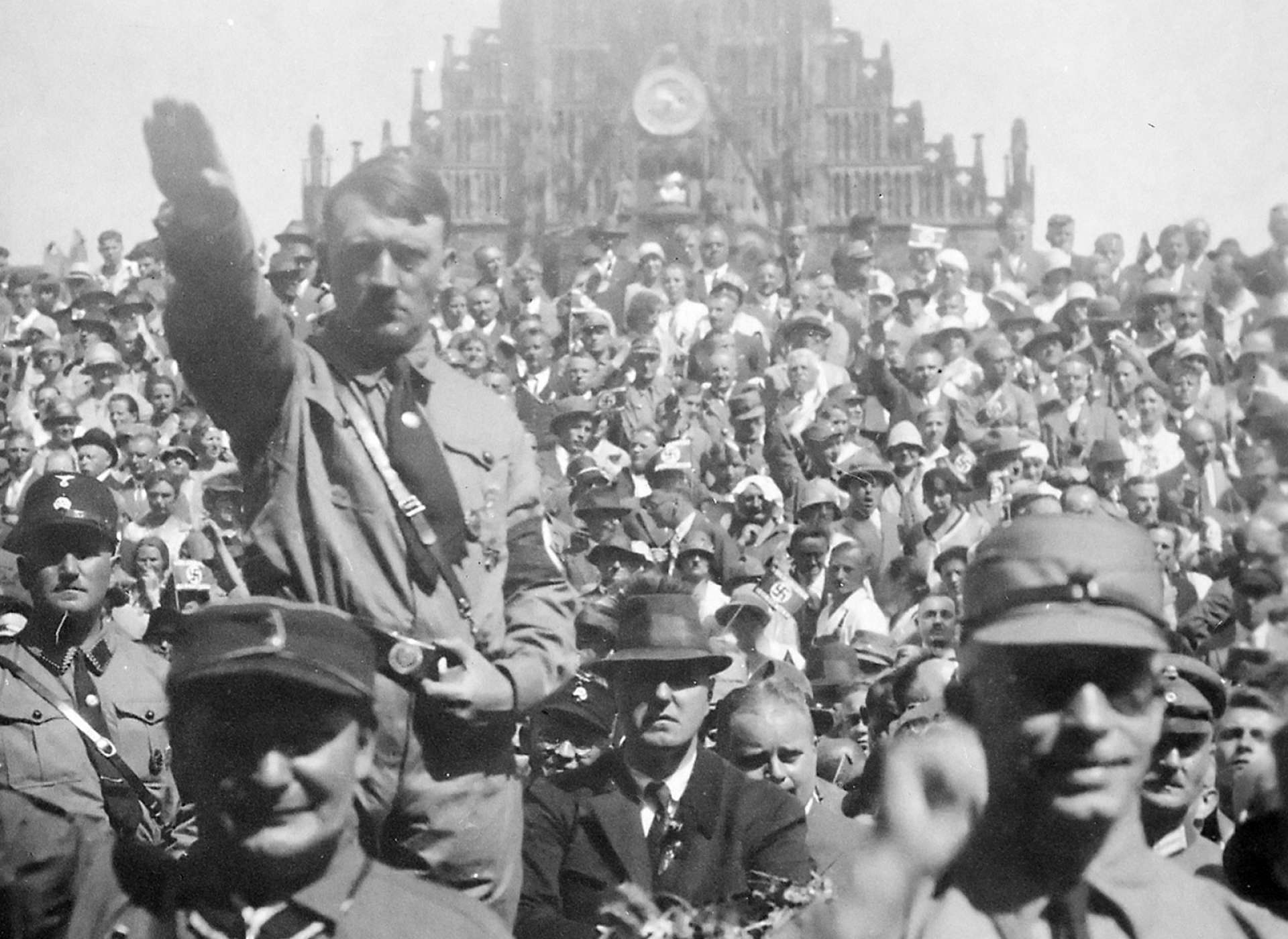
The impact on Germany: political consequences of economic collapse
Germany's experience during the Depression shows how economic crisis can lead to political extremism and ultimately war. The Weimar Republic's vulnerability created conditions that enabled Hitler's rise to power.
Germany's vulnerability to the American crisis
Germany's Weimar Republic was particularly vulnerable to the American economic collapse due to its post-war situation:
Note
Germany's post-war economic structure made it especially dependent on American financial support, creating a dangerous vulnerability when the American economy collapsed.
- War reparations burden - Following the Treaty of Versailles (1919), Germany was forced to pay substantial reparations to the victorious European powers
- Dependence on American loans - Germany had borrowed heavily from America both to pay reparations and fund industrial reconstruction
- Economic domino effect - When the American economy collapsed and banks recalled their loans, the German banking system collapsed, leading to business failures and soaring unemployment
Political implications of economic crisis
The economic collapse created a political crisis that had far-reaching consequences:
Important
The economic breakdown created a political vacuum that extremist parties were able to exploit:
- Para-military organisations emerged to address unemployment through work schemes
- Extremist parties gained support - Both left-wing and right-wing extremist parties found opportunities to gain popular support
- Hitler's work-creation schemes attracted support from unemployed Germans
- The Communist Party (KPD) and Nazi Party (NSDAP) both benefited from the crisis
Hitler's response and rise to power
Hitler implemented several policies that helped him gain and maintain power:
-
Rearmament programmes reduced unemployment and stimulated industrial growth
-
Rationing and trade controls kept consumption down and inflation low, providing economic stability that many Germans welcomed
-
These policies helped Hitler consolidate his power, ultimately leading to Germany's role in starting World War II
The impact on Japan: from economic crisis to militarism
Japan's response to the global Depression demonstrates how economic vulnerability can lead to aggressive nationalism and military expansion. As a newly industrialised nation, Japan's experience shows the particular challenges faced by developing economies during global crises.
Japan's economic vulnerabilities
As a newly industrialised country, Japan faced particular challenges during the Depression:
Note
Japan's modernisation had created economic dependencies that made the country especially vulnerable to global economic disruption:
- Export dependence - Japan relied heavily on export earnings to finance imports of essential fuel and raw materials
- Silk industry crisis - Japan's silk industry, a major export earner, was already suffering from competition with artificial silk-like fibres produced by Western chemical companies
The collapse and its consequences
The Depression hit Japan severely, creating conditions that would lead to political radicalization:
- Luxury purchases collapsed as people had less money to spend
- Severe unemployment created a crucial political crisis
- Between 1929 and 1931, the value of Japanese exports dropped by 50%
- Workers' incomes fell dramatically
- Bad harvests led to rural hardship, with some areas experiencing near starvation conditions
Japan's recovery measures
Japan's government implemented economic policies that were more successful than America's New Deal:
Example
Japan's Economic Recovery Policies
Deficit spending policies:
- The government spent more money than it collected in taxes to stimulate economic activity
- This created jobs and encouraged consumer spending
- The policy provided money for the government through increased economic activity
- Currency devaluation - Japan deliberately reduced the value of its currency, which doubled industrial production
From economic recovery to militarism
However, Japan's economic recovery came with dangerous political consequences:
Important
The Dark Side of Economic Recovery:
Military spending priorities:
- Much of the government's deficit spending went towards buying munitions for the armed forces
- This supported an increasingly nationalistic and militarising country
- In 1934, when the government tried to reduce deficit spending and cut back on military expenditure, it faced violent opposition
Political transformation:
- Nationalists, particularly those in the army, reacted angrily to reduced military spending
- The finance minister was assassinated
- Civilian government officials came increasingly under military control
- By World War II, Japan had become a military dictatorship
The impact on South Africa: gold, agriculture and social consequences
South Africa's experience during the Depression shows how the country's unique economic structure provided both protection and vulnerability. The gold mining industry created a buffer against the worst effects, while other sectors suffered severely.
The gold standard and economic protection
South Africa's economy was partially protected from the worst effects of the Depression due to its gold mining industry:
Note
South Africa's gold-based economy created a unique situation where the country could partially insulate itself from global economic collapse while still facing significant challenges in other sectors.
- Currency backing - The South African currency was backed by the gold standard, which initially made South African goods expensive
- Strategic decision - In 1932, the decision was made to abandon the gold standard, beginning a process of economic expansion
- Investment shift - South Africa was saved from complete economic collapse by its gold mining industry, as investors moved their money from the volatile stock market to more stable gold shares
- Export compensation - Growing gold exports helped compensate for losses in other areas of trade
Agricultural and mineral exports crisis
Despite gold's protection, other sectors of the South African economy suffered severely:
- Declining demand - Global demand for South African agricultural and mineral exports dropped significantly as world trade slumped
- Wool price collapse - The price of wool fell by 75% between 1925 and 1933
- Farming crisis - Many farmers became unable to pay their mortgages and were forced off their land
- Particular hardship for sharecroppers - Bywoners (white sharecroppers) who did not own land were particularly hard hit
Social consequences: the Carnegie Commission findings
The economic crisis had serious social implications, particularly for white South Africans:
Important
Carnegie Commission on Poor Whites (1931):
- The Commission found that most rural white South Africans (Afrikaners) had become a major concern for the government
- Nearly one-third of Afrikaners were living in deep poverty
- The situation was made worse by serious drought conditions
Political implications and long-term consequences
The economic hardship experienced by Afrikaner farmers had significant political consequences that would shape South Africa's future:
- Government response - The South African government used the financial difficulties of Afrikaner farmers to promote Afrikaner nationalism
- Political transformation - This helped the Nationalist Party gain power in 1948
- Policy consequences - The Nationalist victory led to the entrenchment of apartheid as official government policy
A primary source from the period explains: "To an extent, the financial plight of the Afrikaner farmers had been brought on by the worldwide economic depression that had its roots in the USA Great Depression that started in 1929 with the Wall Street crash."
The cyclical nature of capitalism
The events of the 1930s and 1940s revealed important truths about how capitalist economies function, showing that they follow predictable cycles of boom and bust. This understanding would fundamentally change how governments approached economic policy.
Understanding the boom-bust cycle
The Depression and subsequent recovery demonstrated capitalism's cyclical nature through several stages:
Example
The Capitalist Boom-Bust Cycle
- Economic expansion - Sustained increases in economic indicators driven by rapid credit expansion to the private sector
- Rising asset prices - Commodity and stock market prices rise significantly
- Credit crunch - Asset prices collapse and credit becomes difficult to access
- Reduced economic activity - Large reductions in investment and consumption occur
- Economic recession - Usually short-lived, with consumption growth resuming within a year
Transformation of economic thinking
The Depression caused a complete transformation in economic theory and government policy:
Important
Revolutionary Change in Economic Philosophy:
Before the 1930s:
- Governments and business leaders believed that prosperity resulted from minimal government intervention in the domestic economy
- Faith in open international trade as the path to prosperity
- Belief that currencies should be fixed in value and readily convertible between countries
After the 1930s:
- Recognition that some government regulation of the economy was necessary for stability
- Understanding that pure free-market capitalism could lead to devastating economic collapse
- Acceptance that government intervention might be needed to prevent or address economic crises
This shift in thinking would influence economic policy for decades to come, leading to the development of welfare states and more active government involvement in economic management.
Summary
Key Points to Remember:
- World War II ended America's Great Depression - The war effort created massive employment opportunities and government spending that the New Deal alone had not achieved
- The Neutrality Acts failed to keep America out of war - Despite attempts to remain neutral through legislation, Pearl Harbor forced America into World War II
- The Depression spread globally due to economic interconnectedness - Countries dependent on American loans and trade suffered when the US economy collapsed
- Different countries responded differently to the crisis - The USSR escaped through isolation, Germany and Japan turned to militarism, while the USA and Britain developed welfare systems
- Economic crisis led to political extremism - Both Germany and Japan's responses to the Depression contributed directly to the causes of World War II, showing how economic hardship can fuel dangerous political movements