Society of the USA in the 1920s (Grade 11 NSC Matric History): Revision Notes
📚Revision Notes
Society of the USA in the 1920s
Introduction: the "roaring twenties"
The 1920s in America became known as the "Roaring Twenties" because it was a time of tremendous social change and excitement. While Europe was still recovering from World War I, America was thriving economically and socially. This prosperity brought significant changes to American society, including new forms of entertainment, changing social attitudes, and greater freedom for many groups.

Note
The term "Roaring Twenties" reflected not just economic prosperity, but also the loud, energetic cultural changes that characterized the decade - from jazz music to new social freedoms.
The decade saw the growth of jazz music, which became wildly popular across the country. People had more leisure time and money to spend on entertainment. The radio made music widely available to ordinary families. African Americans moved in large numbers from rural areas to cities, bringing jazz music and new dance styles with them. This migration would have important consequences for race relations during the decade.
Changing roles of women in the 1920s
Political participation and voting rights
Women gained an important victory when they won the right to vote. However, this political breakthrough had limitations. Although women could now participate in elections, they still had very little real access to political power. Only a handful of women were elected to public office during this period.
Important
Despite winning voting rights, women's political representation remained extremely limited throughout the 1920s, highlighting the difference between legal rights and actual political power.
Despite these limitations, women found new ways to become politically and socially active. They succeeded in organising together to push for social reforms and changes in society. Women joined various organisations that supported women's liberation and worked toward achieving equal status with men in society.
New ideas about women's behaviour
The 1920s brought dramatic changes in how women were expected to behave. Traditional roles and old ideas about proper female behaviour were challenged by a new generation of women. These changes freed many women from the restrictive social expectations they had faced previously.
Progressive young women, known as "flappers," became symbols of this new freedom. Flappers shocked older generations by wearing short dresses or trousers, cutting their hair short, wearing makeup, and smoking in public. Movie stars became important role models and were often seen as symbols of sexuality and independence.
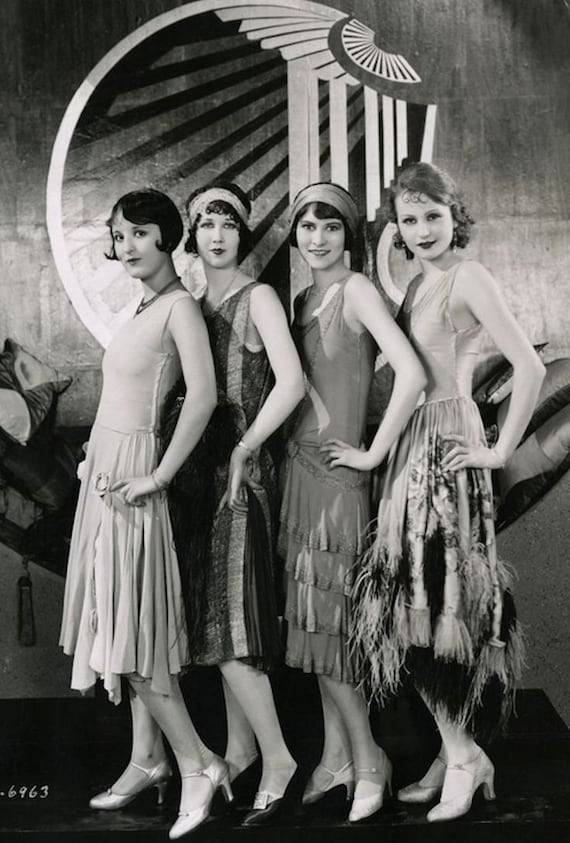
Example
Example: The Flapper Revolution
A typical flapper in 1925 might:
- Wear a knee-length dress (scandalous for the time)
- Bob her hair in a short, fashionable cut
- Apply rouge and lipstick openly
- Smoke cigarettes in public
- Dance the Charleston at jazz clubs
- Drive her own automobile
This behavior directly challenged Victorian-era expectations of modest, domestically-focused women.
Social and economic changes
The divorce rate doubled during the 1920s as women felt more empowered to leave unhappy marriages. Women increasingly made important decisions about what to buy for their homes and families, as advertising began targeting them specifically as consumers.
World War I had significantly changed labour patterns for women. During the war, women had taken on more challenging jobs traditionally held by men. After the war, many women were not eager to return to their pre-war domestic roles. Driving brought women unprecedented freedom of movement, allowing them to travel independently.
Society's rules changed as women began going to bars and social venues without male "protectors" - something that would have been scandalous before the war. Middle-class women especially began competing with men in the job market, seeking professional opportunities and careers.
Workplace challenges
Despite these advances, wage inequality remained a serious problem. Women were still paid significantly less than men for similar work. Employers often justified this by arguing that women represented cheaper labour. Ironically, this wage gap actually led to increased employment opportunities for women, as businesses sought to reduce their labour costs.
Note
The economic paradox of the 1920s was that discrimination against women in wages actually increased their employment opportunities, as cost-conscious employers hired them to reduce expenses.
Race relations in the 1920s
Migration and urban tensions
Race relations became increasingly strained during the 1920s. The Southern states had long been associated with racist attitudes and policies. Many poor African Americans moved from rural areas to cities seeking better opportunities, but this migration created new problems and tensions.
This movement of people led to racial discrimination and unfair treatment of black Americans in urban areas. Racial tensions often erupted into violence as white and black communities came into conflict.
Important
The Great Migration of African Americans from rural South to urban North during this period fundamentally altered American demographics and intensified racial conflicts in previously less diverse cities.
Riots and violence
Initially, white people rioted against black communities, but African Americans began to fight back, retaliating against the unfair treatment they received. These racial conflicts created dangerous situations in many American cities.
Services in predominantly black areas were generally poor and inadequate. For example, Harlem in Manhattan, New York, became a ghetto where only black Americans lived. By 1929, Harlem had become crime-ridden and impoverished, with virtually no public services provided by the city government.
Jim Crow laws and segregation
"Jim Crow" laws remained firmly in place throughout the Southern states. These laws enforced racial segregation and denied African Americans basic rights such as voting, attending "white" schools, or taking certain jobs that were reserved exclusively for white people.

Important
Jim Crow laws created a systematic apartheid system in the American South, legally enforcing racial separation in virtually every aspect of daily life - from schools and restaurants to water fountains and public transportation.
While Northern states did not have such explicit laws, African Americans still faced significant discrimination there. They were typically limited to low-paying jobs such as doorkeepers, railway labourers, and other manual positions.
The Ku Klux Klan revival
The Ku Klux Klan (KKK) experienced a dramatic revival during the 1920s. Originally established in the South during the 19th century, the KKK was revived after World War I and reached its height in the mid-1920s with approximately 5 million members.
The organisation promoted "racial purity" and opposed everything they considered "un-American." They particularly targeted Jews, blacks, Catholics, immigrants, and communists. The KKK received most of its support from rural areas, especially in states like Indiana and Oregon.

Example
Example: KKK Influence at its Peak
In Indiana during 1925:
- Nearly 1 in 4 white Protestant men belonged to the KKK
- The organization controlled local and state politics
- KKK members held positions as sheriffs, judges, and mayors
- They organized massive public rallies with thousands of participants
- Cross burnings and intimidation tactics were common
This demonstrates how mainstream the KKK had become in certain regions during the 1920s.
KKK tactics included terrorisation and violence, using force and conducting threatening rituals. They forced Catholics and Jews to sell their property and engaged in extreme violence against blacks, including beatings and lynchings. Members wore distinctive white robes and hoods to conceal their identities during these activities.
Immigration and prejudice
Between 1900 and 1914, approximately 13 million immigrants arrived in America, mostly from Southern and Eastern Europe. Despite the fact that most white Americans were themselves descendants of immigrants, many became alarmed about people arriving from what they considered "undesirable" countries. This led to the passage of laws limiting immigration to the United States.
Social life: prohibition and its consequences
The prohibition experiment
Prohibition - the ban on the sale of alcohol - began in the 1920s and represented a major social experiment in America. Supporters believed it would create a more "sober" society, promote hard work, and reduce crime rates. The policy was enforced by the federal government.
However, Prohibition proved to be largely unsuccessful and created numerous unintended consequences that would plague American society throughout the decade.

Note
Prohibition was based on the 18th Amendment to the Constitution and was intended to solve social problems through government regulation of personal behavior - a bold experiment in social engineering.
Failure and criminal consequences
Because alcohol became scarce and expensive due to the ban, people were willing to take significant risks to make money through illegal alcohol trade. Smuggling alcohol became relatively easy, as criminals could bring liquor into the country illegally, particularly across the Mexican border.
Bootlegging - the illegal making and importing of alcohol - became a profitable criminal enterprise. Moonshining involved transporting illegal alcohol, typically at night to avoid detection. Criminals brought alcohol from neighbouring countries using trucks and boats, while others set up their own whisky stills to produce alcohol locally.
The enforcement of Prohibition cost approximately $10 million per year, and about 50,000 people were arrested annually for breaking these laws.
Rise of organised crime
Prohibition led to a significant increase in violent crime. Bootlegging generated enormous profits, and people were willing to protect their illegal income through violence. Armed gangs were employed to protect illegal liquor shipments, leading to gun battles between rival criminal organisations.
Al Capone became the most notorious and powerful crime boss, particularly in Chicago. He forced bootlegging operation owners to pay him for "protection," threatening to destroy their businesses if they refused. Capone bribed police and other officials to leave his operations alone and killed anyone who defied his authority.
Example
Example: Al Capone's Criminal Empire
By 1929, Al Capone's organization:
- Controlled over 1,000 speakeasies in Chicago
- Generated an estimated $60 million annually from illegal alcohol
- Employed hundreds of armed enforcers
- Corrupted police, judges, and politicians through bribes
- Used violence to eliminate rivals, including the famous St. Valentine's Day Massacre
This shows how Prohibition created powerful criminal organizations that challenged government authority.
Speakeasies - secret establishments where illegal alcohol could be purchased - became common throughout American cities. Criminal activities expanded beyond bootlegging to include armed robbery and prostitution.
End of prohibition
As crime continued to increase and public support decreased, more Americans called for the end of Prohibition. The 1931 economic depression made the situation worse, and states realised that taxing legal alcohol sales would bring much-needed revenue to government coffers.
Franklin D. Roosevelt (Democrat) won the 1932 election partly because the Democratic Party opposed Prohibition. In 1933, Prohibition officially ended, bringing this failed social experiment to a close.
Summary
Key Points to Remember:
-
The 1920s were called the "Roaring Twenties" because of economic prosperity, cultural changes, and new forms of entertainment like jazz music
-
Women gained voting rights but still faced limitations in political power; "flappers" challenged traditional gender roles through fashion and behaviour
-
Race relations worsened due to urban migration, leading to riots, discrimination, and the revival of the Ku Klux Klan with 5 million members
-
Prohibition (1920s-1933) failed spectacularly, creating organised crime, bootlegging operations, and figures like Al Capone who controlled illegal alcohol trade
-
Social changes during this decade included greater freedom for women, increased racial tensions, and the rise of consumer culture, setting the stage for future conflicts and developments in American society