The New Deal (Grade 11 NSC Matric History): Revision Notes
📚Revision Notes
The New Deal
Roosevelt's election and the promise of change
The devastating Wall Street Crash of 1929 created a political crisis for President Herbert Hoover and the Republican Party. By 1932, American voters were angry and desperate for solutions to the economic disaster that had engulfed the nation. The mood strongly favoured the Democrats, as people blamed the Republicans for their suffering.
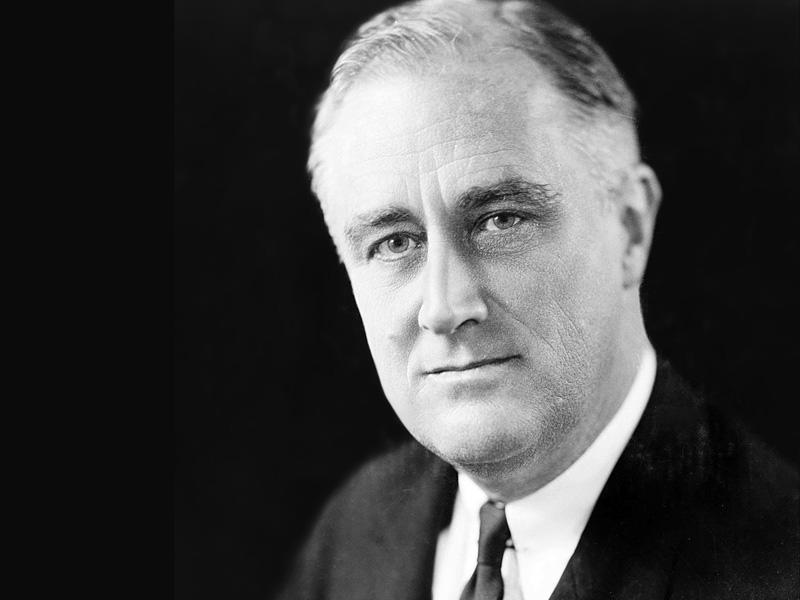
Franklin Delano Roosevelt (commonly known as FDR) won a landslide victory in the 1932 Presidential election. He promised a 'New Deal for the forgotten man' - ordinary Americans who had been abandoned during the economic crisis. Roosevelt understood that capitalism itself was under serious threat and needed to be saved through careful reforms rather than revolutionary change.
Note
Roosevelt's famous inaugural address included the inspiring words: "We have nothing to fear but fear itself" - a message designed to restore American confidence during the darkest period of the Great Depression.
Understanding the New Deal
The New Deal was Roosevelt's comprehensive programme to tackle the Great Depression through three main approaches, known as the 3 R's:
Note
The Three R's of the New Deal:
Relief meant providing immediate assistance to those worst affected by the Depression. This included emergency help for the unemployed, homeless, and hungry families who were struggling to survive.
Recovery focused on getting the economy moving again by making industries productive and creating employment opportunities. The goal was to restore economic activity so people could support themselves and buy goods again.
Reform involved making changes to the economic system, particularly the stock market and banking, to prevent another devastating crash from happening in the future.
This approach represented a major shift from President Hoover's philosophy. Where Hoover had rejected socialism and government ownership but recognised some need for intervention, Roosevelt was willing to go much further. He understood that during World War I, the US economy had been successfully planned and regulated, and he aimed for similar intervention to restore prosperity and reduce inequality.
Roosevelt established a Brains Trust - a small group of advisers who helped him formulate new policies. This team developed 15 major pieces of legislation that were passed during Roosevelt's first 100 days in office, demonstrating his commitment to rapid action.
The two phases of the New Deal
First New Deal (1933 to mid-1935)
The First New Deal concentrated on immediate relief and recovery measures, along with some reforms to prevent future economic disasters.
Banking reforms were crucial because thousands of banks had closed, destroying people's faith in the financial system. Roosevelt temporarily closed all banks and passed the Emergency Banking Relief Act in 1933. This gave him power to regulate banking transactions and foreign exchange. Banks had to be inspected and proven financially sound before reopening. The government also guaranteed deposits for small investors, which helped restore public confidence and encouraged people to trust banks again.
Example
Banking Reform Process:
Step 1: Roosevelt declared a "bank holiday" - temporarily closing all banks
Step 2: Banks underwent government inspection for financial soundness
Step 3: Only financially stable banks were permitted to reopen
Step 4: Government guaranteed small deposits to restore public trust
Step 5: Public confidence returned and people began depositing money again
Relief measures addressed the most urgent need - direct assistance for people facing extreme poverty. The Federal Emergency Relief Administration provided state governments with money for emergency relief, including soup kitchens and temporary housing for homeless families.
Recovery programmes aimed to reduce unemployment and get people working again. The government introduced Alphabet Agencies - various programmes with abbreviated names like the Civilian Conservation Corps (CCC). These government-sponsored initiatives created jobs and provided income so people could support themselves and purchase goods.
Reform legislation began changing the capitalist system to ensure no second crash would occur. The National Industrial Recovery Act (NIRA) established codes of fair practice for individual industries and promoted industrial growth. The Public Works Administration (PWA) created jobs building public infrastructure like buildings, highways, and flood control systems.
The National Recovery Administration (NRA) was one of the most controversial New Deal measures. It aimed to stabilise business, generate purchasing power, and provide jobs through codes of 'fair' competitive practice. These codes defined labour standards, raised wages, established maximum working hours, and required government, employers, and labour to negotiate regulations together. Businesses following these agreements could display a blue eagle symbol, and consumers were encouraged to 'buy blue eagle' products. However, this broke American traditions of free competition and created conflict between businessmen, consumers, and bureaucrats. The Supreme Court declared the NRA unconstitutional in 1935.
Second New Deal (1935-1940)
The Second New Deal tackled the fundamental problem of mass unemployment more directly and focused on long-term protection measures.
The Works Progress Administration (WPA) replaced earlier programmes and employed over three million people by late 1938. It built public buildings, hospitals, schools, airports, bridges, highways, and parks. This programme demonstrated that government employment could help prevent social revolution by giving people hope and purpose.
Important
Roosevelt understood that "hungry and jobless people are the stuff of which revolutions are made." The New Deal programmes were designed not just to provide relief, but to prevent the social upheaval that could threaten American democracy itself.
Social welfare measures created America's first national social safety net. The Social Security Act of 1935 established a system of pensions and unemployment benefits. To fund these programmes, Roosevelt introduced a 'soak the rich' tax that required wealthy individuals and big businesses to pay higher taxes.
The government also helped evicted sharecroppers with loans and housing assistance, showing concern for rural poverty.
Labour relations were transformed through the National Labour Relations Act (Wagner Act) of 1935. This legalised collective bargaining for trade unions and restored faith in the New Deal after disappointment with the NRA. Workers gained the right to choose their own union through secret ballot votes.
These measures represented a significant change in the role of government. Instead of the non-intervention approach under Republican administrations, Roosevelt's government took meaningful responsibility for providing relief and establishing recovery mechanisms. He recognised that hungry and jobless people had little to lose and could threaten the state with revolution, so the government had a duty to provide safety nets for the old and poor.
Opposition to the New Deal
Although Roosevelt's policies were popular with ordinary Americans, they faced significant opposition from various groups.
Conservative and wealthy opposition
Wealthy Americans and business owners felt Roosevelt was interfering too much in business affairs. They resented paying social security contributions, which reduced their profits, and opposed the power the Wagner Act gave to trade unions. Many believed the New Deal weakened capitalist principles and that union activities like collective bargaining threatened the individualism associated with capitalism.
The wealthy considered Roosevelt a traitor to his own social class and felt the New Deal was moving America towards socialism. They used the 'soak the rich' tax to fund New Deal programmes, which they saw as unfair redistribution of wealth.
Republicans regarded the New Deal as excessive federal centralisation. They believed New Deal programmes were dangerous and would lead to high government spending, increased taxes, and significant growth in bureaucracy.
Former President Hoover argued that New Deal experimentation would actually worsen the effects of the Depression and hold back economic recovery.
The Supreme Court, with its conservative majority until 1936, ruled several First New Deal programmes unconstitutional. In 1935, the Court declared both the NRA unconstitutional and invalidated a railway pension law. In 1936, it ruled against the Agricultural Adjustment Act and struck down a New York state minimum wage law. However, by 1937, conservative judges had left the Supreme Court, and Roosevelt appointed more sympathetic judges who supported his measures.
Criticism from the left
The main criticism from left-wing politicians was that the New Deal did not go far enough in solving economic problems and social inequalities.
Huey Long, ex-Governor and Senator from Louisiana, became the most vocal critic. He argued for redistributing wealth and introducing a minimum wage across the country before being assassinated in 1935.

Communists criticised the New Deal as 'social fascism' and called Roosevelt a 'dictator', while being careful to distance themselves from Russian revolutions.
Charles Coughlin, a prominent Catholic priest, initially supported the New Deal as 'Christ's Deal' but later became increasingly critical of the slow pace of reform. He strongly opposed the destruction of crops and farm animals under agricultural programmes.
Opposition within the Democratic Party
Southern Democrats created internal party tensions. Local power elites felt the New Deal jeopardised their position and were uncomfortable with organised labour and moves towards racial equality.
Racial issues caused significant problems. A group of Southern delegates walked out of the 1936 Democratic convention and refused to support any party that viewed African Americans as political and social equals.
Impact on American capitalism
Restoration of confidence
The Depression had severely threatened America's free market system and liberal democratic government. Roosevelt recognised that "hungry and jobless people are the stuff of which revolutions are made." The New Deal successfully restored Americans' confidence in the free market system and liberal democracy, helping preserve the American way of life during a critical period.
Economic regulation
Rather than bringing about revolutionary change or abandoning capitalist principles, the New Deal reformed and strengthened the capitalist system in America. It removed abuses from the unregulated economy and gave the state an important role in economic management. This government involvement actually strengthened American capitalism by making it more stable and sustainable.
The New Deal created what became known as the corporate state. Before Roosevelt, big business had virtually monopolised political power in Republican America. New Deal regulation created two new major players: big labour and big government. When combined with World War II, this drew business, government, and labour into close cooperation.
Continuing economic problems
Despite its achievements, the New Deal did not completely end the Great Depression. In 1937, Roosevelt began reducing government spending to balance the federal budget, which triggered a new phase of economic downturn. By 1938, America was experiencing another deep recession with five million job losses. It was ultimately the move towards World War II that brought the Depression to an end.
Legacy and limitations
The New Deal brought dignity back to many ordinary Americans and established the principle that government should play a role in citizens' social welfare. However, it had significant limitations:
Important
Major New Deal Limitations:
Racial exclusion: Many African Americans were excluded from New Deal benefits because they worked as tenant farmers, farm labourers, or domestic workers - occupations that did not qualify for unemployment benefits, minimum wages, or farm subsidies. Segregation policies continued in Southern states and were even applied in programmes like the Civilian Conservation Corps.
Gender discrimination: The principle of "last hired, first fired" meant women often lost jobs to men, and workplace discrimination continued with women receiving lower wages.
For the first time, Americans expected the federal government to provide social welfare, but capitalists viewed this as a weakening of traditional free-market principles. The government's new role in providing security and relief for unemployed, elderly, and sick people represented a fundamental shift in American political philosophy.
Summary
Key Points to Remember:
-
The 3 R's - Relief, Recovery, and Reform - formed the foundation of Roosevelt's New Deal approach to tackling the Great Depression
-
Two distinct phases: The First New Deal (1933-1935) focused on immediate relief and recovery, while the Second New Deal (1935-1940) emphasised long-term reforms and social welfare
-
Government intervention marked a dramatic shift from Republican laissez-faire policies to active federal involvement in the economy and social welfare
-
Opposition came from multiple directions: conservatives thought it went too far towards socialism, while left-wing critics argued it didn't go far enough to solve inequality
-
The New Deal strengthened rather than weakened American capitalism by regulating the economy, restoring public confidence, and preventing revolutionary change during a critical period