Homeostatic Control of Blood Glucose Levels (Grade 11 NSC Matric Life Sciences): Revision Notes
📚Revision Notes
Homeostatic Control of Blood Glucose Levels
What is homeostasis?
Homeostasis is a fundamental concept in biology that describes how living organisms maintain stable internal conditions despite changes happening around them. Think of it like your body's internal thermostat that keeps everything balanced and working properly.
Note
Your body constantly monitors and adjusts various internal conditions such as temperature, water levels, and chemical balance to keep you healthy and functioning optimally.
Key terminology
Understanding the specific terms related to blood glucose control is essential for grasping how this homeostatic mechanism works:
- Negative feedback mechanisms – processes in the body that detect changes in internal conditions and act to restore balance (homeostasis).
- Blood glucose – the amount or concentration of glucose present in the bloodstream.
- Insulin – a hormone made by the pancreas that lowers blood glucose by converting glucose into glycogen for storage.
- Glucagon – a hormone produced by the pancreas that raises blood glucose by converting stored glycogen back into glucose.
- Glycogen – the stored form of glucose found in the liver and muscle cells.
Important
These terms work together in a complex system that keeps your blood sugar levels stable throughout the day, whether you've just eaten a meal or haven't eaten for hours.
How negative feedback mechanisms work
Negative feedback mechanisms are like your body's automatic correction system. When something goes out of balance, your body detects the change and takes action to bring things back to normal. This process follows a consistent pattern:
Example
The Seven Steps of Negative Feedback:
- An imbalance is detected in the body
- A control centre receives this information and is stimulated
- The control centre responds to the stimulus
- A message is sent to the appropriate target organ or system
- The target organ responds by taking corrective action
- This response opposes or reverses the original imbalance
- Balance is restored to normal levels
This cycle repeats continuously to maintain homeostasis throughout your life.
Blood glucose regulation explained
Your blood contains glucose, which is the primary fuel your cells use for energy through cellular respiration. Maintaining the right amount of glucose in your blood is crucial for your body to function properly.
Important
Why blood glucose levels matter:
- Too low: Your cells cannot release enough energy, and your body cannot function at its best
- Too high: Water gets drawn out of your cells into the bloodstream, causing dehydration throughout your body
The pancreas acts as the monitoring centre for blood glucose levels, constantly checking and adjusting as needed.
The role of insulin and glucagon
Your pancreas produces two key hormones that work as opposing partners to control blood glucose:

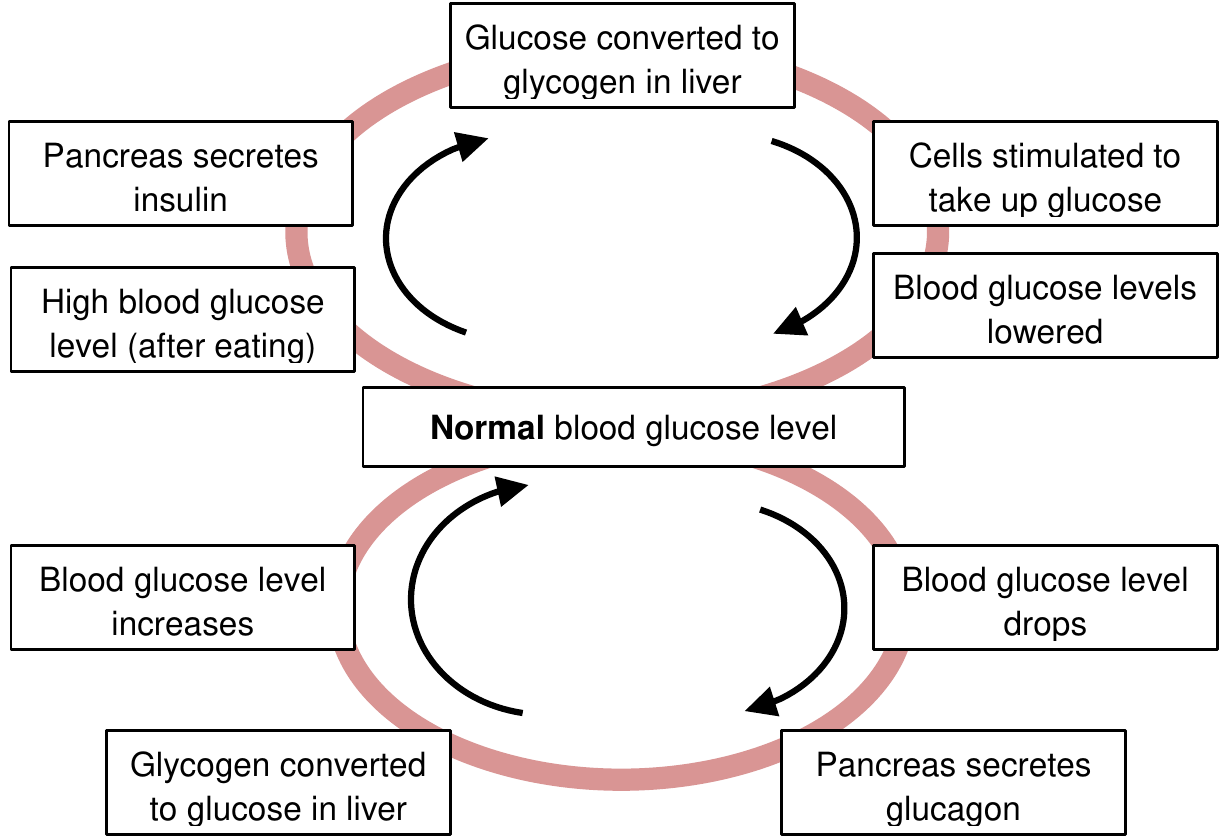
When blood glucose rises (after eating):
- The pancreas detects the increase and releases insulin
- Insulin stimulates the conversion of glucose into glycogen for storage
- Glycogen is stored primarily in the liver and skeletal muscles
- Body cells are also stimulated to take up more glucose
- Blood glucose levels return to normal
When blood glucose falls (between meals or during exercise):
- The pancreas detects the decrease and releases glucagon
- Glucagon stimulates the conversion of stored glycogen back into glucose
- This glucose enters the bloodstream
- Blood glucose levels return to normal
Note
This creates two interconnected feedback loops that maintain blood glucose homeostasis. The process can be summarised as glucose and glycogen constantly converting back and forth based on your body's needs.
Diabetes mellitus
Sometimes this carefully balanced system doesn't work properly, leading to a condition called diabetes mellitus. This disorder is characterised by persistently high blood glucose levels, which cause fatigue, dehydration, and lack of energy.
Important
Type 1 diabetes:
- Usually caused by an inherited disorder or loss of insulin-producing cells in the pancreas
- Requires lifelong daily insulin injections
- Needs a specially adapted diet
- Often develops in younger people
Type 2 diabetes:
- Caused by insulin resistance, where the body doesn't respond properly to insulin
- Usually results from poor lifestyle choices over time
- Can often be managed through a balanced diet, regular exercise, and medication
- More common in adults, especially those who are overweight
Glucose tolerance testing
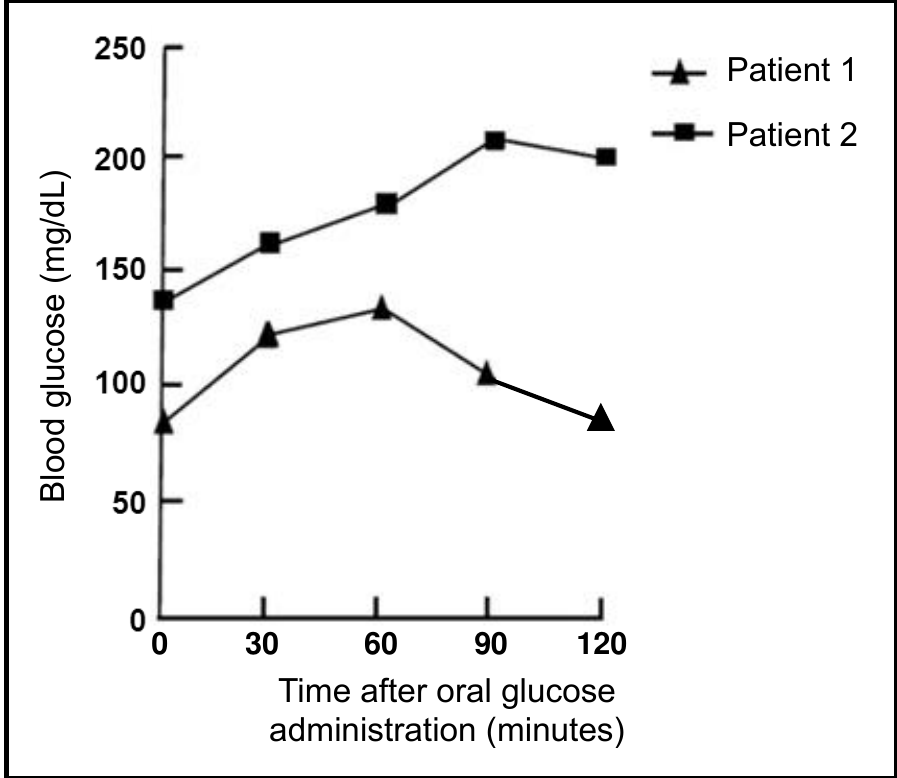
Medical professionals use glucose tolerance tests to diagnose diabetes. This test shows how well your body can process glucose over time.
Example
How the Glucose Tolerance Test Works:
- Patients fast for 12 hours before the test
- They drink a standard glucose solution
- Blood glucose levels are measured every 30 minutes for two hours
Interpreting the results:
- Normal response (Patient 1): Blood glucose rises moderately after drinking the glucose solution, then returns to normal levels within two hours
- Diabetic response (Patient 2): Blood glucose starts higher, continues to rise significantly, and remains elevated even after two hours
This test helps doctors determine whether someone has diabetes and needs treatment.
Summary
Key Points to Remember:
- Homeostasis keeps your internal conditions stable despite external changes
- Two key hormones work as opposing partners: insulin lowers blood glucose, glucagon raises it
- Negative feedback loops continuously monitor and adjust blood glucose levels
- Type 1 diabetes usually requires insulin injections, while Type 2 diabetes can often be managed with lifestyle changes
- Glucose tolerance tests help diagnose diabetes by showing how your body processes sugar over time