Process of Cellular Respiration (Grade 11 NSC Matric Life Sciences): Revision Notes
📚Revision Notes
Process of Cellular Respiration
Introduction to cellular respiration
Cellular respiration is a fundamental life process that allows all living organisms to obtain the energy they need to survive and function. This chemical process involves breaking down glucose molecules to release energy that cells can use for their various activities.
Understanding cellular respiration begins with recognising that it is part of the broader concept of metabolism - all the chemical processes that occur in living organisms which are controlled by enzymes.
Note
Understanding Metabolic Processes
There are two main types of metabolic processes:
- Catabolic processes break down complex molecules into simpler ones, releasing energy in the process
- Anabolic processes build up complex molecules from simpler ones, requiring energy input
Cellular respiration is primarily a catabolic process because it breaks down glucose to release energy. This energy is essential for organisms to carry out vital functions such as:
- Growth and development
- Cell division and reproduction
- Movement and locomotion
- Transport of substances around the body
- Active transport across cell membranes
What is cellular respiration?
Cellular respiration is the chemical process where glucose is broken down gradually to release energy. This process can occur in two different ways depending on whether oxygen is available or not.
Note
Two Types of Cellular Respiration
Aerobic respiration occurs when oxygen is present, whilst anaerobic respiration takes place in the absence of oxygen. Both processes aim to break down glucose to release energy, but they differ significantly in their efficiency and end products.
Aerobic respiration - the complete breakdown of glucose
Aerobic respiration is the more efficient form of cellular respiration that requires oxygen to function properly. This process occurs in specific locations within cells and involves several important components.
The key organelle responsible for aerobic respiration is the mitochondrion. These structures are often called the "powerhouses of the cell" because they are the main sites where energy production occurs. ATP (adenosine triphosphate) serves as the universal energy carrier molecule that transports energy around cells.
Important
Mitochondrial Structure and Function
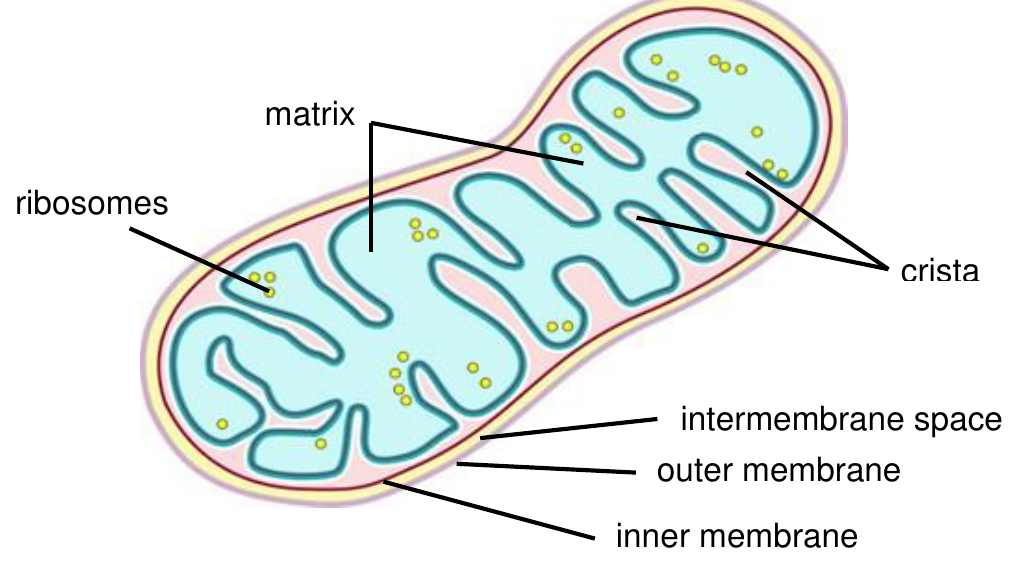
The mitochondrion has a complex internal structure that is perfectly designed for energy production. It contains:
- An outer membrane that controls what enters and exits
- An inner membrane that is highly folded into structures called cristae
- The matrix - the inner space containing enzymes and ribosomes
- An intermembrane space between the two membranes
This intricate structure maximises the surface area available for the chemical reactions of respiration to occur.
The overall process of aerobic respiration
The requirements for aerobic respiration are simple: glucose and oxygen. The process produces carbon dioxide, water, and ATP energy. This can be represented by the word equation:
The three stages of aerobic respiration
Important
The Three Critical Stages
Aerobic respiration occurs through three distinct stages, each happening in different parts of the cell:
- Glycolysis - occurs in the cytoplasm
- Krebs Cycle - occurs inside the mitochondrion
- Oxidative Phosphorylation - occurs inside the mitochondrion
Stage 1: Glycolysis
Example
Stage 1: Glycolysis Process
Glycolysis takes place in the cytoplasm, outside the mitochondrion. During this stage:
- No oxygen is required yet
- Glucose molecules are broken down into smaller molecules
- A small amount of energy is released and stored in ATP molecules
- High-energy hydrogen ions are produced for use in the third stage
This stage represents the initial breakdown of glucose and can occur even without oxygen present.
Stage 2: Krebs Cycle
Example
Stage 2: Krebs Cycle Process
The Krebs Cycle can only occur when oxygen is available and takes place inside the mitochondrion. During this stage:
- Carbon dioxide is released as a waste product
- More high-energy hydrogen ions are produced
- These hydrogen atoms are transported to the third stage using special carrier enzymes
Stage 3: Oxidative Phosphorylation
Example
Stage 3: Oxidative Phosphorylation Process
This final stage occurs inside the mitochondrion and requires oxygen. The process involves:
- Passing high-energy hydrogen atoms from one carrier enzyme to another
- Releasing energy during each transfer
- Using the released energy to combine a phosphate molecule with ADP to form ATP
- Oxygen acting as the final hydrogen acceptor, combining with hydrogen to form water
This process is represented by:
The three-stage process ensures that glucose is completely broken down and maximum energy is extracted for the cell's use.
Anaerobic respiration - respiration without oxygen
Sometimes cells cannot access sufficient oxygen to carry out aerobic respiration. In these situations, they can switch to anaerobic respiration to continue producing energy, albeit less efficiently.
Note
Key Definitions
Anaerobic respiration occurs when oxygen is not available. Fermentation is a specific type of anaerobic respiration that occurs in yeast and other organisms.
Anaerobic respiration has several key characteristics:
- It occurs without oxygen being present
- It happens for short periods, mainly during intense physical exercise
- It produces significantly less ATP than aerobic respiration
- It only partially breaks down glucose molecules
There are two main types of fermentation, each occurring in different organisms:
Anaerobic respiration in animals (Lactic acid fermentation)
Example
Lactic Acid Fermentation in Animals
In animal cells, anaerobic respiration is known as lactic acid fermentation. This process:
- Occurs in muscle cells during intense exercise when oxygen supply is limited
- Allows glycolysis to continue in the cytoplasm
- Results in the accumulation of lactic acid, which causes muscles to become tired and painful
- Produces only a small amount of ATP compared to aerobic respiration
When muscles receive oxygen again, the lactic acid can be converted back to pyruvic acid, allowing normal metabolism to resume.
Anaerobic respiration in plants (Alcoholic fermentation)
Example
Alcoholic Fermentation in Plants
In plant cells, anaerobic respiration is called alcoholic fermentation. This process:
- Enables glycolysis to continue in the cytoplasm of plant cells
- Results in the accumulation of pyruvic acid initially
- Breaks down pyruvic acid to form ethanol (alcohol) and carbon dioxide
- Can be summarised as:
Industrial applications of fermentation
Fermentation processes have important industrial uses. Yeast and other fungi naturally carry out anaerobic respiration and are utilised to:
- Produce alcoholic beverages such as beer and wine
- Help bread rise during the baking process by producing carbon dioxide gas
- Manufacture cheese through fermentation processes
Comparing aerobic and anaerobic respiration
Understanding the differences between aerobic and anaerobic respiration helps explain why cells prefer aerobic respiration when oxygen is available.
| Feature | Aerobic Respiration | Anaerobic Respiration |
|---|---|---|
| Oxygen requirement | Oxygen is required | Oxygen is not required |
| End products | Carbon dioxide and water | Lactic acid (animals) or carbon dioxide and alcohol (plants/yeast) |
| Location in cell | Cytoplasm and mitochondria | Cytoplasm only |
| Energy efficiency | Complete glucose breakdown producing large amounts of ATP | Partial glucose breakdown producing small amounts of ATP |
Summary
Why Aerobic Respiration is Preferred
This comparison shows why aerobic respiration is the preferred method - it produces much more useable energy from the same amount of glucose.
Investigation terminology
Note
Important Investigation Terms
When studying cellular respiration practically, several key terms are important to understand:
- Lime water is a chemical solution used to test for the presence of carbon dioxide gas
- Glycogen is the form in which glucose is stored in animal cells
- Germination refers to the process where a plant grows from a seed
These terms are essential for understanding and conducting investigations into cellular respiration processes.
Remember!
Summary
Key Points to Remember:
-
Cellular respiration is the process that breaks down glucose to release energy for cellular activities
-
Aerobic respiration requires oxygen and produces lots of ATP, carbon dioxide, and water through three stages: glycolysis, Krebs cycle, and oxidative phosphorylation
-
Anaerobic respiration occurs without oxygen, produces less ATP, and creates different waste products (lactic acid in animals, alcohol in plants)
-
Mitochondria are the main sites of aerobic respiration and have a complex structure designed for efficient energy production
-
Both types of respiration are essential for life, with anaerobic respiration serving as an emergency backup when oxygen is limited