Kidney Diseases (Grade 11 NSC Matric Life Sciences): Revision Notes
📚Revision Notes
Kidney Diseases
What are kidney diseases?
Kidney diseases can be life-threatening conditions that require different types of medical treatment. When your kidneys don't function properly, they cannot maintain the correct balance of salts, water, and pH levels in your blood. This imbalance can reach dangerous, toxic levels that seriously harm your body.
Note
There are two main ways kidney failure can develop:
- Chronic kidney failure: Develops slowly over time due to long-term health conditions like diabetes
- Acute kidney failure: Happens suddenly due to injury, infection, or severe dehydration
When kidney failure becomes severe, patients need either dialysis treatment or a kidney transplant to survive.
Types of kidney diseases
Kidney stones
Kidney stones are solid calcium deposits that develop in the kidney area. These hard granules form when certain substances in your urine become too concentrated.
What causes kidney stones:
- Eating too much protein, sugar, and drinking lots of cola drinks
- Not drinking enough water (dehydration)
- Genetic factors (inherited from your parents)
Symptoms to watch for:
- Intense back pain
- Blood appearing in your urine
Important
Prevention tip: Drinking adequate water daily is one of the most effective ways to prevent kidney stone formation.
Kidney failure
Kidney failure occurs when your kidneys can no longer philtre waste products from your blood effectively. This can develop gradually or happen suddenly.
Main causes:
- Overusing pain medications over long periods
- Abuse of illegal drugs
- Chronic conditions like diabetes
- Sudden injury or severe dehydration
Important
Why it's dangerous: Long-term damage to kidney tissues means they cannot perform their vital filtering function, leading to a dangerous buildup of waste products in your body.
Bilharzia infection
Bilharzia (also called schistosomiasis) is a parasitic disease that's particularly common in Africa, South America, and Asia. This condition is caused by tiny flatworms called Schistosoma.
How you get infected:
- The parasite lives in freshwater snails
- When you swim or walk in contaminated rivers, dams, or lakes
- The worm larvae attach to your skin and enter your body
- They travel through your bloodstream and release eggs
- These eggs damage your kidneys, ureters, and bladder
Symptoms include:
- Blood in your urine
- Fever and skin rashes
- Constant tiredness and weakness
- Anaemia (low red blood cell count)
Important
Prevention:
- Avoid swimming or walking in contaminated water sources
- Treatment is available to reduce symptoms
Dialysis treatment for kidney failure
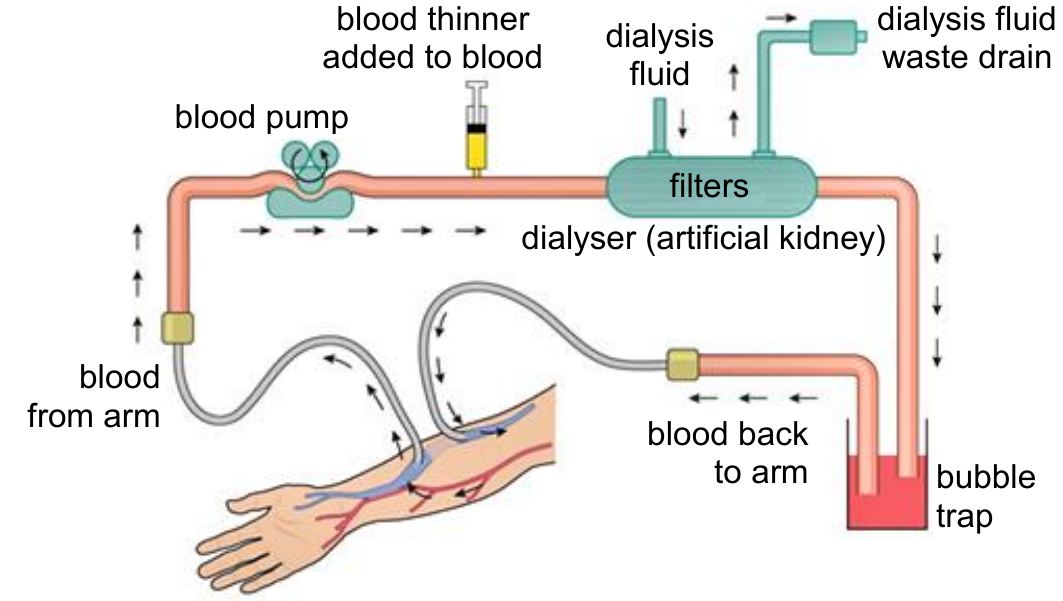
When kidneys fail severely, patients need dialysis - a treatment that acts as an artificial kidney. A dialysis machine is sometimes called an artificial kidney machine because it performs the filtering work that damaged kidneys cannot do.
How dialysis works
During dialysis treatment, a patient's blood is pumped out of their body through special tubing. The blood passes through a filtration system (called a dialyser) that removes waste products and excess water. The cleaned blood is then returned to the patient's body.
Note
Key components of the dialysis system:
- Blood pump to circulate blood through the system
- Dialyser (artificial kidney) containing special philtres
- Dialysis fluid to help remove waste products
- Blood thinner injection to prevent clotting
- Bubble trap to remove air bubbles safely
Problems with dialysis treatment
While dialysis can keep patients alive, it has significant limitations:
- Time-consuming and expensive: Patients need regular sessions, often several times per week
- Physical exhaustion: Patients often feel very tired after treatment and may struggle to work
- Incomplete waste removal: The artificial system cannot remove all waste products as effectively as healthy kidneys
- Limited availability: In South Africa, there's high demand for dialysis machines, so patients must book appointments well in advance
- Cost barriers: Treatment is expensive and not always available in public hospitals
Important
Important note: The only permanent solution for kidney failure is receiving a kidney transplant.
Kidney transplants
A kidney transplant involves surgically placing a healthy kidney from a donor into a patient whose kidneys have failed completely.
Requirements for successful transplants
For a transplant to work, several conditions must be met:
Blood group compatibility:
- The donor must have the same blood group (A, B, AB, or O) as the recipient
- This prevents the body from attacking the new kidney
Tissue matching:
- The donor's tissues must be very similar to the recipient's
- Close tissue matching reduces the risk of rejection
- Blood relatives often make the best donors because of genetic similarity
Challenges with kidney transplants
Organ rejection: Even with good matching, the recipient's immune system may still attack the transplanted kidney as a "foreign" object. To prevent this, patients must take immunosuppressive drugs for the rest of their lives.
Note
Side effects of treatment:
- Immunosuppressive drugs can have serious side effects
- They make patients more vulnerable to infections and other illnesses
Limited donor availability:
- There's always a shortage of available kidneys for transplant
- Many patients wait years for a suitable donor
Important
Legal and ethical considerations: South Africa has specific laws and ethical guidelines governing organ donation that both donors and recipients must understand and follow.
Summary
Key Points to Remember:
- Kidney diseases can be life-threatening and require immediate medical attention when symptoms appear
- Prevention is key: Stay hydrated, avoid contaminated water, and don't abuse medications
- Three main kidney conditions to know: kidney stones, kidney failure, and bilharzia infection
- Dialysis is a temporary solution that philtres blood artificially but has many limitations and disadvantages
- Kidney transplants offer the best long-term solution but require careful donor-recipient matching and lifelong medication to prevent rejection