Investigations (Grade 11 NSC Matric Life Sciences): Revision Notes
📚Revision Notes
Investigations
Understanding photosynthesis experiments
Scientists use controlled experiments to study photosynthesis and prove which factors are essential for this vital process. These investigations help us understand exactly what plants need to make their own food and what they produce during photosynthesis.
Note
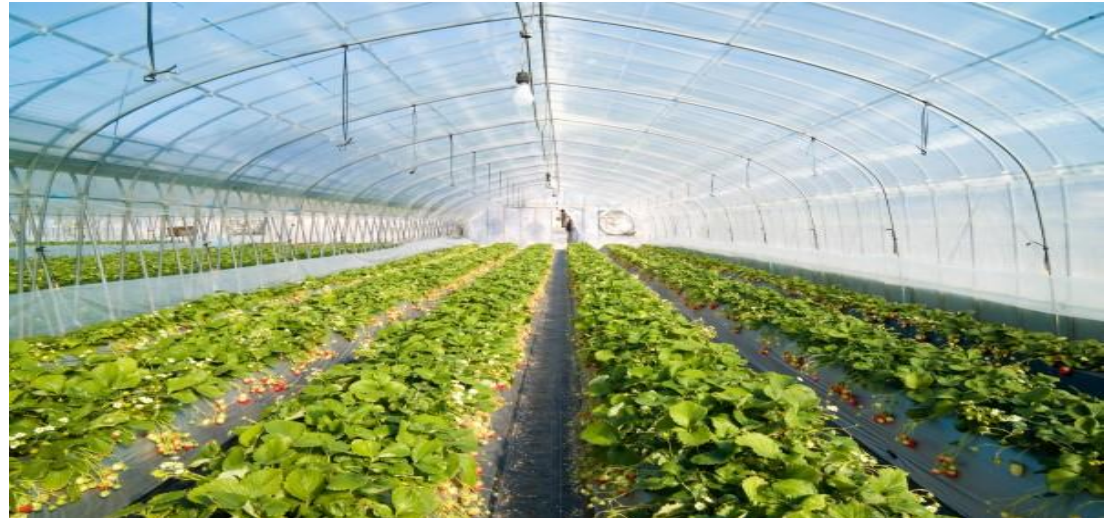
Greenhouses provide ideal conditions for studying photosynthesis because they allow scientists to control environmental factors like light, temperature, and carbon dioxide levels. This controlled environment makes it easier to investigate how each factor affects the rate of photosynthesis.
Preparing plants for investigation: destarching
Before starting any photosynthesis experiment, we must remove existing starch from the plant through a process called destarching. This is crucial because we need to ensure that any starch found after the experiment was produced during our investigation, not stored from earlier photosynthesis.
Important
Critical First Step: Destarching Process
- Place the plant in a completely dark cupboard for 48 hours
- During this period, the plant uses up its stored starch for energy since it cannot photosynthesise in darkness
- After 48 hours, any starch detected in subsequent tests will be evidence that photosynthesis occurred during the experiment
The starch test using iodine solution is the key method for detecting whether photosynthesis has taken place. When iodine contacts starch, it produces a distinctive blue-black colour. If no starch is present, the iodine remains light brown.
Investigation 1: The starch test
This fundamental investigation demonstrates how to detect starch production, which proves that photosynthesis has occurred. Glucose produced during photosynthesis is immediately converted to starch for storage, making starch an excellent indicator of photosynthetic activity.
Example
Worked Example: Performing the Starch Test
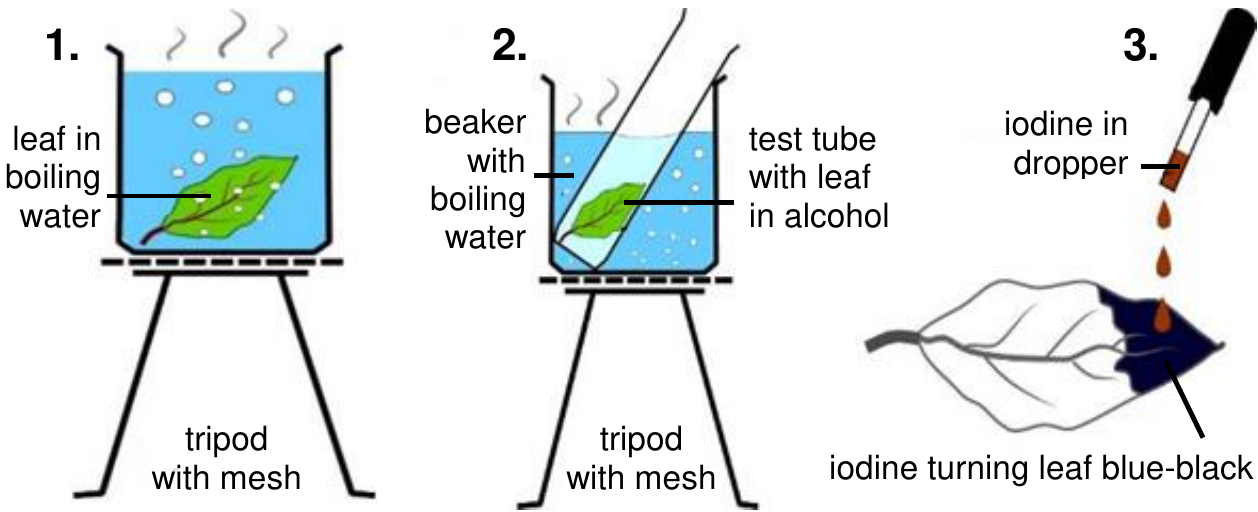
Step 1: Soften the leaf Place a leaf in boiling water for several minutes. This kills the cells and stops all metabolic processes, making the leaf easier to handle.
Step 2: Remove chlorophyll Transfer the leaf to a test tube containing ethanol (alcohol) and place in a hot water bath for approximately 10 minutes. The ethanol dissolves the green chlorophyll, leaving the leaf white and brittle. We use a water bath because ethanol is highly flammable and must not be heated directly.
Step 3: Prepare for testing Carefully remove the brittle leaf and rinse it in water to soften it again.
Step 4: Apply iodine test Spread the leaf on a tile and add several drops of iodine solution.
Result: A positive result shows the leaf turning blue-black, which confirms that starch was present and therefore photosynthesis occurred.
Investigation 2: Light is required for photosynthesis
Light provides the energy needed to drive photosynthesis. This investigation proves that without light, plants cannot produce starch, demonstrating that light is an essential requirement for photosynthesis.
Aim: To prove that light is required for photosynthesis
Important
Understanding Controls vs Experiments
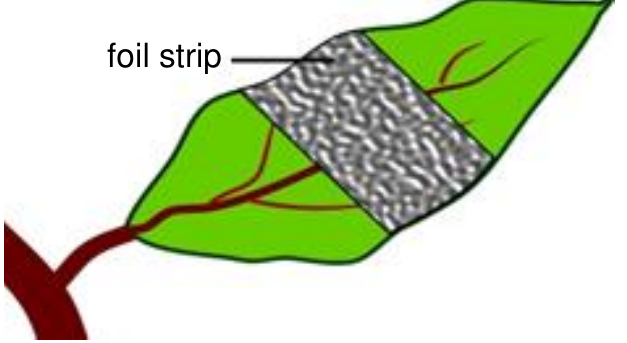
- The foil-covered section is the experiment - it receives no light
- The uncovered section is the control - it receives all normal requirements including light
This comparison allows us to see the direct effect of removing just one factor (light) while keeping everything else the same.
Method:
- Destarch a potted plant by keeping it in darkness for 48 hours
- Create the experiment: Cover part of a leaf (while still attached to the plant) with aluminium foil to block light from reaching that area
- Allow photosynthesis: Place the plant in bright sunlight for 48 hours
- Test for starch: Remove the leaf, take off the foil, and perform the starch test
Results:
- Experiment (foil-covered area): Iodine remains light brown - no starch produced
- Control (uncovered area): Iodine turns blue-black - starch was produced
Conclusion: Light is essential for photosynthesis. Without light, plants cannot produce starch, proving that photosynthesis cannot occur in darkness.
Investigation 3: Carbon dioxide is required for photosynthesis
Carbon dioxide serves as the raw material from which plants build glucose molecules during photosynthesis. This investigation demonstrates that removing prevents photosynthesis from occurring.
Aim: To prove that carbon dioxide is required for photosynthesis
Method:
- Destarch two potted plants by placing them in darkness for 48 hours
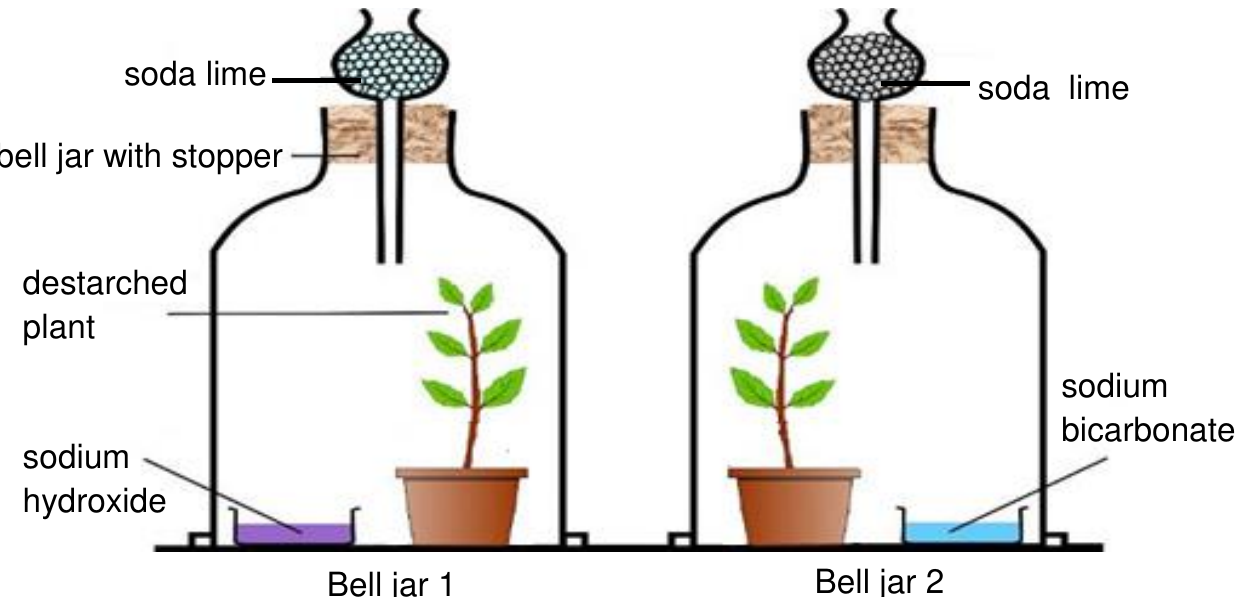
- Set up the apparatus: Place each plant in a sealed bell jar with different conditions:
- Bell jar 1: Contains sodium hydroxide, which absorbs carbon dioxide from the air
- Bell jar 2: Contains sodium bicarbonate, which releases carbon dioxide into the air
- Allow photosynthesis: Place both sealed jars in bright sunlight for 48 hours
- Test for starch: Remove leaves from both plants and perform the starch test
Note
This experiment uses two bell jars to create a perfect comparison - one removes while the other adds extra . This clearly demonstrates the effect of carbon dioxide availability on photosynthesis.
Results:
- Bell jar 1 (no ): Iodine remains light brown - no starch produced
- Bell jar 2 (extra ): Iodine turns blue-black - starch was produced
Conclusion: Carbon dioxide is essential for photosynthesis. Without , plants cannot produce starch, proving that carbon dioxide is a vital raw material for the process.
Investigation 4: Chlorophyll is required for photosynthesis
Chlorophyll is the green pigment that captures light energy for photosynthesis. This investigation uses a variegated leaf (containing both green and white areas) to prove that chlorophyll is essential for photosynthesis.
Aim: To prove that chlorophyll is required for photosynthesis
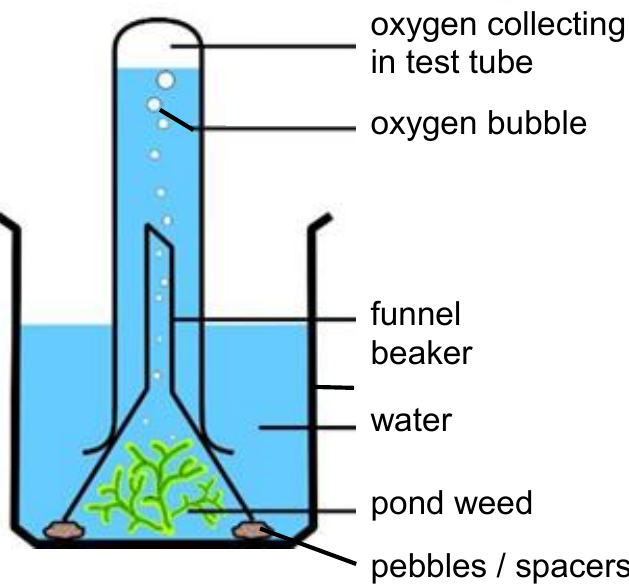
A variegated leaf contains both green areas (with chlorophyll) and white areas (without chlorophyll). This natural variation allows us to test both conditions on the same leaf, making it an excellent experimental setup.
Example
Worked Example: Testing Chlorophyll Requirement
Step 1: Provide optimal conditions Place a plant with variegated leaves in bright sunlight for several hours
Step 2: Remove and test Take a variegated leaf and perform the starch test
Step 3: Compare results Observe the difference between green and white areas
Results:
- White areas (no chlorophyll): Iodine remains light brown - no starch produced
- Green areas (with chlorophyll): Iodine turns blue-black - starch was produced
Conclusion: Chlorophyll is essential for photosynthesis. Only the green parts of the leaf containing chlorophyll can produce starch, proving that this pigment is necessary for capturing light energy.
Investigation 5: Photosynthesis produces oxygen
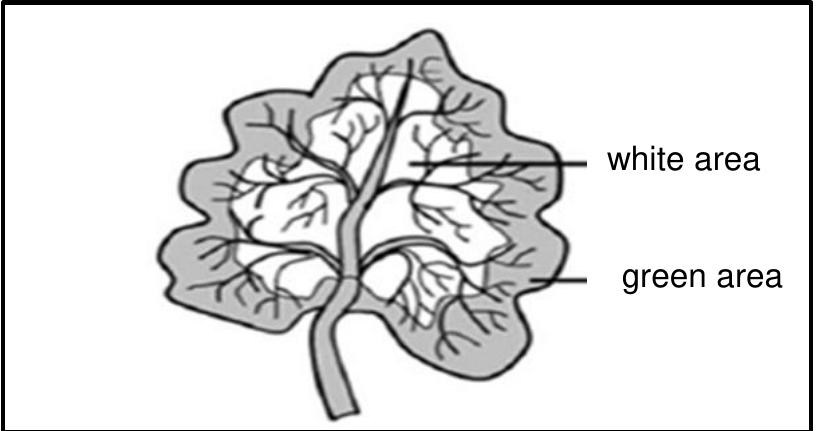
Oxygen is released as a waste product during photosynthesis. This investigation uses aquatic plants to collect and test the gas bubbles they produce during photosynthesis.
Aim: To prove that oxygen is produced during photosynthesis
Method:
- Set up apparatus: Place pond weed in a beaker of water under a funnel, with an inverted test tube to collect gas bubbles
- Enhance the process: Add a small amount of sodium bicarbonate to provide extra carbon dioxide
- Allow photosynthesis: Place the setup in bright light for several hours
- Collect gas: Gas bubbles will rise and collect in the test tube
- Test the gas: Once sufficient gas is collected, seal the test tube underwater, remove it, and insert a glowing wooden splint
Note
The glowing splint test is the standard method for detecting oxygen gas. If oxygen is present, the glowing splint will re-ignite or burn more brightly than in normal air.
Results: The glowing splint re-ignites or burns more brightly, indicating the presence of oxygen gas.
Conclusion: Oxygen is produced during photosynthesis, confirming that this vital gas is released as plants make their own food.
Analysing photosynthesis data
Understanding how environmental factors affect the rate of photosynthesis is crucial for both scientific knowledge and practical applications like agriculture.
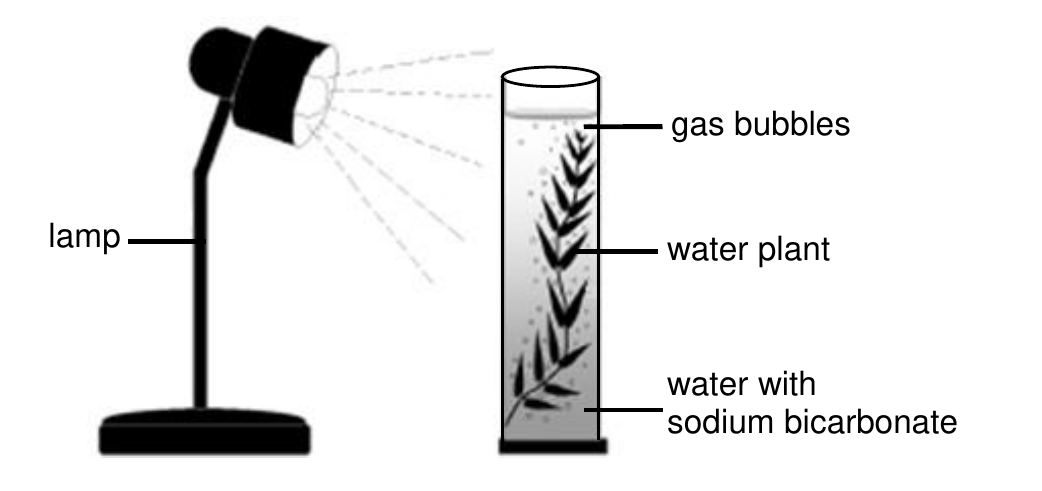
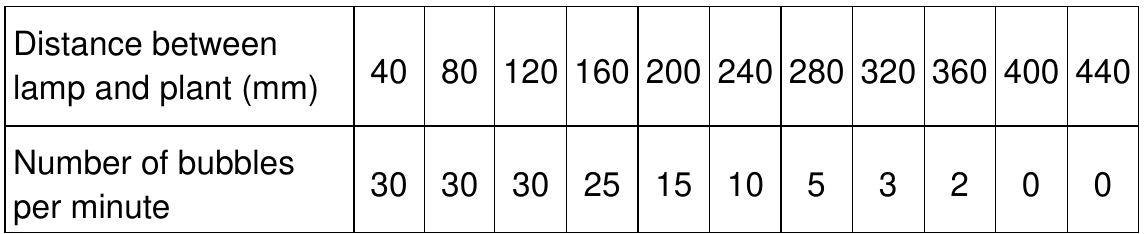
When investigating photosynthesis, scientists often study how changing one factor affects the results. For example, investigating how light intensity affects the rate of oxygen production helps us understand optimal growing conditions for plants.
Note
Key Experimental Skills:
- Variables: Identify independent variables (what we change) and dependent variables (what we measure)
- Controls: Ensure fair testing by keeping all other factors constant
- Data analysis: Use graphs and tables to identify patterns and relationships
- Drawing conclusions: Link results back to the underlying biological processes
Remember!
Summary
Key Points to Remember:
- Destarching is essential - Always remove existing starch before starting experiments by keeping plants in darkness for 48 hours
- The starch test is key - Blue-black colour with iodine means starch is present; light brown means no starch
- Four main requirements for photosynthesis - Light, carbon dioxide, chlorophyll, and water are all essential
- Oxygen is the bonus product - Use the glowing splint test to prove oxygen production during photosynthesis
- Controls matter - Always compare experimental conditions with normal conditions to draw valid conclusions