Resultant of Perpendicular Vectors (Grade 11 NSC Matric Physical Sciences): Revision Notes
📚Revision Notes
Resultant of Perpendicular Vectors
Introduction to vectors in two dimensions
A vector is a physical quantity that has both magnitude (size) and direction. In Grade 10, you studied vectors in one dimension, but now we extend this concept to work with vectors in two dimensions using the Cartesian coordinate system.
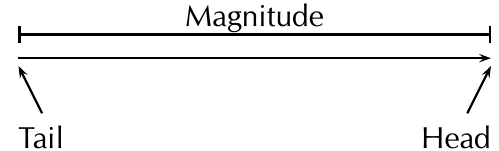
When we represent vectors visually, we use arrows where the length indicates the magnitude and the arrowhead shows the direction. The starting point is called the tail and the endpoint is called the head.
Note
When writing a vector symbol, we place an arrow above the letter (e.g., ) to show it represents a vector quantity with both magnitude and direction. This distinguishes it from scalar quantities which only have magnitude.
Vectors on the Cartesian plane
The Cartesian coordinate system consists of two perpendicular axes: the x-axis (horizontal) and y-axis (vertical). This system allows us to represent vectors in two dimensions rather than just along a single line.
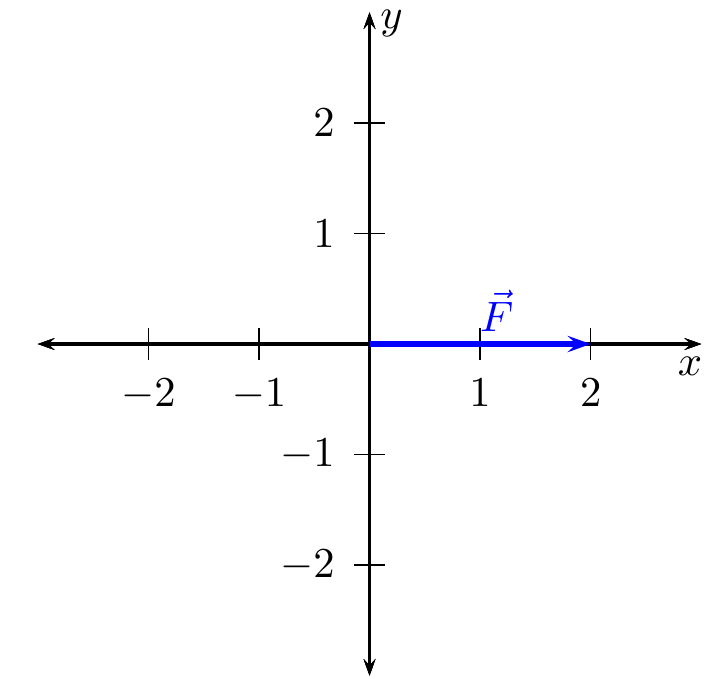
Vector equality and positioning
Important
Key Concept: Vector Equality
Vectors are equal if they have the same magnitude and direction, regardless of where they are positioned on the coordinate plane. This means multiple arrows of the same length pointing in the same direction represent the same vector.
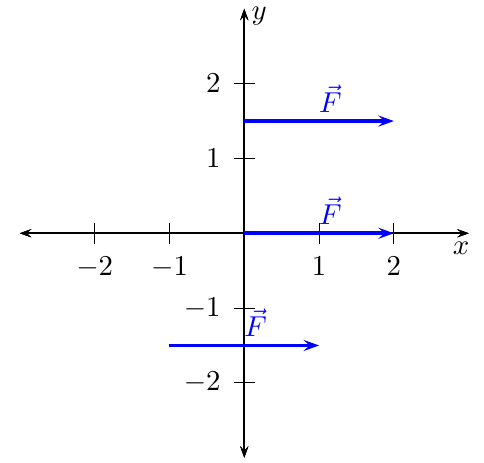
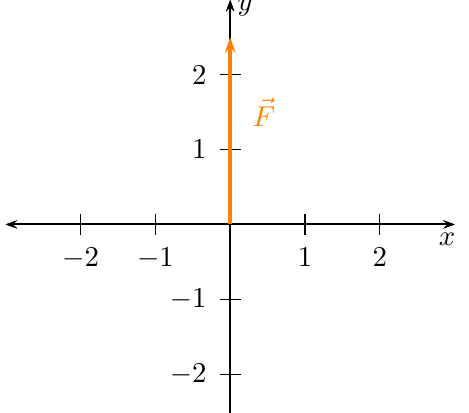
The position of a vector's starting point does not affect the physical quantity it represents, as long as the magnitude and direction remain unchanged.
Methods for finding resultants
When multiple vectors act together, we can find their combined effect using a single resultant vector. There are two main graphical methods for determining resultants.
Head-to-tail method
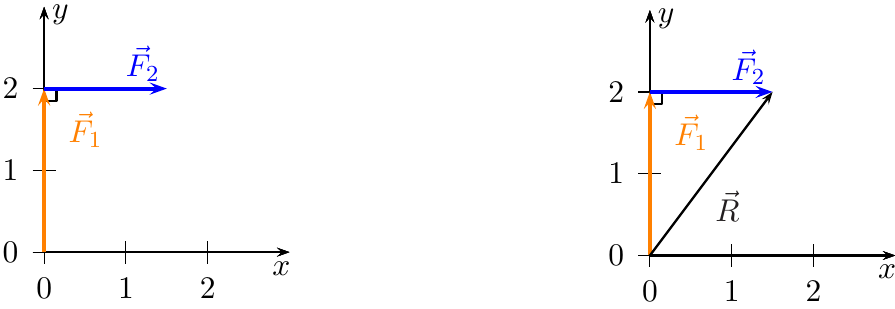
This method involves connecting vectors end-to-end in sequence using the head-to-tail method:
- Draw the first vector from the origin
- Place the tail of the second vector at the head of the first vector
- Continue this process for all vectors
- The resultant is drawn from the tail of the first vector to the head of the last vector
Note
The order in which you draw the vectors does not matter - the final resultant will be the same regardless of the sequence used. This property is called the commutative law of vector addition.
Tail-to-tail method
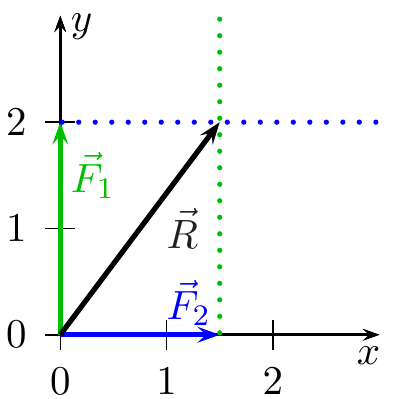
In this approach using the tail-to-tail method, all vectors are drawn from the same starting point (origin):
- Draw all vectors starting from the origin
- From the head of each vector, draw a line parallel to the other vectors
- Where these parallel lines intersect is the head of the resultant vector
- Draw the resultant from the origin to this intersection point
Working with perpendicular vectors
Perpendicular vectors are vectors that meet at right angles (90°). These are particularly important because they form the basis for component analysis in two dimensions.
Finding components
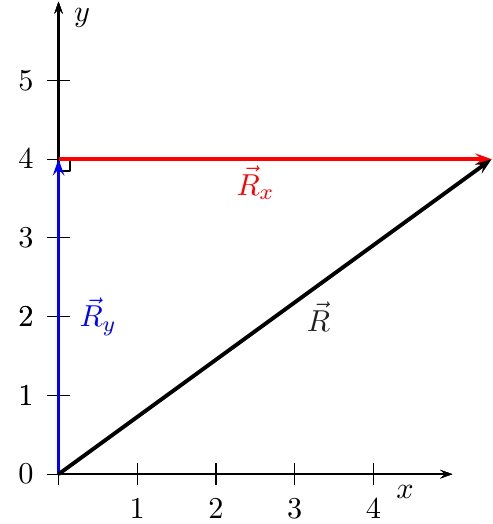
When dealing with perpendicular vectors, we can separate them into:
- Rx: the horizontal component (parallel to x-axis)
- Ry: the vertical component (parallel to y-axis)
Using Pythagoras' theorem
Important
Critical Formula for Perpendicular Vectors
For perpendicular vectors, the magnitude of the resultant can be calculated using Pythagoras' theorem:
Where:
- = magnitude of the resultant vector
- = magnitude of the horizontal component
- = magnitude of the vertical component
Worked example: Finding resultant magnitude
Example
Worked Example: Calculating Resultant Magnitude
Question: Find the magnitude of the resultant for perpendicular forces of 4 N horizontally and 5.5 N vertically.
Solution:
Step 1: Identify the perpendicular components
- (horizontal)
- (vertical)
Step 2: Apply Pythagoras' theorem
Step 3: Calculate the magnitude
Answer: The magnitude of the resultant is 6.8 N
Component method for multiple vectors
When dealing with several vectors, you can use this systematic approach:
- Find : Add all forces pointing right, subtract all forces pointing left
- Find : Add all forces pointing up, subtract all forces pointing down
- Calculate resultant magnitude: Use
Note
This method is particularly useful because it reduces complex vector problems to simple arithmetic with perpendicular components. It's often more accurate than purely graphical methods.
Practical applications
Vector analysis is essential in many physics contexts where multiple forces or directional quantities are involved:
- Forces acting on objects from different directions
- Displacements involving movement in multiple directions
- Velocities with both horizontal and vertical components
- Accelerations in two-dimensional motion
The principles learned here apply to all vector quantities, not just forces.
Exam tips
Note
Exam Strategy Tips
- Always draw clear diagrams with labelled axes
- Use consistent scales when sketching vectors
- Remember that perpendicular vectors form right triangles
- Check your calculations using both graphical and mathematical methods
- Pay attention to direction - positive and negative components matter
Summary
Key Points to Remember:
- Vectors have both magnitude and direction, unlike scalar quantities
- Perpendicular vectors meet at 90° angles and form the basis for component analysis
- Pythagoras' theorem () applies only to perpendicular vectors
- The head-to-tail method connects vectors end-to-end to find the resultant
- Vector equality means same magnitude and direction, regardless of position
- Component analysis reduces complex 2D problems to simple arithmetic