Darwin: The Theory of Evolution by Natural Selection (Grade 12 NSC Matric Life Sciences): Revision Notes
📚Revision Notes
Darwin: The Theory of Evolution by Natural Selection
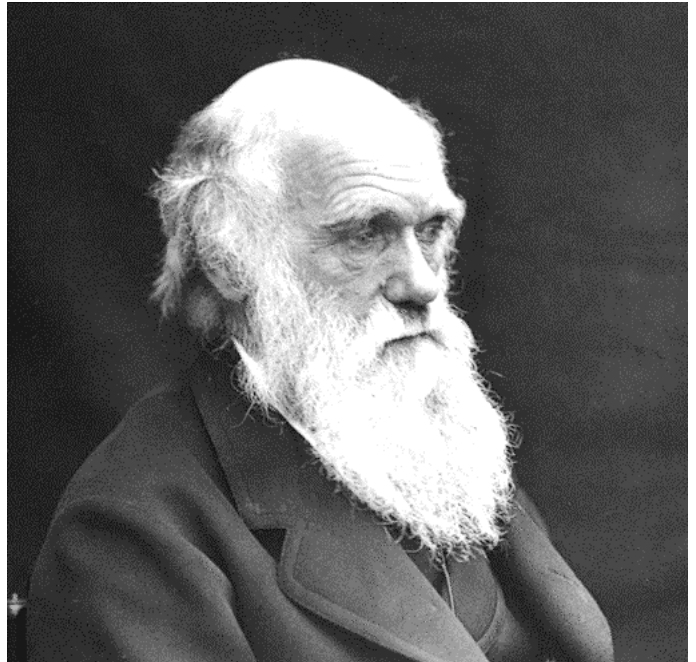
Who was Charles Darwin?
Charles Darwin was a British scientist who developed one of the most important theories in biology. His theory of evolution by natural selection came from observations he made during his voyage around the world on a ship called the HMS Beagle.
Note
Darwin's theory revolutionised our understanding of how life on Earth has changed over time. His work provided the scientific foundation for explaining the diversity of species we see today.
Darwin's key observations
During his journey on the HMS Beagle, Darwin made four important observations that led to his theory:
- Overproduction: Populations can produce far more offspring than actually needed for survival
- Limited resources: The sizes of most natural populations and their available resources remain relatively constant over time
- Natural variation: There is natural variation in characteristics among members of the same species
- Inheritance: Some characteristics are inherited and passed on from parents to the next generation
Important
These four observations were crucial because they revealed a fundamental problem in nature: more organisms are born than can survive with limited resources, but they vary in their characteristics. This creates the conditions necessary for natural selection to occur.
Darwin's main conclusions
Based on these observations, Darwin reached three important conclusions:
- Struggle for survival: All organisms are involved in a struggle for survival, and only those best suited to their environment will survive
- Reproductive advantage: Organisms that survive are more likely to reproduce and therefore pass on their useful characteristics to their offspring
- Population change: Over many generations, reproduction between individuals with different genetic makeup changes the overall genetic composition of the population
Note
Darwin's conclusions logically followed from his observations. If more offspring are produced than can survive, and organisms vary in their traits, then those with advantageous traits will be more likely to survive and reproduce.
What is natural selection?
Natural selection is one of the main mechanisms that explains how evolution takes place. It works on a simple principle: organisms that are best suited to their particular environment will produce the most offspring.
This process is often called "survival of the fittest" - but it's important to understand that "fittest" doesn't mean the strongest or fastest. Instead, it means the organisms that are best suited to their environment.
Important
Common Misconception Alert! "Survival of the fittest" does NOT mean the biggest, strongest, or fastest organisms survive. It means the organisms that are best adapted to their specific environment will be most successful at reproducing.
Some factors that can create selective pressure include:
- Changes in food availability
- Competition for resources
- Predation pressure
- Climate changes
- Availability of shelter
How does natural selection work?
The process of natural selection follows six main steps:
Example
The 6-Step Process of Natural Selection
Step 1: Variation exists among offspring because they differ from their parents due to processes like crossing over and random arrangement of chromosomes during reproduction.
Step 2: When the environment changes or competition increases (for food, space, mates, etc.), this creates selective pressure.
Step 3: Offspring with characteristics that make them better suited to the new environment or competition are most likely to survive and reproduce.
Step 4: Organisms without the beneficial characteristics are less able to survive in the new conditions and will die out.
Step 5: More offspring in the next generation will have the advantageous characteristics. The proportion of individuals with beneficial traits increases.
Step 6: These changes accumulate over time, and eventually most or all individuals in the population will have the beneficial trait.
Real-world example: guppy evolution
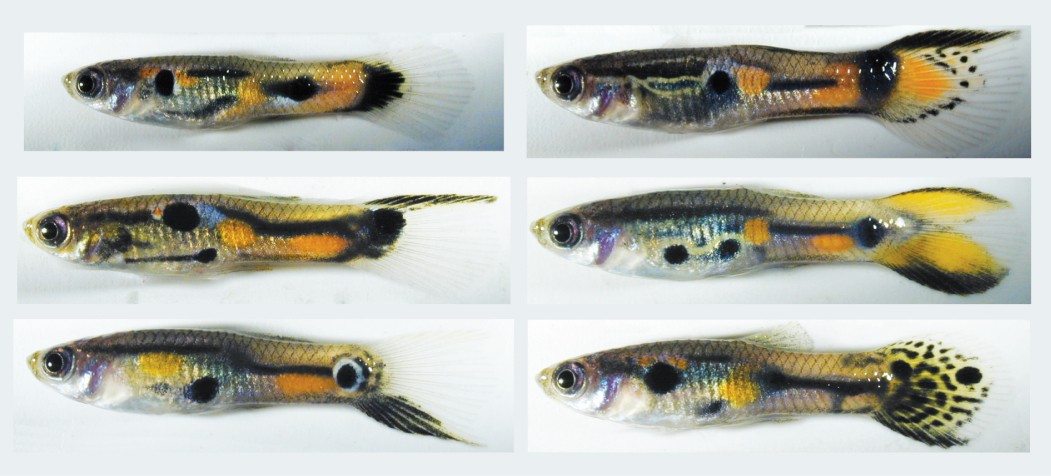
Scientists have studied how natural selection works in guppies (small fish) to test Darwin's theory. Male guppies have brightly coloured spots that help attract females for mating, but these same spots also make them more visible to predators.
Example
Research Findings: Guppy Coloration Study
Researchers found that:
- In streams with many predatory fish, male guppies had fewer spots (reduced predation risk)
- In streams with fewer predators, male guppies had more spots (better mating success)
This demonstrates how environmental pressure (predation) selects for different traits in different environments, providing real-world evidence for Darwin's theory.
Important concepts to remember
Natural selection is not random - it's directed by environmental pressures. The environment acts as the selective force that determines which traits are beneficial.
Important
Key Principles of Natural Selection:
Natural selection acts on existing variation - it doesn't create new traits, but rather selects from the variation that already exists in a population.
The process can lead to speciation - when populations become well-adapted to different environments, they may eventually become separate species.
Exam tips
Summary
Essential Exam Points:
- Remember that "survival of the fittest" means best adapted, not strongest
- Natural selection requires variation to work - no variation means no selection
- Environmental factors provide the selective pressure
- The process happens over many generations, not just one
- Always explain both survival AND reproductive success in your answers
Remember!
Summary
Key Points to Remember:
- Darwin's theory is based on four key observations he made during his voyage on the HMS Beagle
- Natural selection means organisms best suited to their environment produce the most offspring
- "Survival of the fittest" refers to being best adapted, not being the strongest
- The process works through six main steps, starting with variation and ending with population-wide changes
- Environmental factors create the selective pressure that drives natural selection