Punctuated Equilibrium (Grade 12 NSC Matric Life Sciences): Revision Notes
📚Revision Notes
Punctuated Equilibrium
What is punctuated equilibrium?
Punctuated equilibrium is an evolutionary theory that explains how species change over time through distinct patterns. Unlike the smooth, gradual changes that Darwin originally proposed, this theory suggests that evolution happens in bursts. Species experience long periods where they remain relatively unchanged (called stasis), followed by brief periods of rapid evolutionary change.
This groundbreaking concept was introduced by two American scientists, Niles Eldredge and Stephen J. Gould, in 1972. They observed something puzzling in the fossil record that didn't quite match Darwin's original ideas about how evolution works.
Note
The term "punctuated equilibrium" literally means "interrupted balance" - referring to long periods of evolutionary balance (equilibrium) that are interrupted or "punctuated" by rapid bursts of change.
How punctuated equilibrium differs from gradualism
Darwin's original theory, known as gradualism (or phyletic gradualism), proposed that species evolve slowly and steadily over time. According to this view, physical characteristics of populations change gradually through the slow accumulation of small genetic modifications.
However, Eldredge and Gould noticed that the fossil record told a different story. Instead of finding smooth transitions between species, they observed long periods where fossil species showed little to no change, interrupted by periods where new species appeared relatively quickly in geological terms.
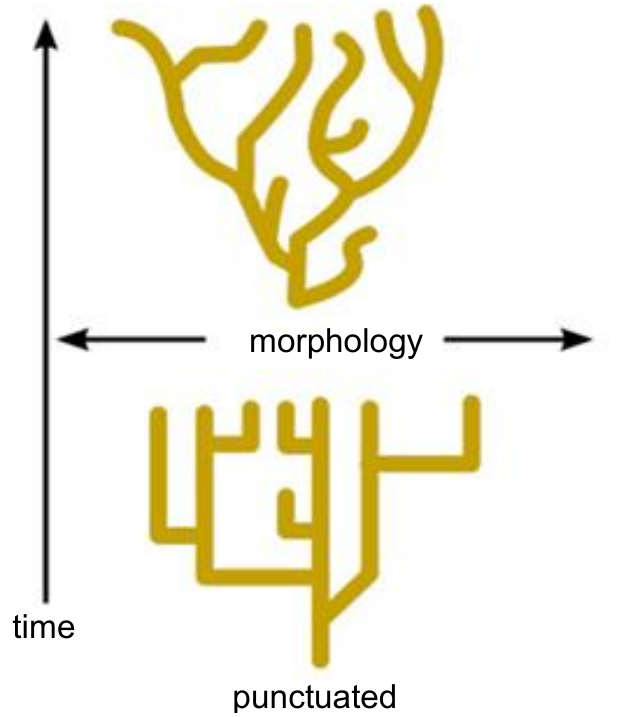
The diagram above clearly shows these two contrasting patterns. The top tree represents gradual evolution with smooth, curved branches, while the bottom tree shows the angular, step-like pattern characteristic of punctuated equilibrium.
Important
Key Difference: Gradualism predicts smooth, continuous change over time, while punctuated equilibrium predicts long periods of stability interrupted by rapid bursts of evolutionary change.
Evidence supporting punctuated equilibrium
The main evidence for punctuated equilibrium comes from gaps in the fossil record - specifically, the absence of transitional fossils or "missing links." If evolution were truly gradual, we would expect to find many intermediate forms showing small step-by-step changes between ancestral and descendant species. However, these transitional forms are often missing from the fossil record.
This pattern suggests that when new species branch off from parent species, evolutionary changes happen relatively quickly. After this rapid burst of change, organisms remain fairly stable and change very little over long periods.
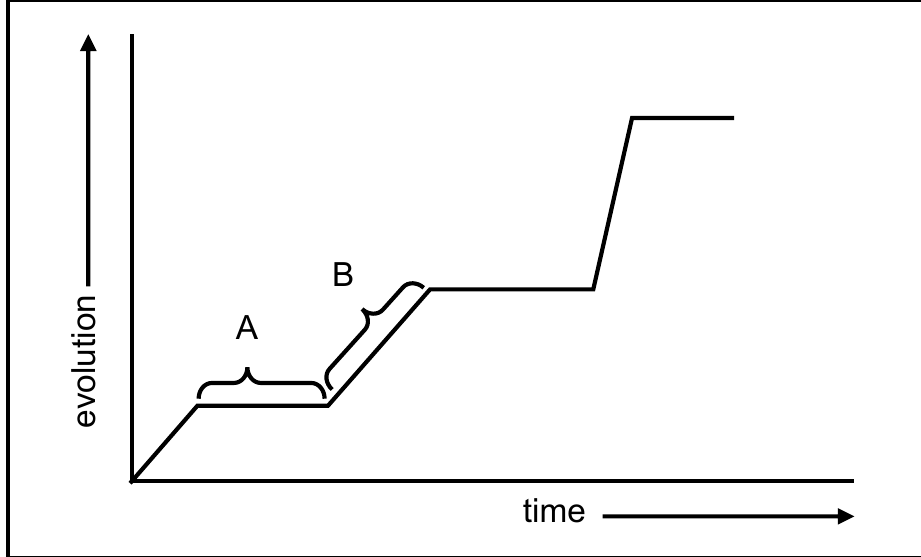
This graph demonstrates the punctuated pattern perfectly. Points A and B represent periods of rapid evolutionary change, separated by plateaus of stability where little evolutionary change occurs.
Note
The "missing links" in the fossil record may not actually be missing - they may simply represent periods of change that were too brief (geologically speaking) to leave extensive fossil evidence.
The mechanism behind punctuated equilibrium
Punctuated equilibrium makes sense when we consider environmental pressures. When environments change rapidly, species face intense selective pressure to adapt quickly or face extinction. Those populations that can adapt rapidly to new conditions survive and reproduce, while others disappear.
Once a species has successfully adapted to its environment, there's less pressure for further change. The species enters a period of equilibrium where natural selection maintains the status quo rather than driving further evolution.
Note
Think of it like this: when your environment is stable, there's no advantage to changing. But when your environment suddenly shifts, those who can adapt quickly have a huge survival advantage.
Relationship to other evolutionary theories
Understanding punctuated equilibrium becomes clearer when we compare it to other evolutionary ideas. While both Lamarckism and Darwinism attempted to explain how species change over time, punctuated equilibrium builds upon Darwin's work by explaining the tempo and pattern of evolutionary change.
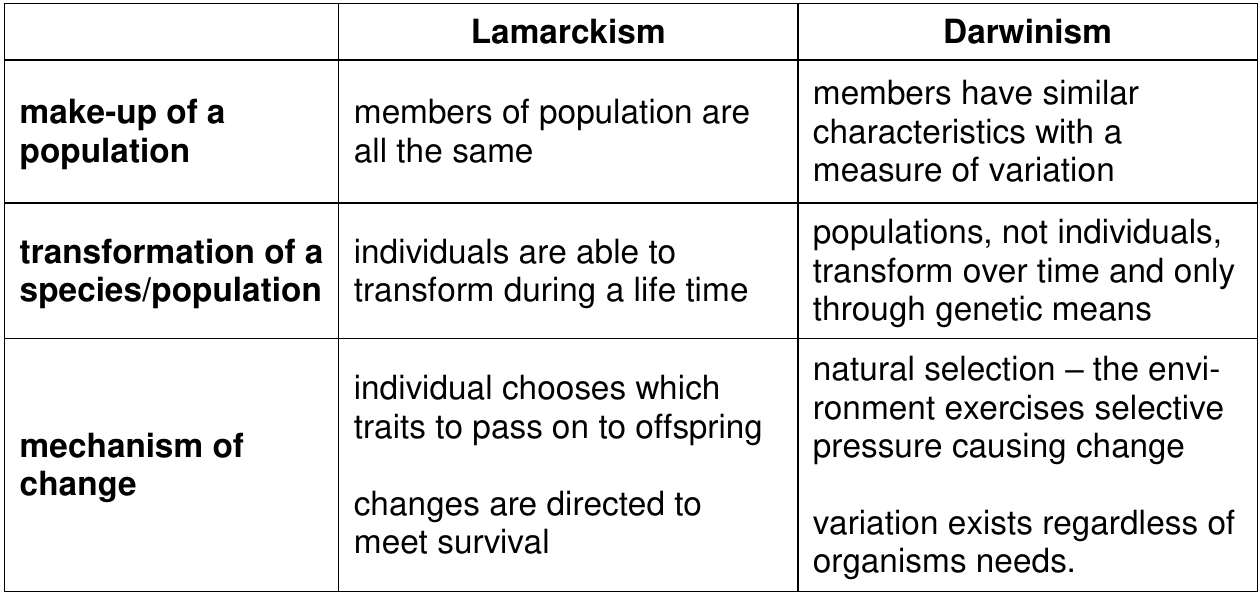
The key insight from Darwin that supports punctuated equilibrium is that populations naturally contain variation, and natural selection acts on this variation. However, punctuated equilibrium adds that this process doesn't always happen at a steady rate - sometimes it accelerates dramatically under certain conditions.
Exam tips and common misconceptions
Important
Common Misconception: Students often think punctuated equilibrium completely contradicts Darwin's theory. In reality, it builds upon and refines Darwin's ideas about natural selection.
Note
Exam Tip: Remember that punctuated equilibrium explains the pattern and timing of evolution, not the underlying mechanism. Natural selection still drives the process, but it works more rapidly during certain periods.
Important
Key Point for Exams: Be able to explain why transitional fossils are rare - it's because evolutionary change happens too quickly (in geological terms) to leave many intermediate forms in the fossil record.
Real-world applications
Punctuated equilibrium helps explain many patterns we see in nature today. For example, when environments change rapidly due to climate change or human intervention, we might expect to see rapid evolutionary responses in some species, followed by periods of stability once they've adapted.
This theory also helps us understand why some species appear to have remained virtually unchanged for millions of years (like coelacanths or horseshoe crabs) - they've been in stable environments with little selective pressure for change.
Example
Real-World Example: Darwin's Finches
The finches of the Galápagos Islands show punctuated equilibrium in action. During normal years, the finch populations remain relatively stable. However, during extreme weather events like El Niño, rapid changes in food availability create intense selective pressure, leading to measurable evolutionary changes in beak size and shape within just a few generations.
Summary
Key Points to Remember:
- Punctuated equilibrium describes evolution as periods of stability interrupted by rapid change, rather than smooth gradual change
- It was developed by Eldredge and Gould in 1972 based on patterns in the fossil record
- The absence of transitional fossils ("missing links") provides key evidence for this theory
- Rapid environmental changes can trigger bursts of evolutionary change, followed by long periods of equilibrium
- This theory builds upon Darwin's work rather than contradicting it - natural selection still drives evolution, just at varying speeds