Genetic Diagrams (Grade 12 NSC Matric Life Sciences): Revision Notes
📚Revision Notes
Genetic Diagrams
What are genetic diagrams?
Genetic diagrams are visual tools that help us understand how traits are passed from parents to offspring. They show us the step-by-step process of inheritance, from the parent generation through to their children. These diagrams are essential for predicting the likelihood of certain traits appearing in offspring.
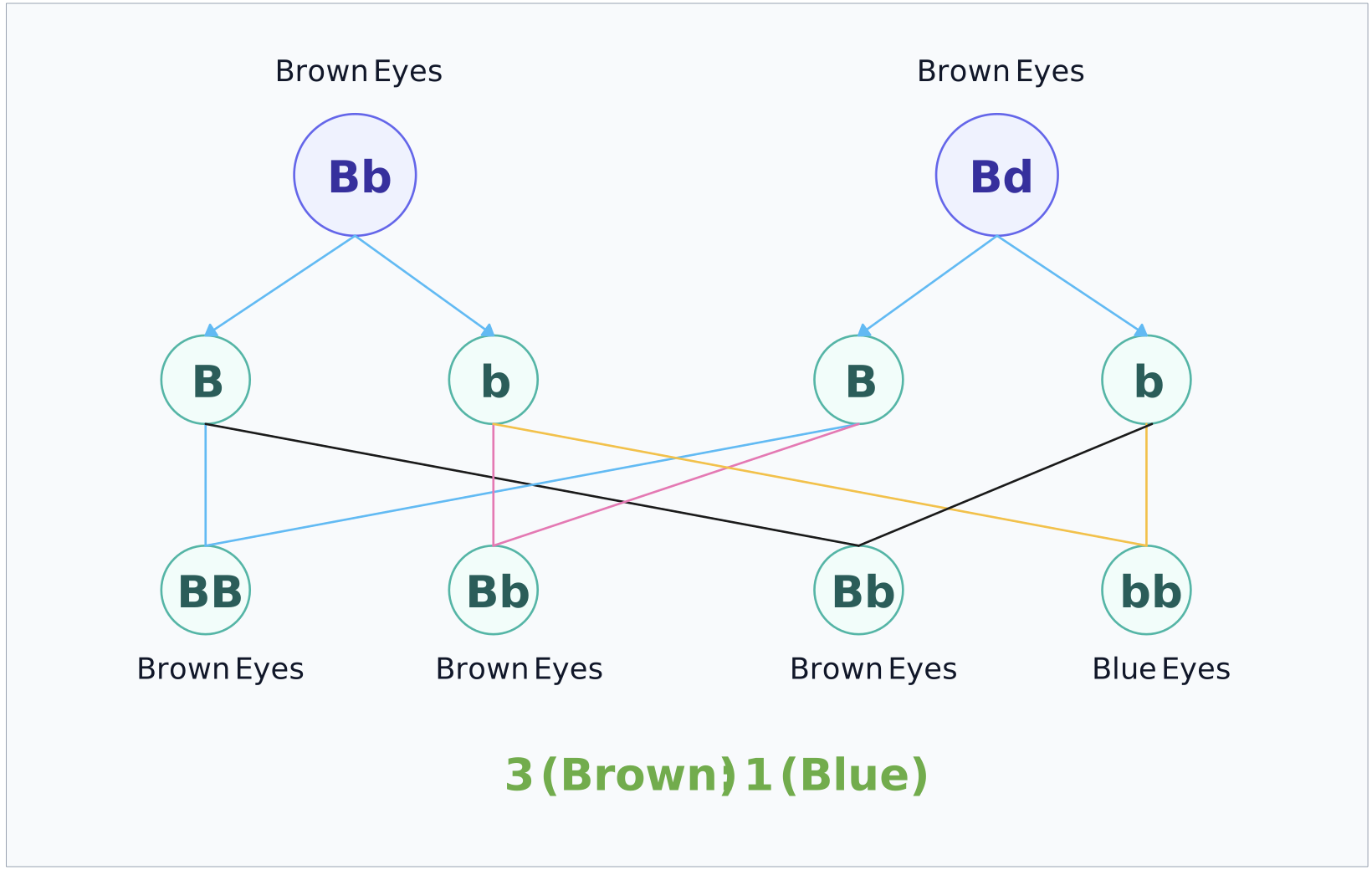
Basic components of genetic diagrams
When drawing genetic diagrams, you need to understand several key terms that form the foundation of genetic analysis:
-
Phenotype: This refers to the visible or observable characteristics of an organism, such as height, eye colour, or seed shape
-
Genotype: This is the genetic makeup of an organism, represented by letters (like TT, Tt, or tt)
-
Alleles: These are different versions of the same gene. We use capital letters for dominant alleles and lowercase letters for recessive alleles
-
Homozygous: When both alleles for a trait are the same (like TT or tt)
-
Heterozygous: When the two alleles for a trait are different (like Tt)

Note
Understanding these terms is crucial because they form the vocabulary you'll use throughout all genetic problems. Each term has a specific meaning that affects how you interpret and solve genetic crosses.
Setting up genetic diagrams
Every genetic diagram follows a standard layout that makes it easy to track inheritance patterns. This consistent structure ensures clarity and helps avoid errors when working through complex crosses.
The diagram starts with the P1 generation (parental generation), shows the process of meiosis where gametes are formed, then fertilisation where gametes combine, and finally the F1 generation (first filial generation or offspring).
Important
Exam Success Tip: Always follow this exact layout in exams, as marks are often allocated specifically for correct formatting! Examiners look for the proper sequence: P1 → meiosis → fertilisation → F1.
Monohybrid crosses with complete dominance
A monohybrid cross examines the inheritance of a single characteristic. In complete dominance, one allele (dominant) masks the expression of another allele (recessive) when both are present.
Example
Worked Example: Seed Shape in Pea Plants
When two heterozygous plants (Rr × Rr) are crossed:
Step 1: Identify parental genotypes
- Parent 1: Rr (heterozygous, round seeds)
- Parent 2: Rr (heterozygous, round seeds)
Step 2: Determine gametes formed during meiosis
- Parent 1 gametes: R or r
- Parent 2 gametes: R or r
Step 3: Show all possible fertilisation combinations
- RR (round)
- Rr (round)
- Rr (round)
- rr (wrinkled)
Results:
- Genotypic ratio:
- Phenotypic ratio: (3:1 ratio)
This 3:1 ratio is characteristic of complete dominance crosses between heterozygous parents and is one of the most important patterns in genetics.
Important
Common Misconception Alert: Students often confuse genotype and phenotype ratios. Remember that genotype ratios show the genetic combinations, while phenotype ratios show the actual observable traits.
Monohybrid crosses with incomplete dominance
In incomplete dominance, neither allele is completely dominant over the other. Instead, they blend together to create an intermediate phenotype in the offspring.
Example
Worked Example: Flower Colour Cross
When a red flower (RR) is crossed with a white flower (WW):
F1 Generation Result: All offspring have pink flowers (RW)
The red and white colours blend to create the intermediate pink colour, demonstrating incomplete dominance.
Key features of incomplete dominance:
- No allele is completely dominant
- F1 offspring show a phenotype that's intermediate between both parents
- All F1 offspring typically have the same phenotype
Monohybrid crosses with co-dominance
In co-dominance, both alleles are equally dominant and both are expressed simultaneously in the phenotype.
Example
Worked Example: Cattle Coat Colour
In cattle coat colour crosses, animals can show both red and white patches simultaneously. Unlike incomplete dominance where colours blend, co-dominance shows both colours distinctly in separate patches on the same animal.
Note
Real-world Application: Human blood groups are an excellent example of co-dominance, where both A and B alleles are expressed in AB blood type, creating a phenotype that shows both characteristics rather than a blend.
Sex determination
Sex determination in humans follows a specific pattern based on sex chromosomes. Females have two X chromosomes (XX), while males have one X and one Y chromosome (XY).
The genetic cross for sex determination always produces a 1:1 ratio ( males : females). This consistent ratio occurs because:
- Females can only contribute X chromosomes
- Males contribute either X or Y chromosomes with equal probability
Note
Understanding Human Chromosomes
Humans have 46 chromosomes in total (23 pairs):
- 44 are autosomes (control body structure and function)
- 2 are gonosomes (sex chromosomes that determine gender)
The arrangement of all chromosomes is called a karyotype. Each species has its own unique number, shape, and size of chromosomes.
Practical tips for genetic diagrams
When working with genetic problems, developing a systematic approach will improve your accuracy and speed. Carefully identify these key elements:
- Which characteristic is being studied
- Which allele is dominant
- Whether parents are homozygous or heterozygous
- What letters to use for alleles
- How to show gamete formation during meiosis
- All possible fertilisation combinations
- How to distinguish phenotypes from genotypes
Important
Exam Strategy: Read questions carefully to determine the type of inheritance pattern before starting your diagram. Look for clues like "intermediate phenotype" (incomplete dominance) or "both traits expressed" (co-dominance). These key phrases will guide you to the correct approach.
Summary
Summary
Key Points to Remember:
- Genetic diagrams follow a standard format: P1 generation → meiosis → fertilisation → F1 generation
- Complete dominance produces 3:1 ratios when crossing heterozygous parents
- Incomplete dominance creates intermediate phenotypes where alleles blend
- Co-dominance shows both alleles expressed simultaneously in the phenotype
- Sex determination always produces a 1:1 male to female ratio
- Always identify the inheritance pattern before starting your genetic diagram
- Pay careful attention to the difference between genotype and phenotype ratios