Sex-Linked Inheritance (Grade 12 NSC Matric Life Sciences): Revision Notes
📚Revision Notes
Sex-Linked Inheritance
What is sex-linked inheritance?
Most of our physical characteristics are determined by genes located on the 22 pairs of autosomes (non-sex chromosomes). However, some traits are controlled by genes found only on the sex chromosomes, particularly the X chromosome. This type of inheritance is called sex-linked inheritance.
Note
The sex chromosomes determine whether you are male (XY) or female (XX). Since males have only one X chromosome and females have two, certain genetic patterns emerge that make sex-linked inheritance unique and important to understand.
Examples of sex-linked traits
Not all sex-linked traits cause problems. For instance, the gene controlling hair growth inside the ear is located on the Y chromosome, which means only males will have this characteristic.
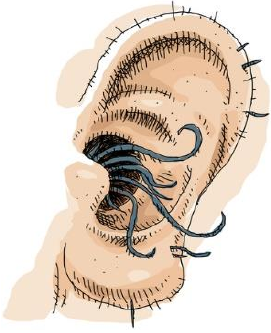
However, some sex-linked traits can cause genetic disorders. The two most common sex-linked disorders you need to know about are colour blindness and haemophilia.
Colour blindness
A person with colour blindness cannot distinguish between certain colours. The most common type is red-green colour blindness, where individuals cannot tell the difference between red and green.
Note
This happens because they lack specific proteins called photoreceptors in the retina of their eyes that normally detect these colours.
Haemophilia
Haemophilia is a serious bleeding disorder where the blood cannot clot properly due to missing blood clotting factors. If someone with haemophilia cuts themselves, the wound will continue to bleed until a clotting factor is given, usually in a hospital setting.
Understanding X-linked recessive inheritance
Both colour blindness and haemophilia are caused by recessive alleles located on the X chromosome. In genetic notation, we represent these as:
- X^b = recessive allele for colour blindness
- X^B = dominant allele for normal vision
- X^h = recessive allele for haemophilia
- X^H = dominant allele for normal blood clotting
Important
Critical Rule: The Y chromosome does not carry alleles for these traits, so we never add letters to Y when writing genotypes for these conditions.
Why are males more affected?
Males face a much higher risk of inheriting sex-linked recessive disorders than females. Here's the fundamental difference:
Note
Males (XY): They have only one X chromosome, so if they inherit the recessive allele, they will definitely express the disorder.
Females (XX): They have two X chromosomes, so they need to inherit two copies of the recessive allele to express the disorder.
This means a male only needs to inherit one recessive allele to be affected, while a female needs to inherit two recessive alleles.
Carrier females
When a female inherits only one copy of the recessive allele, she becomes a carrier. Carriers are very important in genetics because:
- They do not show symptoms of the disorder themselves
- They can pass the recessive allele on to their children
- Half their children may be affected (on average)
Inheritance patterns for sex-linked disorders
Let's look at how these disorders are passed from parents to children using inheritance tables.
Haemophilia inheritance
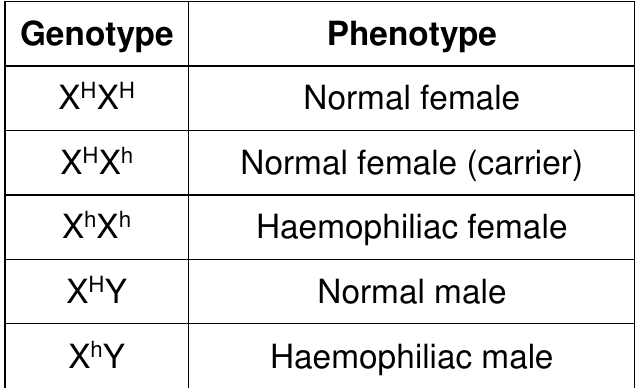
The table shows all possible genotype and phenotype combinations for haemophilia inheritance. Notice how females can be carriers without showing symptoms, while males with the recessive allele are always affected.
Colour blindness inheritance

Similarly, this table demonstrates the inheritance patterns for colour blindness. The same principles apply - males are more likely to be affected because they only need one recessive allele.
Common misconceptions and exam tips
Important
Common Misconception: "Females can't get sex-linked disorders"
Reality: Females can get sex-linked disorders, but it's much less common because they need two recessive alleles.
Important
Essential Exam Tips:
-
Always remember that the Y chromosome doesn't carry these alleles. Never write X^hY^h or X^bY^b - this is incorrect!
-
When doing genetic crosses for sex-linked traits, clearly show:
- The genotypes of both parents
- The possible gametes each parent can produce
- The offspring genotypes and phenotypes
- The ratios or percentages of affected individuals
Real-world applications
Understanding sex-linked inheritance is crucial for several important applications:
- Medical genetics: Helping families understand their risk of passing on genetic disorders
- Genetic counselling: Providing information to couples planning to have children
- Medical treatment: Knowing which family members might be carriers or affected
Note
In South Africa, genetic counselling services are available through public hospitals and can help families understand their genetic risks and make informed decisions about family planning.
Remember!
Summary
Key Points to Remember:
- Sex-linked traits are carried on the X chromosome, not autosomes
- Males are more likely to be affected by X-linked recessive disorders because they have only one X chromosome
- Carrier females don't show symptoms but can pass the disorder to their children
- Never add allele symbols to the Y chromosome when writing genotypes for X-linked traits
- Common examples include colour blindness and haemophilia