Characteristics That Humans Share With African Apes (Grade 12 NSC Matric Life Sciences): Revision Notes
📚Revision Notes
Characteristics That Humans Share With African Apes
Introduction
Understanding the similarities between humans and African apes helps us trace our evolutionary development. When we examine these shared features, we can see evidence of our common ancestry. The similarities point to how we evolved from the same ancestral species, while the differences show how we've developed into distinct species over millions of years.
Note
This study of shared characteristics provides crucial evidence for understanding human evolution and our place in the primate family tree.
Key terminology
Before exploring the shared characteristics, it's important to understand some key scientific terms:
Arboreal means living primarily in trees. This lifestyle shaped many of the features that humans and apes share today.
An opposable thumb refers to a thumb that can be placed opposite the fingers of the same hand, allowing for precise gripping and manipulation of objects.
Sexual dimorphism describes distinct differences in size or appearance between males and females of the same species, beyond just their reproductive organs.
Bipedalism is the ability to walk upright on two legs, while quadrupedalism refers to using all four limbs for movement.
Diurnal animals are active during the day rather than at night.
Major similarities between humans and African apes
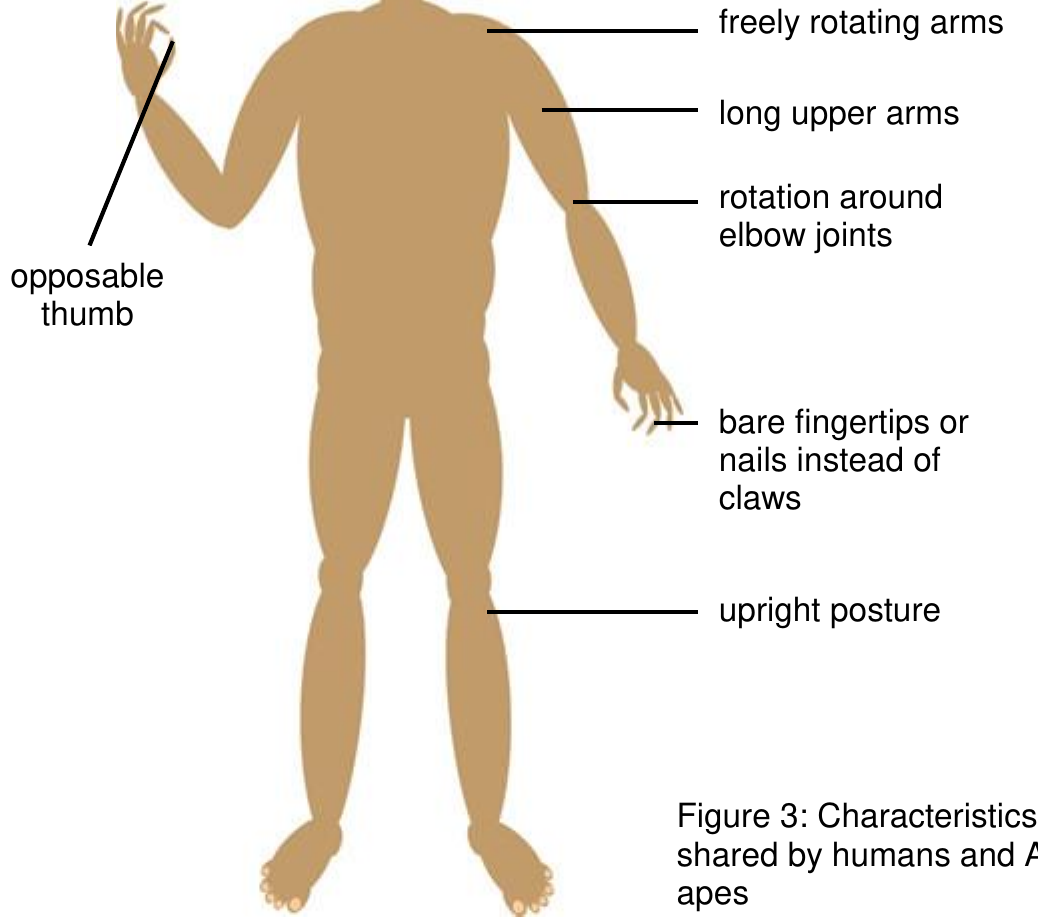
Humans belong to the Hominidae family, along with African apes like chimpanzees and gorillas. Scientists believe these shared characteristics developed because our common ancestors lived an arboreal lifestyle in trees.
Note
The arboreal lifestyle of our common ancestors explains why many of our shared features are perfectly adapted for life in trees, even though modern humans live primarily on the ground.
Physical characteristics we share
Large brains relative to body size - Both humans and African apes have larger brains compared to other animals. This enhanced brain capacity allows for complex information processing and storage, contributing to intelligence and problem-solving abilities.
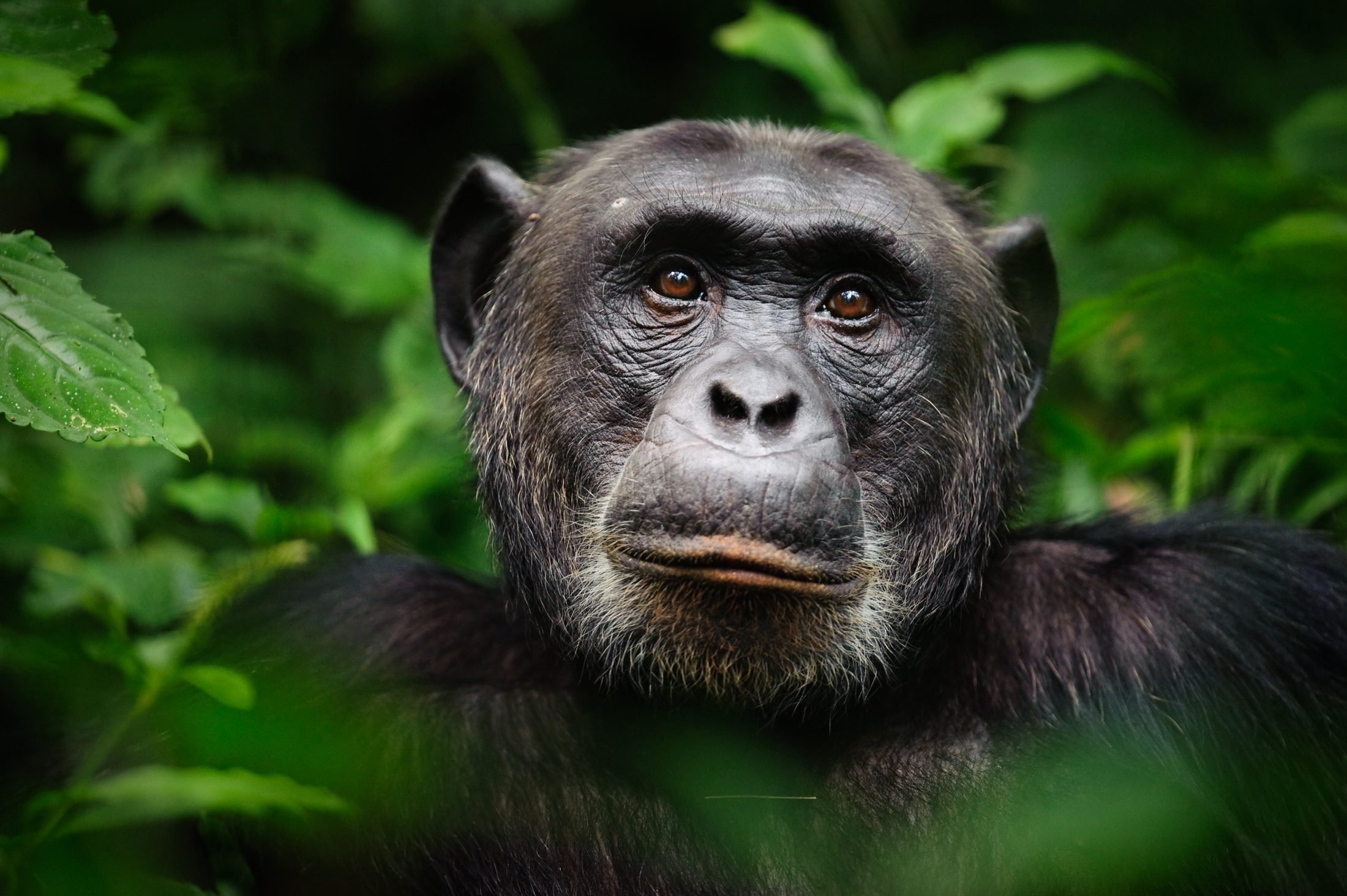
Forward-facing eyes - Having two eyes positioned at the front of the head provides excellent binocular vision. This arrangement allows both eyes to work together, creating depth perception and clearer colour vision that was essential for navigating through tree branches.
Example
Practical Example: Binocular Vision in Action
Try this simple test: Hold your finger about 30cm from your face and look at it with both eyes open. Now close one eye, then the other. Notice how your finger appears to "jump" between positions? This demonstrates how both eyes work together to create depth perception - a crucial advantage for swinging between tree branches safely.
Freely rotating arms - Our arms can move in full circles around the shoulder joint. This flexibility was crucial for swinging from branch to branch in trees, allowing movement in multiple directions to reach fruit or navigate the canopy.
Long upper arms and front limbs - Extended arm length made it easier to reach between branches and grasp food sources that were positioned at various distances in the tree environment.
Flexible elbow joints - The ability to rotate and flex at the elbow joint enables precise reaching and grasping movements. This flexibility also allows for effective manipulation of objects and tools.
Opposable thumbs - This remarkable feature allows the thumb to touch each fingertip on the same hand, creating a powerful grip for holding objects securely.
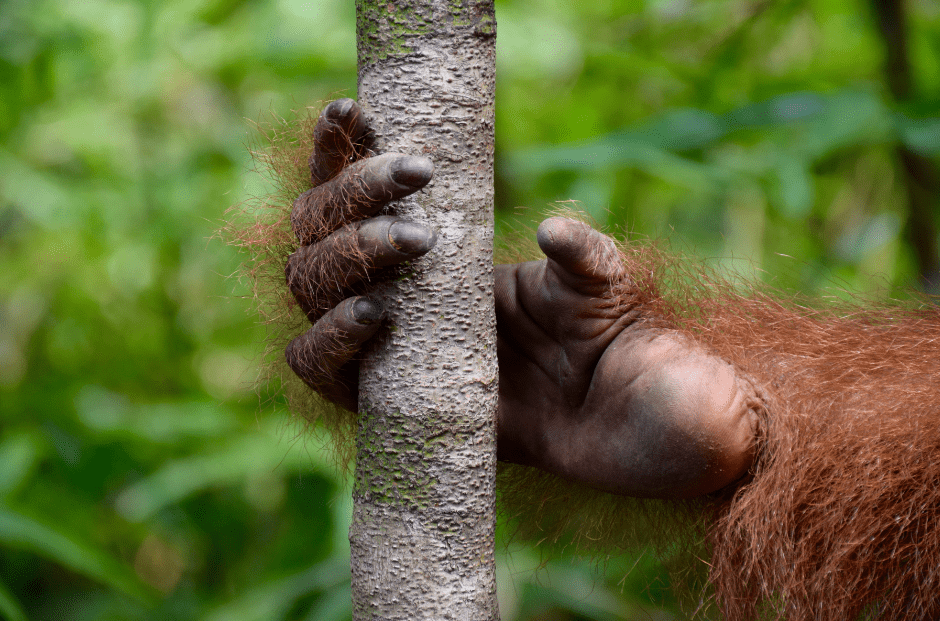
Nails instead of claws - Both humans and apes have flat nails rather than sharp claws. The fingertips have soft, sensitive pads that provide excellent tactile feedback, while the nails protect these sensitive areas without interfering with fine motor skills.
Note
The combination of opposable thumbs, sensitive fingertip pads, and protective nails creates an incredibly versatile grasping system that allows for both powerful gripping and delicate manipulation.
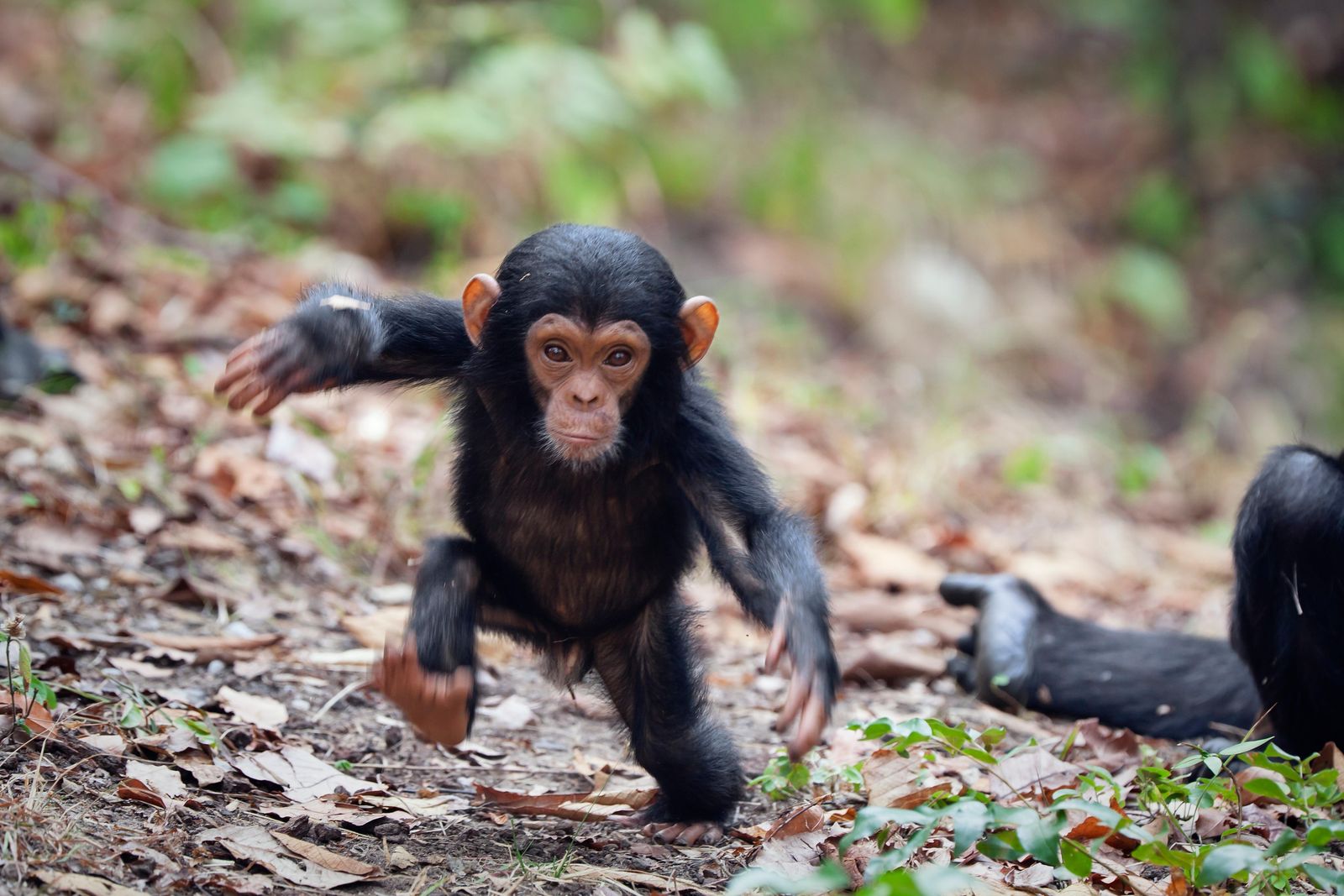
Upright posture capability - While apes typically move on all fours, they can stand and walk upright when needed, just as humans can crawl on all fours despite being primarily bipedal.
Behavioural and structural similarities
Sexual dimorphism - Both humans and African apes show clear differences between males and females in size and appearance, often related to competition for mates.
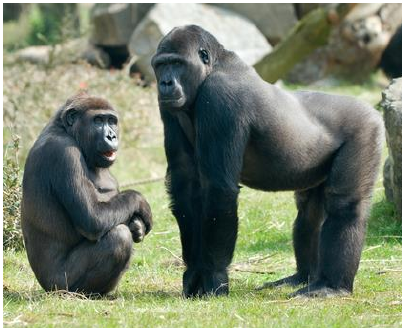
Absence of tails - Unlike many other primates such as baboons and monkeys, neither humans nor African apes have tails. Other primates use their tails for balance or as an additional limb for movement.
Diurnal activity patterns - Both humans and African apes are primarily active during daylight hours rather than being nocturnal creatures.
Understanding our evolutionary connection
Important
It's important to note that scientists don't believe chimpanzees are our direct ancestors. Instead, the evidence suggests that humans and modern African apes evolved from a shared common ancestor millions of years ago. The similarities we observe today reflect this common evolutionary heritage.
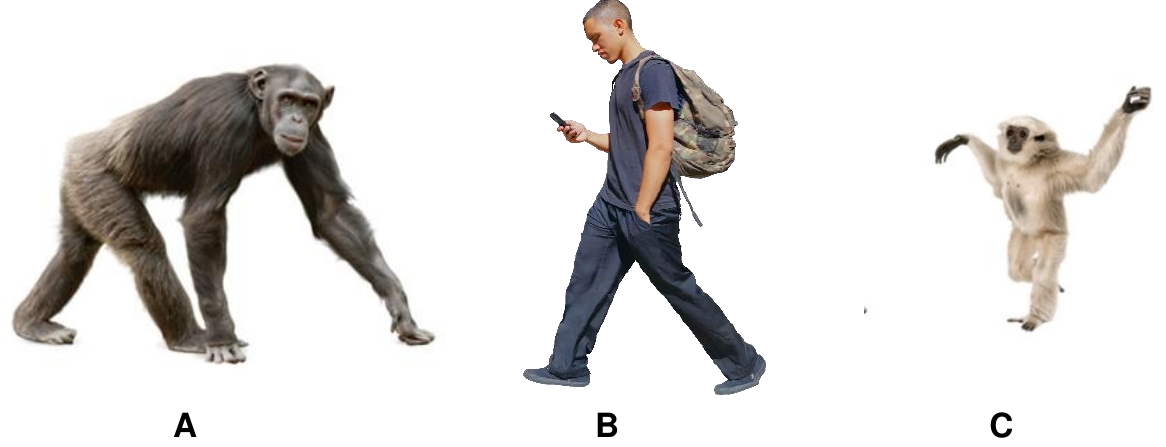
The shared characteristics between humans and African apes demonstrate how evolution has shaped similar solutions to environmental challenges. These features originally developed as adaptations to arboreal living, helping our common ancestors survive and thrive in forest environments.
Summary
Key Points to Remember:
- Humans and African apes share numerous physical and behavioural characteristics due to common ancestry
- Key shared features include large brains, forward-facing eyes, opposable thumbs, and flexible arm joints
- These similarities originally evolved as adaptations to life in trees (arboreal lifestyle)
- Both groups lack tails and show sexual dimorphism, unlike many other primates
- The similarities provide evidence for evolutionary relationships, not direct ancestry from modern apes