Fossil Sites in South Africa (Grade 12 NSC Matric Life Sciences): Revision Notes
📚Revision Notes
Fossil Sites in South Africa
Introduction to South African fossil sites
South Africa is home to some of the world's most important fossil sites that have provided crucial evidence for human evolution. The country contains numerous locations where ancient human ancestors lived and left behind their remains, giving us a window into our prehistoric past.
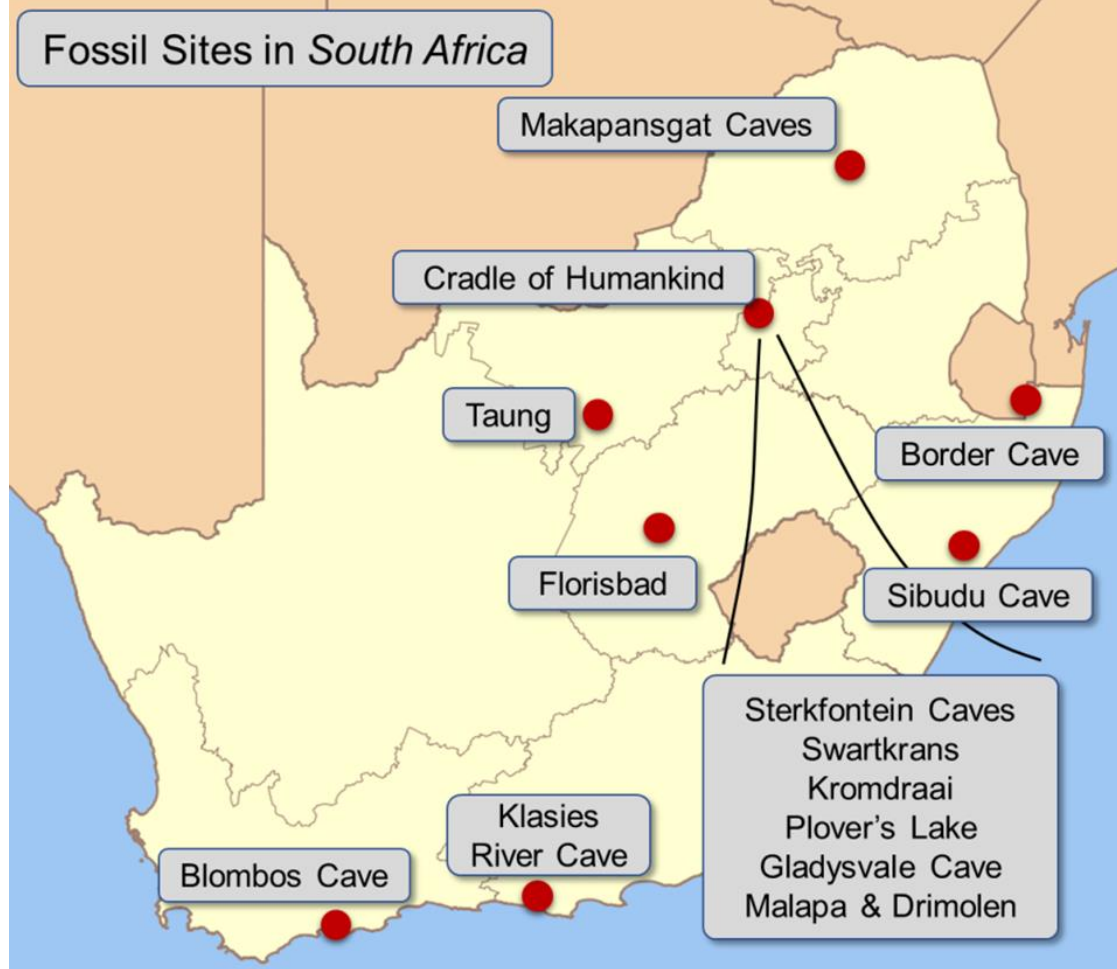
The map above shows the distribution of major fossil sites across South Africa. These sites have produced thousands of fossils that help scientists understand how humans evolved over millions of years.
Note
The distribution of fossil sites across South Africa demonstrates the country's exceptional geological conditions that have preserved ancient remains for millions of years, making it one of the most important regions for understanding human evolution.
The Cradle of Humankind
Location and significance
The Cradle of Humankind is South Africa's most famous fossil region, located in Gauteng Province, northwest of Johannesburg. This area contains 15 different fossil sites and has been designated as a UNESCO World Heritage Site due to its exceptional contribution to our understanding of human evolution.
Important
What makes the Cradle of Humankind so special is that it has produced more hominid fossils than any other location on Earth. The sites within this area have yielded fossils spanning millions of years, providing scientists with an incredibly detailed record of human ancestry.
Key sites within the Cradle of Humankind
Sterkfontein Caves
Sterkfontein is perhaps the most productive fossil site in the world. Since the first hominid discovery here in 1936, scientists have uncovered approximately 500 hominid fossils - representing nearly 40% of all hominid fossils found worldwide.
Example
Major Discoveries at Sterkfontein:
Mrs Ples (1947): Discovered by Robert Broom, this represents the most complete skull of Australopithecus africanus ever found.
Little Foot (1997): Found by Ron Clarke working with Stephen Motsumi and Nkwane Molefe, this fossil is between 4.2 and 3.9 million years old, making it the oldest fossil remains from the Cradle of Humankind.
Homo naledi (2013): Lee Berger and his team excavated about 1550 fossils representing at least 15 individuals of this previously unknown hominid species.
Swartkrans
This site contains the largest collection of Paranthropus robustus fossils found anywhere in the world. It also houses numerous Homo fossils, with the oldest specimens dating back 2.1 to 1.9 million years ago.
Kromdraai
In 1938, this site yielded the first discovery of Paranthropus robustus, identified by Robert Broom. Scientists have found 29 hominid specimens here, dated between 2 and 1.8 million years ago, along with stone tools from around 1 million years ago.
Malapa
Example
Homo sediba Discovery at Malapa:
This site produced the fossil remains of Homo sediba (nicknamed "Karabo"), dated to 2 million years ago. This species appears to be transitional, linking Australopithecus afarensis with the earliest forms of the genus Homo.
Important palaeontologists
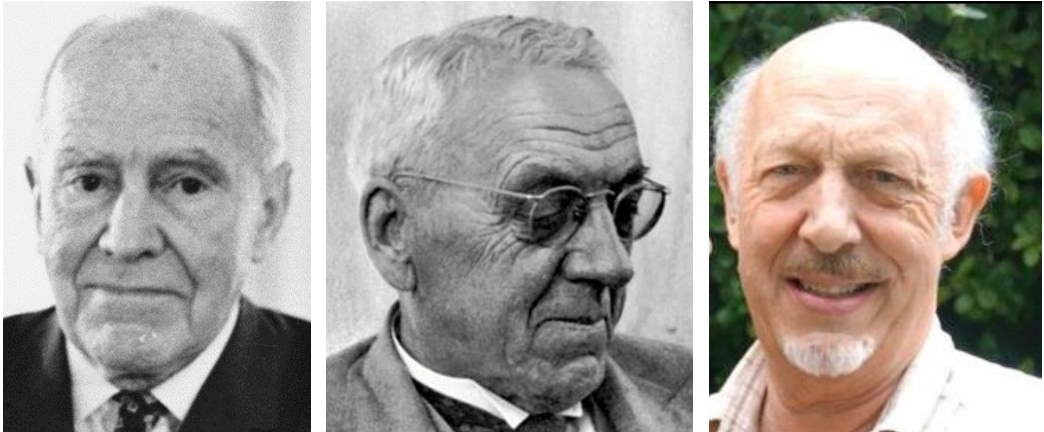
Several renowned South African palaeontologists have made significant contributions to our understanding of human evolution:
- Raymond Dart: Pioneering researcher who initiated investigations at Makapansgat in 1947
- Robert Broom: Discovered Mrs Ples and the first Paranthropus robustus specimens
- Ron Clarke: Found Little Foot and has made numerous important discoveries at Sterkfontein
Other important South African fossil sites
Sites outside the Cradle of Humankind
Taung (North-West Province)
This site gained fame when the Taung child (Australopithecus africanus) was discovered here. This discovery was revolutionary because it was the first evidence suggesting that human ancestors originated in Africa rather than Asia, as previously believed.
Important
The Taung child discovery fundamentally changed scientific understanding by providing the first concrete evidence that Africa, not Asia, was the birthplace of humanity.
Makapansgat Valley (Limpopo Province)
Located near Mokopane, this site became the focus of research initiated by Raymond Dart in 1947. The valley has provided important insights into early hominid behaviour and environments.
Florisbad
Example
The Florisbad Skull Discovery:
In 1932, T. Dreyer discovered a reasonably complete skull here, approximately 260,000 years old. This skull shows characteristics that link it to both Homo heidelbergensis and early Homo sapiens, suggesting it may represent a transitional form.
Coastal sites
Several important sites are located along South Africa's coastline:
- Border Cave (Lebombo Mountains): Contains evidence of early modern human occupation
- Blombos Cave (Cape coast): Famous for early evidence of symbolic behaviour
- Klasies River Cave (Cape coast): Contains some of the earliest evidence of modern human anatomy
Why the Cradle of Humankind is globally important
The Cradle of Humankind holds world heritage status for several scientific reasons:
Unique fossil diversity
Note
The area contains fossils from multiple hominid species, demonstrating the rich diversity of human ancestors that once lived in this region.
The area contains fossils from multiple hominid species, including:
- Australopithecus africanus: The first adult skull was found at Sterkfontein in 1936, and an almost complete skeleton (Little Foot) was discovered in 1997
- Paranthropus robustus: First found at Kromdraai in 1938, with the largest collection at Swartkrans
- Homo erectus: Early fossils discovered by Robert Broom at Swartkrans, with unique associations to early stone tools
Extended time record
Important
The fossils at Sterkfontein span a longer timeframe than similar sites elsewhere - covering approximately one million years from 3 to 2 million years ago. This extended record allows scientists to study evolutionary changes over time.
Exclusive discoveries
Several species have been found only in South Africa, making these sites irreplaceable for understanding human evolution. The discovery of species like Homo naledi continues to reshape our understanding of human ancestry.
Connection to other African sites
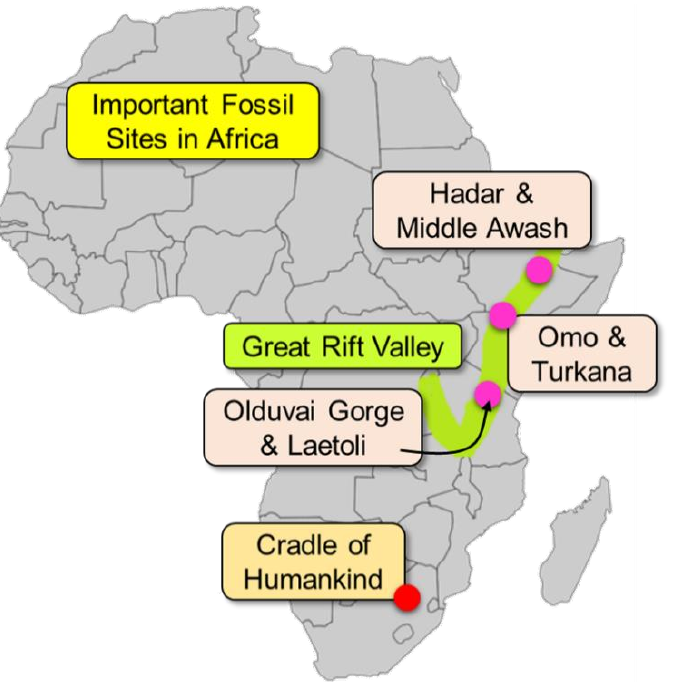
While South Africa contains exceptional fossil sites, other parts of Africa also contribute to our understanding of human evolution. The Great Rift Valley, stretching 2000 kilometres across Ethiopia, Kenya, and Tanzania, contains numerous important fossil sites that complement the South African discoveries.
Note
The focus on South African sites reveals the country's unique position in preserving and revealing the story of human evolution, particularly through the exceptional preservation conditions found in the limestone caves of the Cradle of Humankind.
Remember!
Summary
Key Points to Remember:
- South Africa contains some of the world's most important fossil sites, with the Cradle of Humankind being the most significant
- The Sterkfontein Caves have produced nearly 40% of all hominid fossils found worldwide, including famous discoveries like Mrs Ples and Little Foot
- Key South African palaeontologists like Robert Broom, Ron Clarke, and Raymond Dart have made groundbreaking discoveries that changed our understanding of human evolution
- The Cradle of Humankind is a UNESCO World Heritage Site because it contains the most complete record of human ancestry spanning millions of years
- South African fossil sites have provided evidence that Africa is the birthplace of humanity, with species like Australopithecus africanus and Paranthropus robustus found exclusively in this region