Our Place in the Animal Kingdom (Grade 12 NSC Matric Life Sciences): Revision Notes
📚Revision Notes
Our Place in the Animal Kingdom
Understanding our position in the natural world
Scientists have developed a systematic way to classify all living organisms, and humans have a very specific place within this classification system. By understanding where we fit in the animal kingdom, we can better appreciate our relationships with other living creatures and trace our evolutionary connections.
The classification system used by scientists today is called the Linnaean system, which organises organisms into a hierarchy from the broadest category (kingdom) down to the most specific (species). This system helps us understand the relationships between different groups of organisms.
Note
The hierarchical nature of biological classification means that organisms sharing the same classification level are more closely related to each other than to organisms in different groups. The more classification levels two organisms share, the more similar they are in evolutionary terms.
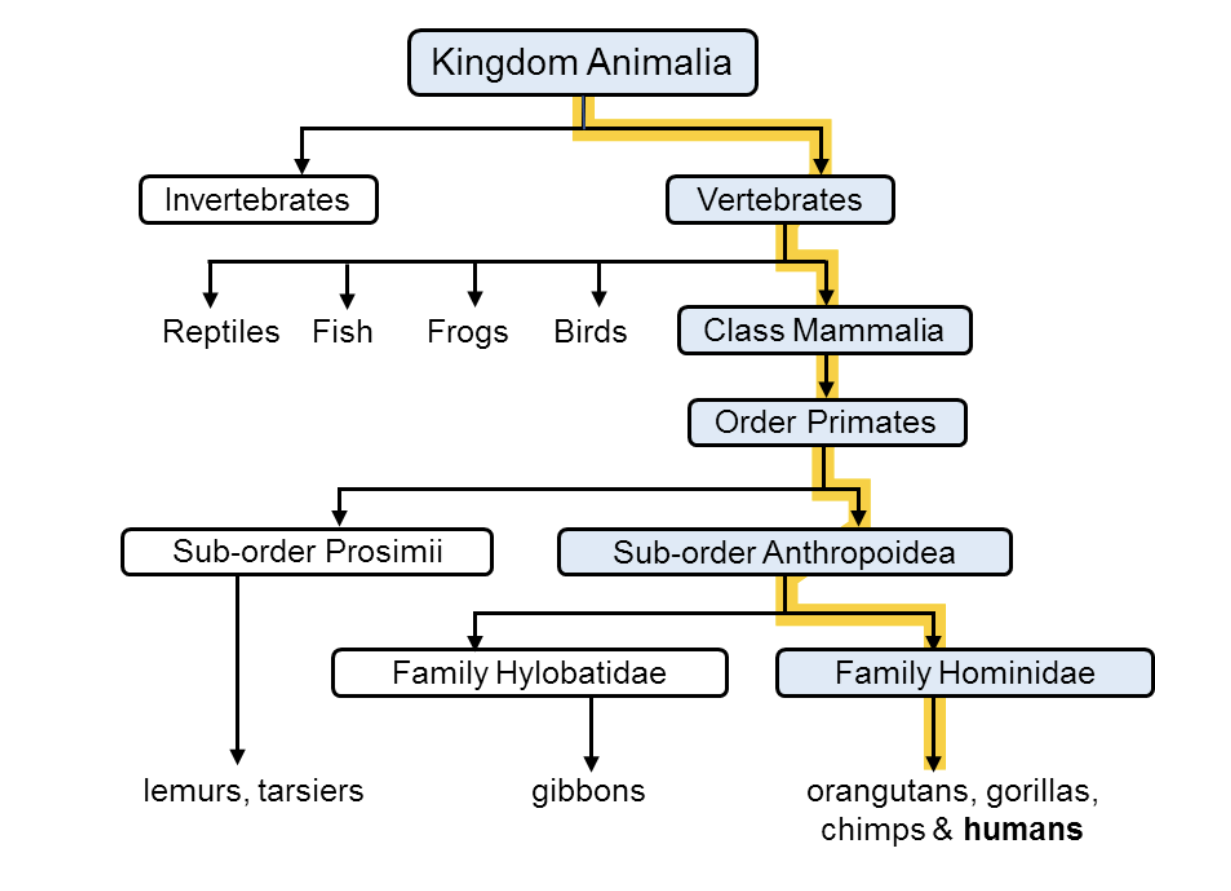
The taxonomic hierarchy and human classification
Modern humans belong to the Kingdom Animalia, which includes all animals. From there, we can trace our classification through increasingly specific groups that share common characteristics.
Important
Understanding taxonomic classification is essential because it reveals evolutionary relationships - organisms grouped together at any level share common ancestors and similar biological features.
Major divisions within Kingdom Animalia
The animal kingdom is first divided into two main groups:
- Vertebrates: Animals with backbones (including humans, fish, birds, reptiles, and mammals)
- Invertebrates: Animals without backbones (such as insects, worms, and jellyfish)
As humans, we belong to the vertebrate group because we possess a backbone and spinal column.
Classification as mammals
Within the vertebrates, humans belong to Class Mammalia. Mammals are distinguished by several key characteristics:
- They give birth to live young (rather than laying eggs)
- They produce milk to feed their offspring
- They have hair or fur at some point in their lives
- They are warm-blooded (can regulate their own body temperature)
Note
These mammalian characteristics evolved over millions of years and represent adaptations that allowed mammals to thrive in diverse environments. The ability to regulate body temperature and nourish young with milk gave mammals significant evolutionary advantages.
Our order: Primates
Humans belong to the Order Primates, a group that includes apes, monkeys, and several other related species. Primates share several distinctive features:
- Opposable thumbs on hands with five fingers
- Fingernails instead of claws
- Two eyes positioned at the front of the head (forward-facing vision)
- Relatively large brains compared to body size
- Complex social behaviours
Primate subdivisions
The Order Primates is divided into two main sub-orders:
Sub-order Prosimii (more primitive primates):
- Includes lemurs and tarsiers
- These represent earlier evolutionary forms of primates
Sub-order Anthropoidea (higher primates):
- Includes monkeys, apes, and humans
- More advanced evolutionary development
- Better developed brains and more complex behaviours
The great apes: Family Hominidae
Within Sub-order Anthropoidea, humans belong to Family Hominidae, also known as the great apes. This family includes:
- Orangutans
- Gorillas
- Chimpanzees
- Humans
Important
Our Closest Relatives
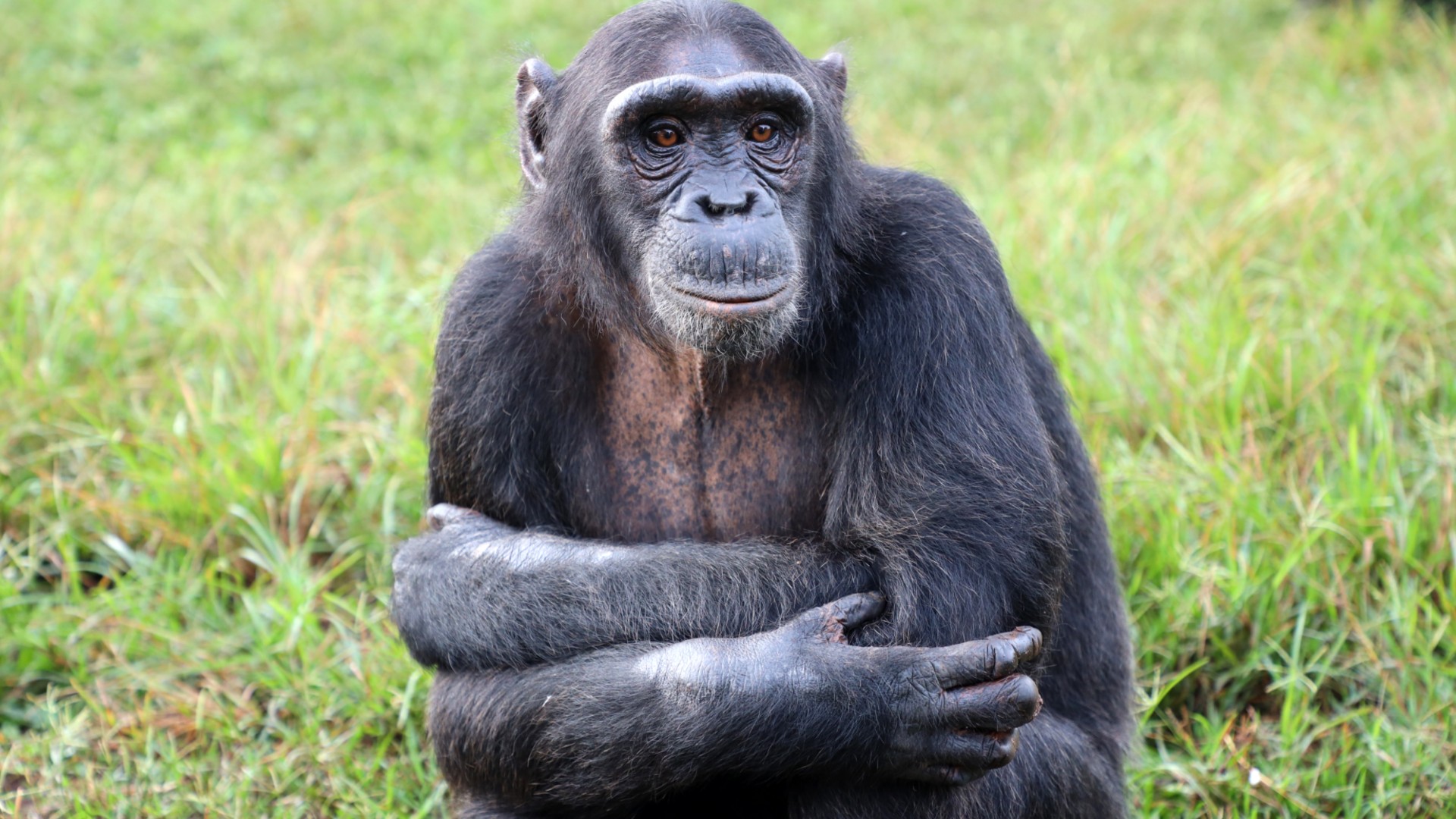
Humans share approximately 98-99% of their DNA with chimpanzees, making them our closest living relatives. This genetic similarity reflects our recent common ancestor and explains many of the behavioural and physical similarities between humans and other great apes.
It's important to note that there's another primate family called Family Hylobatidae, which includes gibbons. Gibbons are smaller apes and are considered separate from the great apes.
Scientific naming of humans
The complete scientific classification of modern humans follows this hierarchy:
Example
Complete Human Classification Example
- Kingdom: Animalia (all animals)
- Class: Mammalia (all mammals)
- Order: Primates (apes, monkeys, and related species)
- Family: Hominidae (great apes)
- Genus: Homo (human lineage)
- Species: sapiens (modern humans)
Each level becomes more specific, showing exactly where humans fit within the natural world.
Our full scientific name is Homo sapiens, which literally means "wise man" (homo = man, sapiens = wise). This two-part naming system is called binomial nomenclature and is used for all species.
Why this classification matters
Understanding our place in the animal kingdom helps us:
- Recognise our close evolutionary relationships with other primates
- Appreciate the characteristics we share with other mammals
- Understand human evolution in context
- See how scientific classification reveals natural relationships between organisms
Note
The yellow pathway shown in the classification diagram traces our specific evolutionary lineage from the broad Kingdom Animalia all the way down to our human family group, highlighting the systematic nature of biological organisation.
Remember!
Summary
Key Points to Remember:
- Humans are classified as Homo sapiens and belong to the Kingdom Animalia as vertebrate mammals
- We are part of the Order Primates, sharing key features like opposable thumbs and forward-facing eyes
- Our closest relatives are the other great apes in Family Hominidae: orangutans, gorillas, and chimpanzees
- The Linnaean classification system organises life from kingdom (broadest) to species (most specific)
- Understanding our taxonomic position helps explain our evolutionary relationships with other organisms