DNA Replication (Grade 12 NSC Matric Life Sciences): Revision Notes
📚Revision Notes
DNA Replication
What is DNA replication?
DNA replication is the fascinating process where DNA creates an exact copy of itself. Think of it like making a perfect photocopy of an important document - the cell needs to duplicate its genetic instructions so that when it divides, both new cells have the same genetic information.
This process happens during a specific part of the cell cycle called interphase, and it takes place in the nucleus of the cell. The timing is crucial because the cell needs to have two complete sets of DNA ready before it can divide during mitosis.
Note
The timing of DNA replication is precisely controlled by the cell cycle. It must be completed before the cell can proceed to mitosis, ensuring that each daughter cell receives a complete copy of the genetic material.
The step-by-step process of DNA replication
DNA replication follows a precise sequence of steps that ensures accuracy. Let's break down this complex process into manageable parts:
Step 1: The DNA double helix unwinds
The twisted ladder structure of DNA begins to open up, similar to untwisting a rope. This unwinding is necessary to access the genetic information stored within.
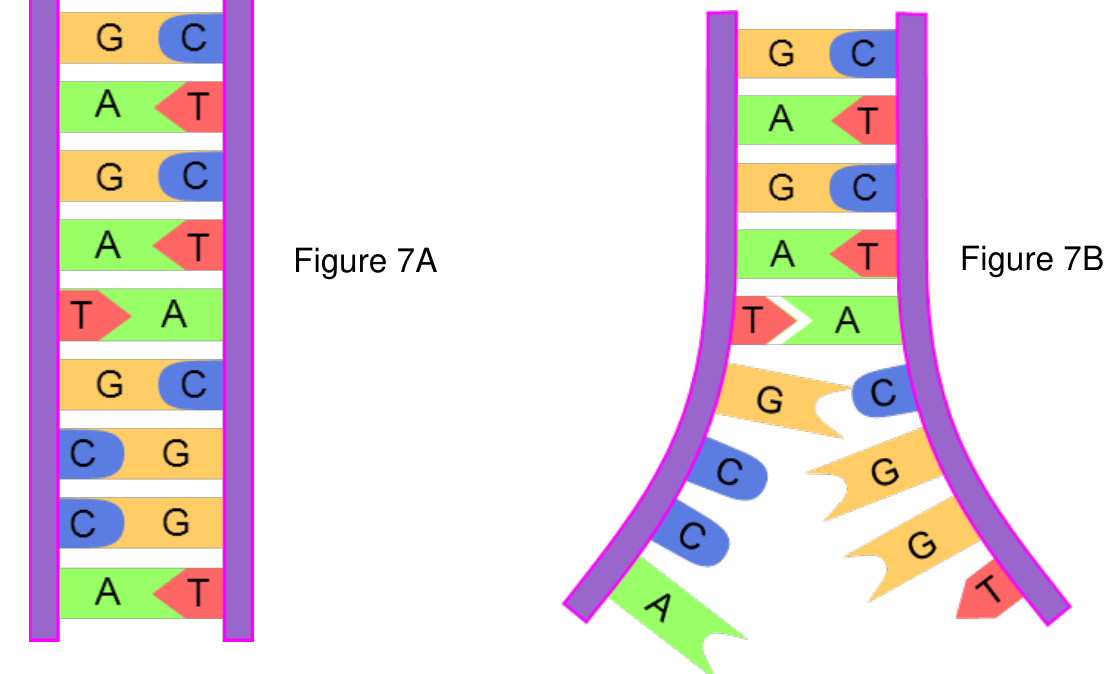
Step 2: The DNA strands separate
The weak hydrogen bonds that hold the complementary base pairs together are broken. This causes the two strands to separate or "unzip", creating an opening where replication can begin. You can think of this like unzipping a jacket - the two sides pull apart.
Step 3: Each strand becomes a template
Now each original DNA strand acts as a pattern or guide for building a new complementary strand. This is why we call them template strands - they provide the blueprint for creating the new DNA.
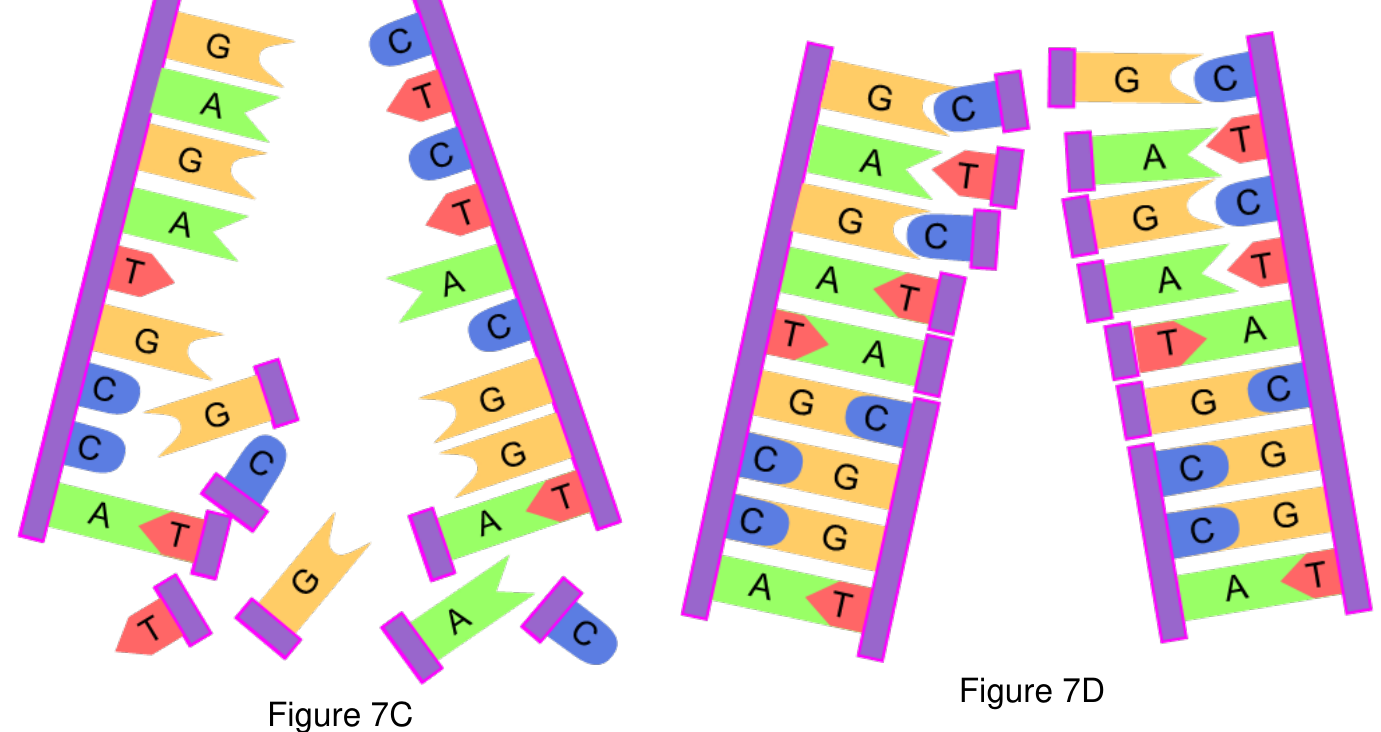
Step 4: Free nucleotides attach
Free nucleotides floating in the nucleus attach to each template strand following the strict base pairing rules:
Example
Base Pairing Rules in Action:
- Adenine (A) always pairs with Thymine (T)
- Cytosine (C) always pairs with Guanine (G)
These nucleotides line up according to their complementary partners on the template strand, like pieces of a puzzle that only fit together in one specific way.
Step 5: Two identical DNA molecules are formed
The final result is two complete DNA molecules, each containing one original strand and one newly built strand. This is called semi-conservative replication because each new DNA molecule conserves half of the original.
Why is DNA replication important?
DNA replication is absolutely essential for life because it ensures genetic continuity. Here's why it matters:
- Cell division: During mitosis, each daughter cell needs its own complete set of genetic instructions
- Growth and development: As organisms grow, they need more cells, and each new cell requires the full genetic blueprint
- Maintaining chromosome number: Replication ensures that each new cell has the same number and type of chromosomes as the parent cell
- Heredity: The process allows genetic information to be passed from one generation of cells to the next
Important
Without accurate DNA replication, cell division would be impossible. Each new cell must receive exactly the same genetic information as the parent cell to function properly and maintain the organism's characteristics.
What can go wrong during DNA replication?
Although DNA replication is usually very accurate, errors can occur that lead to changes in the genetic code. These errors are called mutations.
Common types of errors:
- Incorrect base pairing: Sometimes the wrong nucleotide attaches to the template strand (for example, a G might pair with a T instead of a C)
- Base insertion: An extra nucleotide gets added to the sequence
- Base deletion: A nucleotide gets left out of the sequence
Consequences of errors:
When these mistakes happen, the sequence or order of bases changes in the new DNA molecule. This can result in changes to the gene structure, which might affect how proteins are made or how they function.
Note
Fortunately, cells have sophisticated proofreading mechanisms to check and correct many of these errors during replication. This makes DNA replication remarkably accurate, with error rates typically less than 1 in 10 billion base pairs!
Summary
Key Points to Remember:
- DNA replication creates two identical copies of the original DNA molecule during interphase
- The process follows strict base pairing rules: A pairs with T, and C pairs with G
- Each new DNA molecule contains one original and one new strand (semi-conservative replication)
- Replication is essential for cell division to ensure each daughter cell has complete genetic information
- Errors during replication can cause mutationsthat change the genetic code and potentially affect gene function