Time (Grade 12 NSC Matric Mathematical Literacy): Revision Notes
📚Revision Notes
Time
Understanding time formats
Time can be expressed using different formats, with the 12-hour format and 24-hour format being the most commonly used systems.
12-hour format
The 12-hour format uses the designations "a.m." and "p.m." to distinguish between morning and afternoon/evening times.
Note
Understanding a.m. and p.m.:
- a.m. means "before midday" and covers the time from midnight (12:00 a.m.) until just before noon
- p.m. means "after midday" and covers the time from noon (12:00 p.m.) until just before midnight
For example, school might start at 7:30 a.m. (in the morning) and finish at 2:00 p.m. (in the afternoon).
Reading analogue clocks
Analogue clocks display time using two main hands that point to numbers around the clock face:

Note
Clock Hand Identification:
- The hour hand is the shorter, thicker hand that shows which hour it is
- The minute hand is the longer hand that shows the minutes past the hour
- Some clocks also have a third hand for seconds
24-hour format
The 24-hour format uses numbers from 00:00 to 23:59 without needing a.m. or p.m. designations. This system is commonly seen on digital watches, clocks, and electronic displays.
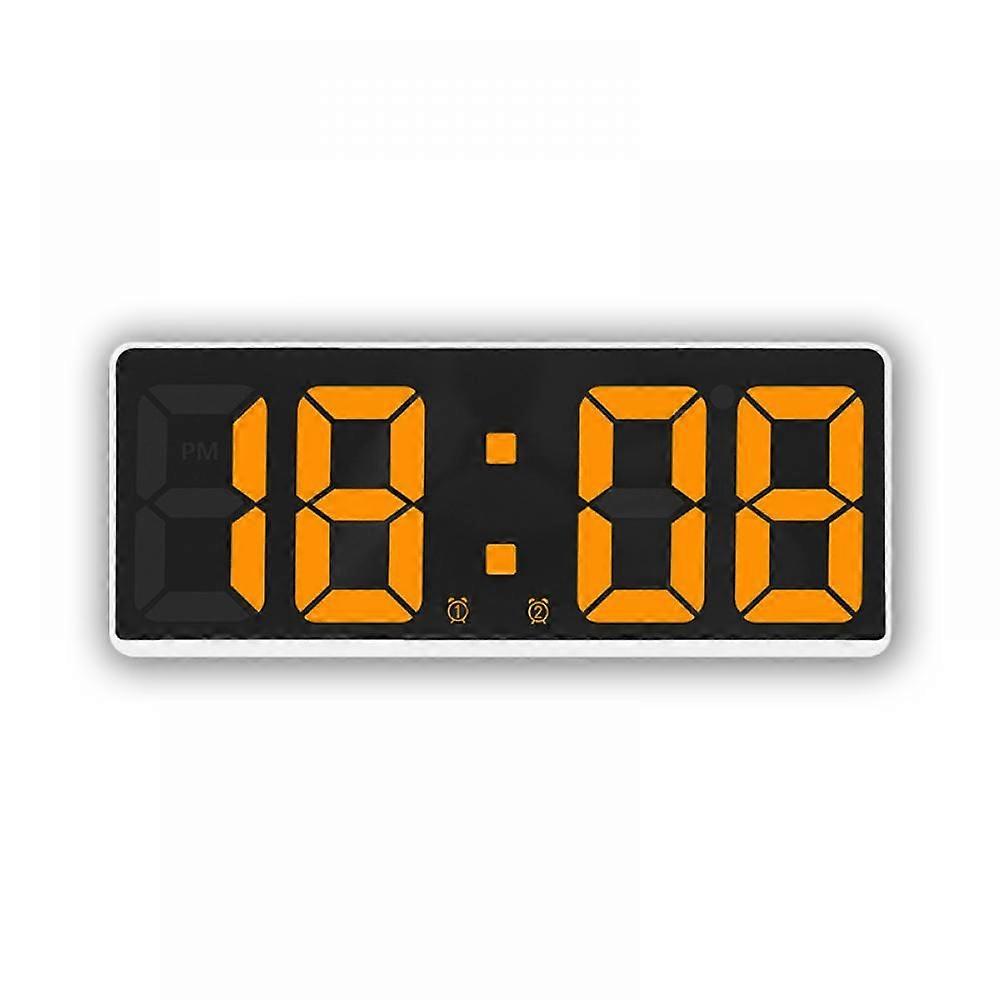
In digital displays, the number on the left shows the hour and the number on the right shows the minutes. Some digital displays also show seconds as a smaller number.
Hundred hours format
Sometimes you may encounter hundred hours format, where the colon (:) is replaced with an "h". For example, 20:00 becomes 20h00.
Converting between time formats
Converting 12-hour to 24-hour format
Important
Conversion Rules: 12-hour to 24-hour format
For a.m. times:
- Times from 1:00 a.m. to 11:59 a.m. stay the same
- 12:00 a.m. (midnight) becomes 00:00
For p.m. times:
- Add 12 hours to times from 1:00 p.m. to 11:59 p.m.
- 12:00 p.m. (noon) stays as 12:00
Converting 24-hour to 12-hour format
Important
Conversion Rules: 24-hour to 12-hour format
For times 00:00 to 11:59:
- Add a.m. to the time
- Change 00:00 to 12:00 a.m.
For times 12:00 to 23:59:
- Subtract 12 hours from times 13:00 to 23:59 and add p.m.
- Keep 12:00 as 12:00 p.m.
Worked examples of format conversion
Example
Worked Example: Converting 12-hour to 24-hour format
- 9:56 p.m. → 9:56 + 12 hours = 21:56
- 8:30 a.m. → stays the same as 08:30
- 4:05 p.m. → 4:05 + 12 hours = 16:05
Example
Worked Example: Converting 24-hour to 12-hour format
- 14:45 → 14:45 - 12 hours = 2:45 p.m.
- 10:25 → stays the same as 10:25 a.m. (before midday)
- 19:35 → 19:35 - 12 hours = 7:35 p.m.
Converting units of time
Understanding the relationships between different time units is essential for solving time-related problems.
Important
Essential Time Conversion Relationships:
Converting mixed time units
When converting time units, you often need to work with mixed units (like minutes and seconds, or hours and minutes).
Example
Worked Example: Converting 140 seconds to minutes and seconds
Step 1: Divide by 60 to find whole minutes
Step 2: This tells us we have 2 whole minutes with some remainder
Step 3: Calculate the remaining seconds
Therefore, 140 seconds = 2 minutes and 20 seconds
Example
Worked Example: Converting 138 minutes to hours and minutes
Step 1: Divide by 60 to find whole hours
Step 2: This tells us we have 2 whole hours with some remainder
Step 3: Calculate the remaining minutes
Therefore, 138 minutes = 2 hours and 18 minutes
Example
Worked Example: Converting 34 hours to days and hours
Step 1: Divide by 24 to find whole days
Step 2: This tells us we have 1 whole day with some remainder
Step 3: Calculate the remaining hours
Therefore, 34 hours = 1 day and 10 hours
Common exam tips and traps
When working with time in exams, be aware of these common mistakes:
Important
Critical Exam Pitfalls to Avoid:
-
Don't confuse decimal answers with time format: If you calculate 2.33 hours, this does NOT mean 2 hours and 33 minutes. The decimal part needs to be converted properly.
-
Remember the conversion factors: Always double-check that you're using the right conversion (60 seconds = 1 minute, not 100).
-
Pay attention to a.m./p.m.: When converting between formats, make sure you're adding or subtracting 12 hours correctly based on whether it's morning or afternoon.
-
Use appropriate units: Choose sensible units for your answer - measure school holidays in days or weeks, not seconds, and measure how long it takes to cross a road in seconds, not years.
-
Check your arithmetic: Time calculations often involve division and remainders, so double-check your working.
Summary
Key Points to Remember:
- The 12-hour format uses a.m. (before midday) and p.m. (after midday), while the 24-hour format uses numbers from 00:00 to 23:59
- When converting p.m. times to 24-hour format, add 12 hours (except for 12:00 p.m.)
- Key time conversions: 60 seconds = 1 minute, 60 minutes = 1 hour, 24 hours = 1 day
- When converting mixed units, use division to find whole units and subtraction to find remainders
- Decimal time values need to be converted properly - 2.33 hours is NOT 2 hours and 33 minutes!