Biological Diversity and Evolution (HSC SSCE Biology): Revision Notes
📚Revision Notes
Biological Diversity and Evolution
What is biological diversity?
Biological diversity (or biodiversity) refers to the variety of all forms of life on Earth, including the diversity of characteristics that living organisms have and the variety of ecosystems of which they are components.
Living things exist in many different forms, from unicellular organisms like bacteria to multicellular varieties such as emus and kangaroos. Scientists have discovered approximately million different species, with more being found every year. Many more species have existed in the past, as evidenced by fossils, but have now become extinct (completely died out).
Note
All different species that exist today have developed over billions of years through evolutionary processes driven by changes in the environment – both natural and, increasingly, those influenced by humans.
Three levels of biodiversity
Biodiversity exists on three different levels:
- Genetic diversity: The total number of genetic characteristics in the genetic make-up of a species. This is the raw material of evolution.
- Species diversity: A measure of the diversity of different species in an ecological community.
- Ecosystem diversity: The variation of different ecosystems found in a region.
Why is biodiversity important?
Biodiversity is what sustains us and enriches our lives. We depend on it for benefits such as:
- Fresh air
- Food and medicines
- Clean water
- Fuel and other resources
Important
Diversity within a population is what allows it to adapt to changes in the environment. Globally, species are rapidly becoming extinct, which puts entire ecosystems at risk.
The relationship between evolution, biodiversity and ecology
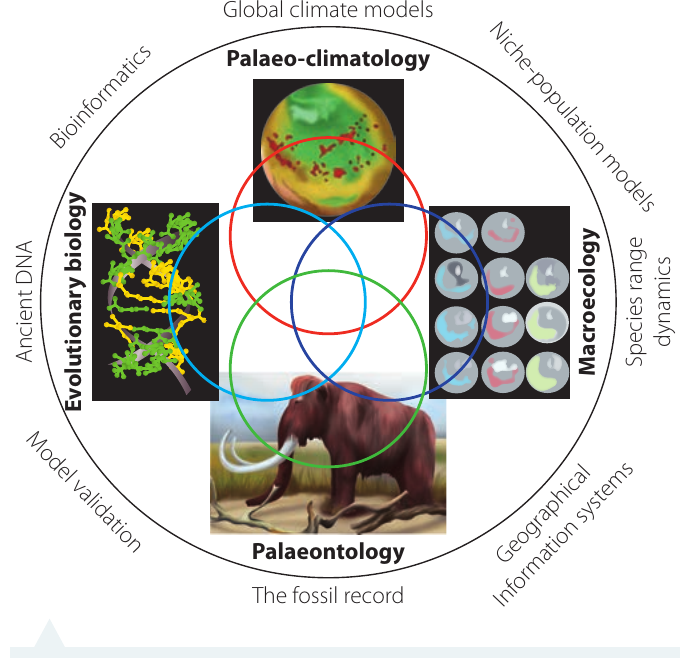
Evolution, biodiversity and ecology are proving to be far more closely interrelated than was previously understood. Recent research is showing that:
- Not only does evolution rely on biodiversity, but evolution also affects biodiversity and can drive or limit it
- Evolutionary change may happen rapidly in response to strong selection pressures, not just gradually over long periods
- Global changes such as climate change can significantly impact biodiversity
Note
This has led to new fields of study such as:
- Ecoevolution: The effect of global changes (such as climate change) on biodiversity
- Evolutionary ecology: Studies including the evolutionary basis of the diversity of life, phenotypic variation and change in populations, evolutionary responses to global change, and evolution and coevolution in ecosystems
Case study: The Baw Baw frog
Example
Case Study: The Baw Baw frog and Climate Change
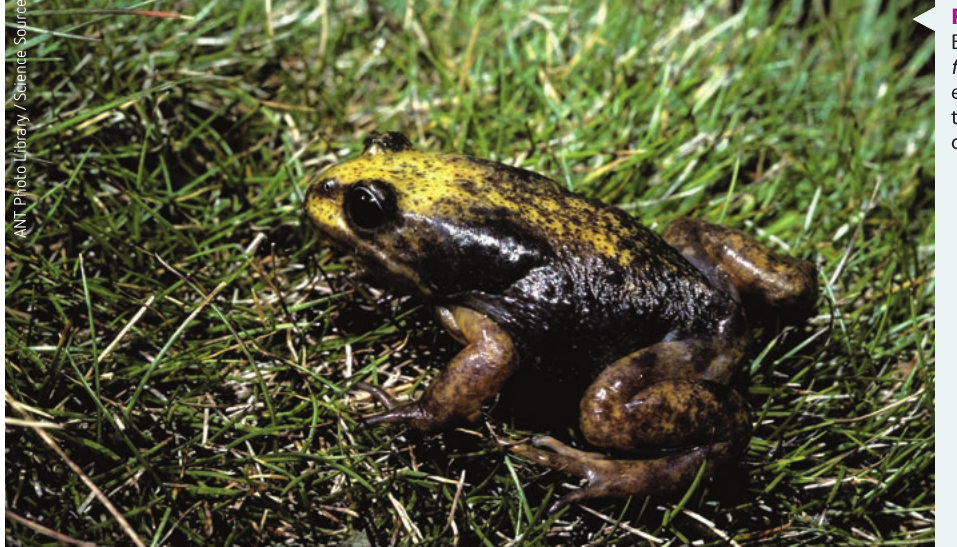
The endangered Baw Baw frog (Philoria frosti) provides an excellent example of how climate change and evolution are connected:
- Today, these frogs are found only in a small area in the central highlands of Victoria
- Evidence shows their ancestors were distributed along the Great Dividing Range when Australia had a wetter climate
- Today's Baw Baw frogs are considered living relics with very low genetic diversity, suggesting past climate change placed the species under great pressure
- The population has declined by 98% in just 30 years
- Current threats include:
- Introduced chytrid fungus disease
- Climate change from the enhanced greenhouse effect
- Habitat fragmentation through conflicting land use
- Melbourne Zoo has introduced a breeding program to establish a genetically diverse community and conserve the species
Genetic diversity and survival
Genetic diversity within a species is crucial for populations to adapt to changes in the environment. Environments are constantly changing, posing selection pressures that enable some organisms with favourable characteristics to survive and reproduce more successfully than others.
Populations with reduced genetic diversity
Important
Populations with reduced genetic diversity risk extinction in the long term.
Consider these examples:
Example
Example 1: Bacterial population in a Petri dish
- A population of bacteria reproduces by binary fission in a Petri dish
- Each member is identical to every other member
- If mild acid is introduced (selection pressure) and there is no pre-existing ability to survive the change, the entire population will die out
- No genetic diversity = no survival
Example
Example 2: Rabbit calicivirus resistance
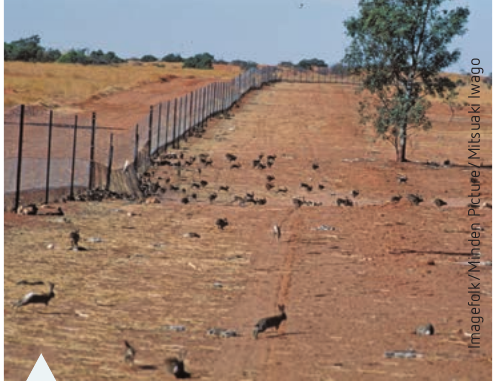
- The calicivirus affects rabbits and has been used as a biological control mechanism in Australia
- It kills 95% of rabbits within 72 hours
- However, some rabbits do not die – they have an inherited resistance to the virus
- These resistant rabbits survive to reproduce and pass that genetic characteristic to their offspring
- Increasingly, the rabbit population becomes resistant to the calicivirus
- This demonstrates Darwin and Wallace's Theory of Evolution by Natural Selection in action
The Darwin-Wallace Theory of Evolution by Natural Selection
Evolution is a change in living organisms over a long period. While the concept that organisms may change over time had been considered as far back as the 4th century BCE, no testable theory or mechanism was proposed until much later.
Historical development
Evolutionary thinking as we know it today had its beginnings in the mid to late 1700s. In the early 19th century, Jean Baptiste Lamarck proposed a mechanism for evolution (later rejected), but his ideas opened the way for new proposals. This led to the currently accepted Theory of Evolution by Natural Selection, proposed by Charles Darwin and Alfred Wallace in the late 19th century.
Common premises of evolutionary theories
All theories of evolution share some basic premises:
- Living organisms arose from common ancestors or a common life form and have changed over time
- Differences that occur among groups of living organisms imply that living things change over time
- Similarities occur in living things and suggest common ancestry – the basic chemistry inherited from a common life form has remained relatively unchanged and has been passed down through generations
Core concepts of natural selection
The Darwin-Wallace Theory of Evolution by Natural Selection is based on the premise that living things arose from a common ancestor and that some populations moved into new habitats where they adapted over time to their environments, leading to the diversity of life.
Important
Natural selection depends on four key concepts:
-
Variability: All populations have random differences or variation among their members
-
Heritability: Variation may be inherited
-
Over-reproduction: Organisms produce more offspring than the environment can support (not all offspring survive)
-
Competition: Competition occurs between organisms, leading to survival of the fittest
Speciation – the formation of new species
Darwin and Wallace's idea that populations change by natural selection and become adapted to the environment gave rise to their ideas on speciation – the formation of new species.
Note
They proposed that the formation of a new species may occur when a population becomes isolated from the original group. Only those individuals with variations that allow them to survive the changed conditions will reproduce and pass on their characteristics. Eventually, the population becomes so different from the original population that individuals are no longer able to interbreed and produce fertile offspring – the defining condition for a population to be considered a different or new species.
Neo-Darwinism or modern synthesis
Scientists have more recently applied concepts of Mendelian genetics to support and explain Darwin and Wallace's ideas on random genetic variation leading to gradualism and the formation of new species.
It was only in the first decade of the 20th century, after Mendel's experimental results were confirmed and accepted, that the Darwinian theory of evolution was extended to include the genetic processes involved in natural selection. The explanation of Darwinian evolution based on modern genetics is termed neo-Darwinism.
Variation and heredity
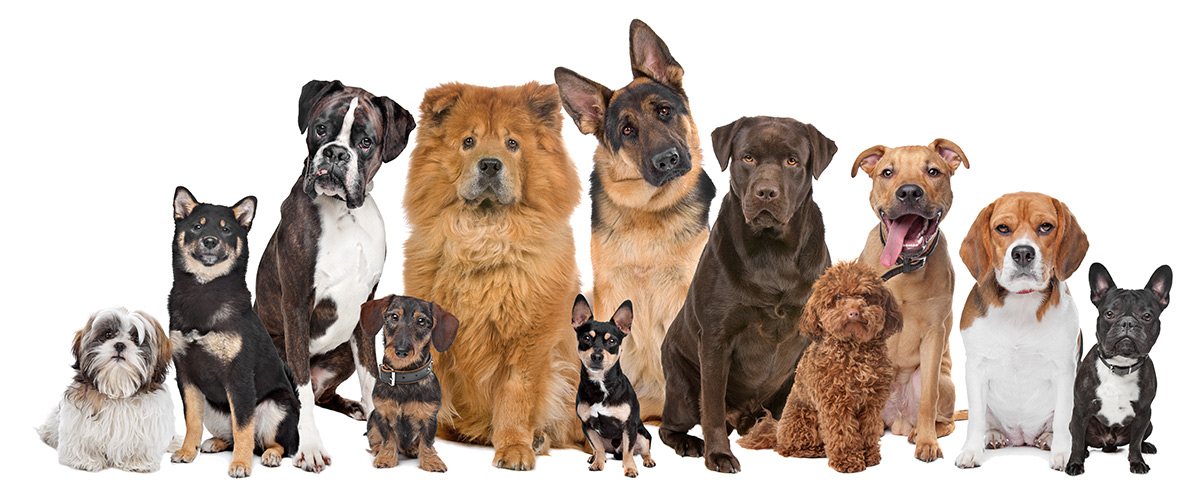
In any population, although offspring resemble their parents, they are not identical to them. The term variation applies to differences in the characteristics (appearance or genetic make-up) of individuals within a population. Not all humans, dogs, cats or elephants look exactly alike.
Types of variation:
- Environmental variation: Arises from the interaction of an organism with its environment (e.g., access to water and sunlight affecting plant growth). This type affects the individual organism only.
- Heritable variation: Variations that can be passed from one generation to another. These affect evolution and are essential for evolution to occur. Heritable variations are often produced in a population as a result of mutations.
The importance of the gene pool
The variation in the gene pool of a population (all the possible varieties of a gene within a group of interbreeding organisms) is important in determining the chances of survival of that population.
Note
If there is a sudden change in the environment:
- Those individuals that randomly possess a variation that is an advantage are more likely to survive the changed conditions
- Individuals that do not possess that variation may be unable to compete and survive
- Those that survive are more likely to reach reproductive age and pass their favourable characteristics to their offspring
- Individuals with less favourable variations will eventually be eliminated from the population as they are out-competed
- If individuals within the population become so different that they can no longer interbreed with the original population to produce fertile offspring, then the population is considered to be a new species
Important
Important principle: An individual does not develop an adaptation in response to environmental change. Organisms must already possess the random variation that confers an advantage under the new conditions. This variation is now called an adaptation – it enables the organism to cope better with the selection pressure and out-compete those organisms that do not possess it.
Types of speciation
Allopatric speciation
Allopatric speciation is speciation that occurs when populations become isolated. This process involves several stages:
- In a parent population with a large range and common gene pool, there is regular gene flow due to mating between individuals
- Part of the population becomes separated due to physical barriers, preventing gene flow between the parent population and the isolated population
- The two populations experience different selection pressures that favour individuals with specific genotypes (genetic make-up) over others. This alters the frequency of specific genes. The isolated population becomes a subspecies
- If separated long enough, the gene pool of each population changes in isolation. Gene flow does not occur as populations are not in breeding contact. They may become so different that they can no longer interbreed if brought together
Related terms
Note
- Sympatric species: Closely related species whose distribution overlaps
- Allopatric species: Species that are geographically isolated
A modern example of evolution
In species that live in fast-changing environments, there is continual selection of individuals with favoured characteristics. This is particularly evident in species with short generation times.
Case study: Antibiotic resistance in Staphylococcus aureus
Example
Case Study: Antibiotic resistance in Staphylococcus aureus
The bacterium Staphylococcus aureus provides an excellent modern example of evolution:
- Usually, Staphylococcus infections are treated with antibiotics
- Some bacteria have a genetic predisposition that makes them resistant to the antibiotics
- These resistant bacteria survive and reproduce offspring that are also resistant
- A broader range of antibiotics is then introduced to treat infections
- The overuse of antibiotics and failure by patients to complete courses leads to further selection of resistant bacteria over many generations
- As a result, methicillin-resistant Staphylococcus aureus (MRSA), also known as 'golden staph', has arisen
- Staphylococcus aureus bacteria from years ago are genetically different from current golden staph bacteria
This change in a strain of organism over a short period represents what biologists term microevolution.
The origin and diversification of life
The origin of life on Earth
It is believed that the environment on early Earth provided conditions for the formation of the first living cells:
- Inorganic molecules formed organic molecules
- Organic molecules reacted to form more complex organic compounds
- Complex organic compounds became separated from their surroundings when membranes formed around them
- This separation allowed entities to metabolise more effectively – these are thought to have been the first prokaryotic cells
From prokaryotes to eukaryotes
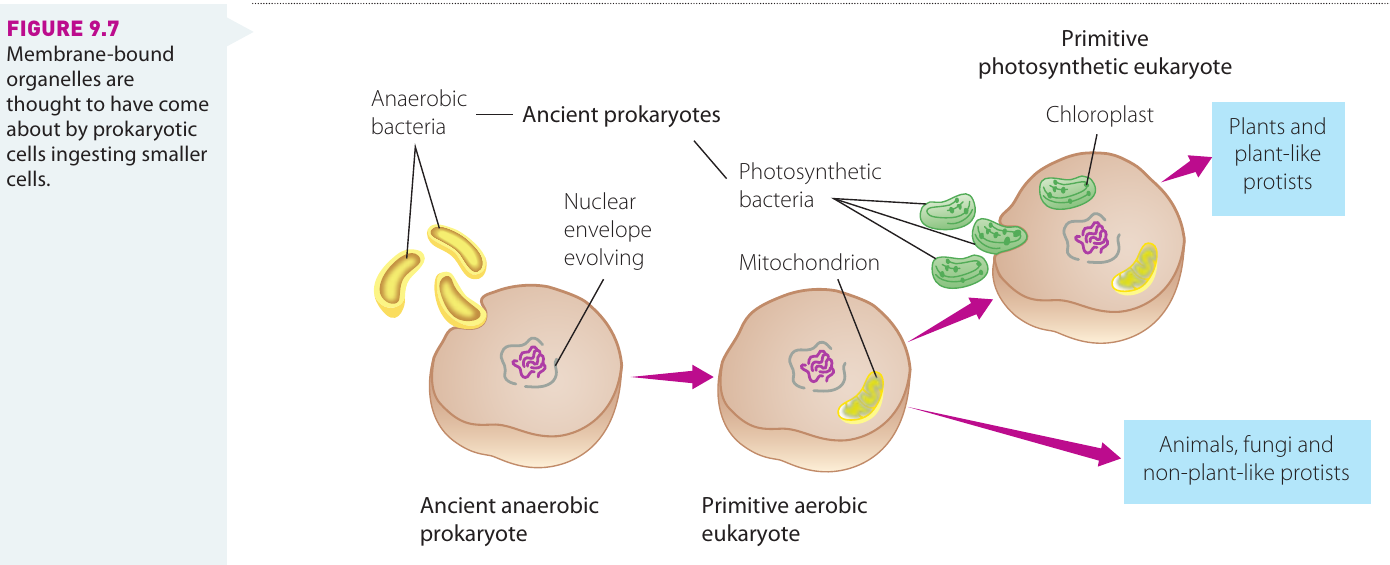
Further advances occurred when cells developed specialised compartments to carry out different chemical reactions. Evidence suggests this happened through:
- Larger cells ingesting smaller cells
- Resulting in membrane-bound organelles such as chloroplasts and mitochondria occurring inside cells
- These would have been the first eukaryotic cells
With cells now able to photosynthesise and produce oxygen, the scene was set for increasing diversity, complexity and size of organisms.
Note
Timeline: All of this would have happened between million years ago (mya) and mya in the Precambrian era.
Major extinction events and diversification
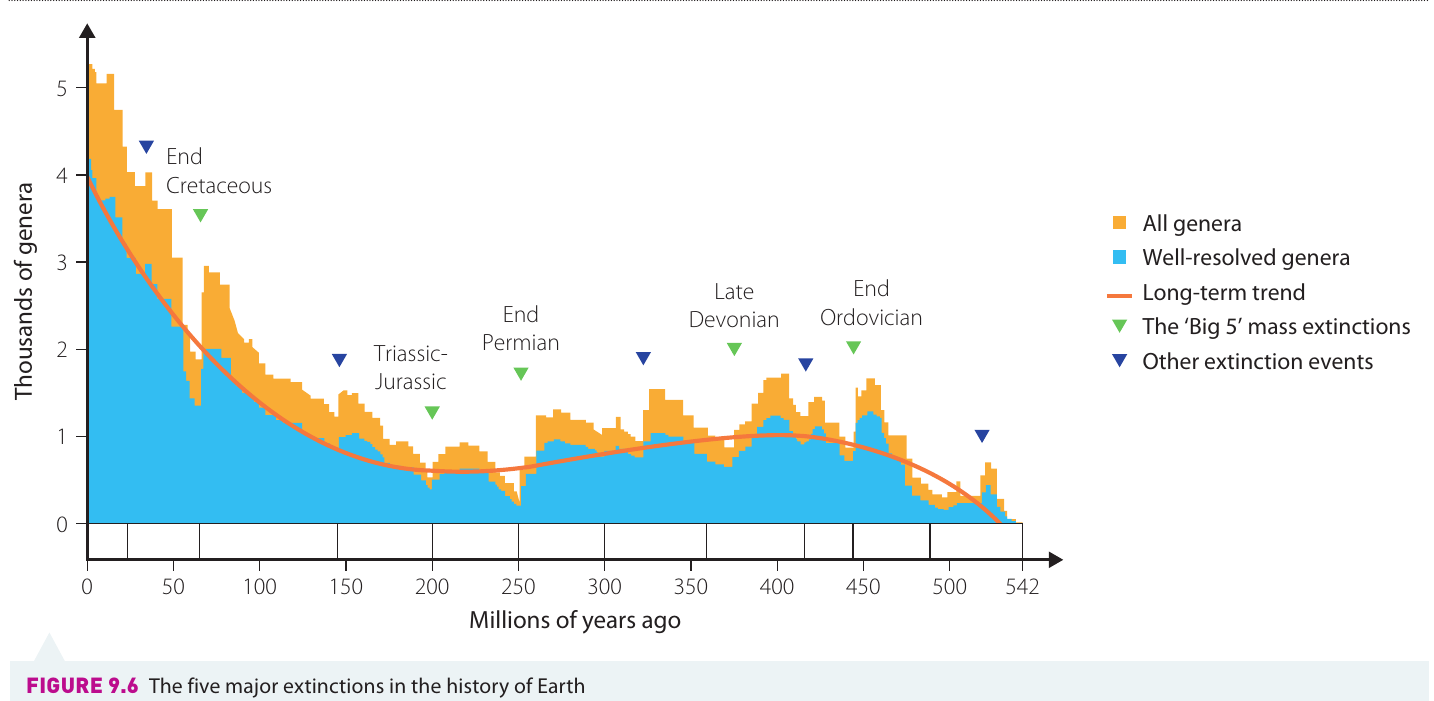
Biologists have been aware of species that changed over longer periods by examining the fossil record. However, the fossil record does not show a uniform pattern of change. Rather, it shows that after a major extinction event (widespread and rapid decrease in biodiversity), new life forms flourish.
Example
Example: Post-dinosaur mammal diversification
After the extinction of the dinosaurs, mammals – once small and rare animals – were able to take advantage of new niches left open as their previous inhabitants became reduced in numbers or extinct. At the end of the Cretaceous period ( mya), the number of reptile families decreased (the fifth mass extinction), enabling mammals to occupy those niches and increase in variety and number.
The diversification timeline
Life began to diversify further following the major changes in the Precambrian era:
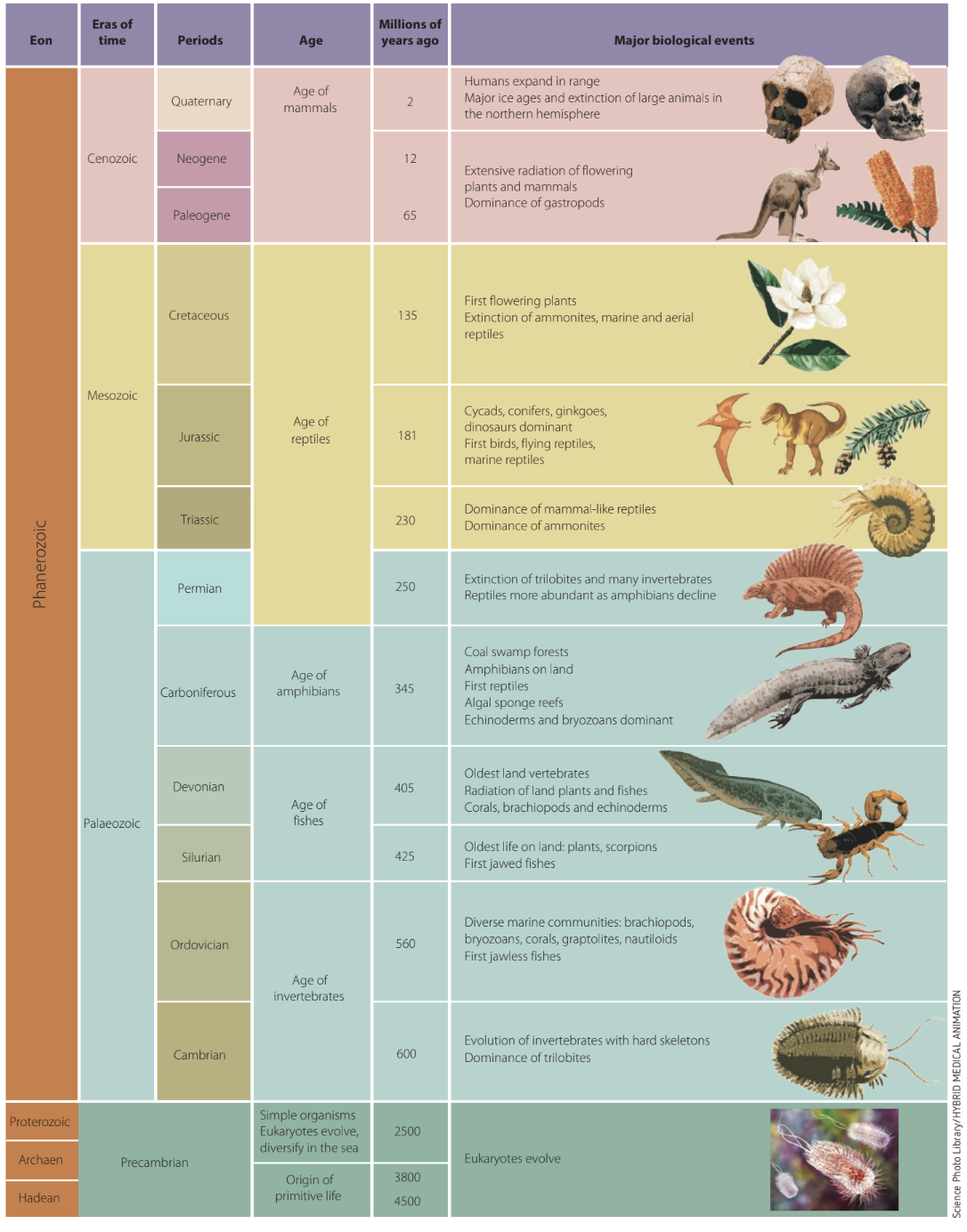
- mya: Rise of invertebrates
- mya: Rise of fish
- mya: Rise of amphibians
- Large extinction of many invertebrates occurred, and amphibians began to decline
- mya: Rise and dominance of reptiles, marking the start of the Mesozoic era (including Jurassic and Cretaceous periods when dinosaurs roamed Earth)
- mya: Mammal-like reptiles dominated after extinction of early land reptiles
- Extinction of marine and aerial reptiles followed
Plant evolution:
- Cycads, conifers and ginkgoes were dominant flora during the Jurassic period
- mya: Flowering plants arose following major extinction of marine and aerial reptiles
The Cenozoic era ( mya):
- Rise of mammals
- During the quaternary period, extinctions of large mammals including megafauna occurred in the northern hemisphere
- Similar extinctions followed on islands including Australia
- These extinctions occurred as humans expanded in range and coincided with dramatic climate changes and ice ages
Note
Hypotheses for these extinction events include:
- Overhunting by humans
- Climate change
- Spread of disease
- Over-predation by non-humans
From unicellular to multicellular organisms
The move from unicellular to multicellular organisms began when cells clustered together:
- When cooperation between cells occurred, colonial organisms resulted, giving them a selective advantage over unicells
- Once cells within the group began to specialise to carry out particular functions, this led to higher organisation and the selection of multicellular organisms
Organisms that have changed little
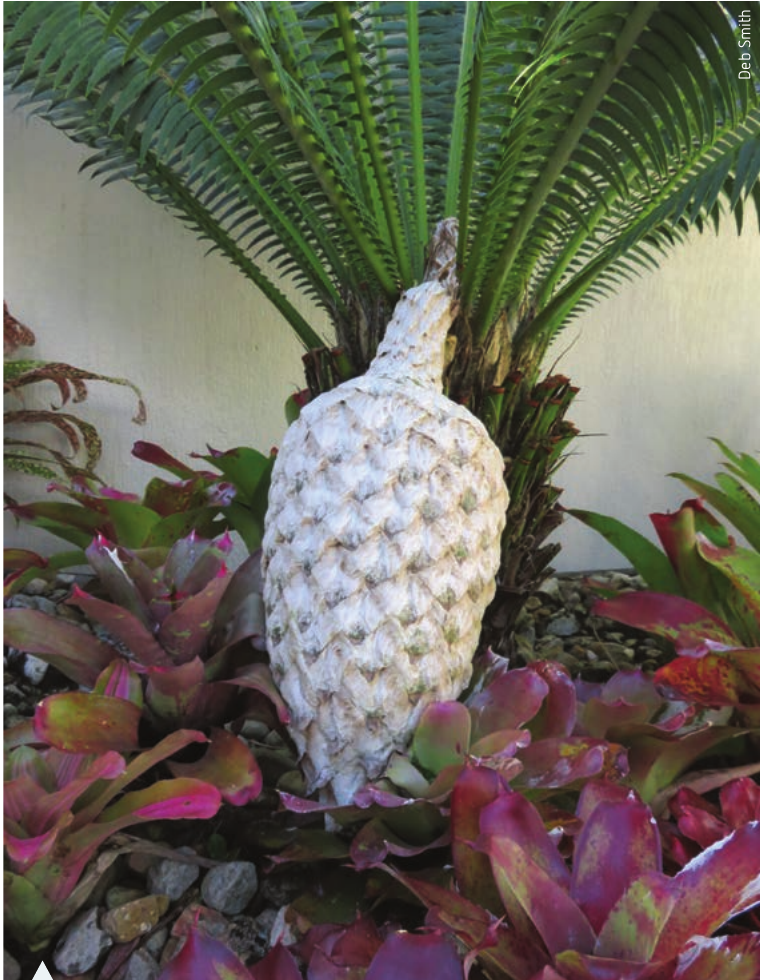
Some organisms appear to have changed very little when examining their fossil record. Examples include:
- Coelacanth (fish)
- Cycads (plants)
- Tuatara (reptile)
- Horseshoe crab (fossils million years old appear very similar to living species)
Important
Rather than suggesting these organisms have not changed, it indicates that their environments have not changed significantly, and therefore they have had little selection pressure influencing their evolution.
Key principle: Organisms that are able to adapt to a variety of environments (having high genetic diversity) are able to survive and out-compete others with less genetic diversity.
The geological timescale and diversity of life
Palaeontology is the scientific study of fossils (the remains of living things). Fossils have provided scientists with evidence of the diversity of living things on Earth.
Development of the geological timescale
The geological timescale was developed to clearly show how the diversity of life changed:
- Nicolaus Steno (1669): Established that all sedimentary rocks were laid down in layers and that bottom layers were older than top layers
- James Hutton (1795): Suggested geological processes were uniform in frequency and magnitude – the principle of uniformitarianism
- William Smith (1815): Developed a geological map of England using fossils to show a logical progression of time – the principle of faunal succession
This enabled scientists to see how living things have changed over millions of years.
Microevolution and macroevolution
It is evident that natural selection may result in:
- Microevolution: Changes within a species (such as antibiotic resistance in bacteria)
- Macroevolution: Populations becoming so different that new species are formed
Note
For speciation to occur, isolation is necessary.
Remember!
Summary
Key Points to Remember:
- Biodiversity refers to the variety of all forms of life on Earth, existing at three levels: genetic diversity, species diversity, and ecosystem diversity
- Genetic diversity is the raw material of evolution and is essential for populations to adapt to environmental changes
- The Darwin-Wallace Theory of Evolution by Natural Selection is based on four key concepts: variability, heritability, over-reproduction, and competition
- Organisms do not develop adaptations in response to environmental change – they must already possess the random variation that becomes advantageous
- Speciation occurs when populations become so different that they can no longer interbreed to produce fertile offspring
- Modern examples like antibiotic resistance in bacteria demonstrate evolution occurring over short time periods (microevolution)
- Life on Earth evolved from simple prokaryotic cells to complex multicellular organisms over billions of years, with major extinction events driving diversification