Why Monitor the Environment? (HSC SSCE Chemistry): Revision Notes
📚Revision Notes
Why Monitor the Environment?
Introduction to environmental monitoring
Environmental pollution is a growing concern across Australia. A simple internet search for terms like "water contamination Australia" returns millions of results, highlighting the scale of the problem. Similar searches for air and soil contamination reveal equally concerning findings. The media regularly reports incidents involving toxic chemicals, such as firefighting foam and chemical spills, which contaminate waterways and soil.
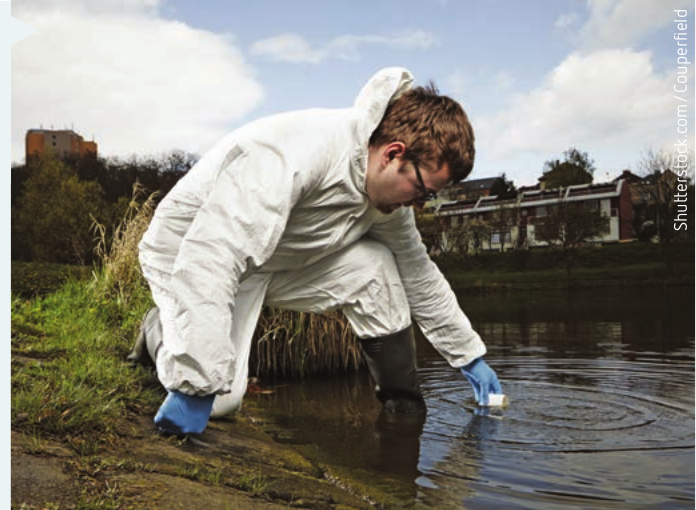
Government organisations play a crucial role in protecting our environment. In Australia, state and federal agencies like the NSW Environmental Protection Authority (EPA) are primarily responsible for monitoring the environment to safeguard the health and safety of the population. These organisations work to identify and measure pollutants, which can be generally classified as either inorganic or organic substances. This chapter focuses specifically on inorganic substances.
What is a pollutant?
Understanding pollution requires a clear definition of what makes a substance a pollutant. We define a pollutant as any substance whose introduction into the environment has undesired effects on the environment itself or on environmental resources. This definition is broader than you might initially think.
Important
Interestingly, even substances that occur naturally in the environment can become pollutants. This happens when their concentrations exceed levels specified in environmental regulations.
A helpful example is ozone ():
- In the upper atmosphere, ozone is beneficial because it absorbs harmful ultraviolet radiation, preventing it from reaching Earth's surface
- At ground level, however, ozone is considered a pollutant because it can damage vegetation and cause human health problems, including respiratory issues
Note
Exam tip: Remember that the same chemical can be beneficial in one location but harmful in another. Context matters when identifying pollutants!
National environmental standards
Australia, like many developed nations, has established comprehensive national guidelines to protect environmental quality. These guidelines set acceptable levels for various parameters across different environmental contexts.
Types of environmental guidelines
Australia maintains national standards for:
- Water quality
- Freshwater (including drinking water)
- Groundwater
- Marine water
- Air quality
- Soil quality
Note
These guidelines define acceptable levels for three types of parameters:
- Biological parameters (living organisms)
- Physical parameters (temperature, turbidity, etc.)
- Chemical parameters (concentrations of specific substances)
The role of chemists
Chemists play a vital role in environmental protection by conducting regular testing and analysis. Their work helps maintain national standards of quality and safety.

Chemists monitor various parameters to ensure the protection of plants and animals in the environment. When pollution is detected, their analysis helps identify the source and extent of contamination, enabling appropriate remedial action.
Sources of pollution
Understanding where pollution comes from is essential for effective environmental management. Two major sources of pollution are chemical spills and excess fertiliser use.
Pollution from chemical spills
Industries produce many chemicals on a large scale that we encounter in everyday life, including in our homes and school laboratories. Common large-scale industrial chemicals include:
- Acids: sulfuric acid () and nitric acid ()
- Bases: sodium hydroxide (), lime ( or ), and sodium carbonate ()
These chemicals serve as raw materials for other industrial processes, such as fertiliser production and metal extraction.
Environmental concerns with chemical spills
The major environmental issue surrounding these chemicals involves what happens during a spill. Spills can occur due to:
- Fires
- Explosions
- Leaks
- Damage to transport vehicles
- Damage to storage tanks
When chemicals cannot be contained, the consequences may be severe and long-lasting.
Case study: Brisbane River firefighting foam spill
Important
Real-World Incident: Brisbane River Contamination
In April 2017, a significant environmental incident occurred when 22,000 litres of firefighting foam containing toxic chemicals was accidentally released into the Brisbane River. This spill was believed to be responsible for the deaths of many marine organisms.
The incident triggered:
- Ongoing monitoring of water quality in the affected area
- Public health warnings advising people not to consume seafood caught in the area
- Increased awareness of the environmental impact of firefighting foam
This same type of foam has been used over many years at air force bases across Australia, leading to contamination of soil and groundwater. This contamination poses ongoing dangers to populations living near these bases, requiring continuous monitoring of water and soil quality.
Household chemical pollution
The general population also contributes to environmental pollution. Many people don't realise that certain household products should not be released into wastewater or stormwater drains. These include:
- Herbicides
- Pesticides
- Paints
- Other toxic chemicals
These substances eventually make their way into waterways, where they can harm aquatic ecosystems.
Note
Exam tip: Be prepared to discuss both industrial and domestic sources of pollution, as questions may ask about various contributors to environmental contamination.
Pollution from fertilisers
Excess fertiliser use creates a different type of environmental problem. When fertilisers are washed off gardens and agricultural fields during rainfall, they often make their way into lakes and rivers. This seemingly simple process can trigger a cascade of environmental problems.
Nutrients and algae growth
Fertilisers contain nutrients that plants need to grow, particularly:
- Phosphates (containing phosphorus)
- Nitrates (containing nitrogen)
While these nutrients help crops and gardens flourish, they also act as nutrients for algae that live in waterways. When excess nutrients from fertilisers enter a waterway, algae can experience explosive growth rates.
Eutrophication: a serious water quality problem
What is eutrophication?
Eutrophication is the enrichment of waterways through the addition of nutrients, particularly phosphates and nitrates. While this may sound harmless, it leads to severe environmental consequences.
The eutrophication process
Example
How Eutrophication Develops: Step-by-Step
When excess nutrients from fertilisers are released into a waterway, the following sequence occurs:
Step 1: Rapid algae growth Algae populations experience fast growth rates due to abundant nutrients
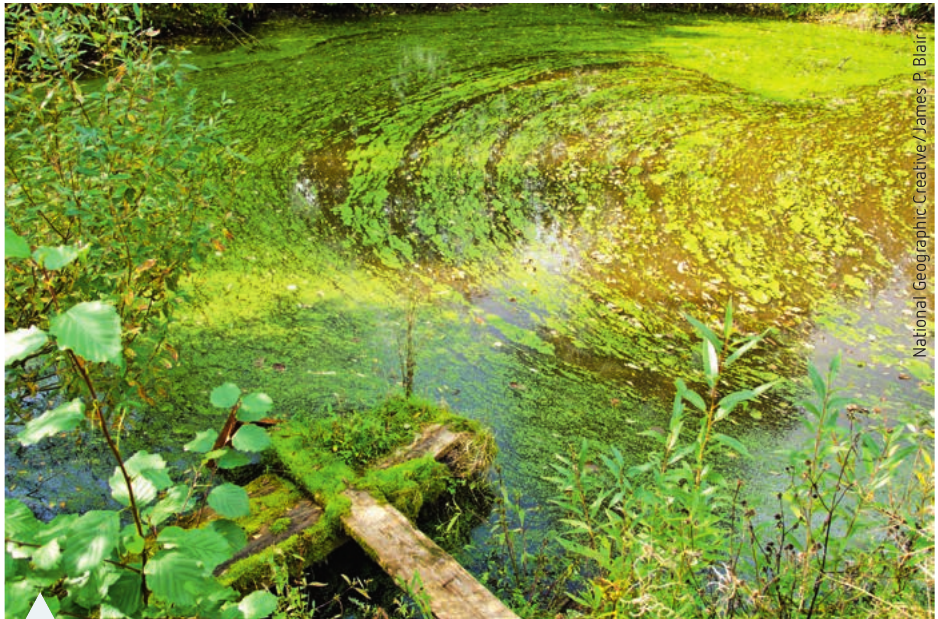
Step 2: Algal bloom formation In extreme situations, algae form thick layers on the water surface
Step 3: Light blocking These thick algal blooms prevent sunlight from penetrating into the water
Example
Continuing: The Destructive Cascade
Step 4: Underwater plant death Plants growing underwater cannot photosynthesise without sunlight, causing them to die
Step 5: Oxygen depletion Reduced photosynthesis means less oxygen is produced in the water. The lack of oxygen means aquatic animals such as fish cannot breathe and subsequently die
Step 6: Anaerobic decay As animals and algae die, they undergo decomposition in the low-oxygen environment. This anaerobic (without oxygen) decay process produces toxic chemicals
Toxic chemicals produced by eutrophication
Important
The anaerobic decay during eutrophication produces several dangerous chemicals:
- Methane ()
- Ammonia ()
- Hydrogen sulfide ()
- Phosphine ()
Memory aid: Remember "MAPS" - Methane, Ammonia, Phosphine, Sulfide - for the toxic products of eutrophication.
These chemicals poison the waterways, making them unsafe for:
- Drinking
- Recreation (swimming, fishing)
- Agricultural water supply
Regulation of fertiliser use
Problems with eutrophication have become so severe in some regions that fertiliser use is now regulated:
- In some parts of the United States, waterways are so polluted that householders are legally banned from using fertilisers in their gardens to prevent nutrient run-off into river systems
- In Australia, the Murray River suffers from algal blooms. Farmers are sometimes asked to limit fertiliser use or implement measures to prevent run-off into the river, reducing the nutrients available to algae
Note
Exam tip: Be prepared to explain the complete eutrophication process, from nutrient addition through to toxic chemical production. Understanding the cause-and-effect relationships is crucial.
Remember!
Summary
Key Points to Remember:
-
Environmental monitoring is essential for identifying pollutants that may affect the health of plants and animals, enabling problems to be addressed before they become severe.
-
A pollutant is any substance that causes undesired effects on the environment, including naturally occurring substances when present in excessive concentrations.
-
Chemical spills from industrial production, transport, and storage of chemicals like acids and bases pose significant environmental risks. Real incidents like the Brisbane River firefighting foam spill demonstrate the long-term consequences of chemical contamination.
-
Fertiliser pollution occurs when excess phosphates and nitrates wash into waterways, triggering eutrophication - a process that enriches waterways with nutrients, causing explosive algae growth.
-
Eutrophication creates a destructive cycle: algal blooms block sunlight → underwater plants die → oxygen levels drop → fish die → anaerobic decay produces toxic chemicals (methane, ammonia, hydrogen sulfide, phosphine) → waterways become unsafe for all uses.