Associated Issues (HSC SSCE Chemistry): Revision Notes
📚Revision Notes
Associated Issues
The chemical industry creates significant impacts across Australian society, the economy, and the environment. Understanding these associated issues helps us recognise both the benefits and challenges of chemical production, and how modern approaches like green chemistry aim to address environmental concerns.
Economic and social impacts
Australia's chemical industry makes substantial contributions to the national economy. The mining sector alone employs more than 2% of the Australian population across diverse roles, including engineers, chemists, truck drivers, and accountants. When combined with the broader chemical manufacturing sector that produces household and industrial chemicals for domestic use and export, employment numbers grow considerably.
The economic value is equally impressive. Australia's chemical manufacturing industry contributes approximately $11 billion to the national economy and represents 11.5% of the entire manufacturing sector. This demonstrates how integral chemical production is to Australia's economic health and employment landscape.
Note
The diversity of employment roles—from highly specialised engineers and chemists to logistics and administrative professionals—shows how the chemical industry creates opportunities across multiple skill levels and career paths, strengthening local communities through varied employment options.
Energy in chemical production
Energy represents a major factor in all chemical production processes. Understanding where this energy comes from and how it's used helps explain both the costs and environmental impacts of the chemical industry.
Note
Energy costs often represent one of the largest operating expenses for chemical manufacturers, which is why companies strategically locate facilities near affordable energy sources and continuously invest in energy-efficient technologies.
Energy sources
Most energy used in chemical production comes from burning fossil fuels, including coal, natural gas, and petroleum. However, chemical companies increasingly turn to alternative sources when available. Hydroelectricity and other renewable energy sources offer two key advantages: they can be cheaper to use and they cause less environmental damage than fossil fuel combustion.
Example
Worked Example: Strategic Location for Energy Access
Tasmania demonstrates how energy availability influences industrial location decisions. Many metal refining companies that require electrolysis have established operations specifically in Tasmania to access the abundant hydroelectric power available in that state.
Why Tasmania?
- Abundant hydroelectric resources provide cheap, reliable power
- Electrolysis processes consume enormous amounts of electricity
- Lower energy costs = lower production costs = competitive advantage
- Reduced environmental impact compared to fossil fuel-powered operations
This strategic location choice reduces both costs and environmental impact, showing how renewable energy can drive both economic and environmental benefits.
Energy uses in the industry
Chemical production requires energy at multiple stages, with some processes demanding far more energy than others. The following uses are listed in order of increasing energy consumption:
- Physical processes: Powering machinery for crushing and grinding raw materials requires the least energy
- Transportation: Moving materials via trucks, conveyor belts, or pipes demands moderate energy
- Heating processes: Roasting or evaporative processes like distillation require substantial energy to achieve the high temperatures needed
- Electrolysis: Breaking down chemicals through electrolysis of aqueous or molten solutions consumes the most energy
Understanding this hierarchy helps explain why chemical companies constantly seek more energy-efficient methods and why electrolysis processes are often located near cheap power sources.
Note
Memory Aid: Remember the energy hierarchy with "Please Try Heating Early":
- Physical processes
- Transport
- Heating
- Electrolysis
Environmental issues
The chemical industry creates significant environmental impacts through both the production process and the use of final products. These impacts require careful management and increasingly strict regulation.
Consequences of acid rain
Acid rain forms when industrial waste products enter the atmosphere and react with water to create acids. This environmental problem illustrates how chemical production can have far-reaching consequences beyond the factory site.
Formation of acid rain
Although fossil fuels primarily contain carbon and hydrogen, they often include sulfur impurities. When these fuels burn, sulfur oxides form and subsequently react with atmospheric water to create sulfuric acid. The chemistry proceeds through these steps:
Important
The hydrogen ions () produced in the final step make the rainwater acidic, creating what we call acid rain. This seemingly simple chemistry has devastating environmental consequences across entire ecosystems.
Effects on aquatic environments
When acid rain falls, it travels into rivers, lakes, and other waterways through drainage systems and land runoff. The consequences for aquatic ecosystems can be severe and complex.
Many soils naturally contain negatively charged silicate ions that bind to various ions in the soil. Some bound ions benefit the environment (like magnesium and potassium), whilst others cause harm (particularly aluminium). When acid rain falls, the hydrogen ions displace these bound ions from the soil silicates. This releases harmful ions like aluminium, which then wash into nearby waterways.
Note
The Displacement Mechanism:
Think of soil silicates as holding different ions in storage. When acidic hydrogen ions () arrive, they're like aggressive competitors that push out the previously stored ions. Unfortunately, this releases toxic aluminium ions that then flow into waterways, creating a secondary source of harm beyond the direct pH reduction.
The combination of low pH and increased aluminium ion concentration devastates aquatic life. Whilst some plants and animals can tolerate acidic conditions, many species are highly sensitive to pH changes. Young organisms and eggs face particular vulnerability. At pH 5 or below, fish eggs simply will not hatch. If pH drops even lower, adult fish suffer direct harm and die.
Important
Critical pH Threshold: pH 5 represents a crucial tipping point for aquatic ecosystems. Below this level, fish reproduction fails completely as eggs cannot hatch. Remember: "Fish Five" — fish eggs fail below pH five. This single threshold can determine whether an entire fish population survives or disappears.
Crustaceans with calcium carbonate exoskeletons face a different but equally serious threat. The acid reacts directly with their shells, softening and potentially destroying them, leaving the animals defenceless. This reaction proceeds as follows:
When organisms die from these effects, the entire ecosystem suffers. Animals that depend on these organisms for food struggle to survive, and these impacts cascade through all levels of the food web.
Effects on forests
Acid rain also devastates forest ecosystems. Trees exposed to acid rain show slowed growth rates, leaves that turn brown, and eventually stopped photosynthesis. The damage occurs through multiple mechanisms.
Acid in the soil releases toxic ions like aluminium, using the same displacement process described earlier. This aluminium blocks the uptake of essential nutrients through tree roots, effectively starving the trees even when nutrients are present in the soil. In severe cases, entire forest regions in Europe and North and South America have died from prolonged acid rain exposure.
Note
The Starvation Mechanism:
Even though nutrients exist in the soil, aluminium ions prevent trees from accessing them. It's like having food in a locked cupboard — the nutrients are there, but the tree cannot use them. This indirect effect often proves more devastating than the direct acidic damage to leaves and bark.
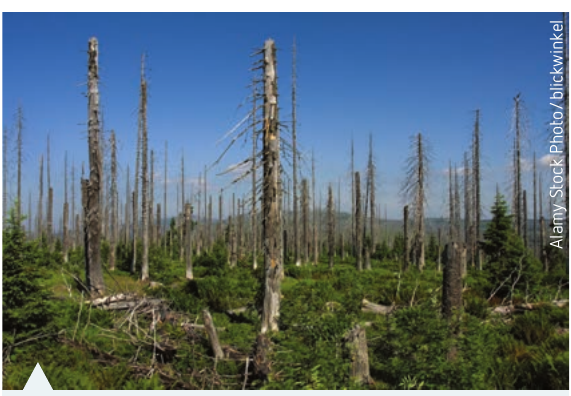
The image above shows the stark reality of forest devastation caused by acid rain, with dead standing trees stripped of foliage creating a skeletal landscape.
Effects on buildings
Human-built structures also suffer from acid rain. Limestone and marble buildings across Europe show severe damage from decades of acid rain exposure. The calcium carbonate in these building materials dissolves through the same chemical reaction that destroys crustacean shells (shown in the equation above). Over time, this dissolution causes significant structural damage and loss of architectural detail.
Chemical spills
Beyond ongoing emissions, the chemical industry faces serious environmental risks from accidental spills. These incidents can occur during production, transport, use, or storage of chemicals, and may result from fires, explosions, leaks, or damage to transport vehicles and storage tanks.
The Bhopal disaster
The Bhopal disaster of December 1984 stands as one of the worst chemical spills in history, demonstrating the catastrophic potential of chemical accidents. A gas leak at the Union Carbide India pesticide plant in Bhopal, India, exposed half a million people to methyl isocyanate and other toxic gases.
Methyl isocyanate is an extremely toxic chemical that causes severe problems through inhalation or skin contact. Exposed individuals can suffer chest pains and chemical burns. At high concentrations, the chemical causes pulmonary oedemas (fluid in the lungs), haemorrhages, and death.
Important
The Scale of the Disaster:
No official death toll has ever been fully confirmed, but authorities recorded at least 3000 deaths, with some reports suggesting up to 8000 people died from chemical exposure. Tens of thousands more suffered chemical burns and other serious injuries.
This tragedy represents one of the deadliest industrial accidents in history and fundamentally changed how the world approaches chemical safety and emergency planning.
Regulatory responses
The Bhopal disaster prompted worldwide reviews and implementations of emergency planning procedures. In the United States, legislators passed the Emergency Planning and Community Right-to-know Act. This law requires companies to provide detailed information about chemicals they use, store, and transport, and to submit comprehensive emergency plans for potential spills, leaks, and other incidents.
Note
Today, similar planning requirements and legislation exist throughout the world, significantly improving preparedness for chemical emergencies. The Bhopal disaster, whilst tragic, created a lasting legacy of improved safety standards that have likely prevented countless other disasters.
Addressing environmental issues
Recognition of these environmental problems has led to increasing regulation of the chemical industry. Several approaches now work together to reduce environmental harm.
Legislation and waste treatment
Modern legislation regulates how waste generated by chemical production must be treated and disposed of. The law now requires that waste can only be disposed of when it no longer harms the environment.
Liquid wastes from chemical plants must meet strict legislative requirements before release into sewage systems or waterways. Gases containing contaminants must pass through devices called scrubbers, which remove the majority of contaminants before the gases enter the atmosphere.
Note
Prevention vs. Treatment:
The chemical industry increasingly adopts new chemical processes and clean technologies designed to reduce the amount of waste produced in the first place. This preventative approach often proves more effective and economical than treating waste after production — it's easier and cheaper to avoid creating a problem than to fix it later.
Green chemistry
A movement called green chemistry has emerged with the specific aim of reducing chemistry's environmental impact through fundamental changes to how we design and conduct chemical processes.
Green chemistry represents a relatively new field that aims to reduce environmental impact by minimising or eliminating the use or production of hazardous substances. As our understanding of chemical impacts on the environment grows, the importance of this approach becomes increasingly clear.
Important
The Philosophy of Green Chemistry:
Green chemistry requires analysing all aspects of chemical production to ensure nothing potentially harmful is used or produced. This approach adopts the principle that "prevention is better than cure".
Rather than adding steps to deal with hazardous chemicals after their production, green chemistry aims to prevent their formation in the first place. This fundamental shift in thinking represents a revolutionary approach to chemical manufacturing.
Origins and principles
The concept of green chemistry originated with the US Federal Pollution Prevention Act of 1990. This legislation established a hierarchy for addressing pollution:
- Prevent pollution at the source
- Treat chemicals to make them safe before disposal
- Dispose of untreated chemicals safely
This hierarchy operates in order of preference. When designing a process, the primary goal is preventing pollution entirely. If hazardous chemicals cannot be avoided, they should be treated before disposal. Only if treatment proves impossible should untreated chemicals be disposed of (and then only through safe methods).
Example
Worked Example: Applying the Pollution Hierarchy
Consider a factory that produces a pharmaceutical drug, generating toxic solvent waste:
Option 3 (Dispose): Collect toxic solvents and send to hazardous waste facility
- Cost: High
- Environmental impact: Moderate to high
- Long-term sustainability: Poor
Option 2 (Treat): Use chemical processes to neutralise toxic solvents before disposal
- Cost: Moderate
- Environmental impact: Low to moderate
- Long-term sustainability: Moderate
Option 1 (Prevent — Best Choice): Redesign the synthesis to use non-toxic solvents or eliminate solvents entirely
- Cost: Low (after initial redesign)
- Environmental impact: Minimal or none
- Long-term sustainability: Excellent
The hierarchy shows us that prevention delivers the best outcome for both the environment and the bottom line, even though it may require more upfront thinking and design work.
This systematic approach ensures that environmental protection receives priority at every stage of chemical production, rather than being an afterthought.
Summary
Key Points to Remember:
-
Australia's chemical industry contributes $11 billion to the economy and employs over 2% of the population, demonstrating significant economic and social importance.
-
Energy consumption in chemical production increases in this order: physical processes → transport → heating → electrolysis, with electrolysis requiring the most energy.
-
Acid rain forms when sulfur oxides from fossil fuel combustion react with water to produce sulfuric acid, which then damages aquatic life, forests, and buildings through reduced pH and release of toxic aluminium ions.
-
The Bhopal disaster (1984) resulted in at least 3000 deaths and led to worldwide implementation of emergency planning legislation requiring companies to disclose chemical information and prepare spill response plans.
-
Green chemistry follows the pollution hierarchy of prevent → treat → dispose, prioritising the elimination of hazardous substances at the design stage rather than managing them after production.