Australia's First People – Removing Toxicity From Foods (HSC SSCE Chemistry): Revision Notes
📚Revision Notes
Australia's First People – Removing Toxicity From Foods
Introduction to traditional plant knowledge
Aboriginal and Torres Strait Islander peoples possessed extensive knowledge about their environment and the plants within it. They utilized approximately 700 different plant species for various purposes, including shelter construction, transport (canoes), weapons, hunting tools, fishing equipment, food preparation containers, nutritional sources, firewood, and water carriers. Plants served as a major source of carbohydrates in their diet.
Note
Diverse Plant Applications
The variety of plant uses demonstrates sophisticated understanding of natural resources:
- Structural: Shelter, canoes, weapons
- Tools: Hunting equipment, fishing gear
- Containers: Food preparation and water storage
- Sustenance: Nutritional sources and carbohydrates
- Energy: Firewood and heat sources
This diversity shows how deeply Aboriginal and Torres Strait Islander peoples understood the properties and potential applications of different plant species.
Plant processing requirements
Of the 700 plant species used, more than 300 required some form of processing before consumption, and approximately 20 needed complex processing. This term refers to treatment methods requiring more than half a day to complete. Complex processing was typically necessary due to the presence of:
- Toxins: Substances causing harmful effects or potentially fatal outcomes
- Unpalatable substances: Materials with disagreeable taste or smell
Whilst the overall percentage of plants needing complex processing was relatively small, in certain localized regions—particularly tropical rainforest ecosystems—this proportion was significantly higher.
Important
Understanding Complex Processing
Complex processing refers specifically to treatment methods that take more than half a day to complete. This extended time requirement indicates the presence of either highly toxic compounds or substances that are difficult to remove through simple preparation methods.
Toxicity in edible plants
In the tropical rainforests of north-eastern Queensland, approximately two-thirds of edible plant species contained no toxic substances. For the remaining plants:
- Some parts were toxic whilst others remained safe to consume
- Some contained toxins in quantities below the threshold for health concerns
- Others required processing to become safe for consumption
Note
Example: Planchonia careya (Cocky Apple)
This plant demonstrates the complexity of toxin distribution in edible species. The fruit is safe to eat, but the bark and roots contain toxins. This selective toxicity required detailed knowledge to identify which parts could be consumed safely without processing.
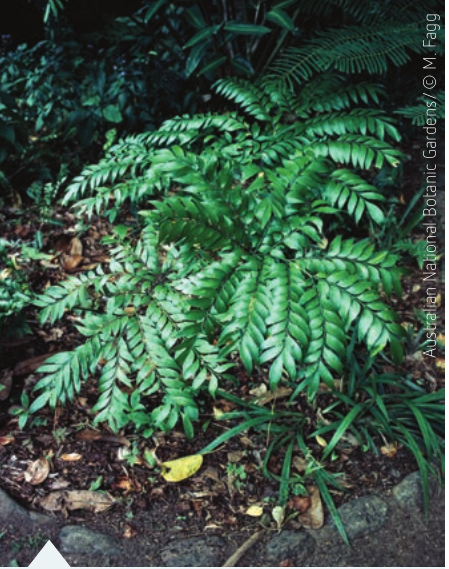
Cycads: A case study in toxic plant processing
Distribution and characteristics
Cycads are commonly found throughout Australian tropical regions. The distribution map below shows four genera: Bowenia (yellow), Cycas (blue), Macrozamia (red), and Lepidozamia (green).
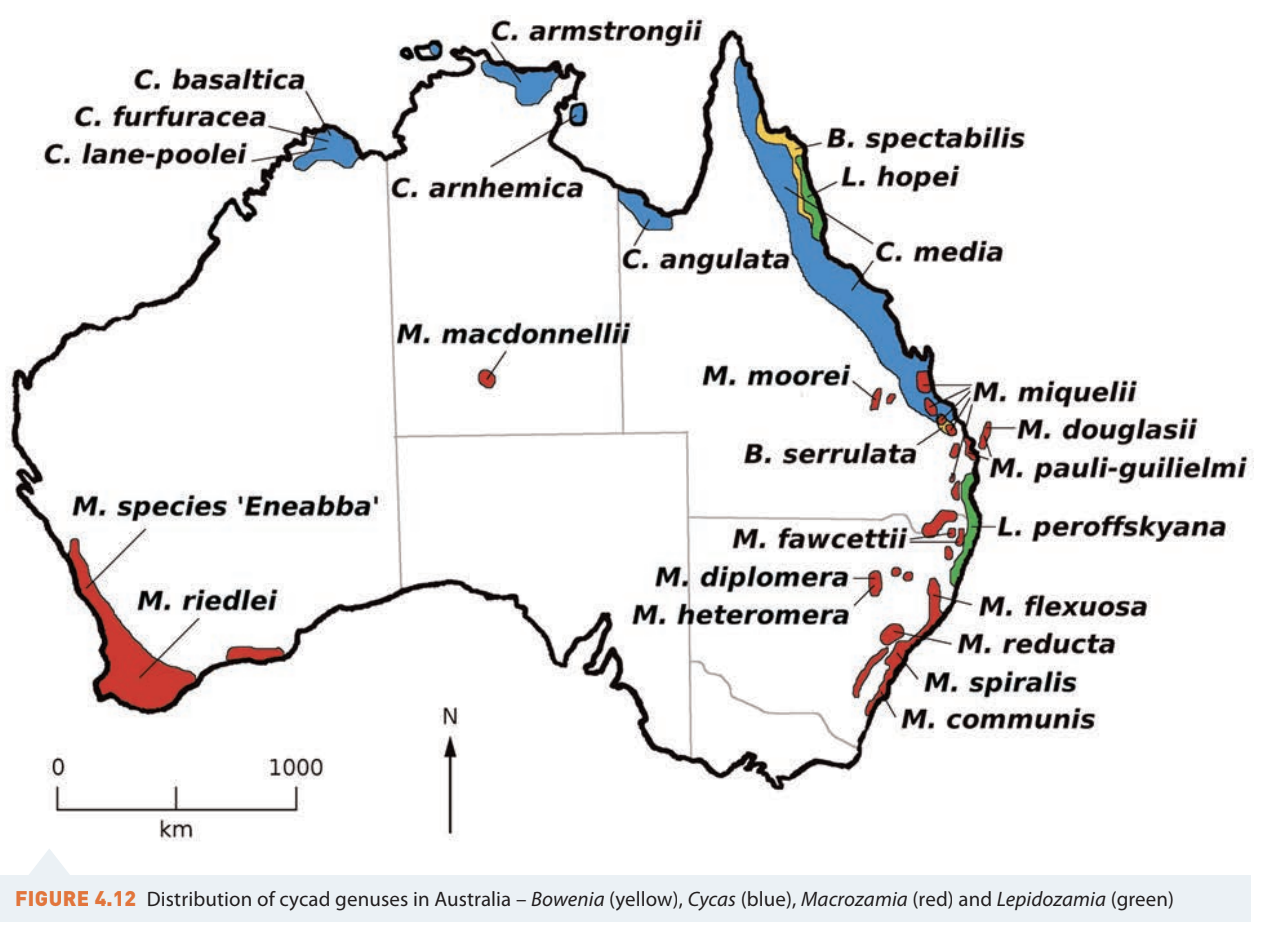
Bowenia spectabilis, found in tropical north-eastern Queensland, holds the distinction of being the world's most toxic cycad with the highest levels of harmful compounds. Despite this extreme toxicity, Aboriginal and Torres Strait Islander peoples successfully processed and consumed the roots of this plant.
Why process such toxic plants?
Several factors made cycad processing worthwhile:
- Cycads regenerate rapidly after fire, providing food when other plants are unavailable
- They produce large quantities of fruit
- They offered dietary variety
- They were available during seasons when other food sources were scarce
Toxic compounds in cycads
Important
Health Risks from Azoxyglycosides
Cycads contain azoxyglycosides, which cause serious health problems:
- Gastrointestinal disorders
- Liver damage and cancer
- Myelin degradation (stripping the protective layer around nerves, causing nerve impulse leakage and unpredictable movements)
- Potentially fatal outcomes if consumed without proper treatment
The severity of these health risks underscores the remarkable knowledge required to safely process these plants for consumption.
The chemistry of leaching
What is leaching?
Leaching is a water-based extraction process used to dissolve and remove toxins from plant materials. This method is effective when:
- The toxins are water-soluble
- A reliable water supply is available
The main toxin: Cycasin
The primary toxic compound in cycads is cycasin (methylazoxymethanol glucoside). Its molecular structure reveals the presence of oxygen, nitrogen, and hydrogen atoms arranged in a specific configuration that makes it water-soluble.
The solubility of cycasin is of water, making leaching highly effective for its removal.
Example
Traditional Leaching Method: Step-by-Step Process
Aboriginal and Torres Strait Islander peoples developed a sophisticated multi-stage technique:
Step 1: Cooking The plant material (seeds or kernels) was first cooked to begin breaking down cellular structures.
Step 2: Preparation The cooked material was then pounded, sliced, or ground into a meal to increase surface area.
Step 3: Container Preparation The prepared material was placed in finely woven baskets made from lawyer cane (Calamus australis).
Step 4: Water Flow The baskets were positioned in flowing creeks where continuous water movement occurred.
Step 5: Duration The process continued from a few hours to several days, depending on toxin levels.
Key Advantage: Using flowing water meant toxins continuously dissolved and were carried away, preventing accumulation and maintaining maximum efficiency throughout the process.
Solution equilibria and dynamic equilibrium
Modern leaching processes
Contemporary leaching methods, such as treating artifacts recovered from shipwrecks, use static water in containers. In this scenario:
- Salts from the artifact dissolve into the water
- The salt concentration gradually increases
- Eventually, the water cannot dissolve additional salts
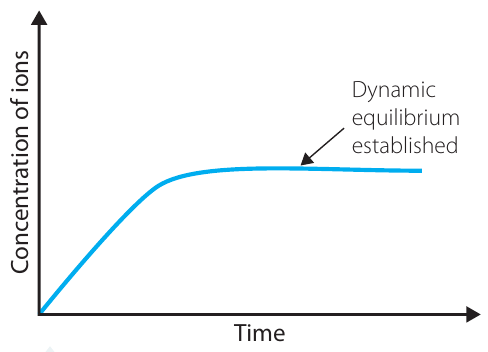
- Dynamic equilibrium is established
Understanding dynamic equilibrium
At dynamic equilibrium, two processes occur simultaneously at equal rates:
- Salts dissolving from the artifact into the water
- Salts moving from the water back into the artifact
The graph below illustrates how ion concentration changes over time during leaching, showing the point at which dynamic equilibrium is reached.
Note
Breaking Dynamic Equilibrium
When dynamic equilibrium occurs, the water must be replaced with fresh water to continue the leaching process effectively. The artifact is removed, the solution discarded, and the container refilled with fresh water before returning the artifact to continue treatment.
This manual water replacement mimics what flowing water accomplishes naturally.
The advantage of flowing water
Aboriginal and Torres Strait Islander peoples' use of flowing creeks meant that water was constantly being replaced naturally. The toxins were continuously carried away by the current, and the system never reached dynamic equilibrium. This made their traditional method highly efficient—they didn't need to manually replace the water, and the leaching process could continue uninterrupted for as long as necessary.
Important
Why Flowing Water Was Superior
The key difference between static and flowing water systems:
Static Water (Modern Method)
- Dynamic equilibrium is reached
- Requires manual water replacement
- Leaching stops when equilibrium is achieved
- Less efficient overall
Flowing Water (Traditional Method)
- Equilibrium never established
- Continuous natural water replacement
- Leaching continues indefinitely
- Maximum efficiency maintained
This demonstrates how traditional knowledge achieved optimal results by preventing the establishment of dynamic equilibrium.
The significance of traditional knowledge
The development of techniques to safely process toxic plants like cycads demonstrates:
- Sophisticated understanding of chemical processes (without modern terminology)
- Careful observation and experimentation over generations
- Ability to expand food resources through processing technology
- Knowledge of solubility principles and water flow dynamics
- Improved food security and dietary variety
This traditional knowledge represents an important intersection between cultural practices and chemical principles, particularly solution equilibria. The leaching process used by Australia's First People exemplifies practical application of solubility concepts that are fundamental to modern chemistry.
Summary
Key Points to Remember
-
Aboriginal and Torres Strait Islander peoples used approximately 700 plant species, with over 300 requiring processing to remove toxins or unpalatable substances.
-
Leaching is a water-based extraction process that works by dissolving water-soluble toxins. It is most effective when toxins have high solubility and flowing water is available.
-
Cycasin, the main toxin in cycads, has a solubility of , making it highly amenable to removal by leaching.
-
Dynamic equilibrium occurs when the rate of dissolution equals the rate of redeposition. Flowing water prevents this equilibrium from being established, making traditional leaching methods highly efficient.
-
The sophisticated processing techniques developed by Australia's First People demonstrate practical application of solution equilibria principles long before modern chemistry formalized these concepts.