Investigating Compound Properties and Elements (HSC SSCE Chemistry): Revision Notes
📚Revision Notes
Investigating Compound Properties and Elements
Why compounds differ from their elements
When elements combine chemically to form compounds, something remarkable happens: the resulting compound has completely different properties from the elements that made it. This might seem surprising at first, but it's a fundamental principle of chemistry that helps explain why substances behave the way they do.
Note
For example, sodium is a soft, highly reactive metal that explodes when it touches water. Chlorine is a poisonous green gas. Yet when these two dangerous elements combine, they form sodium chloride—ordinary table salt that we safely eat every day! This dramatic transformation illustrates how profoundly chemical bonding changes the nature of substances.
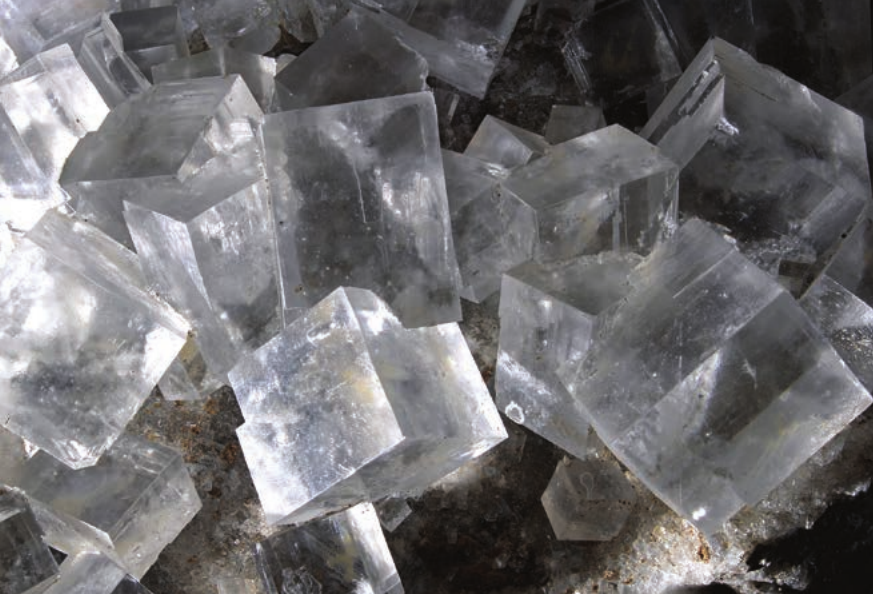
This dramatic difference in properties occurs because of how atoms bond together. As you learned previously, atoms naturally tend to arrange their electrons to achieve the stable electron configuration of the nearest noble gas. The way atoms achieve this stability determines the properties of the substances they form.
In this investigation, you'll explore these concepts by comparing the properties of magnesium and oxygen with the compound they form when combined: magnesium oxide.
Investigation 5.1: Comparing magnesium, oxygen and magnesium oxide
What you'll investigate
The aim of this investigation is to compare specific properties of two elements (magnesium and oxygen) with the compound they form (magnesium oxide). By conducting this comparison, you'll develop a deeper understanding of how chemical bonding changes the characteristics of substances.
This investigation combines hands-on practical work with secondary research, giving you experience in both experimental techniques and scientific data collection.
Equipment and materials needed
Before beginning your investigation, gather the following items:
- magnesium ribbon
- piece of sandpaper
- Heat-proof mat
- Bunsen burner
- Tripod
- Matches
- Crucible and lid
- Pipe-clay triangle
- Brass tongs
- Power pack
- Watch glass
- Mounted lamp
- electrical wires with banana plugs
- alligator clips
Safety first: risk assessment
Important
Safety is paramount when conducting chemistry experiments, especially those involving heating and bright light. Consider the following risks and how to manage them:
| What are the risks in doing this investigation? | How can you manage these risks to stay safe? |
|---|---|
| Burning magnesium produces a bright white light | Do not look directly into the crucible while heating the magnesium |
| The crucible will be very hot after heating | Use brass tongs to move it from the pipe-clay triangle to the heat-proof mat |
Always think about additional risks that might apply to your specific laboratory situation. Discuss any concerns with your teacher before proceeding.
Experimental procedure
Follow these steps carefully to conduct your investigation:
1. Prepare the magnesium: Begin by cleaning your magnesium ribbon using the sandpaper. This removes any oxide coating on the surface. Record what the cleaned magnesium looks like in your observations.
2. Set up the apparatus: Loosely coil the magnesium strip and place it inside the crucible. Position the crucible on the pipe-clay triangle, which should sit on top of the tripod.
3. Begin heating: Place the lid on the crucible and light your Bunsen burner. Heat the crucible using the hot blue flame.
4. Allow air to enter: Periodically lift the lid using brass tongs to allow fresh air (oxygen) into the crucible. This ensures the magnesium can react with oxygen.
5. Continue the reaction: Keep heating the apparatus for approximately to minutes. The magnesium needs sufficient time and heat to react completely with the oxygen.
6. Observe the product: After heating is complete, carefully lift the crucible lid and observe the magnesium oxide that has formed. Record detailed notes about its appearance.
7. Test electrical conductivity: Set up your power pack and mounted lamp circuit. Test whether magnesium (the element), oxygen (in air), and magnesium oxide (the compound) conduct electricity. Record your observations.
8. Research melting points: Use reliable data books or internet sources to find the melting point values for magnesium, oxygen, and magnesium oxide. Record these values in degrees Celsius.
Note
The most significant changes occur during steps 3-6 when the magnesium reacts with oxygen. You may observe the magnesium glowing brightly and changing colour—this indicates the chemical reaction is taking place and new bonds are forming.
Recording your observations
Create a table like the one below in your notebook to organize your findings. In the 'conducts electricity?' row, enter 'yes' or 'no' based on your testing.
| Element/Compound | Magnesium | Oxygen | Magnesium oxide |
|---|---|---|---|
| State (solid, liquid or gas) | |||
| Appearance | |||
| Conducts electricity? | |||
| Melting point (°C) |
Take time to fill in each cell thoughtfully. Look for patterns and differences as you complete the table.
Analysing your results
Once you've collected all your data, carefully compare the properties of magnesium, oxygen, and magnesium oxide. Consider each property in turn:
- How do the physical states differ? Why might this be significant?
- What differences do you notice in appearance? Is the compound similar to either element?
- How does electrical conductivity vary between the elements and their compound?
- Compare the melting points. What pattern emerges?
Note
Look for both similarities and differences. The goal is to build a complete picture of how these substances relate to each other. Pay particular attention to whether the compound's properties are intermediate between the two elements, or completely different from both.
Drawing your conclusion
Based on your analysis, you need to answer a crucial question: Does the compound magnesium oxide have the same properties as its constituent elements (magnesium and oxygen)?
Use evidence from your results table to justify your answer. Consider:
- Are any properties the same between the compound and its elements?
- Are most properties different?
- What does this tell you about chemical bonding and compound formation?
Your conclusion should be a clear statement supported by specific evidence from your investigation.
How atoms achieve stability through bonding
Your investigation revealed that compounds have different properties from their constituent elements. This happens because of the way atoms bond together to achieve stability.
Atoms naturally seek to achieve the electron configuration of the nearest noble gas—a stable arrangement that makes them less reactive. There are two main ways atoms can accomplish this:
Important
Two pathways to stability:
Atoms can achieve noble gas electron configurations through either ionic bonding (electron transfer) or covalent bonding (electron sharing). Both methods result in more stable arrangements, but they produce compounds with distinctly different properties.
Ionic bonding: electron transfer
In ionic bonding, electrons are completely transferred from one atom to another. This transfer creates ions, which are charged particles—either positively or negatively charged depending on whether they lost or gained electrons.
Example
Example: Magnesium oxide formation
When magnesium reacts with oxygen:
- Magnesium atoms transfer electrons to oxygen atoms
- This creates positively charged magnesium ions (Mg²⁺)
- And negatively charged oxygen ions (O²⁻)
- These oppositely charged ions attract each other strongly, forming the compound magnesium oxide
The strong attraction between ions explains why ionic compounds typically have different properties from their constituent elements—such as higher melting points and different electrical conductivity.
Covalent bonding: electron sharing
In covalent bonding, atoms share electrons between them rather than transferring them completely. Each atom in the bond 'counts' all the shared electrons as its own, allowing both atoms to achieve a noble gas configuration.
This sharing creates molecules where atoms are held together by the attraction to the shared electrons. Covalent compounds also have properties that differ from their constituent elements, though in different ways compared to ionic compounds.
Understanding these two types of bonding helps explain the vast diversity of substances we observe in chemistry and why compound properties differ so dramatically from element properties.
Summary
Key Points to Remember:
- Compounds have very different properties from the elements they're made from—this is a fundamental principle of chemistry
- The investigation of magnesium, oxygen, and magnesium oxide demonstrates this principle through comparing physical state, appearance, electrical conductivity, and melting point
- Atoms achieve stability by obtaining noble gas electron configurations through bonding
- Ionic bonding involves complete electron transfer between atoms, creating charged ions that attract each other
- Covalent bonding involves electron sharing between atoms, where each atom considers all shared electrons as its own
- Safety is crucial when conducting experiments—always follow risk assessments and use appropriate protective equipment