Reactivity of Metals and Displacement Reactions (HSC SSCE Chemistry): Revision Notes
📚Revision Notes
Reactivity of Metals and Displacement Reactions
Introduction
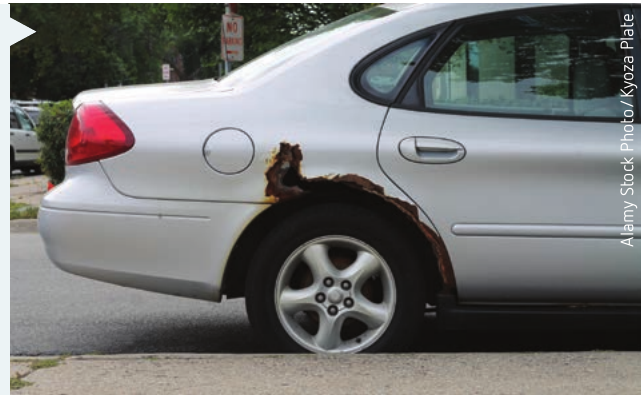
Understanding how metals react with different substances is crucial in chemistry. Metals are everywhere in our daily lives - from the copper wires that carry electricity in our homes, to the iron and aluminium used in vehicles, to the stainless steel cutlery we use at mealtimes. However, many metals are prone to corrosion, which can damage or destroy metal objects over time.
Note
Corrosion is one of the most costly problems in modern society. The rusting of iron and steel alone costs billions of dollars annually in repairs, replacements, and protective measures. Understanding metal reactivity helps engineers and chemists develop better protective strategies.
Chemical reactivity determines how likely a particular metal is to corrode when used for a specific purpose. By studying the reactivity of different metals, chemists can predict which metal is best suited for a particular application and how to protect it from unwanted chemical reactions.
Reaction of metals with oxygen
When metals are exposed to oxygen in the air, many of them undergo oxidation reactions to form metal oxides. However, different metals react at vastly different rates, which provides important clues about their relative reactivity.
Reactivity levels with oxygen
The reactivity of metals with oxygen can be categorised into several groups:
Highly reactive metals such as lithium (), sodium (), and potassium () react rapidly with oxygen at room temperature, along with calcium () and barium (). These metals tarnish quickly when exposed to air and must often be stored under oil to prevent reaction.
Important
Group 1 and Group 2 metals are so reactive with oxygen that they must be stored under oil or in inert atmospheres to prevent unwanted reactions. Never handle these metals with bare hands, and always ensure they are properly stored after use.
Moderately reactive metals including magnesium (), aluminium (), iron (), and zinc () react slowly with oxygen at room temperature. However, if these metals are heated in air or pure oxygen, they burn vigorously with bright flames. This is why magnesium ribbon is used in flares and fireworks.
Less reactive metals such as tin (), lead (), and copper () react slowly with oxygen and only when heated. Copper develops a characteristic black coating of copper oxide when heated in air.
Unreactive metals including silver (), platinum (), and gold () do not react with oxygen at all, which is why they are called noble metals and are valued for jewellery.
Chemical equations for oxygen reactions
When metals react with oxygen, they form metal oxides, which are ionic compounds. Here are some representative equations:
For lithium:
For magnesium:
For aluminium:
The general equation for metal oxidation is:
Physical observations
The appearance of metals changes dramatically during oxidation. Metals that burn in air or oxygen form crystalline white solids that have none of the physical properties of the original metal - they lose their metallic lustre, strength, malleability, and electrical conductivity.
Note
Some metals, such as aluminium and zinc, develop a protective oxide coating that adheres tightly to the metal surface and prevents further reaction. This self-protecting property makes these metals particularly useful in construction and manufacturing.
In contrast, iron forms a powdery, flaky layer of rust that does not protect the underlying metal, allowing corrosion to continue indefinitely.
Reaction of metals with water
The reaction of metals with water provides another method for assessing reactivity. Different metals show varying degrees of reactivity with water, ranging from violent reactions to no reaction at all.
Metals that react with water at room temperature
The most reactive metals - lithium (), sodium (), potassium (), calcium (), and barium () - react with water at room temperature. When these reactions occur, two products are formed: hydrogen gas and a metal hydroxide.
The chemical equation for lithium reacting with water is:
For calcium:
Important
Sodium and potassium react so vigorously with water that the reaction often produces enough heat to ignite the hydrogen gas, causing explosions. These reactions must be carried out with extreme caution, using small pieces of metal and appropriate safety equipment including safety screens and eye protection.
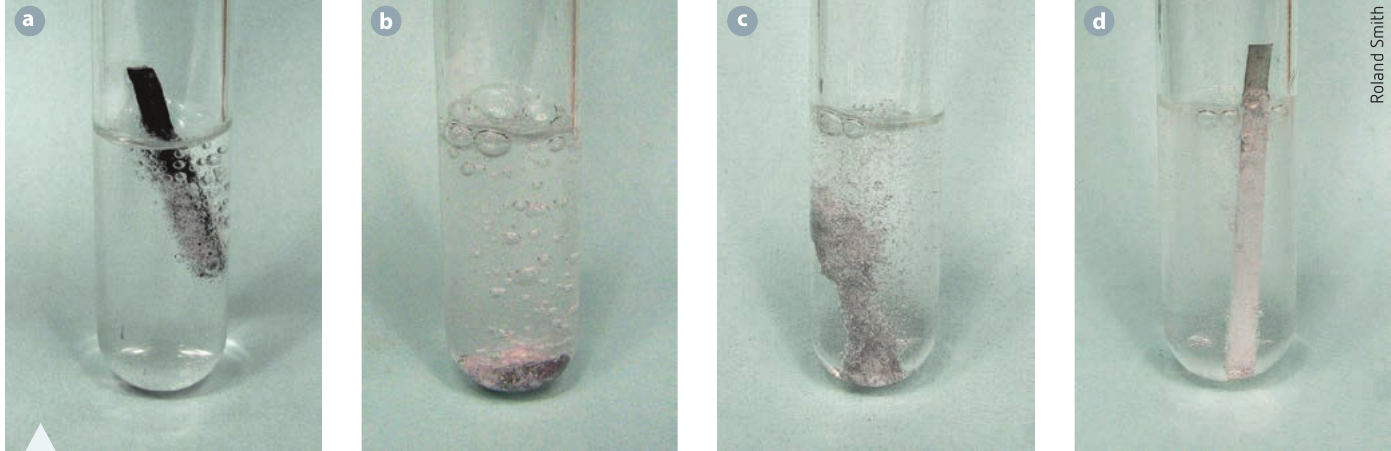

The general equation for metals reacting with water is:
Metals that react with steam
Moderately reactive metals such as magnesium (), aluminium (), zinc (), and iron () do not react with water at room temperature. However, they will react with steam at elevated temperatures.
Example
Worked Example: Magnesium Reacting with Steam
When magnesium ribbon is held in steam from boiling water, several observations can be made:
- The magnesium burns with a bright white light
- A white deposit of magnesium oxide forms on the ribbon
- Hydrogen gas is produced (which can be tested with a lighted splint - it burns with a squeaky pop)
The reaction equation is:
Note that with steam, the product is a metal oxide rather than a metal hydroxide:
Metals that do not react with water
The least reactive metals - tin (), lead (), copper (), silver (), platinum (), and gold () - do not react with water or steam at all, even at high temperatures. This unreactivity makes them ideal for applications involving water, such as copper pipes in plumbing systems.
Reaction of metals with dilute acids
Testing how metals react with dilute acids provides another way to determine their relative reactivity. Most metals react with dilute hydrochloric acid () and dilute sulfuric acid (), although the reaction rates vary considerably.
Which metals react with acids
All the metals we have discussed except copper (), silver (), gold (), and platinum () will react with dilute acids. For tin () and lead (), the reactions are quite slow unless the acid solutions are heated.
When a metal reacts with a dilute acid, two products are always formed: a metal salt and hydrogen gas.
The general equation is:
Example: zinc reacting with hydrochloric acid
When zinc reacts with dilute hydrochloric acid, zinc chloride and hydrogen gas are produced. The neutral species equation is:
Understanding ionic equations
Acids in solution produce hydrogen ions (). It is actually the hydrogen ion from the acid that reacts with the metal. We can show this more clearly by writing a net ionic equation, which displays only the ionic species that undergo change in the reaction:
Important
Understanding the Difference: Net Ionic vs Complete Ionic Equations
Net ionic equations show only the species that change during the reaction, making it easier to see the essential chemistry occurring. This is the most useful form for understanding redox reactions and displacement reactions.
Complete ionic equations show all ions present, including spectator ions that don't participate in the reaction. These provide a fuller picture but can be more cluttered.
Example
Worked Example: Writing Ionic Equations
For the reaction of zinc with hydrochloric acid:
Step 1: Write the neutral species equation
Step 2: Write the complete ionic equation by breaking apart all aqueous ionic compounds
Step 3: Identify and remove spectator ions (ions that appear unchanged on both sides) The chloride ions () appear on both sides unchanged - they are spectator ions.
Step 4: Write the net ionic equation
This equation clearly shows that zinc atoms are converted to zinc ions, while hydrogen ions are converted to hydrogen gas molecules.
Displacement reactions
Note
Definition: A displacement reaction is a reaction in which a more reactive metal converts the ions of a less reactive metal into neutral atoms.
Displacement reactions provide strong evidence for the relative reactivity of different metals and form the basis of the reactivity series.
What happens in a displacement reaction
When a piece of reactive metal is placed into a solution containing ions of a less reactive metal, the more reactive metal atoms lose electrons and form positive ions. Meanwhile, the less reactive metal ions in solution gain electrons and form neutral metal atoms. This is a redox reaction where oxidation and reduction occur simultaneously.
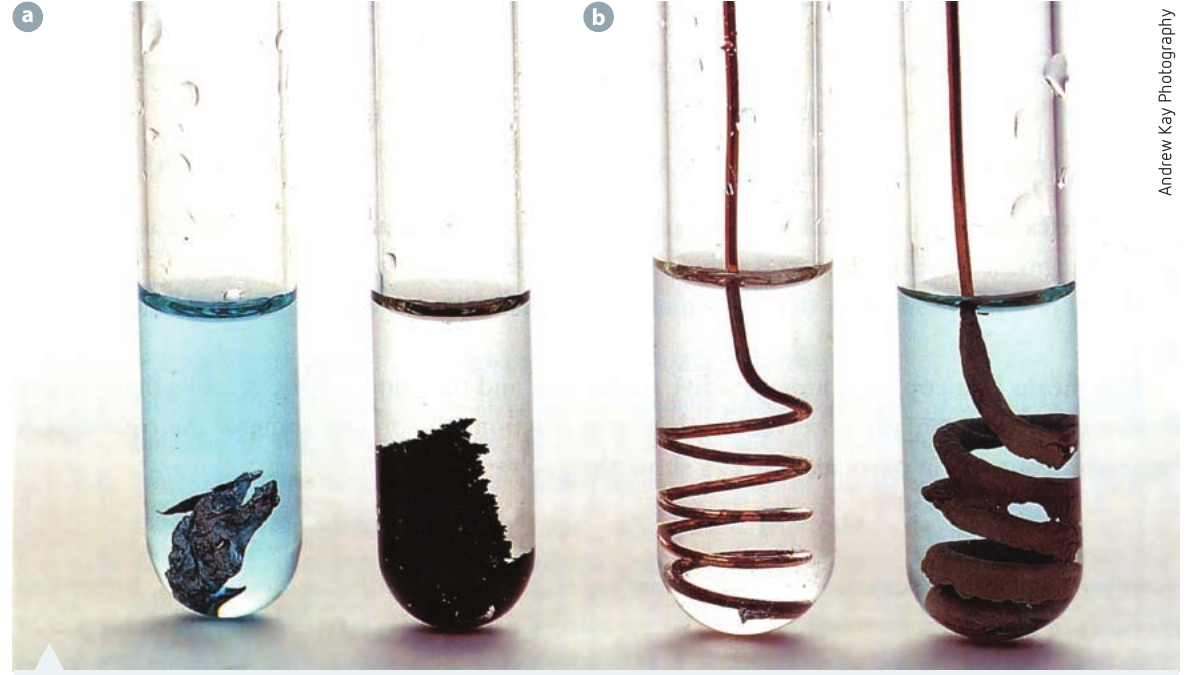
Example 1: zinc and copper sulfate
Example
Worked Example: Zinc Displacing Copper
Observations: When silvery zinc metal is placed into a blue solution of copper sulfate, several observable changes occur:
- The zinc becomes covered with reddish-brown copper
- The blue colour of the solution gradually fades as copper ions are replaced by colourless zinc ions
- The temperature of the solution increases (exothermic reaction)
Neutral species equation:
Net ionic equation:
Explanation: This equation reveals that zinc atoms are oxidised to zinc ions, whilst copper ions are reduced to copper atoms. Zinc is more reactive than copper, so it can displace copper from its compounds.
Example 2: copper and silver nitrate
Example
Worked Example: Copper Displacing Silver
Observations: When reddish-brown copper wire is dipped into a colourless solution of silver nitrate:
- A black deposit of metallic silver forms on the copper
- The silver appears black because it forms as very fine particles
- If the reaction is allowed to proceed for a long time, the solution develops a bluish colour due to the formation of copper ions
Neutral species equation:
Net ionic equation:
Explanation: Copper is more reactive than silver, so copper atoms displace silver ions from solution.
Using displacement reactions to determine reactivity
By testing many combinations of metals and metal ion solutions, we can determine which metals are more reactive than others. A metal will only displace another metal from solution if it is more reactive. If no reaction occurs, then the metal is less reactive than the metal ion in solution.
Important
The Reactivity Series Principle
The metal that displaces the largest number of other metals from their solutions is the most reactive. By conducting systematic displacement experiments, chemists have established a reactivity series that ranks metals from most to least reactive.
This series is fundamental to predicting which reactions will occur and which metals are suitable for specific applications.
Summary
Key Points to Remember:
-
Metals react with oxygen, water, and acids at different rates depending on their reactivity. The most reactive metals (like lithium, sodium, and potassium) react rapidly even at room temperature, whilst unreactive metals (like gold and platinum) barely react at all.
-
When metals react with oxygen they form metal oxides. When they react with water they produce metal hydroxides and hydrogen gas. When they react with dilute acids they form metal salts and hydrogen gas.
-
Net ionic equations show only the species that change during a reaction, making it easier to see what is actually happening at the ionic level. Spectator ions that don't change are omitted.
-
A displacement reaction occurs when a more reactive metal displaces a less reactive metal from a solution of its ions. These reactions can be used to establish the relative reactivity of different metals.
-
Understanding metal reactivity is essential for choosing the right metal for specific applications and for protecting metals from corrosion.