The Australian Workforce (HSC SSCE Economics): Revision Notes
📚Revision Notes
The Australian Workforce
Understanding the workforce
The workforce represents all people aged 15 and over who are either currently employed or actively looking for work. This definition is important because it determines how we measure labour market performance and economic capacity.
Australia's workforce can be broken down into distinct categories based on employment status. The total population contains several groups, but only specific individuals count as part of the workforce.
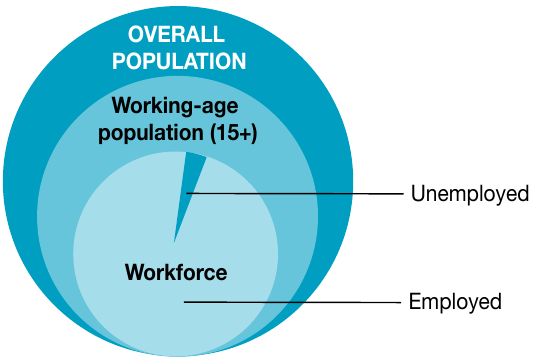
Who counts as part of the workforce?
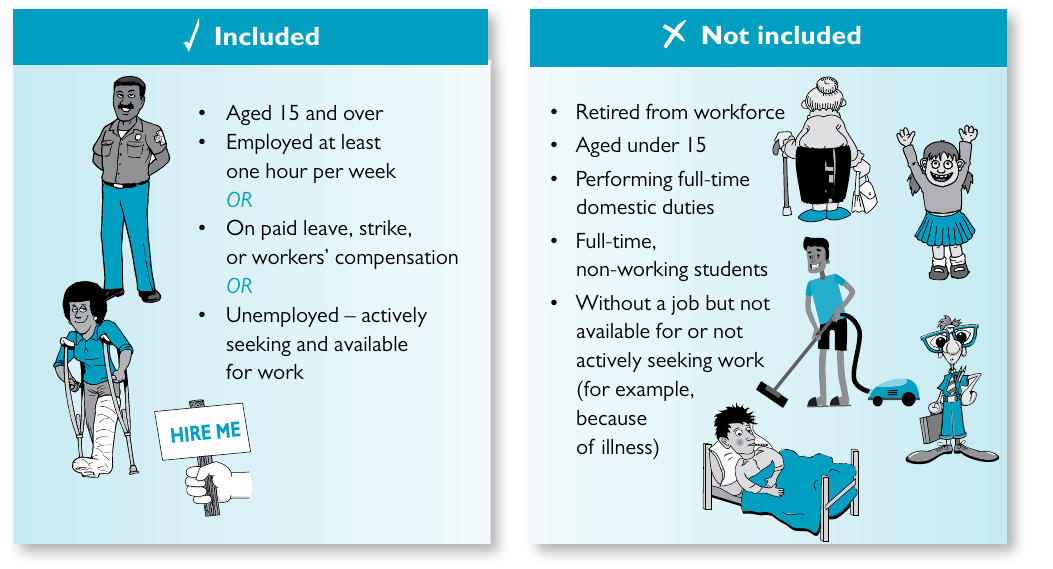
The workforce includes people who meet specific criteria. To be counted as employed, a person must work at least one hour per week. This broad definition captures full-time workers, part-time workers, and even those working very minimal hours. People on paid leave, on strike, or receiving workers' compensation are also considered employed, as they maintain an active employment relationship.
Important
Key Definitions:
A person is defined as being employed if they have one or more hours of work per week.
A person is defined as unemployed if they are:
- Currently available for work
- Actively seeking work
- Unable to find it
This means they must be taking steps to find a job, such as applying for positions or attending interviews.
Who is excluded from the workforce?
Several groups do not count as part of the workforce, even though they may be part of the overall population:
- Children under 15
- People who have retired
- Full-time students who are not working or seeking work
- People performing full-time domestic duties who are not looking for paid employment
- Anyone who is without a job but not actively seeking work (perhaps due to illness or discouragement)
Note
Understanding Unemployment
Unemployment refers to a situation where individuals want to work but are unable to find a job, and as a result labour resources in an economy are not utilised. This represents a waste of labour resources, as these workers could be contributing to economic output but are unable to do so.
Factors influencing workforce size and quality
Two key aspects determine the economic contribution of the workforce: its size and its quality. A larger workforce can produce more goods and services, expanding economic capacity. However, workforce quality matters just as much. A well-educated, highly skilled, and healthy workforce is significantly more productive than one lacking these characteristics.
Three main factors shape the size and quality of Australia's workforce: population size, age distribution, and education patterns.
Population size
The total population sets the upper limit for workforce size. A larger population creates the potential for a larger workforce, though not everyone in the population will be part of it.
Note
How Populations Grow: Two Key Mechanisms
Population growth occurs through two mechanisms:
Natural increase refers to the excess of births over deaths in the population, taken over a period of one year. When more babies are born than people die, the population grows through natural increase.
Net migration refers to the excess of permanent new arrivals to our country over permanent departures, over a period of one year. When more people immigrate to Australia than emigrate from it, net migration contributes positively to population growth.
Australia's natural increase has declined in recent decades, falling to just above 0.6% of the population per year in the early 2010s. This decline reflects several social changes. Couples are marrying later than previous generations, having fewer children, and both partners increasingly remain in full-time work rather than one leaving employment to raise children.
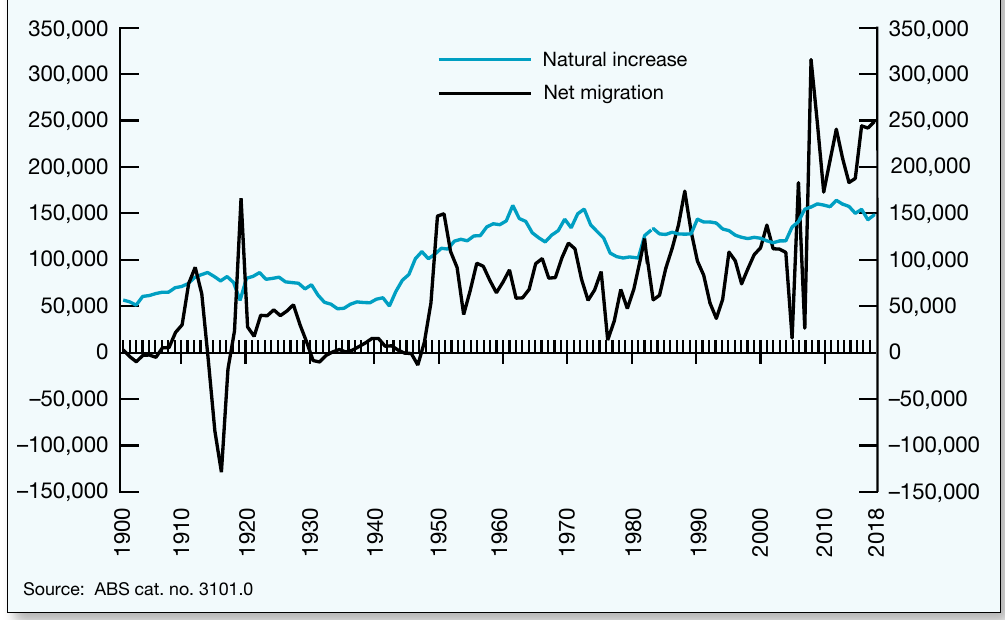
Net migration has contributed approximately 40% of Australia's total population growth since World War II, making it a crucial driver of workforce expansion. However, migration levels fluctuate significantly based on economic conditions.
During periods of economic recession and high unemployment, governments typically reduce migration intake to ease pressure on the labour market. When economic growth is strong and labour shortages emerge, governments tend to increase migration quotas. For example, Enterprise Migration Agreements have allowed companies to bring in temporary migrants to fill skills shortages in major mining projects.
Age distribution
The age structure of Australia's population has significant implications for workforce size. Most workers fall between ages 15 and 65. Children under 15 attend school and are excluded from the workforce. While there is no compulsory retirement age, most people retire by age 65. Therefore, a higher proportion of the population in the 15-65 age bracket creates greater potential for a larger workforce.
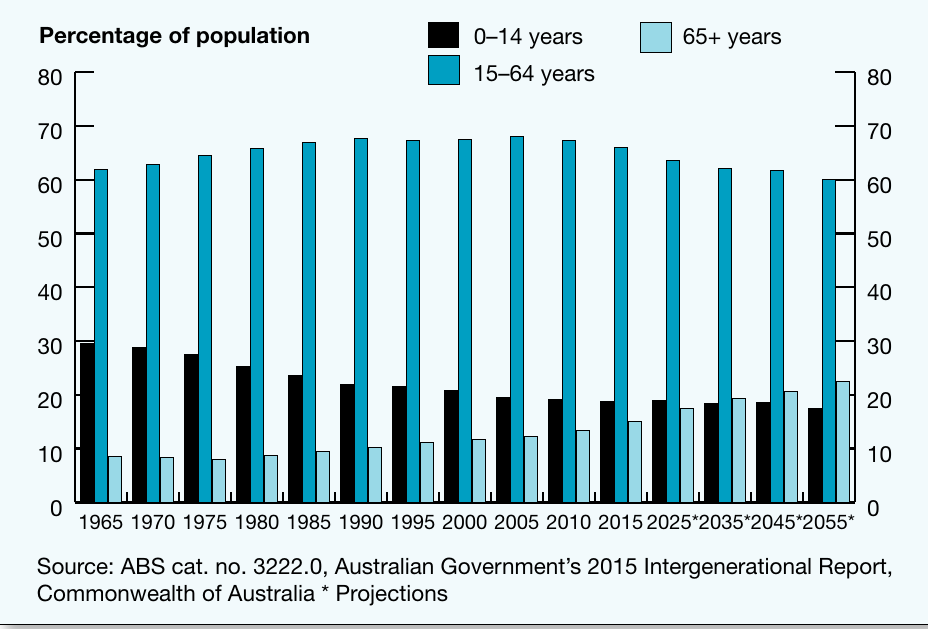
Recent demographic trends reveal important challenges for Australia's future workforce:
Declining working-age proportion: The percentage of Australia's population aged 15-65 is beginning to decline after increasing for several decades. The post-war "baby boom" generation initially expanded the working-age population as they entered employment. Now, this same generation is moving into retirement, reversing the trend.
Population ageing: Over the past three decades, Australia has experienced significant population ageing. The proportion of people under 15 has decreased, while those over 65 have increased substantially. Between 1991 and 2016, the median age rose from 32 to 38 years.
This ageing trend appears across many industrialised economies, driven by declining birth rates and increasing life expectancy due to improved living standards and healthcare.
Important
The Ageing Population Challenge
Population ageing creates economic challenges because the potential workforce size becomes constrained while the dependent elderly population grows.
The scale of this challenge is significant:
- During the 2000s: Australia's workforce grew by 2,266,000 people
- During the 2020s (projected): Workforce growth of only 190,000 people
This represents less than one-tenth of recent growth rates. This slowdown could substantially constrain future economic growth.
Policy responses to ageing
Governments have attempted various measures to address workforce challenges from population ageing. One approach involves encouraging older workers to remain in the workforce longer, increasing the labour force participation rate.
In 2014, the government announced a plan to gradually raise the pension qualifying age (often called the retirement age) to 70 by 2035. This built on an earlier increase from 65 to 67 announced in 2009. The goal was to keep older workers employed longer. However, this proved politically unpopular, and Prime Minister Scott Morrison abandoned the plan to raise the retirement age to 70 in 2018.
Education patterns
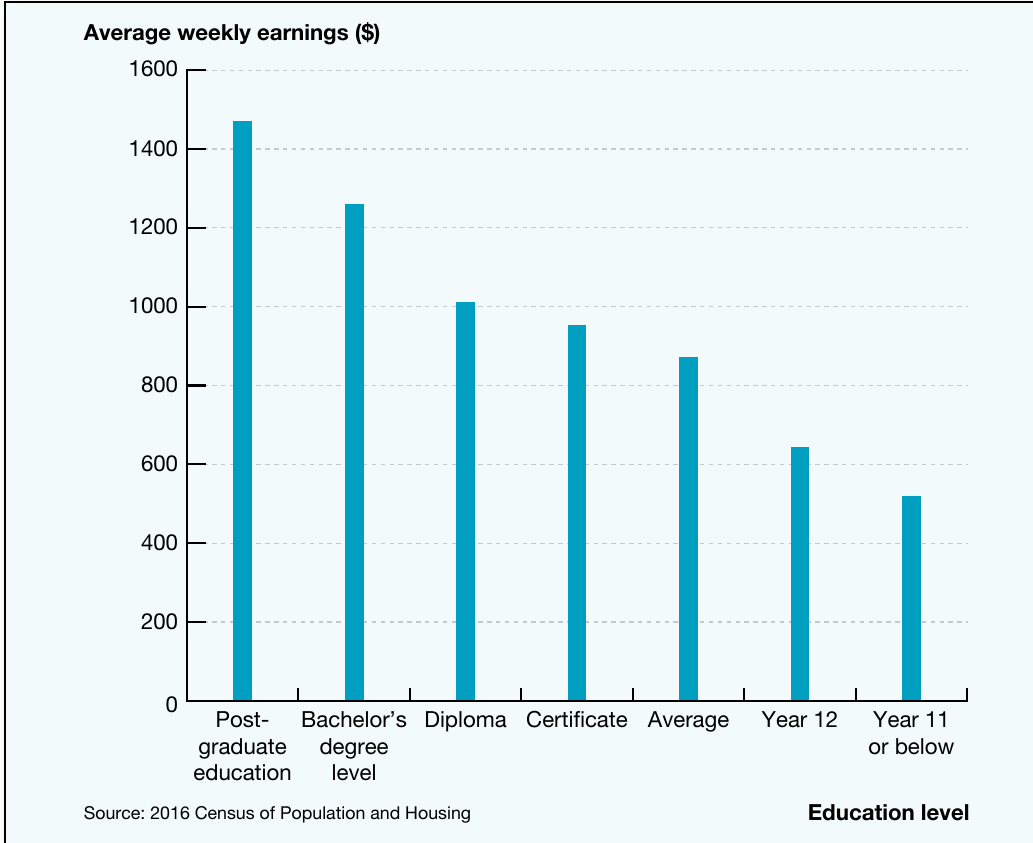
Education outcomes represent the single most important factor influencing workforce quality. While education is expensive, a highly skilled and productive workforce is essential for economic success. Individuals who invest years in training and study benefit through significantly higher earnings.
Note
Education and Earnings: The Clear Link
The 2016 Census revealed a clear relationship between educational attainment and income:
- A person with a bachelor's degree earns approximately 2.4 times as much compared to someone who did not complete high school
- Those with postgraduate qualifications earn around $1,480 per week
- Those with Year 11 education or below earn just $520 per week
Education also affects employment prospects. Across OECD countries, unemployment rates among people without high school completion average five percentage points higher than those who completed high school but gained no further qualifications.
Australian education participation has increased over time. Between 2008 and 2018, the proportion of young workers (aged 25-34) with post-school qualifications rose from 69% to 75% - a 6 percentage point increase. However, challenges remain. Only 67% of Australians aged 25-64 have completed secondary school education.
Education funding in Australia
Australia's public spending on education sits slightly above international averages. In 2015, educational institutions received 13.5% of government spending in Australia, higher than the OECD average of 11.1%.
However, Australia differs notably from other countries in its reliance on private funding for education. Private sources fund 34% of total education spending in Australia - a larger share than any OECD country except Chile. This means families and individuals bear a significant portion of education costs directly.
Summary
Key Points to Remember:
- The workforce includes all people aged 15+ who are working or actively seeking work
- Employed means working at least one hour per week; unemployed means available for work, actively seeking it, but unable to find it
- Australia's population grows through:
- Natural increase: births minus deaths
- Net migration: arrivals minus departures
- Australia's population is ageing: the working-age proportion (15-65) is declining while the 65+ proportion is increasing
- Population ageing threatens future workforce growth, potentially constraining economic expansion
- Education is the most important factor for workforce quality:
- Higher qualifications lead to significantly higher earnings
- Bachelor's degree holders earn 2.4 times more than those without high school completion
- Higher education also leads to lower unemployment
- Australia spends above-average on education publicly but relies heavily on private funding compared to other OECD countries