Ratios (HSC SSCE Mathematics Standard): Revision Notes
📚Revision Notes
Ratios
What is a ratio?
A ratio lets you compare quantities that are measured in the same units, and the order of the numbers matters. When you see a ratio like , it represents parts compared to parts.
Note
Ratios are closely connected to fractions. The ratio can also be written as:
- A fraction:
- A decimal:
- A percentage:
All of these represent the same relationship between the two quantities.
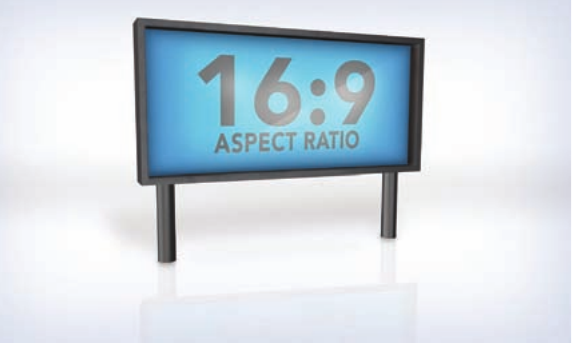
For example, a screen with a aspect ratio means that for every units of width, there are units of height.
Equivalent ratios
Equivalent ratios are different ratios that represent the same relationship. You can find equivalent ratios by multiplying or dividing both parts of the ratio by the same number.
Think of it like equivalent fractions - just as , you can scale ratios up or down while keeping the same proportion.
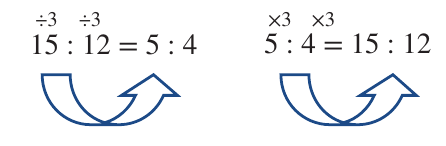
For instance, the ratios and are equivalent because:
- Dividing both parts of by gives
- Multiplying both parts of by gives
Note
The Key Rule: Whatever you do to one part, you must do to the other part.
Simplifying ratios
Simplifying a ratio means reducing it to its simplest form, where the numbers are as small as possible while still representing the same relationship. Just like simplifying fractions, we aim to find the lowest terms.
Simplifying whole number ratios
To simplify ratios with whole numbers, divide both parts by their highest common factor.
Example
Worked Example: Simplify
-
Identify the highest common factor of and , which is
-
Divide both parts by :
The simplified ratio is , meaning for every parts of the first quantity, there is part of the second quantity.
Simplifying ratios with fractions
When a ratio contains fractions, multiply both parts by the lowest common denominator to eliminate the fractions. This gives you whole numbers that you can then simplify if needed.
Example
Worked Example: Simplify
-
The lowest common denominator is (since we only have halves)
-
Multiply both parts by :
-
Calculate the result:
The simplified ratio is . This tells us there are parts of the first quantity for every part of the second quantity.
Simplifying ratios with decimals
For ratios containing decimals, first multiply both parts by a power of 10 to convert them to whole numbers. Then simplify by dividing by any common factors.
Example
Worked Example: Simplify
-
Multiply both parts by to remove decimals:
-
Find the highest common factor of and , which is
-
Divide both parts by :
The simplified ratio is .
Dividing a quantity in a given ratio
Sometimes you need to split a total amount into parts according to a specific ratio. This is common in situations like sharing money, dividing ingredients, or distributing resources.
Important
Four-Step Method for Dividing Quantities:
Step 1: Calculate the total number of parts by adding the numbers in the ratio
Step 2: Divide the quantity by the total number of parts to find the value of one part
Step 3: Multiply each number in the ratio by the value of one part
Step 4: Check your answer by adding the parts together - they should equal the original quantity
Two-part ratio example
Example
Worked Example: Mikhail and Ilya were given $450 to share in the ratio . How much did each person receive?
Step 1: Calculate total parts
- Total parts
Step 2: Find the value of one part
-
parts
-
part
Step 3: Calculate each share
-
Mikhail's share: parts
-
Ilya's share: parts
Step 4: Check the answer
- ✓
Therefore, Mikhail received $200 and Ilya received $250.
Three-part ratio example
Example
Worked Example: An inheritance of $6000 is to be divided among three children, Xia, Yui and Zi, in the ratio . Calculate each child's share.
Step 1: Calculate total parts
- Total parts
Step 2: Find the value of one part
-
parts
-
part
Step 3: Calculate each share
-
Xia's share: parts
-
Yui's share: parts
-
Zi's share: parts
Step 4: Check the answer
- ✓
Therefore, Xia received $1500, Yui received $2400, and Zi received $2100.
Summary
Key Points to Remember:
- Ratios compare quantities with the same units, and order matters - is different from
- Create equivalent ratios by multiplying or dividing both parts by the same number, just like equivalent fractions
- Always simplify ratios to their lowest terms by dividing by the highest common factor
- For ratios with fractions, multiply by the lowest common denominator; for decimals, multiply by powers of first
- When dividing a quantity: add the parts, divide the total, multiply each part, then check your answer adds up correctly