Background to the Civil Rights Movement (HSC SSCE Modern History): Revision Notes
📚Revision Notes
Background to the Civil Rights Movement
The civil rights movement in the United States emerged from decades of racial oppression and discrimination against Black Americans. Although slavery was officially abolished in 1863, the promise of freedom remained largely unfulfilled for nearly a century. Understanding this background is essential for examining the civil rights campaigns of 1945-68.
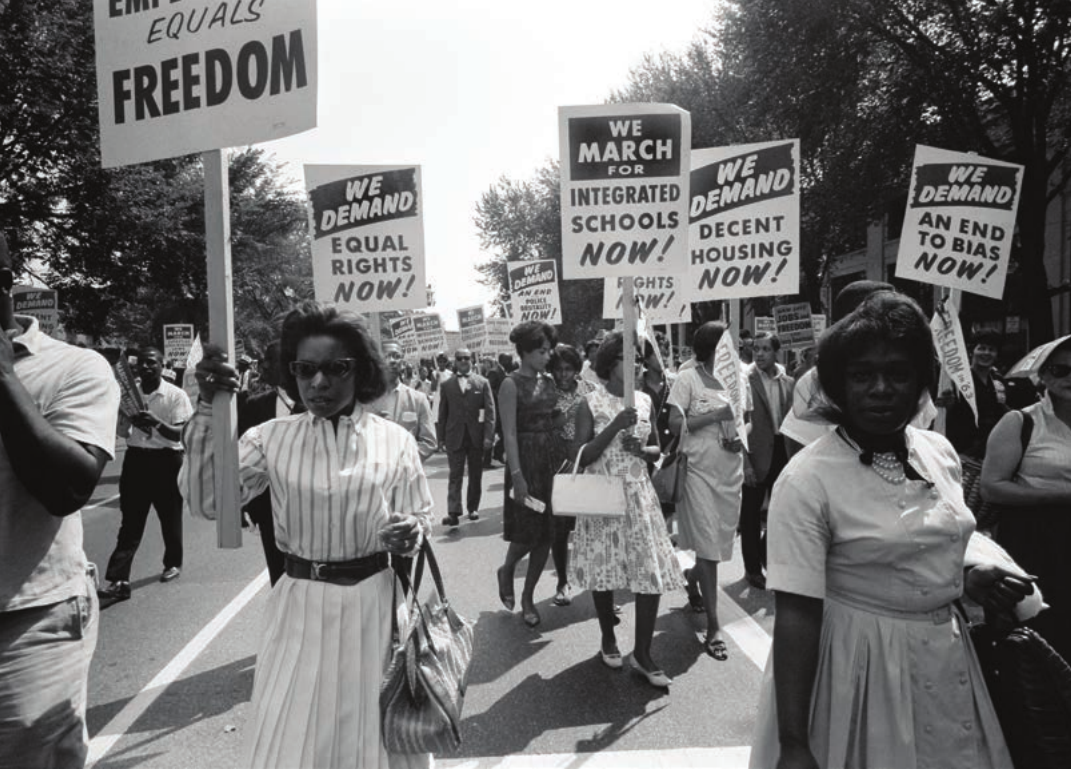
The promise and reality of emancipation
The Emancipation Act of 1863
President Abraham Lincoln's Emancipation Act of 1863 represented a major turning point in American history. This proclamation, issued during the Civil War in January 1863, officially freed enslaved people across America. It became the foundation for three crucial constitutional amendments: the Thirteenth (abolishing slavery), Fourteenth (granting citizenship), and Fifteenth (protecting voting rights).
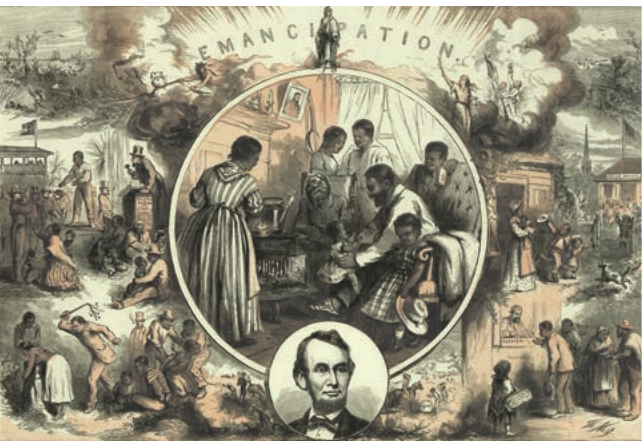
Between 1865 and 1869, Black Americans were granted universal male suffrage, freedom from slavery, and the right to vote. On paper, these changes promised genuine equality and opportunity. However, the reality proved vastly different from this legal promise.
Note
The three constitutional amendments passed during this period - the Thirteenth, Fourteenth, and Fifteenth Amendments - are collectively known as the "Reconstruction Amendments." They were designed to guarantee the rights of formerly enslaved people and establish a legal framework for equality.
Economic oppression in the post-war South
The period following the Civil War, known as Reconstruction, was meant to rebuild America economically, socially and politically. Instead, it became a time of renewed oppression for Black Americans, particularly in the South.
Most former enslaved people found themselves without financial resources to support their families. To survive, many turned to sharecropping - a system where they borrowed money from wealthy landowners (often their former masters) for equipment, livestock and land use. This created a cycle of debt that essentially made them economic slaves within a new system. They could never earn enough to repay their debts and gain true independence.
In the North, urbanised Black Americans could sometimes find low-skilled factory work, but they faced persistent barriers. They were frequently denied equal education and better employment opportunities, keeping them trapped in poverty and limiting social mobility.
Important
Understanding Reconstruction's Dual Legacy
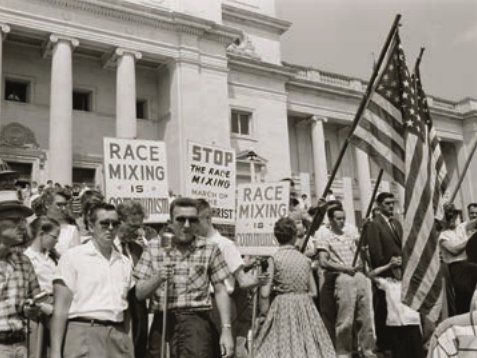
Reconstruction formally refers to the period of rebuilding after the Civil War. However, in the South, it also witnessed growing resistance to Black Americans' newly won rights. Southern states introduced discriminatory measures like grandfather clauses (making it nearly impossible to vote if your grandparents had been enslaved) and Black Codes (laws that treated Black Americans with prejudice and enforced segregation).
The rise of white supremacy and legal segregation
The Ku Klux Klan and racial terror
The Ku Klux Klan (KKK) emerged as a powerful white extremist organisation founded in 1866, shortly after the Civil War ended. This group promoted violent, racist and intolerant attitudes and became heavily influential across Southern states.
The KKK's power grew alarmingly during the 1920s. In the South, they held mass public rallies and recruited over 5 million members. They operated as a secret organisation with coded language and mysterious practices, which made them both feared and, disturbingly, popular among white Americans.
Important
The Klan's Campaign of Terror
The KKK's influence extended far beyond intimidation. Their campaign of terror included:
- Public executions of Black Americans
- Brutal murders of over 200 Black and sympathetic white Americans
- Widespread intimidation to prevent Black Americans from exercising their rights
- Infiltration of the highest levels of government
This right-wing extremist group continues to exert some influence in American society today, though with far less power than in the early 20th century.
Jim Crow Laws: separate and unequal
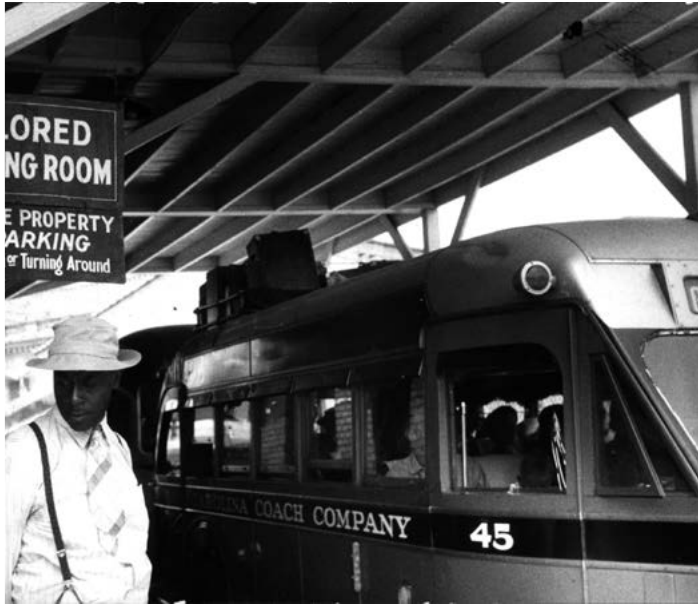
Southern states systematically pushed for Black Codes and grandfather clauses to enforce segregation in education, transport, employment and voting registration. The legal foundation for this discrimination came from a crucial 1896 Supreme Court case.
In Plessey vs Ferguson (1896), the court ruled that 'separate and equal' facilities for Black and white Americans were constitutional and did not violate the amendments protecting civil rights. These segregationist policies became known as Jim Crow Laws.
Important
The Reality of 'Separate but Equal'
Whilst the law claimed facilities would be equal, this was rarely true in practice. State governments consistently spent less money on health and education services for Black Americans compared to white Americans. Schools, hospitals and public amenities for Black communities were inferior in quality, demonstrating that separation inherently meant inequality.
Note
Exam tip: Be prepared to explain why the Plessey vs Ferguson decision was so significant. It gave legal approval to segregation for nearly 60 years, until Brown vs Board of Education (1954) overturned it.
Early resistance and activism
The Congress for Racial Equality (CORE)
Despite the oppressive environment, resistance to Jim Crow Laws occurred sporadically across different states. A major breakthrough came in 1942 when James Framer established the Congress for Racial Equality (CORE) to advocate for racial equality.
CORE pioneered the use of non-violent tactics that would later become the primary strategy of Dr Martin Luther King Jr and other leading civil rights activists. This approach was influenced by:
- Christian beliefs about the dignity and worth of every individual
- The example of Mohandas Gandhi, who had led India to independence from Great Britain through peaceful resistance
- A conviction that moral force could overcome legal injustice
CORE established its base in Chicago, a highly urbanised and wealthy city known for car manufacturing. This northern location gave them relative safety to organise, though Black Americans even in Chicago faced geographical, racial and social segregation.
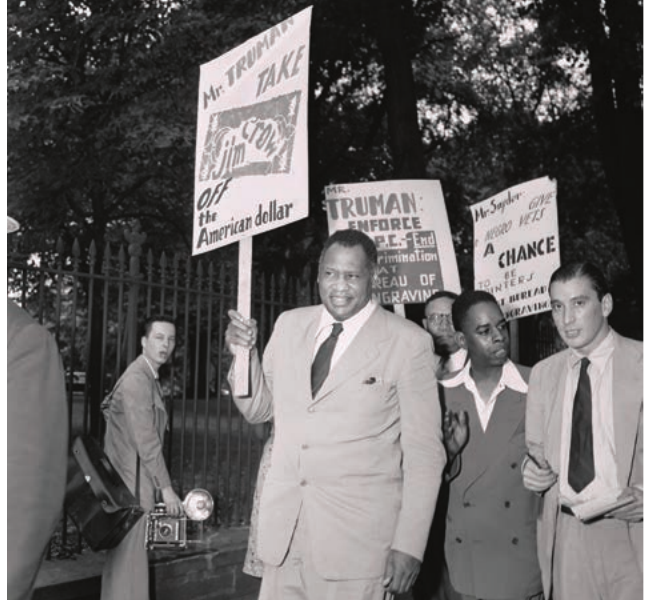
The Freedom Riders of 1947
Following World War II, CORE organised a significant action called the Freedom Rides. In 1947, Black and white leaders travelled together on buses into the Deep South. Their goal was to break down segregation in communities heavily controlled by Jim Crow Laws, where Black Americans were terrorised into submission by the Klan and white supremacist groups.
The 1947 Freedom Rides achieved only limited success for several reasons:
- Media coverage was poor and unsympathetic to the cause
- Activists were acting on behalf of Southern Black Americans rather than those communities mobilising themselves
- There was not yet enough organisation among those most affected by segregation
Important
Important Lesson from Historians
Revolutionary action is more likely to succeed when direct action is taken by those most deeply affected by unjust laws, rather than by outsiders acting on their behalf. This insight would prove crucial for the later success of the civil rights movement in the 1950s and 1960s.
Note
The importance of media coverage - particularly television and newspaper reporting - was a key lesson learned from this experience. Civil rights leaders would use media far more effectively in later campaigns, such as the bus boycotts of the mid-1950s.
The post-World War II context and the Cold War
International tensions and domestic suspicion
The civil rights campaigns of the post-World War II period were significantly influenced by international politics. The Cold War created an atmosphere of fear and suspicion that complicated domestic reform efforts.
The Cold War refers to the period after World War II when the United States, the Soviet Union and China engaged in an ideological battle. Rather than direct military conflict (a 'hot' war), this involved escalating tensions, proxy conflicts and brinkmanship. The threat of nuclear weapons made this period particularly dangerous.
Note
American leaders feared the spread of communism after experiences with Stalin's USSR and Mao Zedong's pro-communist China. The attack on Pearl Harbor and the devastation of the European and Pacific Wars made them determined to protect America from future threats. This created a climate where anyone challenging the status quo could be viewed with suspicion.
The Civil Rights Congress (CRC)
Groups like the Civil Rights Congress (CRC) formed in the northern state of Michigan, where large numbers of Black Americans worked in factories and car manufacturing industries. However, even in the North, these communities often faced geographical, racial and social segregation.
The discontent in cities like Detroit led the CRC to partner with:
- The Communist Party of the United States
- The International Labor Defense
- The National Negro Congress
The CRC provided legal defence and support for victims of state oppression - those who challenged the 'American dream' regardless of their specific cause.
Important
A Dangerous Connection
Communists and civil rights activists became linked together in the public imagination as enemies of the American way of life. This association had serious consequences for the civil rights movement. Government administrations became suspicious of civil rights activism, viewing it as potentially connected to communist infiltration. They wanted to suppress domestic threats quickly so they could focus on external threats posed by the Cold War.
This suspicion made it more difficult for civil rights activists to gain mainstream support and made the government resistant to civil rights reforms during the late 1940s and early 1950s.
Note
Exam tip: Be able to explain how the Cold War context affected the civil rights movement. The association with communism made it easier for opponents to discredit civil rights activists and harder for the movement to gain government support.
Summary
Key Points to Remember:
-
Emancipation didn't mean equality: Although slavery was abolished in 1863, Black Americans faced continued economic oppression through sharecropping in the South and limited opportunities in the North.
-
Jim Crow Laws legalised segregation: The 1896 Plessey vs Ferguson decision allowed 'separate but equal' facilities, but in reality, services for Black Americans were consistently inferior to those for white Americans.
-
Violence enforced white supremacy: The Ku Klux Klan used terror and intimidation to prevent Black Americans from exercising their rights, and infiltrated government at the highest levels.
-
Non-violent resistance had early roots: CORE, established in 1942, pioneered peaceful protest tactics inspired by Christian values and Gandhi's example, though early actions like the 1947 Freedom Rides had limited success.
-
The Cold War complicated civil rights: Government fear of communism led to suspicion of civil rights activists, making domestic reform more difficult in the post-World War II period.