Deng Xiaoping and the Modernisation of China (HSC SSCE Modern History): Revision Notes
📚Revision Notes
Deng Xiaoping and the Modernisation of China
The transition to Deng's leadership
The death of Zhou Enlai and public response
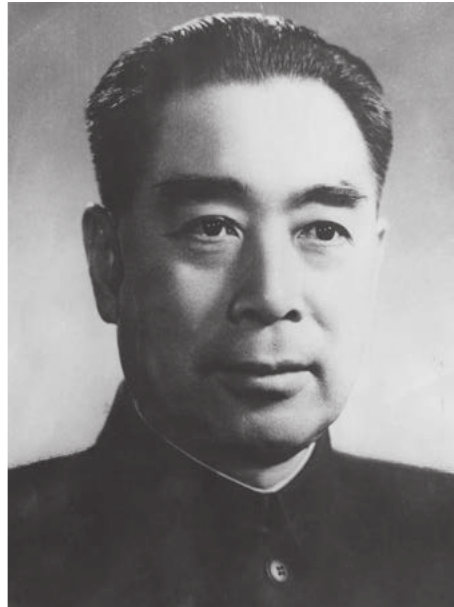
In January 1976, Premier Zhou Enlai died after being denied medical treatment for bladder cancer by Mao. Zhou had served as Premier since 1949 and had worked tirelessly to run the government, especially during the Cultural Revolution when many competent officials had been removed.
Note
During the Cultural Revolution, Zhou Enlai spent much of his time attempting to protect national monuments, old comrades, and even the dying last Emperor, Puyi. His efforts helped preserve important aspects of Chinese history and culture during a period of widespread destruction.
Despite Zhou's decades of service to the Party and China, Mao and the Gang of Four organised a deliberately low-key funeral that did not befit his position or devotion. Mao chose not to attend. Hua Guofeng, a political lightweight who had joined the Party after the Long March, was appointed as Premier to replace Zhou. Deng Xiaoping was demoted yet again.
As the Qingming festival (the annual festival to honour the dead) approached in April 1976, thousands of people came to lay wreaths at the Monument to Revolutionary Martyrs in Tiananmen Square to honour Zhou. People waved flags and gave speeches denouncing Jiang Qing (Mao's wife and a member of the Gang of Four).
Important
This spontaneous outpouring demonstrated the deep respect Zhou commanded and the frustration people felt with the Gang of Four. It was a rare public display of dissent against the regime's leadership.
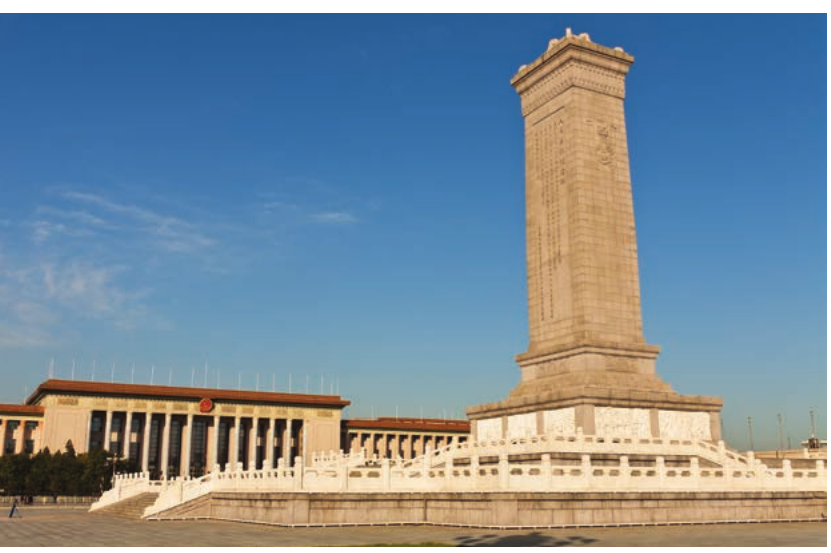
The Politburo met and, with Mao's approval, ordered the wreaths removed on the night of 5 April 1976. The crowd turned violent when they discovered this. Security forces responded with 10,000 militia, 3,000 police, and five battalions of security police who surrounded the square, beating and arresting those they labelled 'counter-revolutionaries'. Jiang Qing was delighted with the suppression. Mao believed Deng Xiaoping was behind the protests and purged him yet again. Hua Guofeng was made Zhou's permanent replacement, making him Mao's designated successor.
Zhou's biographer later stated that his death 'announced the bankruptcy of the communist myth'. The public response to Zhou's death revealed growing dissatisfaction with the regime and foreshadowed the changes to come.
The death of Mao and the end of the Cultural Revolution
By June 1976, Mao had suffered two heart attacks and was attended by a medical team at his villa. His health continued to deteriorate. He had poor kidney function and was blind in his left eye, though he remained alert enough to give instructions. When the Tangshan earthquake shook his bed in July 1976, he was moved to a more secure building.
On 2 September 1976, Mao suffered a third heart attack. Seven days later, on 9 September 1976, the Chairman died, just short of his 83rd birthday. The man who had controlled the Chinese Communist Party for 41 years and the nation for 27 years was gone.
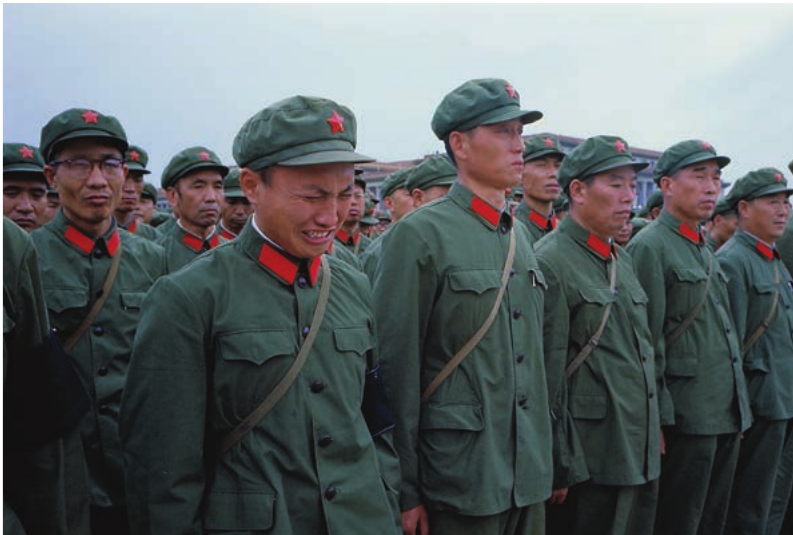
Mao's body was taken to the Great Hall of the People for official mourning. Reactions to his death were mixed.
Note
While many genuinely mourned the 'Great Helmsman', others were secretly relieved. Writer Jung Chang recalled feeling euphoria but having to hide her emotions amongst the public displays of grief. Others, like Xu Meihong, felt that 'the sun had died' and feared darkness ahead for China.
The Cultural Revolution, which had dragged on for ten years, was officially over with the death of the man who had initiated it.
The arrest of the Gang of Four
Following Mao's death, the Gang of Four moved quickly to secure military support in Shanghai and eliminate Deng Xiaoping, who was being protected by Marshall Ye near Guangzhou. However, Marshall Ye had the support of Wang Xiaodong (Mao's Chief of Security) and eventually convinced Hua Guofeng to arrest the Gang of Four.
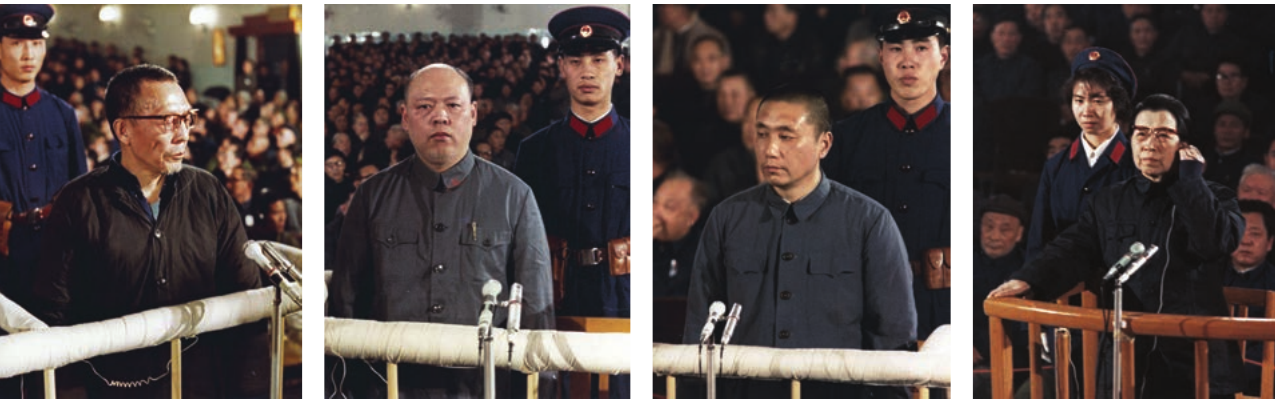
Through a deceptive strategy, three members of the Gang (Zhang Chunqiao, Wang Hongwen, and Yao Wenyuan) were invited to a meeting at Huairen Hall in Zhongnanhai. As they entered, they were read an indictment from the Politburo and arrested. Security forces then arrested Jiang Qing at her quarters without incident, as her security guards had been withdrawn. The only resistance came from Mao's nephew, Mao Yuanxin, who sided with the Gang but was eventually arrested and sentenced to 17 years in jail.
Note
The Gang of Four were later put on trial in November 1980. Jiang Qing and Zhang Chunqiao received death sentences that were commuted to life imprisonment. Wang Hongwen received life imprisonment and Yao Wenyuan received 20 years. All members have since died.
Deng Xiaoping's rise to power
Hua Guofeng's brief leadership
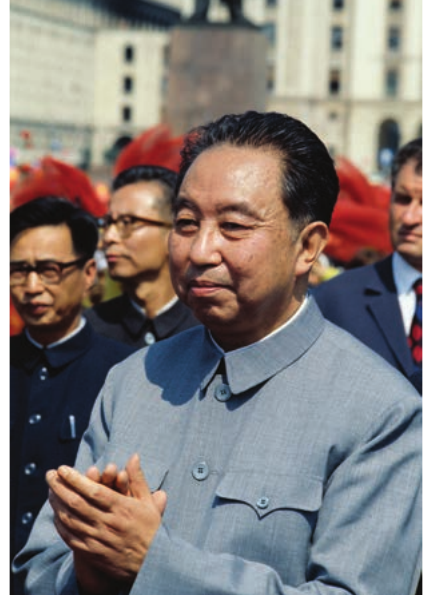
Hua Guofeng, selected by Mao as his successor, attempted to consolidate his position by closely associating himself with Mao's legacy. His policy was based on the 'Two Whatevers': 'Whatever Mao had decided must be carried on' and 'Whatever Mao had said must be upheld'. Posters often depicted Mao saying to Hua: 'With you in charge I am at ease'.
Important
This alliance with Mao's memory and the use of propaganda to tie himself to the cult figure of Mao was not enough. China was looking for change. Military leaders and Mao's economist, Chen Yun, backed Deng Xiaoping as the leader China needed. Hua was a political lightweight who lacked the experience and support to maintain power.
Deng's return and consolidation of power
Deng Xiaoping was quickly rehabilitated yet again in 1977. He became Vice-Premier, Chief of Staff to the People's Liberation Army, and a member of the Politburo. In any assembly of politicians and international visitors, it was Deng who commanded attention and respect. The use of the Democracy Wall and dazibao (big-character posters) to undermine Mao's legacy, and by association Hua's authority, allowed Deng to gradually increase his power until Hua was eased out in a bloodless transition.
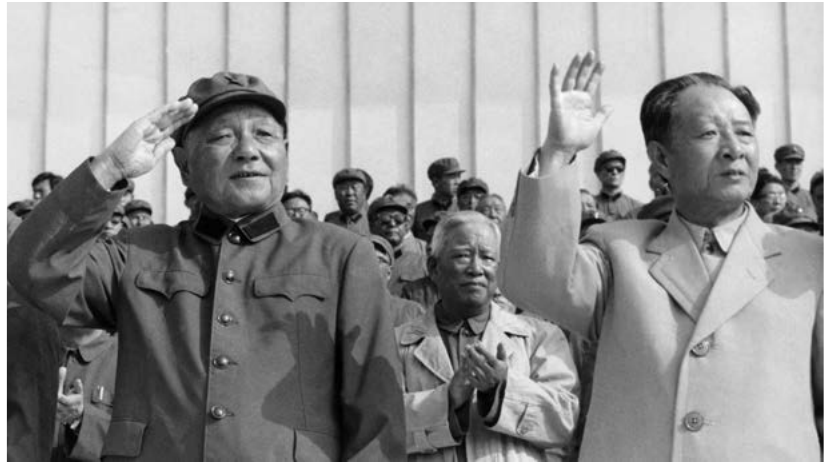
Deng then began to reshape China's economy along similar lines to policies he had employed with Liu Shaoqi in the early 1960s. This radical shift required both a reassessment of Mao's legacy and a dismantling of the commune system.
The reassessment of Mao
Deng faced a delicate challenge. Mao had devastated China through the Great Leap Forward (which caused the deaths of tens of millions) and the Cultural Revolution (which resulted in millions more deaths). Yet the Chinese Communist Party that now ruled China, unelected, was Mao's Party.
Important
The Dilemma of Mao's Legacy
To completely dismantle Mao's image would undermine the CCP's legitimacy. Although Deng had personally suffered during the Cultural Revolution and had little love for Mao, he realised he needed to balance preserving Mao's image whilst criticising it enough to allow his non-Maoist policies to succeed.
The reassessment of Mao took a careful middle path: reaffirming his leadership of the Party whilst admitting he made serious mistakes in his later years. Changes in Mao's public image included:
- Posters of Mao began to include other Party members rather than showing him alone
- 'Great Helmsman' and 'Red Sun' imagery disappeared
- Many public statues of Mao were quietly dismantled overnight without explanation
- Newspapers featured reassessments of his leadership
Note
In December 1983, Hu Yaobang (General Secretary of the Chinese Communist Party Central Committee) described Mao as 'China's greatest and most outstanding figure' of the past century. However, he acknowledged that 'Like many other great figures in past history, Comrade Mao Zedong also made mistakes. The serious mistakes he made in his later years put our Party in a very difficult situation'.
This balanced approach allowed the Party to maintain legitimacy whilst pursuing new policies.
Despite this reassessment, a mausoleum for Mao was built in Tiananmen Square and his body was preserved (though not very successfully - it is occasionally replaced by a wax model when undergoing repairs). A large portrait of Mao still hangs on the Gate of Heavenly Peace, gazing towards his mausoleum. This suggests the CCP felt it necessary to keep Mao's image alive, perhaps as an act of self-preservation.
Deng's economic reforms
The philosophy behind the reforms
Deng believed the urgent need was to improve agriculture and relieve poverty in rural areas. He reasoned that industrial development would follow agricultural improvement. However, implementing these changes meant dismantling key aspects of socialism.
To justify this approach (for which he and Liu Shaoqi had been previously punished), Deng revived the saying: 'It does not matter whether a cat is black or white, so long as it catches mice'. This pragmatic philosophy became the foundation for his 'socialism with Chinese characteristics' - essentially, a form of capitalism operating within a socialist political framework.
Important
Breaking the Iron Rice Bowl
A key concept Deng needed to change was the 'iron rice bowl'. Under the collective system in agriculture and industry, even lazy workers received wages and had no fear of being sacked. Deng believed people needed incentives to work harder and should directly benefit from their own labour.
Agricultural reforms and the Responsibility System
Whilst maintaining the communes and state ownership of land, Deng introduced the 'Responsibility System'. As a trial, he sent a trusted official, Wan Li, to the poorest parts of Anhui Province, where people were still begging to survive.
Under the new system:
- Peasants were allocated land on a family basis
- Families grew crops and sold a predetermined percentage to the state
- The remainder could be sold on the open market for greater profit
- Household plots could be used for growing vegetables or raising small animals
Example
How the Responsibility System Worked
A peasant family would be allocated a plot of land. After growing their crops, they would:
- Sell a fixed percentage to the state at set prices
- Keep the remaining produce to sell at local markets for profit
- Use small household plots for vegetables or animals to generate additional income
This created a direct link between hard work and personal benefit, motivating farmers to increase productivity.
The system proved successful. By 1982, it was widespread and officially approved by the Party. Some peasants became comparatively wealthy, able to afford tractors or trucks to transport goods to market. The first class to benefit from the new economy was the peasant class, whose newfound wealth became the envy of many city dwellers.
Industry and commerce
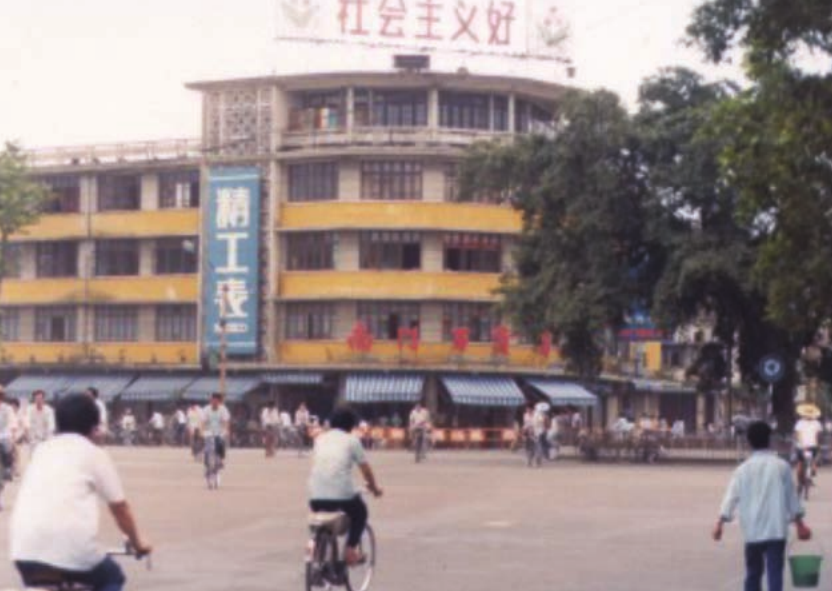
Deng's reforms extended to urban industry and commerce. Previously, under the 'iron rice bowl' policy, service in state-run enterprises was often poor. Shop assistants might file their nails between serving long queues of customers. This lackadaisical attitude was unacceptable in Deng's vision for China.
Key reforms included:
- State-run enterprises were instructed to make profits and, if necessary, dismiss staff who did not work effectively
- People were encouraged to establish private shops to provide competition and better variety of goods and services to customers
- Factories were encouraged to modernise production methods
- After paying taxes, factories could use some profits for reinvestment
- Trade fairs were established to allow companies to import quality equipment from overseas
Joint ventures: Overseas companies were encouraged to invest in China through joint ventures, where Chinese companies partnered 50/50 with international companies. This brought multiple benefits:
- Increased profits due to overseas market access
- Better quality products for the domestic market
- Improved quality control procedures
- Technology transfer
Japan moved quickly to take advantage of the cheap labour these joint ventures offered.
Note
Special Economic Zones
Deng established Special Economic Zones in south-eastern China with investment capital to operate along more capitalist lines. These zones were highly valued by employees, who received significantly better wages and conditions than their counterparts elsewhere. One such zone was Shenzhen, established across the border from Hong Kong in anticipation of Hong Kong's return to mainland control.
The major drawback to this system was that Chinese people were no longer guaranteed employment. Whilst some could increasingly make their own choices and advance themselves economically, others found themselves unemployed without a social security system or unemployment benefits to support them.
Social reforms
Education reforms
In a reversal of the Cultural Revolution's 'Better Red than expert' philosophy, Deng recognised that China needed experts to run its modernising industry. His Four Modernisations policy required high-quality education.
Key changes to education included:
- Examinations became the primary means of entry to good schools
- The government designated certain schools and universities as 'key' institutions, which received the best funding and staffing
- Competition through exams to enter these institutions became intense
- Political education and military training continued in universities, but the emphasis shifted to academic achievement
- Students were encouraged to study at overseas universities to acquire skills and bring them back to China
- 'Foreign experts' (teachers from overseas) were brought in to improve the quality of English and, to a lesser extent, Japanese language instruction - the languages needed for new technologies
- Those who had studied Russian needed to switch languages to improve their opportunities
Note
In schools, the Young Pioneers movement was revived after being destroyed by the Red Guards. This was a combination of a scouting-like organisation and training programme for Party membership. Young Pioneers were easily recognised by the red scarves they wore around their necks.
The one-child policy
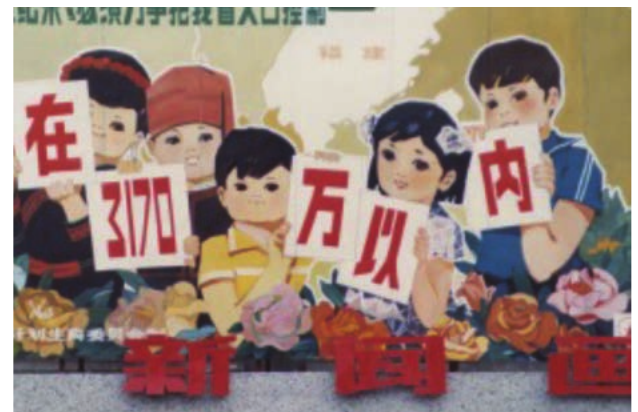
The government recognised that economic growth and prosperity depended on being able to feed and control China's population. Whilst Mao had always seen a large population as an asset, demographers pointed out the difficulty of sustaining a rapidly increasing population of over one billion people.
Important
The Three-Pronged Approach to Population Control
The one-child policy was introduced with a comprehensive strategy:
-
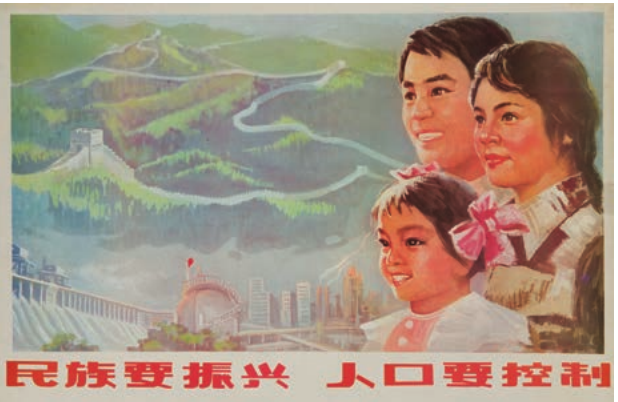
Propaganda campaign: Posters and other media extolled the advantages of having just one child (portrayed as healthier and better cared for)
-
Economic penalties: Families with a second child faced withdrawal of free education and medical treatment
-
Work unit responsibility: The danwei (work unit), particularly its clinic, was responsible for meeting quotas for birth control. Both contraception and late marriages were strongly encouraged
Consequences of the policy:
The one-child policy had significant unintended negative consequences. Whilst many educated city dwellers accepted having only one child (even a female child), rural areas often resisted. Peasants viewed sons as essential for:
- Providing support in retirement
- Praying for their spirits after death
- Continuing the family line
Since daughters traditionally became part of their husband's family upon marriage, girls were often considered economic liabilities.
Important
Tragic Consequences for Female Children
The preference for male children led to:
- Forced terminations of pregnancies to prevent second births
- Infanticide of female babies
- Abandonment of female infants
- Illegal selling of female babies to childless couples
The policy created a gender imbalance with long-term social consequences. Some mothers, desperate for a son, would secretly give birth away from home and sell or abandon daughters, as described in the case of Pan Xiaoyan, who was sold to a childless couple and her identity changed to Huang Ying.
Impact and significance
Deng Xiaoping's reforms fundamentally transformed China. Whilst the political structure and the dominance of the Chinese Communist Party remained largely unchallenged, the economic changes laid the foundation for China to become the economic superpower it is today.
Summary
Key Achievements of the Reform Period (1976-1989)
The period from 1976 to 1989 saw China move from the chaos and poverty of the Cultural Revolution to a modernising economy with:
- Improved agricultural productivity and peasant prosperity
- Growing industrial capacity and quality
- Increasing engagement with the international economy
- Better education standards focused on expertise
- Population control measures (however controversial)
However, these changes also created new challenges:
Important
Emerging Challenges and Tensions
- Loss of the guaranteed 'iron rice bowl' employment
- Growing inequality between urban and rural areas
- Gender imbalance from the one-child policy
- Unemployment without adequate social safety nets
- Tensions between economic liberalisation and political control
These tensions would eventually contribute to the democracy movement and the Tiananmen Square protests of 1989.
Summary
Remember!
-
Zhou Enlai's death in January 1976 and the public's spontaneous memorial in April 1976 revealed growing dissatisfaction with Mao and the Gang of Four, foreshadowing major political changes.
-
Mao died in September 1976, ending the Cultural Revolution. The Gang of Four were arrested shortly after, removing the last obstacles to reform.
-
Deng Xiaoping gradually replaced Hua Guofeng through a bloodless transition, carefully balancing criticism of Mao's later mistakes whilst preserving enough of his legacy to maintain CCP legitimacy.
-
Economic reforms centred on the 'Responsibility System' in agriculture and market-oriented reforms in industry, including joint ventures with foreign companies and Special Economic Zones. The pragmatic philosophy was 'socialism with Chinese characteristics'.
-
The one-child policy was introduced to control population growth and support economic development, but had serious negative consequences, particularly gender-selective practices in rural areas.