The Tiananmen Square Protests (HSC SSCE Modern History): Revision Notes
📚Revision Notes
The Tiananmen Square Protests
Background and context
By the late 1980s, the Chinese people had begun to understand just how far behind the West their country had fallen. Under Mao's leadership, they had been taught that Western workers lived in terrible poverty, similar to the story of The Little Match Girl found in Chinese textbooks. The government had assured them that life in China was better. However, as China opened up to the world and people started watching Western films and television, they quickly realised what they had been missing.
Deng Xiaoping's economic reforms had created significant wealth, but this prosperity was not shared equally. Those with guanxi – political connections – were in the best position to benefit. They could establish joint enterprises with foreign companies, import goods from overseas, and set up private businesses. Meanwhile, young people faced unemployment as Deng's reforms had ended the "iron rice bowl" – the communist guarantee of lifelong employment. These unemployed youth became known as "job-awaiting youth".
Note
Understanding Guanxi
Guanxi refers to political connections that allowed people to bypass bureaucratic obstacles and access economic opportunities. In the context of 1980s China, having guanxi meant the difference between prosperity and struggling to survive economically.
A Chinese proverb captured the corruption that troubled many citizens:
Important
Chinese Proverb on Corruption
"When a man becomes an official, his wife, children, dogs, cats and even chickens fly. When he falls, they all fall with him."
This proverb reflected widespread anger about corruption, particularly regarding Deng Xiaoping's own family. His eldest son, Deng Pufang, had built a large company called Kang Hua that traded in imports and dominated Beijing's taxi industry, attracting the children of the ruling elite. However, Kang Hua's corruption had become common knowledge.
Leadership changes
In 1987, the elderly Deng Xiaoping (now aged 83) decided to officially retire from the Central Committee, though he remained influential behind the scenes. He also forced into retirement several contemporary Long Marchers who opposed economic reform. A younger official, Zhao Ziyang (aged 68), was elected General Secretary at the 13th Congress in Beijing. The Congress had shown unusual disunity within the Party, but Deng's candidate had prevailed. Ready to move into position just below Zhao was Li Peng (aged 59), a Moscow-trained official who had been adopted and raised by Zhou Enlai.
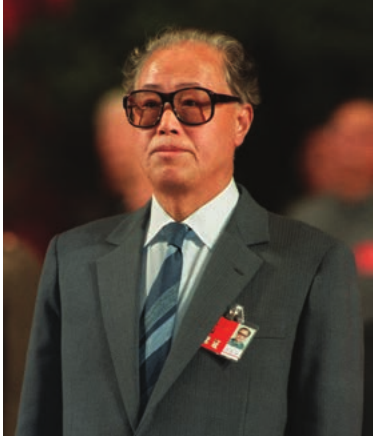
Zhao Ziyang presented a new image to the world. Instead of wearing the traditional Mao jacket, he dressed in Western-style suits and ties. He belonged to the reformist faction of the Chinese Communist Party, which aimed to introduce some democratic reforms. However, he still supported the government's crackdown on the Tibetan uprising that same year. This division within the Party between reformists and hardliners would prove crucial in the events of 1989.
The demands for political, social and economic reform
Growing activism among students and intellectuals began to challenge the Party's authority. The protesters had three main concerns that drove their movement.
The three grievances
Important
The Three Main Student Demands
- Democracy over dictatorship: Students wanted democracy rather than Party dictatorship
- Anti-corruption: Opposition to widespread corruption of Party officials who abused their unchallenged positions of power
- Honouring Hu Yaobang: Mourning the death of reformist leader Hu Yaobang, who had been removed from his position as Secretary-General
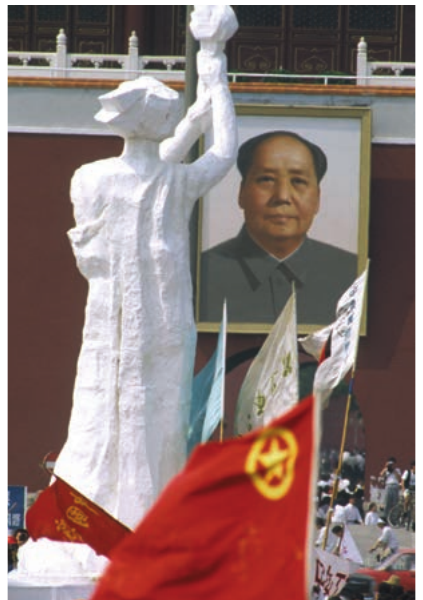
To symbolise their demand for democracy, students at one art school created an image of the "Goddess of Democracy", which they brought to Tiananmen Square – the movement's focal point. Their protests gained additional significance because 4 May 1989 marked the 70th anniversary of the May Fourth Movement, a historical student protest that had called for democracy and modernisation in 1919.
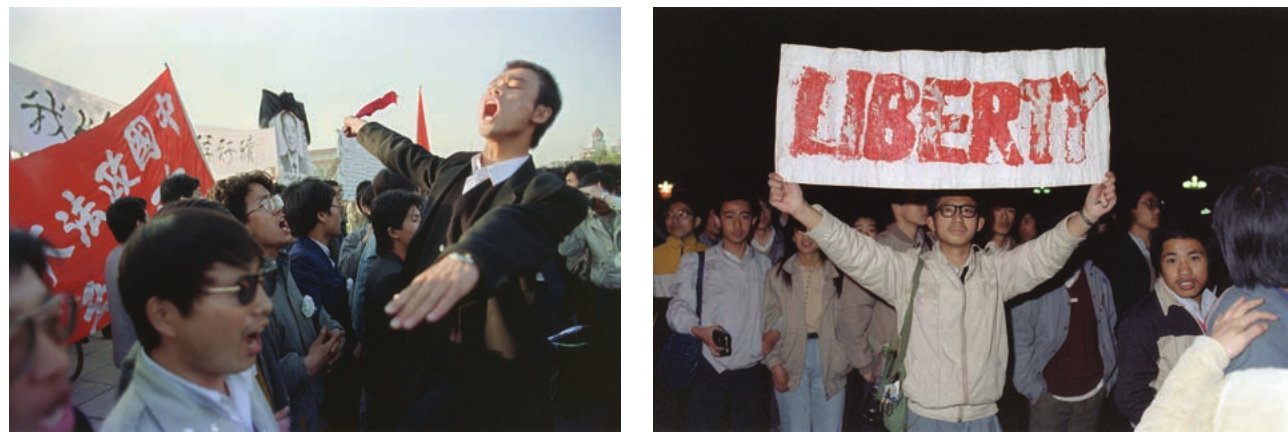
The death of Hu Yaobang in April 1989 sparked an outpouring of grief and protest. Students viewed Hu as a progressive leader who favoured reform and democracy, and they chose to honour his memory at Tiananmen Square – much as demonstrators had remembered Zhou Enlai there 13 years earlier during the Qingming Festival of 1976.
The protest movement grows
Two key figures emerged as leaders of the democracy movement: Fang Lizhi, an astrophysicist, and Wei Jingsheng, a poster writer who was later imprisoned for his criticisms of the government. Other students joined their call for reform. Factory workers, artists, and members of various social groups lent their support to the student protesters.
In May 1989, Tiananmen Square became the stage for large-scale demonstrations. Students camped in the square and some conducted hunger strikes to draw attention to their demands. The government initially attempted to move the students using the People's Liberation Army (PLA), but these soldiers were reluctant to use force against their fellow citizens.
Note
The situation became even more embarrassing for Deng Xiaoping when Mikhail Gorbachev, leader of the Soviet Union, paid a visit to China and witnessed the protests against the government. Zhao Ziyang visited the hunger strikers and was visibly moved by their condition. His sympathy for the protesters led the hardliners, particularly Deng Xiaoping and Li Peng, to remove him from power.
The military and political response
The 4 June 1989 crackdown
On 4 June 1989, the government made a decisive and brutal move. They brought in troops from outside Beijing – specifically the 27th Army, who had no connection with or sympathy for the students. The crackdown was savage and bloody. Tanks rolled into Tiananmen Square and tracer bullets lit up the night sky, causing most of the deaths. After clearing the square, the Army entered universities to arrest protesters. The government hid the true number of casualties and disposed of bodies, referring to the massacre euphemistically as the "Tiananmen Incident".
The death toll and aftermath
Important
The Death Toll Debate
The true number of casualties remains disputed:
- Official government figure: 200-300 "counter-revolutionaries" died
- Red Cross estimate: Approximately 3000 people
- Ding Zilin's research: 2600 people died (Ding Zilin was the mother of one victim who devoted herself to discovering the facts)
Thousands more were arrested throughout the country, and some were executed. Even today, many Chinese citizens remain unaware of what actually happened during the protests and crackdown.
An interesting form of protest emerged after Tiananmen. Students at one university began throwing bottles from their dormitory windows. The Chinese word for "little bottle" is xiao ping – a pun on Deng Xiaoping's name, which means "Little Peace". This demonstrated the Chinese people's ability to use indirect language and symbolism to protest against restrictive regimes.
The Tank Man
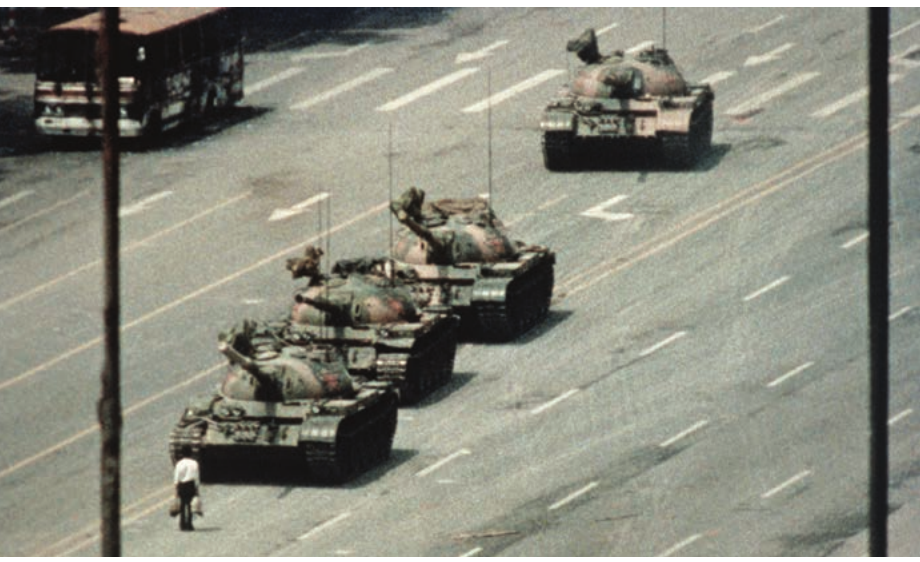
One image from the aftermath of the Tiananmen massacre became iconic worldwide. A lone man carrying shopping bags stood in front of a column of tanks, using his body to block their path. This photograph of individual courage confronting overwhelming state power became one of the most recognisable images of peaceful resistance in the twentieth century.
The impact on China and its standing in the world
Jiang Zemin's rise to power
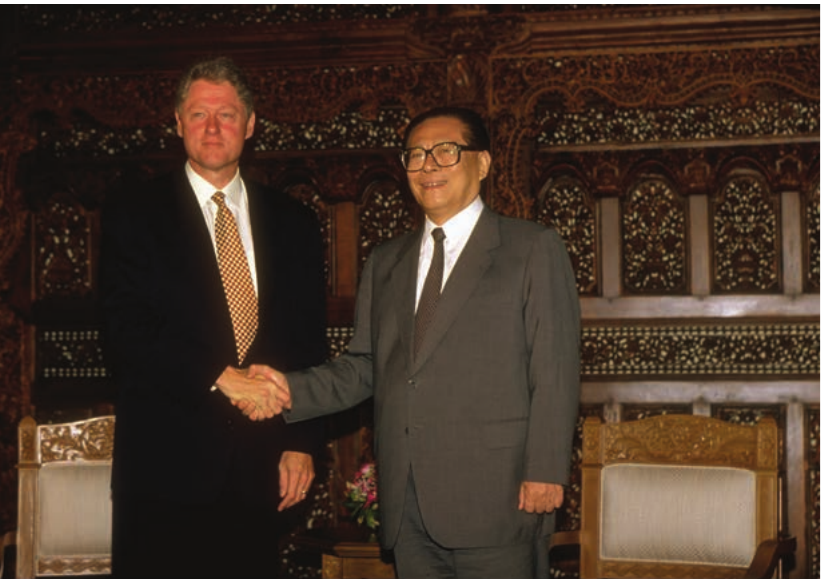
The immediate result of the Tiananmen Incident was the strengthening of political hardliners such as Li Peng and the fall of moderate reformists like Zhao Ziyang, who was placed under house arrest and condemned to political oblivion. Shanghai Party leader Jiang Zemin, one of the third generation of communists, was selected from relative political obscurity to replace Zhao as General Secretary.
Jiang had been mayor of Shanghai during its period of immense economic growth. As mayor, he became an automatic appointee to the Politburo. However, his closure of a Shanghai newspaper that sympathised with the student protesters particularly recommended him to the hardliners. He had a small power base initially, and many considered his appointment as Secretary-General to be temporary.
Note
Jiang's early reluctance to push Deng's economic reforms was unwise. He had even criticised the previous period as being "hard on the economy and soft on politics". To strengthen his position, he continued the hard political line whilst pushing Deng's economic reforms forward. At the 14th Party Congress in 1992, he promoted the goal of a "socialist market economy" and elevated his supporters Zhu Rongji and Hu Jintao (the future leaders of China) to the Politburo Standing Committee.
Internal suppression
Within China, the Tiananmen massacre was kept out of the media except to denigrate the participants. The government continued to use the euphemistic term "incident" rather than acknowledging it as a massacre. Protest leaders were hunted down and imprisoned. Soon, other pressing matters took precedence in people's daily lives: unemployment reached 40% in some areas, coastal regions were surpassing rural areas in economic growth, corruption remained widespread, and many state-owned enterprises were failing. There was strong incentive for people to avoid politics and instead concentrate on participating in economic growth or seeking opportunities overseas.
China's standing in the world
Initially, the international community condemned the 4 June massacre. Foreign reporters and camera crews were already present in Beijing covering the student protests when the crackdown occurred. The photographs of crushed students were horrific. The image of Tank Man holding up a line of tanks provided a rare moment of humanity and hope amidst the tragedy.
However, after the initial shock wore off, the world and its media adopted a more pragmatic approach. China was emerging as an economic superpower, and maintaining good relations became financially important.
Note
International Pragmatism
As an editorial in The Age newspaper observed, Western leaders had always known that what they witnessed at Tiananmen Square was a brutal use of state power. Yet the pragmatic response, once the initial revulsion had faded, was to move ahead cautiously with ending China's isolation. America, Australia, and Europe all acknowledged that China must play an increasingly important role in global affairs, especially as it opened its markets to the world.
On 1 May 1991, Taiwan ended Jiang Jieshi's 43-year-old Period of Communist Rebellion (a state of emergency) and opened the way for greater dialogue between the island and the mainland. Perhaps Deng Xiaoping, the man behind the crackdown, had the last word:
Important
Deng Xiaoping's Prediction
"The West has a short memory."
Hong Kong, Macao and Taiwan
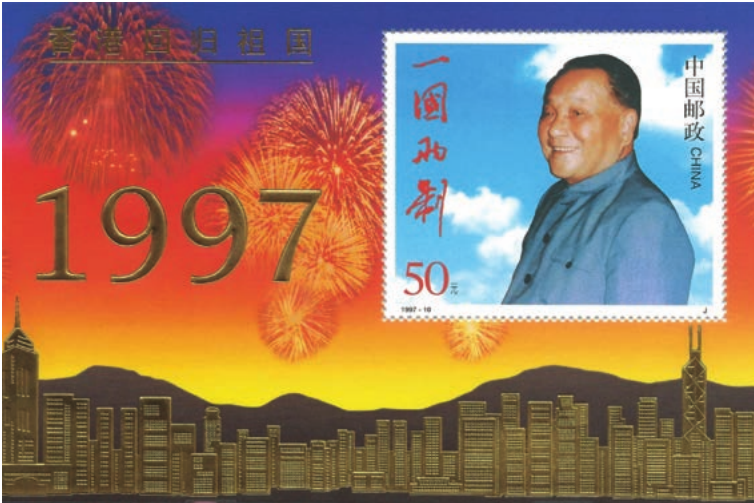
In 1997, Britain's lease on Hong Kong expired. Margaret Thatcher, the British Prime Minister, attempted to renegotiate the arrangement, but Deng Xiaoping refused to compromise. What Deng offered instead was "one country, two systems" – a promise that Hong Kong would remain largely undisturbed for 50 years. Deng did not want investors to flee Hong Kong and diminish the value of this important acquisition.
Note
This promise has been largely maintained, and the people of Hong Kong still enjoy freedoms denied to their mainland counterparts. However, they do not have democracy – though as a Crown colony of Britain, they did not have it before 1997 either. Macao rejoined China shortly afterwards.
Taiwan has not moved closer to reunification with mainland China, but tensions have eased considerably. Military bombardments have ceased, and flights now operate between Taiwan and the mainland. Taiwan can only compete in the Olympics as "Chinese Taibei" (meaning "the capital"). Tensions only rise when a non-Guomindang Party takes control in Taiwan and discusses the island's separate status. China uses cultural diplomacy, including posters, cultural links with South Fujian province, and literature emphasising themes like "falling leaves return to their roots" to encourage Taiwan's eventual reunification with the mainland.
The story continues
More than two decades after Deng Xiaoping's death, China remains fundamentally his creation – politically conservative and dominated by the Chinese Communist Party, yet also an economic superpower. Many citizens are content to pursue Deng's famous dictum, "To be rich is glorious," rather than seek political reforms. As the second generation of communist leaders passes away, political reform may eventually follow the economic transformation that has already occurred.
Summary
Key Points to Remember
-
The Tiananmen Square protests emerged from three main grievances: demand for democracy over Party dictatorship, anger at widespread corruption, and mourning for the ousted reformist Hu Yaobang.
-
On 4 June 1989, the government used the 27th Army (brought in from outside Beijing) to brutally suppress the protests with tanks and tracer bullets. The official death toll of 200-300 "counter-revolutionaries" likely conceals the true figure of approximately 2600-3000 deaths.
-
The crackdown strengthened hardliners like Li Peng and led to Jiang Zemin's rise to power, whilst reformist Zhao Ziyang was placed under house arrest for sympathising with the protesters.
-
Initially condemned worldwide, international pragmatism soon prevailed as countries recognised China's growing economic importance. As Deng Xiaoping predicted, "The West has a short memory."
-
The legacy of Tiananmen continues to shape modern China: political conservatism maintained alongside economic liberalisation, with Hong Kong operating under "one country, two systems" and Taiwan relations gradually improving despite ongoing tensions over reunification.