Towards Nuclear Disarmament (HSC SSCE Modern History): Revision Notes
📚Revision Notes
Towards Nuclear Disarmament
After the Second World War, growing concerns about nuclear weapons led to various international efforts to control, limit, and eventually eliminate these devastating weapons. This note explores the key movements, treaties, and initiatives that have shaped nuclear disarmament from the 1950s to the present day.
Nuclear disarmament groups and their impact on government policy
The rise of the peace movement
In the 1950s, public concern about nuclear testing and radioactive contamination grew significantly. This led to a resurgence of the peace movement around the world. In the United States, peace activist Norman Cousins founded the National Committee for a Sane Nuclear Policy (known as SANE). This organisation called for a complete halt to nuclear testing to prevent the global spread of dangerous radioactive fallout.
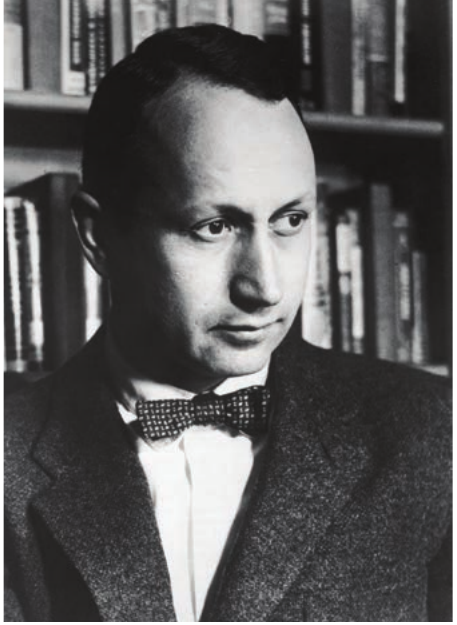
Similar anti-nuclear organisations emerged globally, creating pressure on governments to take action. This growing public concern contributed to a temporary agreement between the US, Britain, and the Soviet Union to stop nuclear testing. However, this moratorium collapsed when both the Soviet Union and United States resumed testing.
Note
The peace movement of the 1950s marked the beginning of sustained public pressure on governments to address nuclear weapons. These grassroots movements demonstrated that ordinary citizens could influence major security policy decisions through organized advocacy and public awareness campaigns.
The Cuban Missile Crisis and its aftermath
The Cuban Missile Crisis of October 1962 brought the world to the brink of nuclear war for thirteen days. Both President John F. Kennedy and Soviet leader Nikita Khrushchev realised how close they had come to losing control of events, even after they decided to resolve the crisis peacefully. This near-disaster highlighted the urgent need for nuclear arms control.
Important
The Cuban Missile Crisis demonstrated that even when leaders want peace, the dynamics of nuclear confrontation can spiral beyond their control. This thirteen-day standoff remains the closest the world has come to full-scale nuclear war, serving as a stark reminder of the catastrophic risks of nuclear weapons.
Norman Cousins played a crucial role in bringing Kennedy and Khrushchev together to negotiate a treaty banning nuclear testing. The improved relationship between the two leaders was dramatically demonstrated in Kennedy's American University speech on 10 June 1963, where he spoke these famous words:
Note
Kennedy's Vision of Common Humanity
For in the final analysis, our most basic common link is that we all inhabit this small planet. We all breathe the same air. We all cherish our children's futures. And we are all mortal.
This speech marked a turning point in Cold War rhetoric, emphasizing shared humanity over ideological divisions.
Kennedy then announced that the United States, Britain, and the Soviet Union were negotiating a treaty to ban nuclear weapons testing.
The Partial Test Ban Treaty (1963)
The Partial Test Ban Treaty (also called the Limited Test Ban Treaty) was signed on 5 August 1963 and came into force on 10 October 1963. The treaty prohibited nuclear explosions:
- In the atmosphere
- In outer space
- Under water
- In any manner that would cause radioactive debris to drift beyond the borders of the testing nation
This treaty was significant because it reduced radioactive contamination, but it did not ban underground nuclear testing.
The Nuclear Non-Proliferation Treaty (NPT)
Background and purpose
The Nuclear Non-Proliferation Treaty (NPT) was adopted by the UN General Assembly on 1 July 1968 and came into force on 5 March 1970. The treaty recognised that 'the proliferation of nuclear weapons would seriously enhance the danger of nuclear war'.
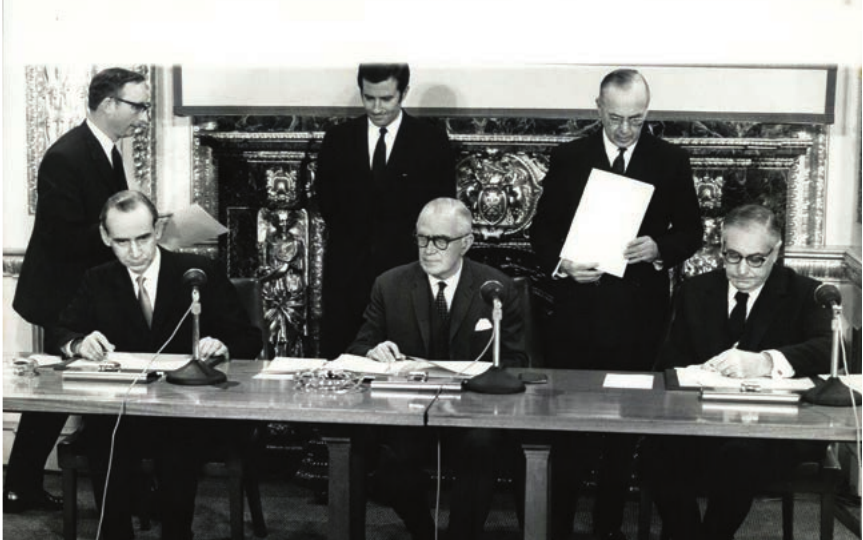
The ultimate aim of the NPT was complete nuclear disarmament under strict international control. This goal was clearly stated in Article VI of the treaty, which called for negotiations to achieve 'the cessation of the manufacture of nuclear weapons, the liquidation of all their existing stockpiles, and the elimination from national arsenals of nuclear weapons'.
Note
The NPT was essentially a bargain between five nations that had nuclear weapons at the time (the USA, UK, France, USSR, and China) and all other nations that promised not to acquire nuclear weapons. In exchange for non-proliferation, the nuclear powers committed to eventual disarmament and sharing peaceful nuclear technology.
Successes and limitations
Successes:
- The NPT has been signed by 190 countries
- It has successfully stopped many nations from developing nuclear weapons
- Australia signed the NPT on 27 February 1970 and ratified it in December 1972 under Prime Minister Gough Whitlam, abandoning its nuclear ambitions
- The treaty has maintained a remarkable degree of global stability
- After much debate, the treaty was extended indefinitely on 11 May 1995
Important
Critical Limitations of the NPT:
- Three countries with nuclear weapons have not signed: India, Pakistan, and Israel
- North Korea signed in 1985 but withdrew in 2003, citing US aggression
- Despite Article VI's call for disarmament, the five nuclear powers nearly doubled their collective arsenals from 38,153 weapons in 1970 to 65,056 in 1986
- The treaty is now criticised for serving the interests of nuclear weapons states rather than promoting genuine disarmament
These limitations reveal a fundamental contradiction: while the NPT successfully prevented horizontal proliferation (spread to new countries), it failed to prevent vertical proliferation (growth of existing arsenals).
Nuclear Weapons Free Zones (NWFZ)
Nuclear Weapons Free Zones are regions where countries commit not to accept nuclear weapons on their territory. Article VII of the NPT supports the establishment of NWFZs as they support non-proliferation at the regional level.
There are now five NWFZs:
- Latin America - Treaty of Tlatelolco (1967) - the first NWFZ
- South Pacific - Treaty of Rarotonga (1985)
- South-East Asia
- Africa
- Central Asia
These zones have contributed to:
- Stigmatising nuclear weapons
- Promoting environmental protection
- Supporting non-proliferation and nuclear disarmament
Other treaties have prohibited nuclear weapons in:
- The Antarctic (Antarctic Treaty, 1959)
- Outer space (Outer Space Treaty, 1967)
- The oceans (Seabed Treaty, 1971)
Violations of NWFZs
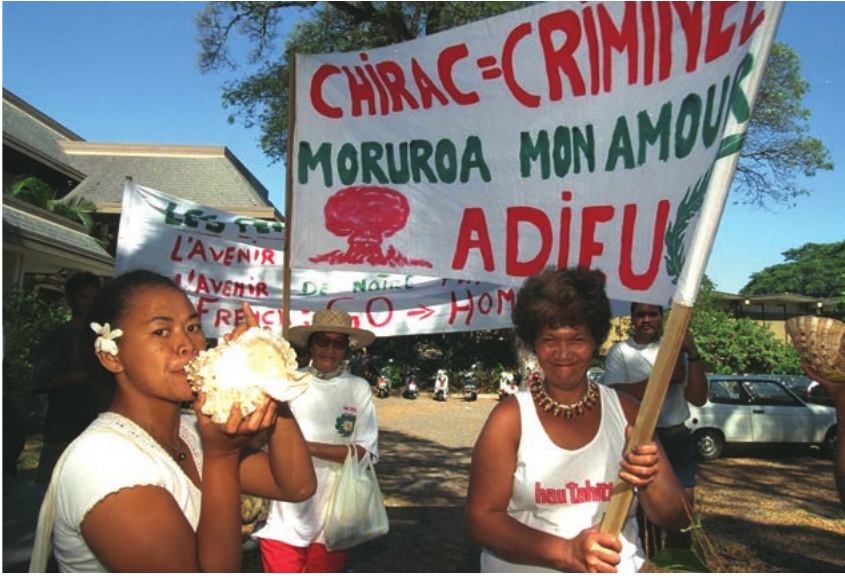
Despite these agreements, nuclear weapons states can violate NWFZs without serious consequences. On 13 June 1995, newly elected French President Jacques Chirac announced the resumption of French nuclear testing in French Polynesia. This outraged public opinion worldwide, particularly in Australia.
Important
Key Limitation of NWFZs
Remember that NWFZs are regional agreements that complement the global NPT, but they lack strong enforcement mechanisms. Nuclear weapons states can violate these zones without facing significant legal or political consequences, as demonstrated by France's testing in the South Pacific.
SALT and START - bilateral arms agreements
Alongside the multilateral NPT, the USA and USSR negotiated bilateral treaties during and after the Cold War.
The Strategic Arms Limitation Talks (SALT) began in 1968 and led to:
- The Anti-Ballistic Missile Treaty (ABM) in 1972
- An agreement capping ICBM (Intercontinental Ballistic Missile) and SLBM (Submarine-Launched Ballistic Missile) forces in 1972
- SALT II in 1979 (though the process stalled with the Soviet invasion of Afghanistan)
Later, Strategic Arms Reduction Treaties (START) achieved actual reductions in nuclear arsenals rather than just limiting growth.
Note
The distinction between SALT and START is crucial: SALT agreements merely limited the growth of nuclear arsenals, while START treaties actually reduced them. This represented a significant shift from arms control to genuine disarmament.
Nuclear disarmament movements - 1950s to the 1980s
The 1980s nuclear freeze movement
The most dramatic reductions in nuclear weapons began in the second half of the 1980s, led by US President Ronald Reagan and Soviet leader Mikhail Gorbachev. However, these leaders did not act in isolation - they were profoundly influenced by the global nuclear disarmament movement.
In his 2009 book Confronting the Bomb, historian Lawrence Wittner explained:
Note
The Power of Popular Movements
...with nuclear weapons enthusiasts controlling major governments and talking glibly of nuclear war, a nuclear conflagration was becoming more likely. In response, millions of people around the world mobilised against the policies of their rulers. Peace and disarmament groups burgeoned into mass movements of unprecedented size and intensity.
Wittner's analysis highlights how grassroots movements created the political pressure necessary for leaders to pursue disarmament.
The movement began in 1980 with:
- The 'Nuclear Freeze' movement in the United States
- The END (European Nuclear Disarmament) movement in Europe
These movements targeted the proposed deployment of a new generation of deadly intermediate-range missiles in Europe by both superpowers.
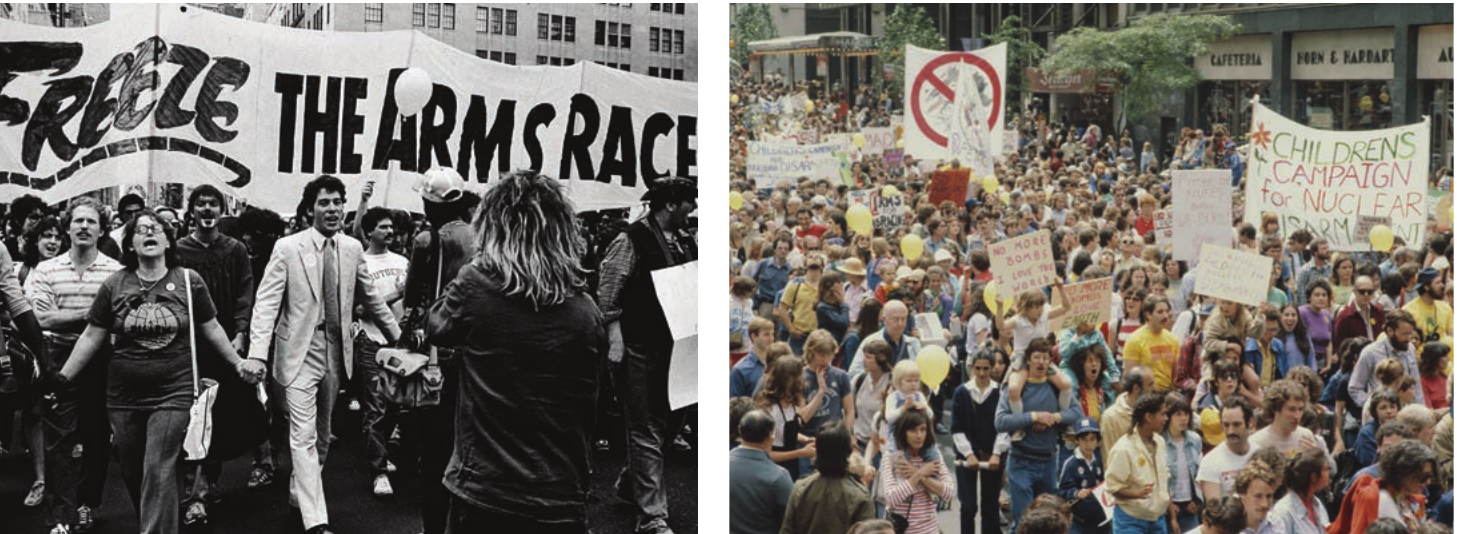
The million-person march (1982)
On 12 June 1982, one million people marched in New York City from the UN building to Central Park. The theme was 'Freeze the Arms Race - Fund Human Needs'. It was the largest political rally in American history. Similar mass rallies occurred around the world.
Influence on leaders
President Reagan changed his hawkish policies on nuclear weapons, leading to his extraordinary public address on 16 January 1984 calling for peace with the Soviet Union and a nuclear-free world - before Gorbachev even came to power!
Mikhail Gorbachev was profoundly influenced by the western nuclear disarmament movement, particularly:
- Einstein's anti-nuclear statement of 1956
- The Russell-Einstein appeal of 1955
When Gorbachev became Soviet leader in March 1985, nuclear disarmament was at the top of his agenda.
Near misses in 1983
Important
How Close We Came to Nuclear War
Despite popular protest, 1983 saw the world come closest to nuclear war since the Cuban Missile Crisis - not once, but twice:
- On 26 November 1983, Soviet officer Stanislav Petrov refused to authorise massive retaliation against a perceived US missile attack (which turned out to be a false alarm)
- During NATO's 'Able Archer' military exercise, Soviet forces were placed on high alert, convinced the exercise was cover for a pre-emptive nuclear strike
These incidents demonstrate how technical failures and misunderstandings could have triggered global catastrophe, underscoring the inherent instability of nuclear deterrence.
The unexpected end to the Cold War arms race
The Reagan-Gorbachev partnership
Mikhail Gorbachev's rise to Soviet leadership became a game changer for nuclear disarmament. The Reagan-Gorbachev Reykjavik Summit held on 11-12 October 1986 led to deep reductions in nuclear forces.
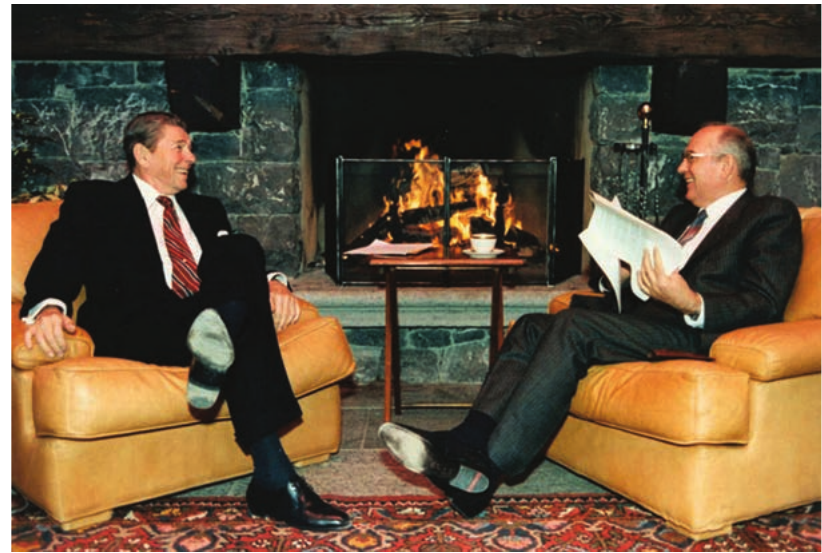
Key achievements:
- Intermediate Nuclear Forces (INF) Treaty (1987) - eliminated an entire class of nuclear missiles
- Strategic Offensive Arms Reductions (START I) (1991) - significant cuts in strategic nuclear weapons
Missed opportunity
Despite the breakthrough, there was a great missed opportunity. Both Gorbachev and US Secretary of Defense Caspar Weinberger put forward separate proposals for eliminating all nuclear weapons. The sticking point was the Americans' unwillingness to agree not to withdraw from the 1972 ABM Treaty, which interfered with Reagan's Strategic Defense Initiative (SDI), known as 'Star Wars'.
Note
The Reykjavik Summit came tantalizingly close to agreeing on the complete elimination of nuclear weapons. Had Reagan been willing to abandon SDI, the world might have achieved total nuclear disarmament in the late 1980s. This represents one of history's great "what if" moments in nuclear policy.
Nevertheless, in 1986 the two leaders put their nations on a path to deep reductions in nuclear weapons that continued for twenty years.
Further reductions
The collapse of the Soviet Union in 1991 signalled the end of the Cold War and led to further treaties:
- START II (1992)
- SORT with Vladimir Putin (2002)
- New START (2010, entered into force in 2011)
These bilateral treaties significantly reduced total nuclear weapons from the Cold War high of 65,000 to less than 15,000 today.
1990s optimism
Post-Cold War hopes
The end of the Cold War led to widespread optimism about nuclear disarmament. The USA and Russia made significant cuts in their nuclear arsenals. The general public, confident that reduced numbers meant freedom from nuclear threat, relaxed, and the nuclear issue largely disappeared from public consciousness.
This optimism led to the NPT Review Conference of 1995 agreeing to extend the treaty indefinitely, though not without heated debates.
Comprehensive Test Ban Treaty (CTBT)
Gorbachev announced a unilateral moratorium on nuclear testing, followed by President Bill Clinton for the US in 1993. This led to negotiations for a Comprehensive Test Ban Treaty (CTBT), designed to prohibit all nuclear weapons testing.
The USA was the first nation to sign the CTBT on 24 September 1996, but the US Senate refused to ratify the treaty in 1999.
Note
Current Status of the CTBT:
- 183 countries have signed the CTBT
- 164 countries have ratified it
- The treaty has not come into force because it requires signature and ratification by eight specific nuclear technology nations: China, Egypt, India, Iran, Israel, North Korea, Pakistan, and the USA
Despite not being formally in force, the CTBT has created strong international norms against nuclear testing.
Despite this, the Preparatory Commission for the Comprehensive Nuclear-Test-Ban Treaty Organization (CTBTO) has built a verification regime ready for when the treaty enters into force.
There has been a de facto moratorium on nuclear testing for 18 years, broken only by North Korea's nuclear tests in 2006, 2009, 2013, and 2016.
ICJ ruling (1996)
A significant development occurred on 8 July 1996 when the International Court of Justice (ICJ) delivered a historic opinion on the legality of nuclear weapons under international humanitarian law.
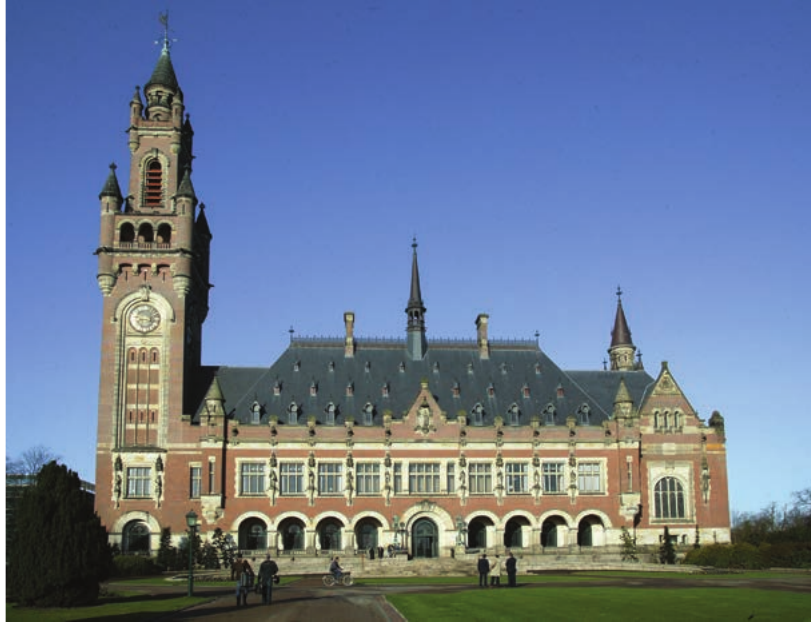
Important
The ICJ Landmark Ruling:
- The threat or use of nuclear weapons is generally illegal under international law
- States have an obligation to conclude negotiations on their elimination
The case was brought by the UN General Assembly, supported by NGO campaigns including the World Court Project, led by organisations such as:
- Lawyers Committee on Nuclear Policy (LCNP)
- International Association of Lawyers Against Nuclear Arms (IALANA)
- International Peace Bureau (IPB)
- International Physicians for the Prevention of Nuclear War (IPPNW)
This ruling provided legal grounding for future humanitarian approaches to nuclear disarmament.
The NPT falters
Slowing progress (late 1990s-2000s)
By the late 1990s, cuts in US and Russian nuclear arsenals slowed, particularly as public pressure decreased. The general public assumed the nuclear threat had disappeared with the Cold War.
NPT Review Conference 2000
The New Agenda Coalition (led by Ireland and Brazil) pressured nuclear weapons states to continue disarmament. The conference agreed to 'Thirteen Practical Steps' and ended on a positive note.
George W. Bush administration (2001-2009)
Important
Setback Under Bush Administration
When George W. Bush became US President in January 2001, progress halted. Bush:
- Repudiated support for the CTBT
- Dispensed with the 1972 Anti-Ballistic Missile Treaty
- Totally ignored the 'Thirteen Practical Steps' throughout his eight-year presidency
This marked a dramatic reversal in US commitment to nuclear disarmament and undermined the NPT framework.
NPT Review Conference 2005
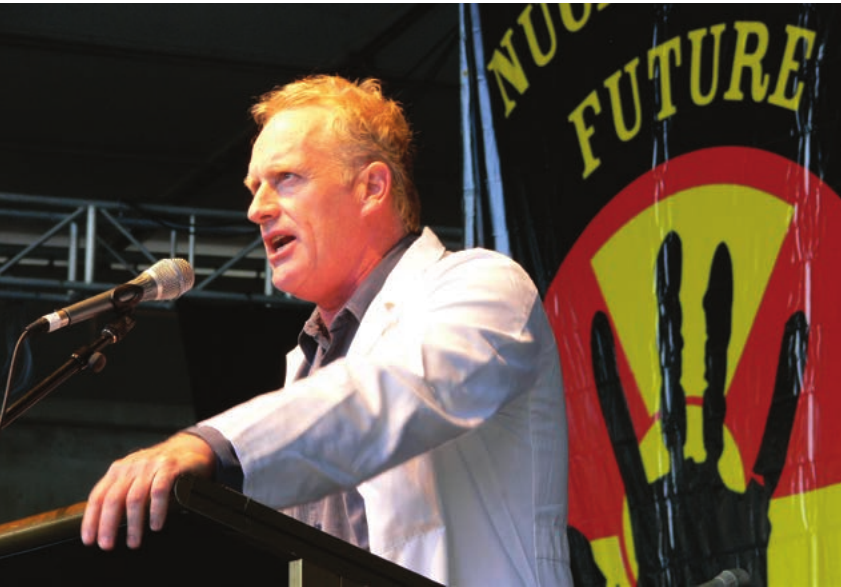
Canadian anti-nuclear campaigner Douglas Roche described the 2005 conference as a 'ritualistic facade' and a 'fiasco'. Not only was no progress made, but the meeting took a backward step when the US refused to acknowledge commitments it had made in 1995 and 2000.
The failure of the 2005 NPT Review led a small group of Australians to create the International Campaign to Abolish Nuclear Weapons (ICAN) in 2007.
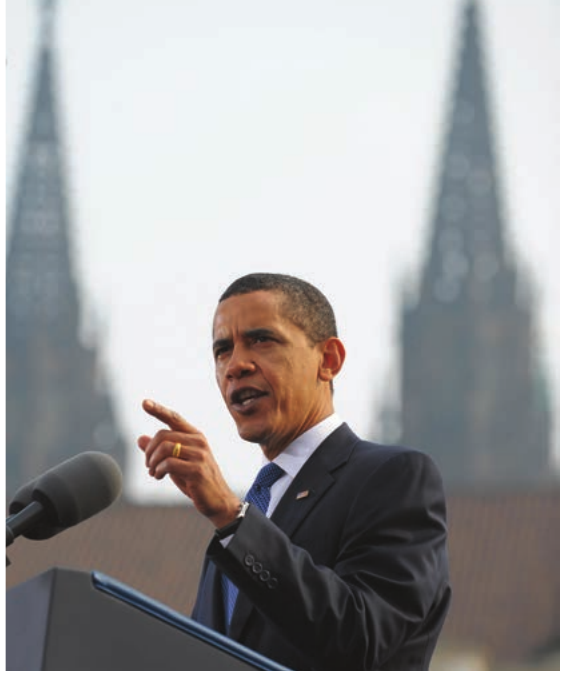
Obama's Prague speech (2009)
Signs of hope emerged when President Barack Obama gave a speech in Prague on 5 April 2009:
Note
Obama's Prague Vision
The United States will take concrete steps towards a world without nuclear weapons. To put an end to Cold War thinking, we will reduce the role of nuclear weapons in our nation's security strategy and urge others to do the same.
Obama continued his commitments at the UN Security Council, where Resolution 1887 (2009) was passed, with all members reaffirming their commitment to the NPT.
NPT Review Conference 2010
At the 2010 Review Conference, the 125 member states of the Non-Aligned Movement pushed for nuclear weapons states to re-commit to disarmament. The Final Draft produced a 64-point Action Plan based on the '19 Practical Steps', and nuclear weapons states committed to eliminate their arsenals.
Many regarded the conference as successful, yet many non-nuclear states and NGO activists were frustrated with endless verbal commitments but no real action. There was growing scepticism that NPT Review conferences could achieve genuine disarmament.
However, the 2010 Final Document included a crucial statement noting 'the catastrophic humanitarian consequences of any use of nuclear weapons'. This left the door open to addressing nuclear weapons through international humanitarian law, and many non-nuclear weapons states began looking for a new approach outside the NPT system.
Since 2011 - progress and danger
The Humanitarian Impact Initiative
In 2011, the International Red Cross and Red Crescent movement signalled a new approach. The Australian delegation of the Red Cross presented community views about nuclear weapons from their 'Make nuclear weapons the target' campaign. This led to a conference resolution called 'Working towards the elimination of nuclear weapons'.
In 2012, the Red Cross appealed to nation states to pursue negotiations for a treaty aimed at the prohibition and elimination of nuclear weapons. Australian Red Cross CEO Robert Tickner played an important role in achieving this.
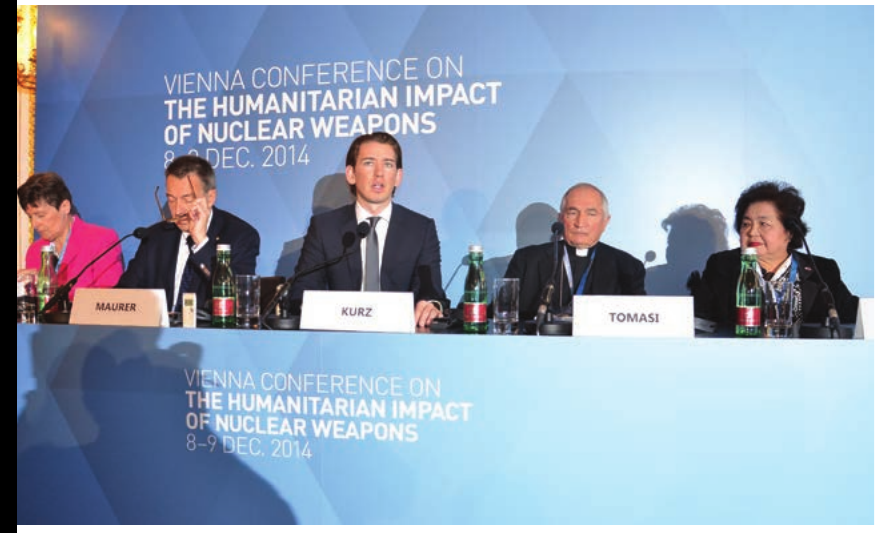
This marked the beginning of the newest phase of anti-nuclear campaigning, known as the Humanitarian Impact Initiative.
Note
In March 2013, the first of three groundbreaking conferences on the Humanitarian Impact of Nuclear Weapons was held in Oslo, with 128 countries attending. Robert Tickner addressed this conference on behalf of the Red Cross. This sparked initiatives in the UN and regional groupings, representing a shift from focusing on security concerns to humanitarian consequences.
Obama's Hiroshima visit (27 May 2015)
On 27 May 2015, President Obama became the first sitting US President to visit the Hiroshima Peace Memorial while attending the G7 Summit. This was particularly significant as it was the seventieth anniversary of the nuclear attack on Hiroshima (6 August 1945).
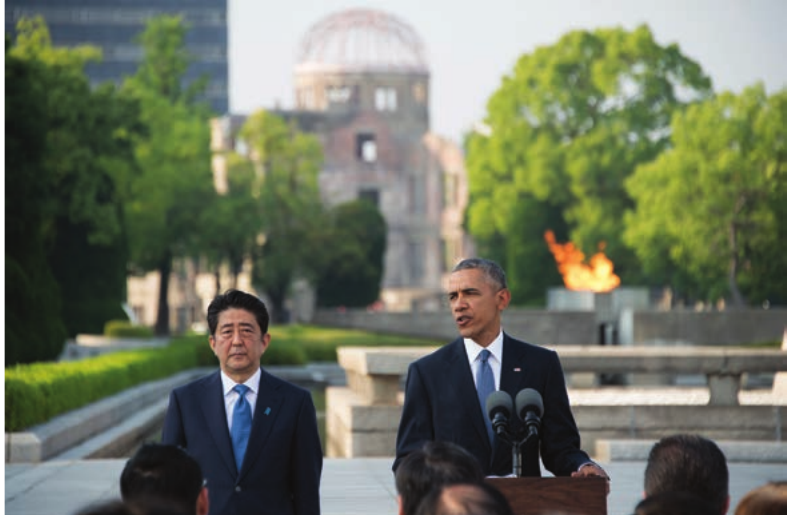
In his landmark speech, Obama expressed a desire for a moral awakening to deal with the nuclear threat. However, during his two terms as president, he made little progress towards such a 'moral revolution' despite:
- His Prague Speech in 2009
- Being awarded the Nobel Peace Prize in 2010
On Obama's watch, the United States continued to maintain and modernise its nuclear arsenal.
Important
The Rhetoric-Reality Gap
There is often a significant gap between political rhetoric about nuclear disarmament and actual policy implementation. Despite Obama's inspiring speeches and Nobel Peace Prize, the US continued to modernise its nuclear arsenal at enormous cost, demonstrating how difficult it is to translate words into meaningful action on nuclear disarmament.
Summary
Key Points to Remember:
-
Nuclear disarmament efforts began in the 1950s with peace movements like SANE, leading to the Partial Test Ban Treaty (1963) which prohibited atmospheric nuclear testing.
-
The Nuclear Non-Proliferation Treaty (NPT) of 1970 remains the cornerstone of nuclear non-proliferation efforts, with 190 signatories, though India, Pakistan, and Israel have not signed.
-
The 1980s saw massive public protests against nuclear weapons, particularly the Nuclear Freeze movement, which influenced leaders Reagan and Gorbachev to pursue disarmament through the INF Treaty (1987) and START agreements.
-
Bilateral US-Soviet/Russian treaties achieved the most significant reductions in nuclear arsenals, decreasing total weapons from 65,000 during the Cold War to less than 15,000 today.
-
Despite progress, challenges remain: The CTBT has not entered into force, the NPT Review process has stalled at times, and nuclear weapons states have been slow to fulfil their disarmament obligations, leading to the development of new approaches like the Humanitarian Impact Initiative from 2011 onwards.