Development of the Cold War to 1968 (HSC SSCE Modern History): Revision Notes
📚Revision Notes
Development of the Cold War to 1968
Containment
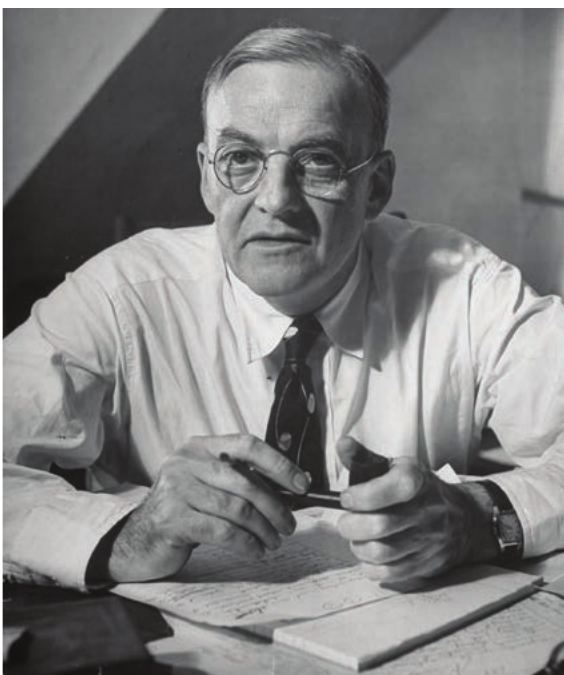
The policy of containment became the cornerstone of American foreign policy during the Cold War. In 1947, George Kennan argued that the United States needed to adopt a strategy of 'long-term patient but firm and vigilant containment of Russian expansive tendencies' in response to Soviet attempts to expand their sphere of influence in Europe and Asia.
Early successes of containment
Several early initiatives seemed to confirm the wisdom of the containment policy:
- The Berlin Airlift (1948-49)
- Aid to Greece and Turkey
- The Marshall Plan
- The creation of NATO
- Truman's stand in Korea
Note
Despite being unpopular and drawn-out, the Korean War served the purpose of containing communist expansion in Asia, further confirming the policy's effectiveness.
Containment as the dominant framework
Containment remained the dominant US foreign policy framework throughout the Cold War. All US presidents drew on it as a rationale for various foreign policy approaches. For example, President Johnson later used containment to justify US intervention in Vietnam.
Rollback: the alternative approach
At times, US presidents considered the opposite policy of 'rollback', which aimed to actively push back communist political power from territory under its control without going to war.
Note
Key term: Rollback - the doctrine of actively attempting to push back another nation's political power from territory under its control, without actually going to war with them.
In the 1952 election campaign, the Republican Party promoted a rollback of communism. Once in power, President Eisenhower experimented with this idea:
- He allowed the CIA to engineer a coup in Iran, establishing a pro-Western government in 1953
- He permitted a CIA operation to overthrow the government in Guatemala
Important
However, these actions were not within the Soviet orbit. When the opportunity came to initiate rollback during the 1956 Hungarian Revolution, Eisenhower chose not to risk it, demonstrating the practical limits of this policy.
The Eisenhower Doctrine
Eisenhower's Secretary of State, John Foster Dulles, based his foreign policy on the belief that international peace and security could be achieved through containment of communism. The United States constructed a network of bilateral and multilateral treaties designed to encircle the Soviet Union and its allies, especially Communist China.
Bilateral treaties were established with:
- Japan
- South Korea
- The Philippines
- The Republic of China (Nationalist China/Taiwan)
Dulles provided strong support to Nationalist China when threatened by Communist China in 1954 and 1958. In 1955, he began channelling aid to South Vietnam after the French withdrew from Indochina. This foreign policy approach, based on containment and international mutual security agreements, became known as the 'Eisenhower Doctrine'.
A fundamental shift in American foreign policy
Note
Both Truman and Eisenhower managed a seismic shift from America's default position of isolationism. This new internationalist approach was maintained by succeeding presidents for the rest of the Cold War, fundamentally changing America's role in world affairs.
The National Security Council (NSC)
In July 1947, Congress passed the National Security Act, which established the National Security Council (NSC). This body was designed to coordinate America's Cold War strategy at the highest level.
Structure and purpose
The NSC consisted of six permanent members:
- Secretary of State
- Secretary of Defense
- Secretary of the Army
- Secretary of the Navy
- Secretary of the Air Force
- The President (acting as chairman)
The NSC served as a mechanism for ensuring all aspects of American involvement in the world were directed towards common goals.
NSC-68: the blueprint for Cold War strategy
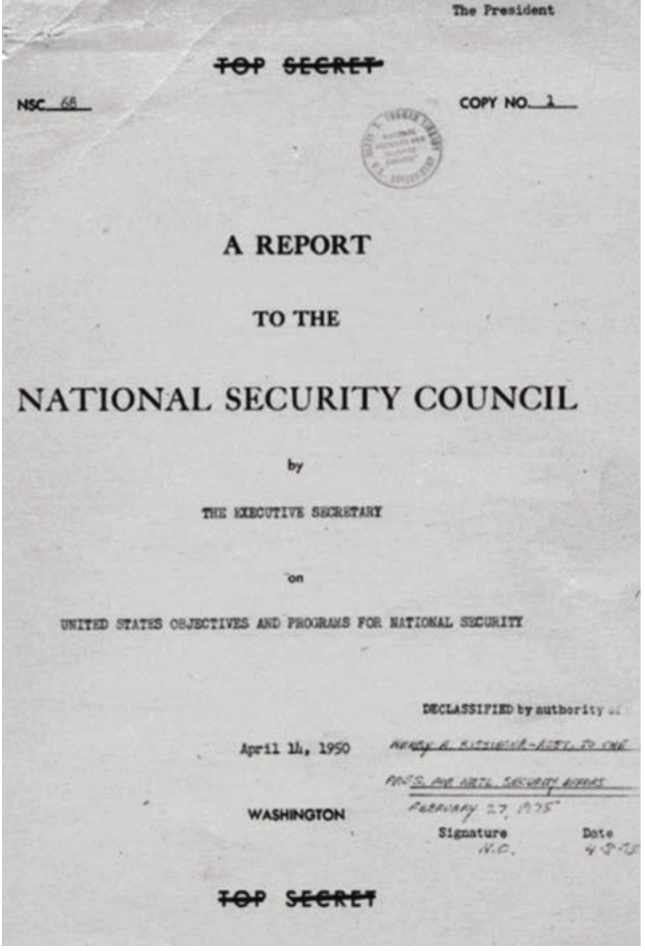
In 1949, following the rise of Communism in China, the NSC prepared a document called NSC-68. This secret document provided a clear set of overall strategies that drove American foreign policy for much of the Cold War, giving substance to the recently adopted containment policy.
Important
Key features of NSC-68:
National Security Council Paper NSC-68, dated 7 April 1950, was subtitled 'United States Objectives and Programs for National Security'. This secret document informed US foreign policy for the next 20 years and was not declassified until 1975.
NSC-68 outlined the 'rapid building up of the political, economic, and military strength of the free world' to enable the United States to attain sufficient strength to deter Soviet expansionism.
The document warned that:
- The Soviet threat would likely increase dramatically in the future
- The Soviets would expand their military forces and nuclear arsenal
- The US needed to respond by strengthening both its conventional and nuclear forces
- This would ensure successful defence of the homeland and overseas interests in any armed confrontation with the Communists
Implementation and impact
NSC-68 called for a dramatic increase in US defence spending. As a result:
- The Truman administration tripled US military expenditure from 5 per cent to 14.2 per cent of GDP between 1950 and 1953
- This was paid for by large tax increases
- The outbreak of the Korean War made domestic opinion more resigned to higher taxes
Eisenhower's modifications
Many NSC-68 policies had started to be implemented by the time Eisenhower became President. However, implementing all its proposals would be unpopular domestically. Eisenhower revised military funding by:
- Reducing spending on conventional forces
- Increasing spending on nuclear forces, which were less costly
This approach aimed to maintain America's strategic position whilst controlling government expenditure.
The Domino Theory
On 7 April 1954, President Eisenhower gave a historic press conference addressing what he saw as the deteriorating security situation in South-East Asia.
Background: the French failure in Indochina
The French were failing in their attempt to re-establish colonial control over Indochina. The Viet Minh, a Vietnamese national group led by Ho Chi Minh, was on the verge of winning a stunning victory over French forces at Dien Bien Phu. A peace conference to resolve the conflict was scheduled for a few weeks later.
Note
The French wanted American military assistance, but Eisenhower decided against intervention. The French army surrendered in May. Despite this decision, the President was concerned that Cambodia, Laos, and Vietnam would be taken over by Chinese-influenced communists.
Eisenhower's explanation
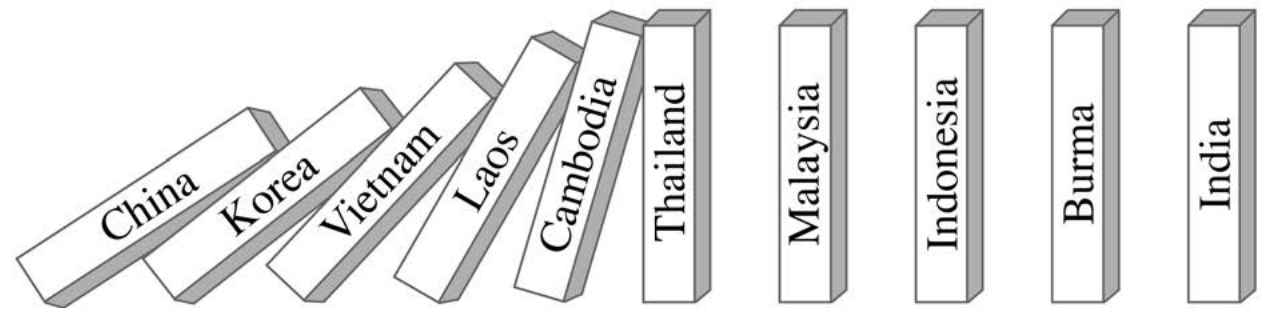
In his press conference, Eisenhower explained that all the resources 'that the world needs' would be gobbled up by the communists in this part of the world. He then introduced a phrase that became central to American Cold War thinking:
Finally, you have broader considerations that might follow what you would call the falling domino principle. You have a row of dominoes set up, you knock over the first one, and what will happen to the last one is the certainty that it will go over very quickly. So, you could have a beginning of a disintegration that would have the most profound influences.
Understanding the domino theory
The 'domino principle' served as a warning of what would happen if the free world was not vigilant with containment. The domino theory provided a simple rationale for the US policy of containment.
Note
Why the theory appealed to policymakers:
The appeal came from the fact it was a graphic way of explaining what was actually happening - the spread of Communism to China, Korea, Indochina and Southeast Asia. The implication was that if one country fell to communism in Asia, there would be a chain reaction felt throughout Asia and beyond. 'So, the possible consequences of the loss are just incalculable to the free world,' concluded Eisenhower.
Expansion of the theory
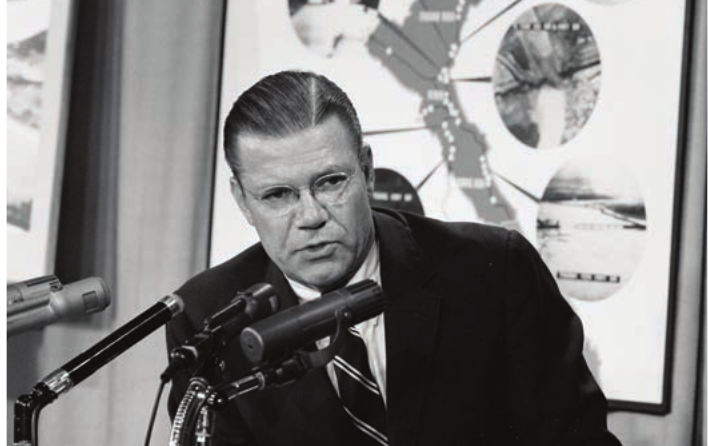
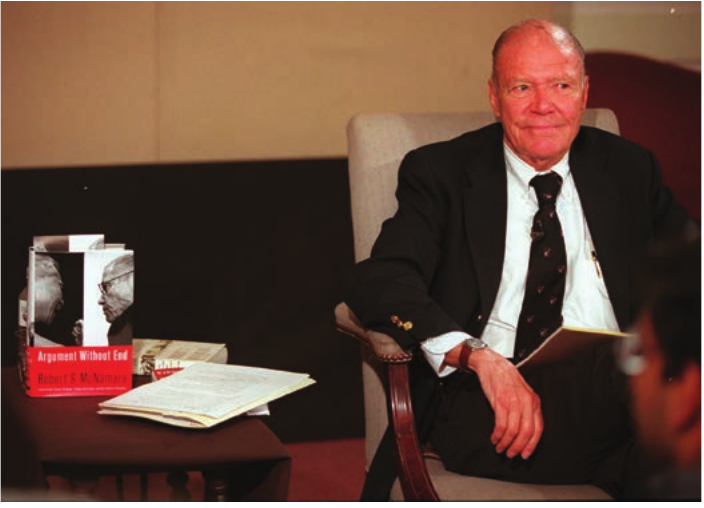
Eisenhower's domino theory laid the foundations for both President Kennedy and President Johnson to become more deeply involved in Vietnam. In March 1964, Defence Secretary Robert McNamara expanded the theory further, stating that unless the US could secure a non-communist South Vietnam, almost all of Southeast Asia would probably fall to communist domination, and may even threaten:
- Australia
- New Zealand
- Taiwan
- South Korea
- Japan
Important
By this time, the domino theory had become an obsession that blinded the US to understanding reality, leading to a tragedy of gigantic proportions.
The failure of domino theory thinking
The fall of South Vietnam and Cambodia to Communist forces in April 1975 marked an absolute failure of 20 years of US effort to prevent Communist domination of Southeast Asia. In 1994, former Secretary of Defence Robert McNamara regretted the policy he had pursued in the sixties in Vietnam, believing that Vietnam going Communist would not necessarily have been a disaster.
Note
Exam tip: Be prepared to evaluate the extent to which the domino theory was a valid assessment of communist expansion or a flawed justification for US intervention in Vietnam.
Peaceful coexistence
In 1953, Joseph Stalin's death and the end of the Korean War offered an opportunity for tensions to be reduced between the superpowers. The new Soviet leader, Nikita Khrushchev, sought to make the most of these events by pursuing a more conciliatory approach to foreign policy.
Defining peaceful coexistence
'Peaceful coexistence' refers to the period from the mid-1950s to the mid-1960s, when there was a thaw in relations between the United States and Soviet Union. This marked a dramatic change in attitude by the Soviet leadership.
Note
Key principles:
Khrushchev argued that the two superpowers could:
- Keep competing in many areas
- Avoid direct confrontation
- Respect each other's sphere of interest
Khrushchev's rise to power
Khrushchev came to power as part of a collective leadership in 1953 after Stalin's death. With Stalin's death, the Soviet leadership embarked on a 'New Course' foreign policy to reduce tensions. In 1956, Khrushchev won a power struggle against Malenkov and became Premier of the Soviet Union.
The secret speech
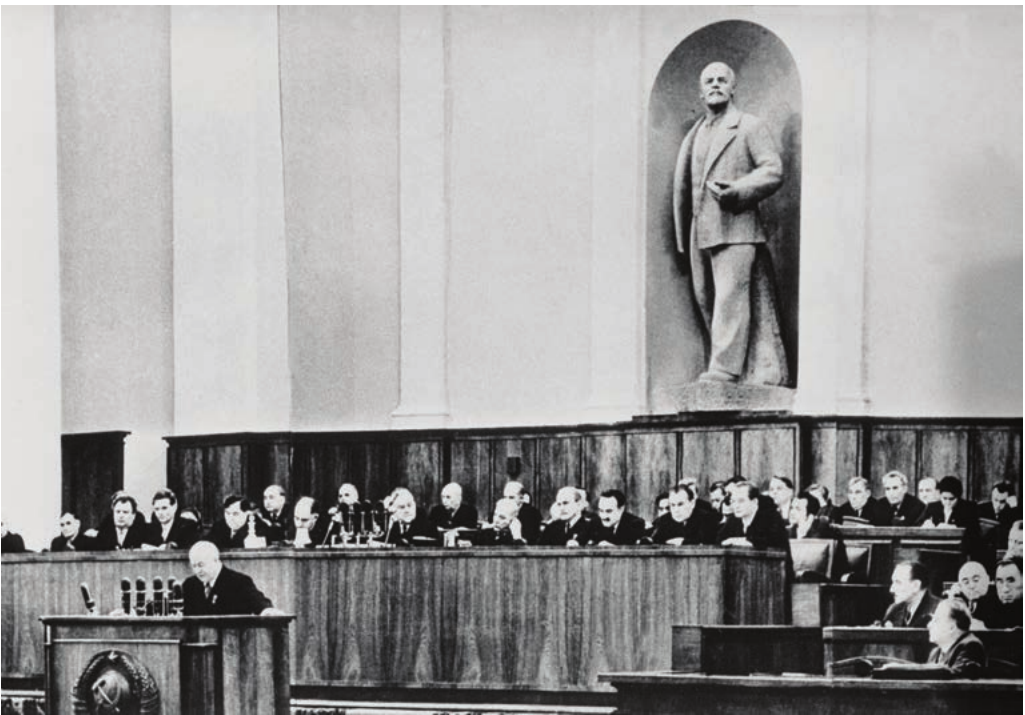
The world took notice at the Twentieth Congress of the Communist Party of the Soviet Union in February 1956, when Khrushchev delivered a speech denouncing the excesses of Joseph Stalin's dictatorial rule. This 'Secret Speech' criticised Stalin's totalitarian methods and the purges he had conducted.
Actions backing peaceful coexistence
Khrushchev demonstrated his commitment to peaceful coexistence through concrete actions:
- October 1954: Visited China to improve relations with Mao Zedong
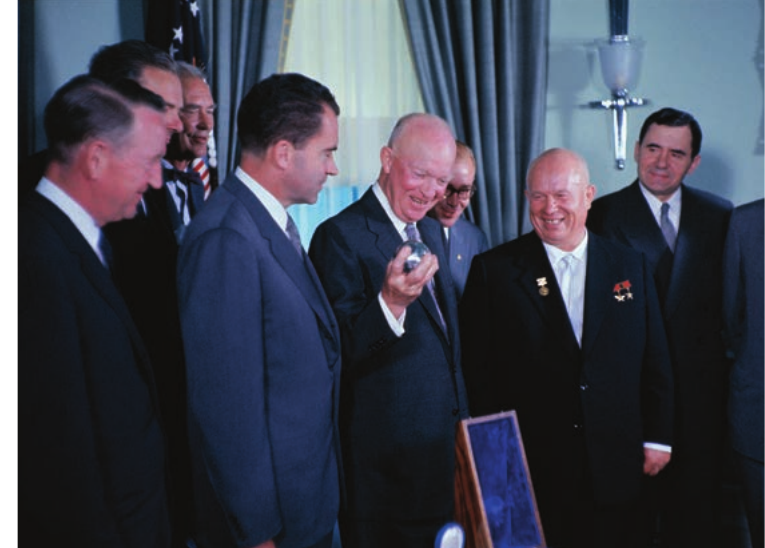
- 1955: Met with Eisenhower in Geneva
- 1955: Agreed to remove Soviet troops from Austria after signing the Austrian Peace Treaty
- 1955: Created the Warsaw Pact and withdrew Soviet troops from neutral Finland
The limits of peaceful coexistence
Important
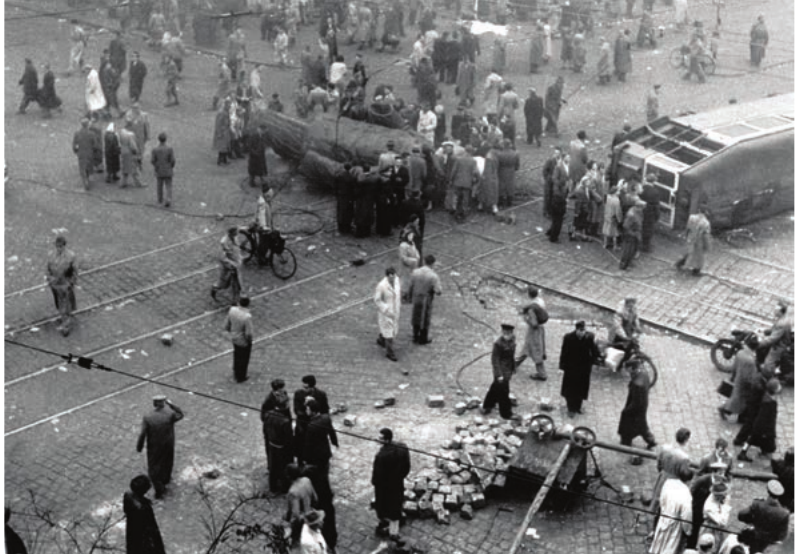
However, Khrushchev was merciless in dealing with Hungary in 1956. When Hungarian leader Imre Nagy announced that Hungary would leave the Warsaw Pact, Khrushchev responded by sending in tanks to crush the Hungarian Revolution. This demonstrated that peaceful coexistence had clear limits - the Soviet Union would not tolerate challenges to its control of Eastern Europe.
Khrushchev's visit to the United States
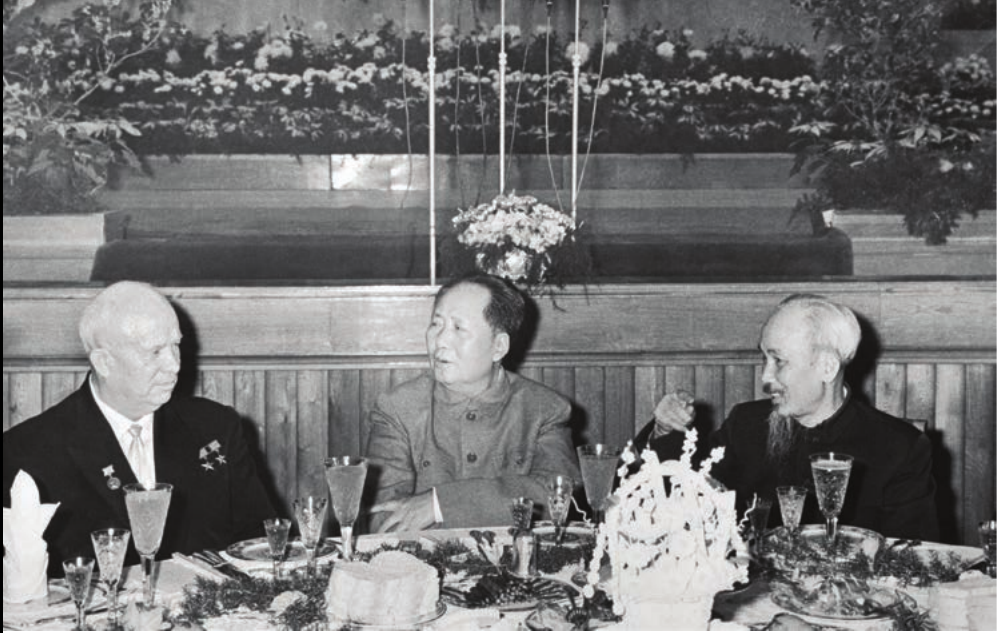
The high point of Khrushchev's 'peaceful coexistence' policy came with his visit to the United States on 15-27 September 1959. This trip fostered expectations of improving the hostile US-Soviet relationship.
Note
Significance of the visit:
There was immense curiosity surrounding Khrushchev and his family during their tour of the United States. Khrushchev himself believed his visit was an historic event and that he was taking necessary steps to diffuse Cold War tensions.
On returning to Moscow, Khrushchev gave a speech in which he said he believed a thaw in the Cold War had begun and that Eisenhower was willing to cooperate with the Soviet Union. Khrushchev had set a calmer tone in international relations, welcomed by populations in both countries. For a short time, both countries could breathe easier.
The U2 incident
Important
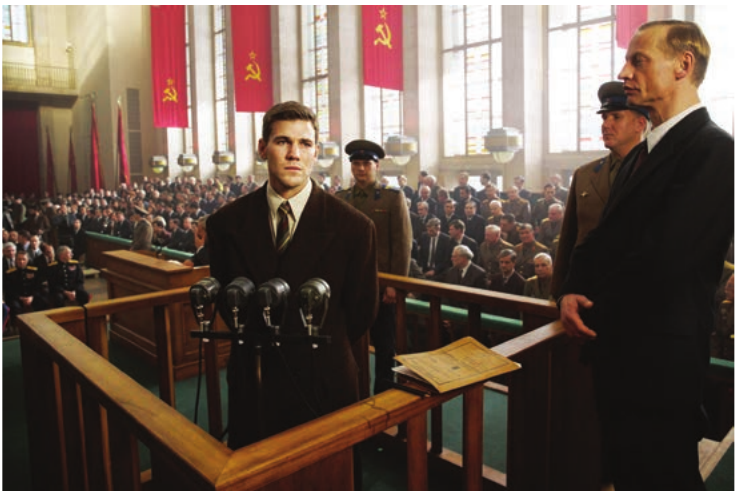
Within six months of Khrushchev's US trip, the optimism evaporated on 1 May 1960, with the shooting down of a U2 spy plane over Soviet territory. Eisenhower had endorsed this flight, despite denying to the Soviets that they were carrying them out. Khrushchev felt betrayed. Everything returned to the old Cold War mindset. Though peaceful coexistence did not disappear altogether, it received a massive setback.
The Sino-Soviet split
Khrushchev received another setback around this time with enormous implications. Relations with China deteriorated when Khrushchev visited in 1959 for the 10th anniversary of the People's Republic of China (on his way back from his US trip).
Reasons for the split:
- Mao had not been impressed with Khrushchev's denunciation of Stalin in 1956
- Mao was annoyed by the Soviet's lack of economic assistance
- Mao became suspicious during 1958 that the Soviets wanted to control the Pacific coast
- From 1960, there was a war of words, with Khrushchev calling Mao a 'left revisionist'
Note
Exam tip: Consider how the U2 Spy Flight Incident was responsible for embittering relations between the United States and the Soviet Union. Also assess whether both Eisenhower and Khrushchev genuinely wanted peace and whether they made the most of opportunities to end the Cold War early.
Superpower rivalry
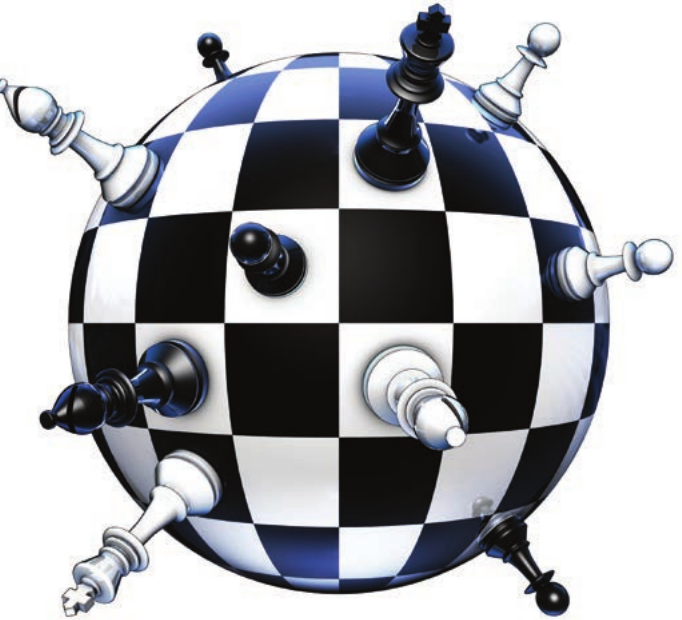
Despite Khrushchev's wish for 'peaceful coexistence' with the United States in the 1950s, rivalry between the two superpowers continued in multiple areas.
Spheres of interest
Both sides appeared to have put the idea of rollback on the backburner, avoiding overt attempts to meddle in each other's sphere of interest. However, both superpowers regarded competition for influence in the non-aligned world as legitimate and did whatever it took to secure both minor and significant gains in a global chess game.
Methods of competition:
Both superpowers were willing to:
- Prop up unsavoury regimes
- Make alliances
- Use espionage
- Give arms and weaponry
- Use client states to fight proxy wars
Important
In terms of keeping out of each other's sphere of interest, both superpowers were inconsistent - this led to crises that brought the world close to Armageddon.
The bipolar world
During the 1950s, a bipolar world developed in which many nations lined up behind one of the two camps led by the superpowers.
Note
Key terms:
- Bipolar world: The world was largely divided into two camps led by the superpowers
- First World: The 'free world' of democratic and industrialised nations, including the United States, Western Europe, Australia, New Zealand, Canada and Japan
- Second World: The industrialised communist bloc countries of the Soviet Union and Eastern Europe
- Third World: The developing countries of Asia, Africa, and South America, many of which had been ruled by colonial powers in the past
Competition in the Third World
Many remaining nations that were not aligned were less developed countries in Asia, Africa and South America. The superpowers used a combination of soft power and ruthless force in the Third World and Middle East in a global geopolitical chess game to extend their influence.
Note
Soft power: The use of a country's cultural and economic influence to influence other countries. The exercise of this power is often independent of government direction.
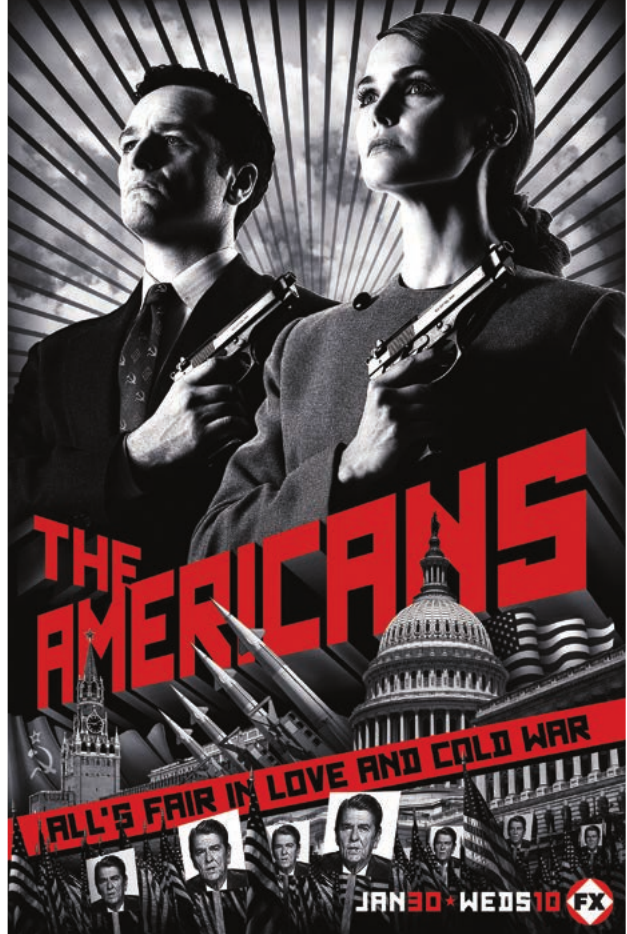
Methods of fighting the Cold War
The Cold War was fought through numerous methods beyond direct military confrontation:
| Method | Description |
|---|---|
| Ideology | Both superpowers promoted their ideologies to the world. Aspects of communist ideology struck a chord with many people in the Third World pursuing national liberation and wanting instant transformation of society and economy. Others feared totalitarian aspects of communism and wanted the freedom and economic benefits the Western world offered. |
| Domestic politics | Within both superpowers, there were long-running bitter political debates about how the Cold War should be prosecuted. Two main groups emerged: the 'hawks' who advocated aggressive foreign policy, and the 'doves' who tried to resolve problems without resorting to force. |
| Economic aid | The United States used the Marshall Plan in Europe to strengthen West European democratic allies. Meanwhile, COMECON was used by the Soviet Union to bind countries closely in trade pacts. Many Third World countries were swayed to join one of the rival blocs with economic aid and technical support, especially for big infrastructure projects like dams, roads, railways and bridges. |
| Military aid | Military aid was offered in terms of experts to train local forces and various types of modern weapons, from small arms like machine guns to big ticket items like defensive missiles, tanks or jet fighters. |
| Soft power | The United States had a real advantage in soft power, mostly spontaneously generated with little government involvement. Its companies, foundations, universities, churches, and civil society organisations projected American ideals and values. This power was quite diffuse and was not used to achieve specific outcomes. |
| Culture | American culture was exported to the rest of the world through movies, music, fashion, and consumer products. The fact that these things were highly sought after behind the Iron Curtain made it a significant aspect of the Cold War. |
| Espionage | Both superpowers used their spy agencies extensively for spying, sabotage and assassinations. The United States had the Central Intelligence Agency (CIA) and the Soviets had the Komitet Gosudarstvennoy Bezopasnosti (Committee of State Security) or KGB. |
| Space race | Both nations used what they had learned from the Nazi V2 rocket programme to build rockets to put satellites and eventually men in space. They competed to be first in each aspect of the space race and used space technology for spying on each other. |
| Arms race | The superpowers competed in the arms race by building up both conventional and nuclear forces. |
| Propaganda | Both sides used propaganda to sell their ideologies to their own people and the world. It was often in the form of slogans, posters, radio and TV programmes and films. |
| Alliances | Alliances were used to reassure friendly nations, share intelligence, pool military forces and deter enemy attack. NATO is regarded as one of the most successful alliances in history, signalling the determination of Western European nations, Canada and the United States to stand together to resist any communist attack on any member country. |
| Sport | Both superpowers competed in sport, particularly in the Olympic Games. |
| Proxy wars | Often Third World or Middle Eastern nations were used to fight a proxy war on behalf of the superpowers - as in the Korean War, the Vietnam War, the Angola Civil War and the Yom Kippur War. |
Note
Proxy war: When the two superpowers use smaller client states to further their own objectives by having them fight each other.

The arms race
During the fifties and sixties, the two superpowers came to accept the idea of co-existence and largely avoided meddling in each other's sphere of interest. However, they competed in every other conceivable way, and any part of the world not already within either's sphere of interest was fair game.
The context of the arms race
The superpowers would wage deadly proxy wars and export weapons and arms all over the planet, whilst still not upsetting their overall approach of co-existence. The cost of keeping the status quo between the two superpowers was eternal vigilance, as any weakness or lack of resolve by one side threatened a major upheaval in the geopolitical balance.
Note
In this context, the arms race became an area of intense competition in the make-up, quantity and quality of arsenals. Each side was always on the lookout for the latest innovation or new weapon to give them the technological edge.
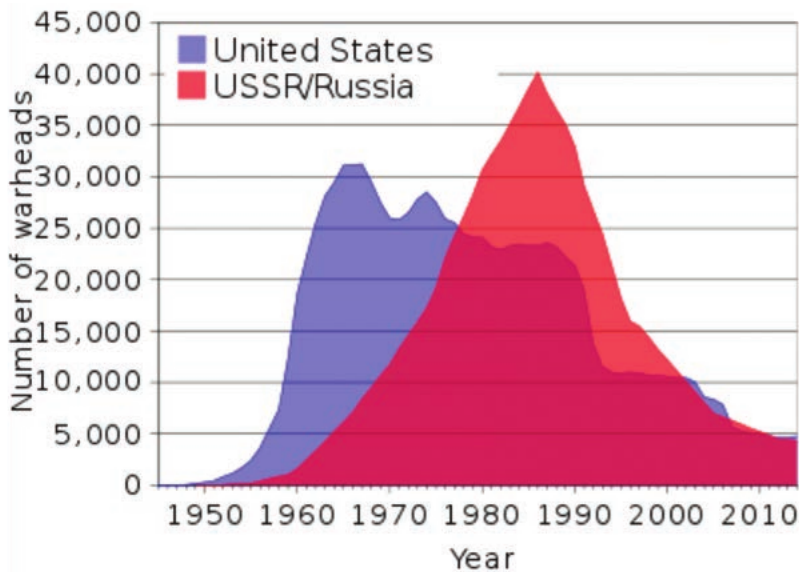
The complexity of the arms race
The arms race was immensely complicated due to the interrelationship between nuclear and conventional arms. The idea that nuclear weapons were just another weapon that could be used in conjunction with a nation's overall armed forces became increasingly harder to accept over the two decades following Hiroshima.
Important
Despite the fact that most leaders and military experts eventually concluded that nuclear weapons cannot actually be used, they remained an integral part of the entire Cold War.
First strike considerations
The idea of launching a first strike on one's enemy was flirted with by the United States, especially in the late 1940s and 1950s when it had nuclear supremacy. However, the United States baulked when it had the opportunity in the Korean War.
The US military concluded there were no useful military targets left in North Korea after widespread conventional bombing. But there was something else at work: the nuclear taboo.
The nuclear taboo
Important
Nuclear taboo: The use of nuclear weapons for any purpose has become practically unthinkable.
Despite the desire of Cold War leaders to use nuclear weapons to resolve particular situations or deal with potential future threats, they came to see nuclear weapons as being in a class of their own. From the time of the atomic attacks on Japan in 1945, a nuclear taboo had developed around this weapon.
Development of the taboo:
Nuclear weapons had come to be viewed with horror by the general public from the time of Hiroshima, but this was strengthened by the massive size of H-Bomb nuclear tests of the fifties. The idea developed that the Bomb was in a special class and there was a clear distinction between 'conventional' and 'nuclear' forces.
Note
To use nuclear weapons would mean breaking the taboo surrounding its use, and once that threshold was crossed, there may be no turning back from all-out nuclear war. However, even without the threat of retaliation, the nuclear taboo remained.
Examples:
- Truman could have used atomic bombs in Korea without Soviet retaliation, as they were two years away from having operational nuclear strike capability
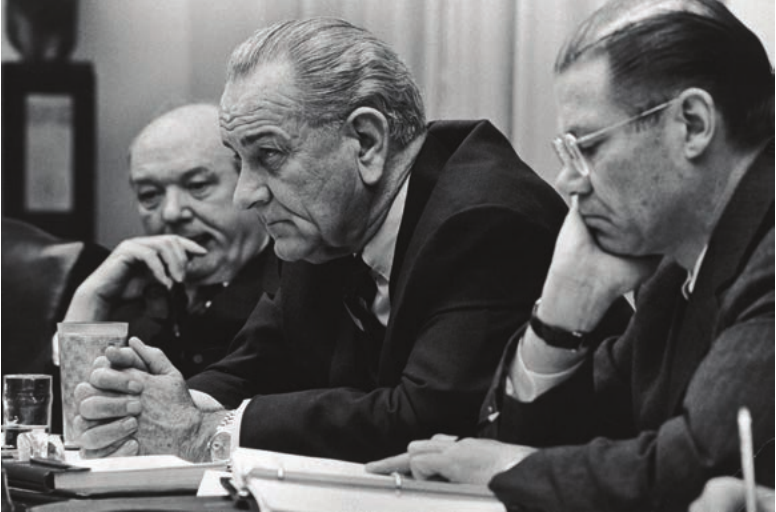
- President Johnson refused to use nuclear weapons in Vietnam, not because of feared Soviet retaliation but because of the moral taboo and likely backlash from the American public (though Johnson had no qualms about using every conceivable type of conventional weaponry in Vietnam)
Note
Exam tip: Consider to what extent the moral taboo surrounding nuclear weapons was a significant factor in US and Soviet leaders of the fifties and sixties refusing to use them.
Nuclear war thinking
At first, President Truman sought to maximise the psychological impact of nuclear weapons in his dealings with the Soviets after the war. In his 9 August radio address, Truman talked about the 'awful responsibility which has come to us' but that we 'thank God that it has come to us, instead of to our enemies.'
Despite flirting with the idea of international control of nuclear weapons, Truman set the United States on a path to use their nuclear monopoly to their advantage in post-war negotiations with the Soviets, believing a Soviet-produced atomic bomb would be many years off.
Soviet response:
This had the opposite effect on Stalin. From the end of 1945, Stalin adopted a policy of 'tenacity and steadfastness', taking a tough stand on all issues out of fear of seeming weak and encouraging the Americans to exert more pressure. Truman also hoped to use the atomic bomb to compensate for Soviet superiority in conventional forces.
Eisenhower's approach: massive retaliation
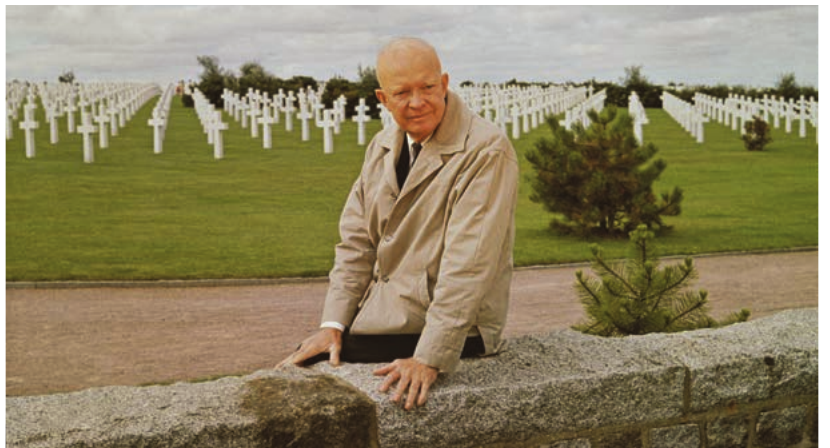
In the 1950s, though the USSR had nuclear weapons, the United States still had clear superiority. President Eisenhower did not believe the US could sustain the vastly increased military budget the Truman administration had implemented.
Eisenhower's strategy:
- Cut back on conventional forces
- Placed greater emphasis on nuclear forces, which were cheaper
- Knew Soviet superiority in conventional forces meant Western Europe could be quickly overwhelmed by the Red Army's massive tank regiments
- Threatened 'massive retaliation' with nuclear weapons in response to any Soviet attack using nuclear or conventional forces
Note
In his 2012 book, Ike's Bluff: President Eisenhower's Secret Battle to Save the World, historian Evan Thomas admired how Eisenhower handled his role at the head of a massive nuclear arsenal:
Eisenhower managed cleverness, indirection, subtlety, and downright deviousness - and by embracing the very thing he could never use - to safeguard his country and possibly the rest of mankind from annihilation. It is easy to forget that Eisenhower was the first person in history to have the means to wreck civilisation. Eisenhower did not shy from power. He used it. But he did so in a way that is still little understood.
Assessment questions:
- Was Evan Thomas right to praise President Eisenhower for using the threat of massive nuclear retaliation to bluff the Soviets? What would Eisenhower have done if Khrushchev had called his bluff, for example over Berlin?
- Eisenhower allowed the US nuclear arsenal to quadruple during his 8-year presidency. Was this wise?
- Eisenhower warned about the 'military industrial complex' at the end of his term but had been responsible for allowing it to take hold. Was Eisenhower's inaction in curtailing the 'military industrial complex' a real failure of his administration?
The 1960s: assured destruction
In the 1960s, Soviet missile technology improved. However, the United States developed the nuclear triad - the ability to deliver a nuclear attack from:
- B-52 bombers
- ICBMs from land-based silos
- SLBMs from submarines
Note
Key terms:
- Nuclear triad: The nuclear weapons delivery system consisting of three components: land-based intercontinental ballistic missiles (ICBMs), strategic bombers, and submarine-launched ballistic missiles (SLBMs)
- ICBM: An Intercontinental Ballistic Missile that can travel over continents and oceans in a very short time
- SLBM: A Submarine Launched Ballistic Missile that can be fired from a submarine whilst still submerged
Defence Secretary Robert McNamara talked of 'assured destruction' - if the Soviets launched a first-strike attack, there was no way they could destroy all US nuclear forces, especially the submarines. They could be 'assured' that their own destruction would surely follow if they tried a surprise nuclear attack.
Mutual Assured Destruction (MAD)
By the late sixties, it became apparent that 'assured destruction' could work both ways due to the massive increase in the Soviet ICBM arsenal. If the US attacked the USSR, they could be assured of a massive retaliatory attack.
Important
One nuclear analyst put an 'M' in front of 'assured destruction' so it became 'Mutual Assured Destruction,' or MAD for short, making for a more apt description of the situation.
Note
Balance of terror: The fear of mutual destruction when two nuclear powers are equipped with nuclear arsenals that threaten absolute and total destruction of both nations.
By the late sixties, the 'balance of terror' led the two superpowers to explore avenues of cooperation, evolving into an interest in treaties and the policy known as détente.
Other factors:
- Britain developed the atomic bomb in 1952
- France followed in 1960
- China in 1964
- More nations would follow if the USA and USSR failed to act
This led to a series of treaties, though the Mutual Assured Destruction doctrine survived.
Fighting a nuclear war
Both sides drew up plans for fighting a war using a mix of conventional and nuclear weapons. Due to the superiority in conventional forces of the Warsaw Pact, NATO made it abundantly clear that any conventional attack would be countered with nuclear weapons.
Types of nuclear weapons:
- Tactical nuclear weapons: Smaller weapons designed for battlefield use against enemy military formations
- Strategic nuclear weapons: Larger warheads designed for destroying cities or large urban or industrial areas
Important
NATO made clear that any conventional attack may be met with tactical nuclear weapons - this was explicit in all their military plans up into the 1980s. Any war in Europe, even if it started conventionally, could turn global once the nuclear threshold was crossed, meaning strategic nuclear weapons would also be used.
NATO's tactical nuclear stockpile
The vast array of tactical nuclear weapons available for NATO to use to repel a Soviet conventional attack is quite astounding. Also astounding is that none of these weapons went astray, went off by accident, or were taken over by a terrorist group or rogue commander.
Note
During the 1960s, Permissive Action Links (PALs) were installed on tactical nuclear weapons to prevent unauthorised use. PALs were originally created to guard against the possibility of a rogue US commander.
NATO's tactical nuclear arsenal (1984):
- 2,250 artillery shells
- 1,850 free-fall bombs
- 700 Nike Hercules SAMs
- 400 ASW weapons
- 300 Atomic demolition munitions (mines)
- 180 Pershing 1a missiles
- 97 Lance missiles
- 90 Honest John missiles
- Total: 6,000 warheads (all in US custody)
- France: 42 Pluton, 110 nuclear-capable tactical aircraft
The problem with tactical nuclear weapons
Important
The main problem was that even though they were smaller and designed for the battlefield, using just one would involve crossing the nuclear threshold, meaning all nuclear weapons could be used. The effort to make nuclear weapons more useful by making smaller tactical weapons for battlefield use was ultimately futile.
In the 'use or lose it' mindset of the time, any use of a nuclear weapon was likely to trigger a massive response from the enemy. Fortunately, no tactical nuclear weapons were ever used in anger throughout the entire Cold War, though on a few occasions they came close.
Note
Exam tip: Assess to what extent the incorporation of tactical nuclear weapons in the military forces of NATO and the Warsaw Pact made a nuclear catastrophe more likely.
The space race
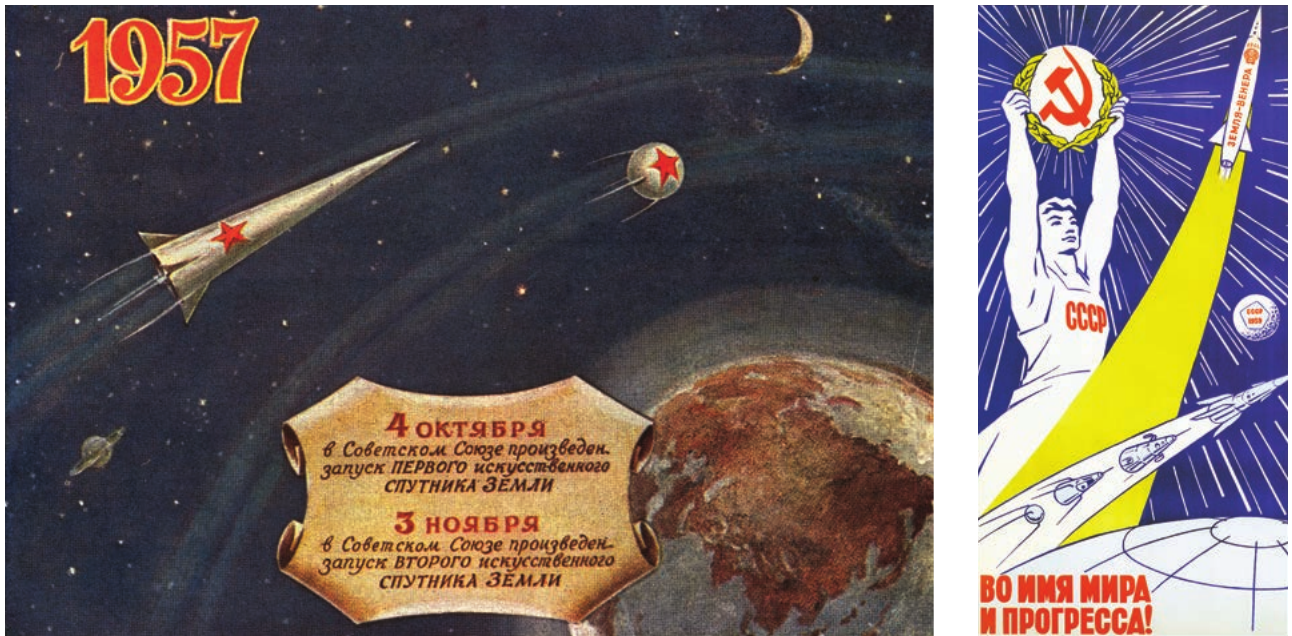
One aspect of superpower rivalry that was not so dangerous was the space race, though what was achieved in space could have worrying military applications.
The beginning: Sputnik
The USSR tested their first ICBM on 21 August 1957 and followed this on 4 October with a rocket that placed the first satellite in space, Sputnik 1. This marked the official beginning of the space race.
Note
These represented great propaganda victories for Soviet leader Nikita Khrushchev, who in 1956 had said of the West, 'We will bury you'. These achievements were greeted with concern in the United States because they indicated:
- The Soviet Union was edging ahead technologically
- Their rocket/missile technology had obvious military applications
American response
On 31 January 1958, the US responded with its first satellite, Explorer 1. Then in October, Congress passed legislation creating the National Space and Aeronautics programme (NASA).
In 1959, the Soviets were again first to:
- Take a spacecraft beyond Earth's orbit
- Reach the Moon
This was followed by the first man in space - Yuri Gagarin on 12 April 1961.
The space race intensifies
The United States was not far behind, with Alan Shephard becoming the first American in space. Most significant though was President Kennedy's commitment to land the first man on the Moon by the end of the decade.
Key achievements:
- 1962: John Glenn of the USA made the first manned orbit of Earth
- 1963: Soviets placed the first woman in space
- Following years: USA took the lead with numerous achievements
- 20 July 1969: USA landed two men on the moon (the highpoint of the space race and clear win for the United States)
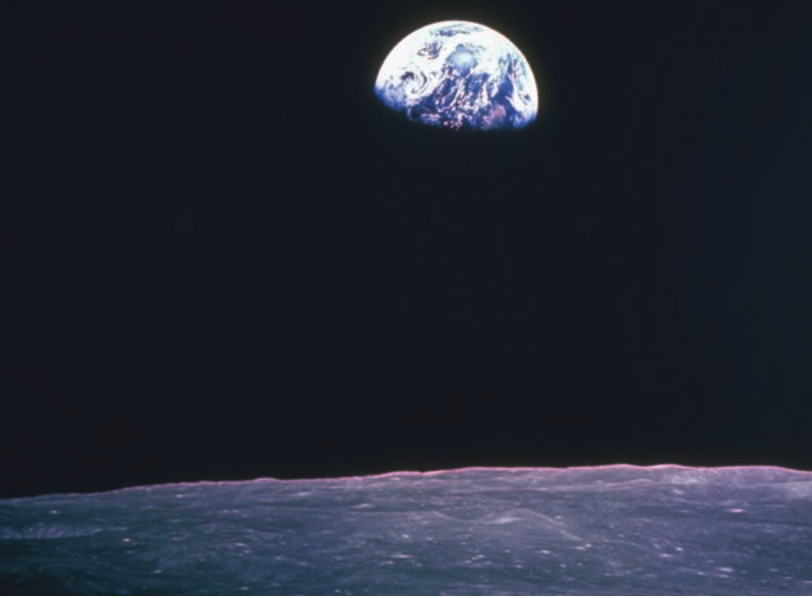
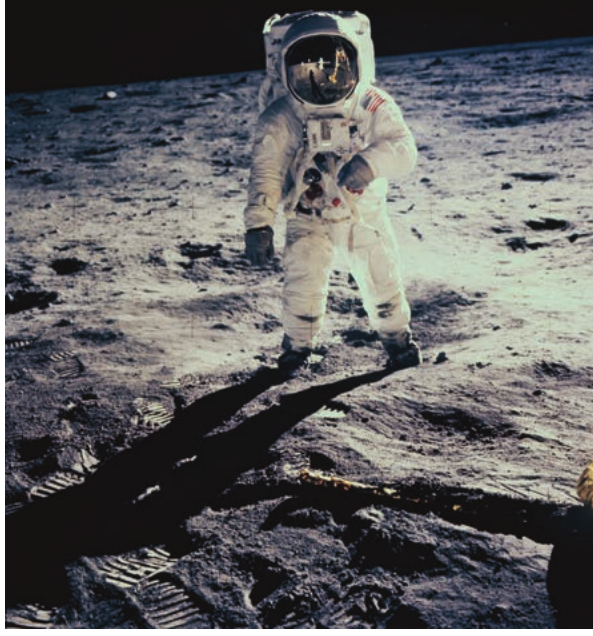
Continued efforts
The efforts of both superpowers continued:
- 1971: Soviets were first to place an orbital space station in space
- 1971: US Mariner 9 orbited Mars
- 1973: US established the Skylab space station
Space cooperation
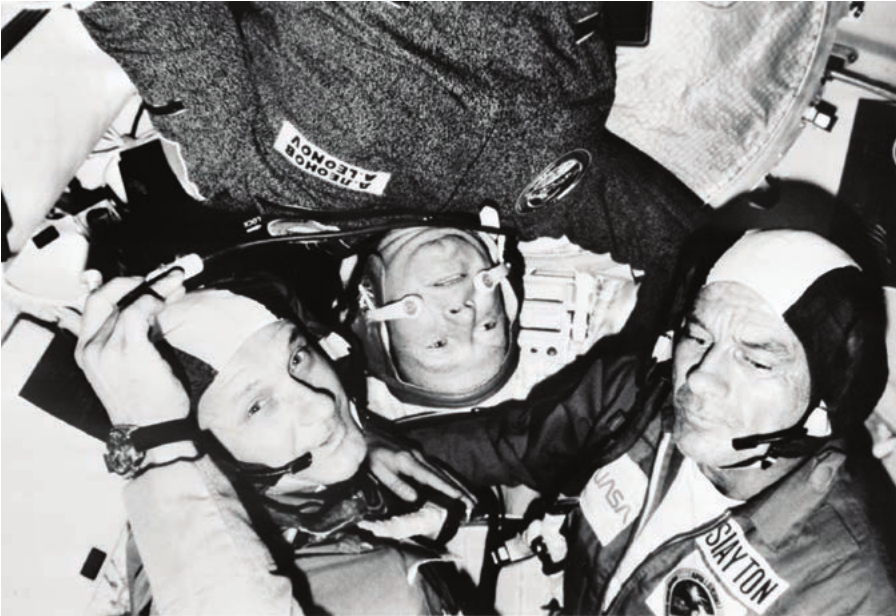
In 1975, events in space followed those on Earth with a joint Russian-American four-day spaceflight, reflecting détente back on Earth. The Apollo-Soyuz Joint Project was a product of years of discussions and negotiations.
Note
Despite the rivalry of the space race, there had been informal cooperation regarding space between the two superpowers. They managed to conclude significant agreements:
Space treaties:
- Outer Space Treaty 1967: Provided the basic framework in international space law based on principles such as not placing nuclear weapons in space and that the moon should only be used for peaceful purposes
- Agreement on the Rescue and Return of Astronauts, 1968
- Moon Agreement 1979
Note
Exam tip: If the USA and USSR could cooperate in space, why couldn't they extend this cooperation to every sphere? Consider what this cooperation reveals about the nature of the Cold War.
The nature and impact of crises
Despite some normalcy returning to relations between the superpowers with the 1955 Vienna summit between Khrushchev and Eisenhower, there were several serious crises in the 1960s that brought both superpowers close to the brink of war. A combination of levelheaded decision-making at crucial times along with a lot of pure luck meant the world avoided Armageddon.
The Berlin Wall, 1961
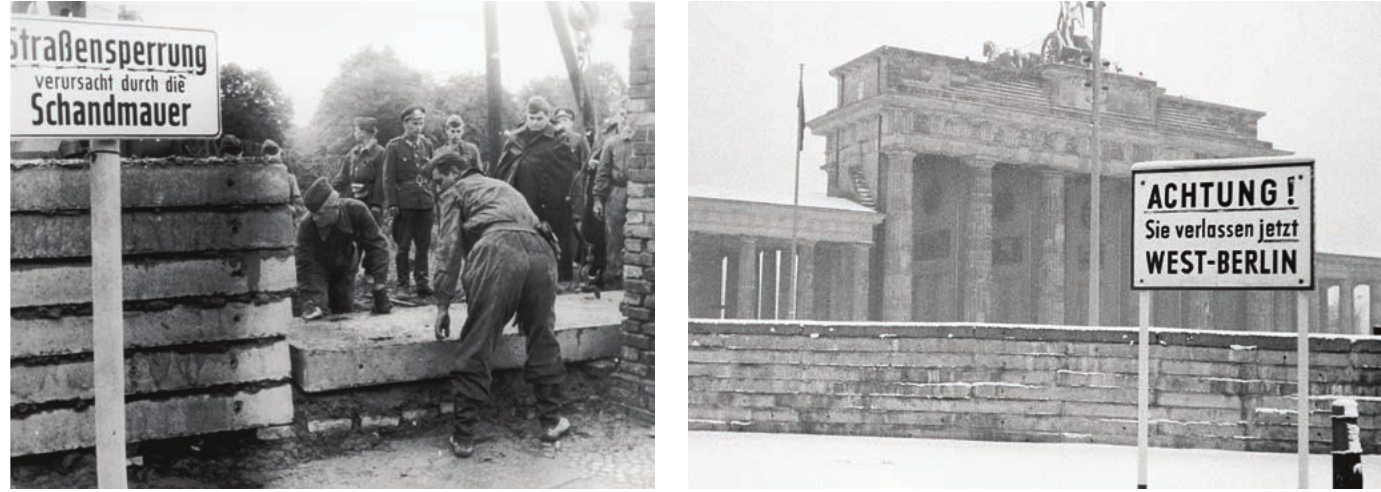
On 13 August 1961, residents of Berlin woke to find barbed wire fences being erected in the middle of their city under the watchful eyes of armed East German soldiers. This was replaced four days later by a wall of brick and concrete that gradually encircled West Berlin.
Security measures:
- 300 watch towers
- 20 bunkers at intervals along the Wall
- Thousands of soldiers
- Guard dogs
- Alarms
Note
Divided Berlin came to symbolise the Cold War from its beginning - from the Berlin Blockade (1948) to the breaking down of the Wall (1989). The erection of the Wall made Berlin even more important for the Cold War. Over its history, around 260 people were killed trying to flee from East to West.
Background to the Berlin Wall
Berlin had been an ongoing issue in relations between the United States and Soviet Union from the end of World War II. The original idea was that occupation zones in Germany would be united and a peace treaty signed with the four Allied powers.
However, this was derailed when Britain, France and the United States decided to:
- Unite their three zones
- Create a common currency
Important
Stalin feared West Germany would be strengthened and made part of an anti-Soviet alliance. Over the course of the Cold War, the only way the Soviet Union could have accepted a unified Germany was if it was weak and not part of a Western alliance.
Khrushchev's objectives
Khrushchev wanted to resolve the German question by getting control of West Berlin, which he saw as:
- An annoyance in the middle of East Germany
- Making it easy for people to flee East Germany
- A nest of spies
- A propaganda symbol for the West
The Vienna Summit crisis
During the June 1961 Vienna summit between Khrushchev and President Kennedy, tensions rose between the two leaders over Berlin. The Soviet leader threatened to solve the Berlin question unilaterally.
Kennedy's response (25 July address):
- Stated the United States may have to defend West Berlin's rights with military force
- Increased the US ICBM force
- Added five new army reserves
- Privately, Kennedy did not want more options than threatening 'massive retaliation' as Eisenhower had done
Impact of the Wall
Note
The existence of the Berlin Wall relieved tensions somewhat as it:
- Stemmed the flow of refugees to the West
- Demonstrated the two superpowers' spheres of influence
During the 1962 Cuban Missile Crisis, one of Kennedy's concerns was that Berlin would be the first place the Soviets would capture in the event of all-out war.
Kennedy's Berlin visit
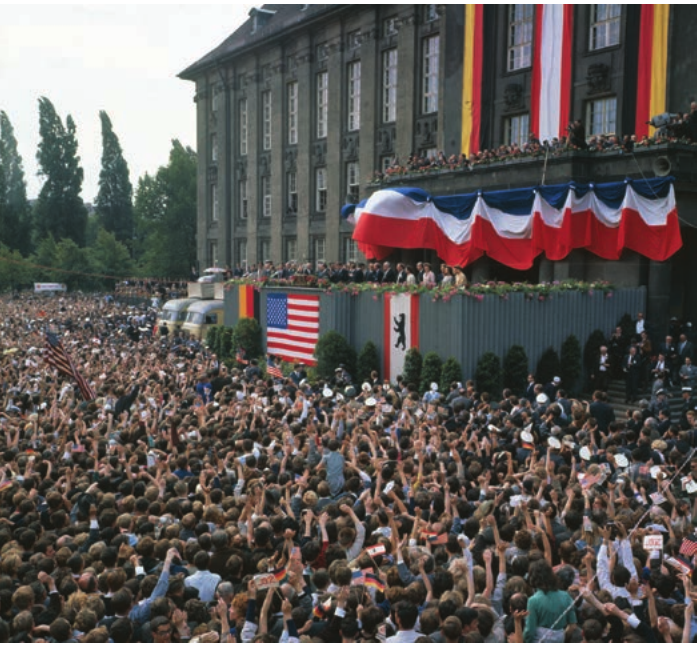
After the Cuban Crisis and eased tensions with Khrushchev, President Kennedy visited Berlin in June 1963. He received a rapturous welcome from the people of West Berlin. The situation stabilised after this. However, both sides knew that in the event of all-out war between the superpowers, Berlin would be on the front line. The Berlin Wall remained a chilling symbol of the Cold War and became its most enduring iconic symbol.
Note
Exam tip: Consider to what extent the Berlin Wall actually eased tensions between the United States and the Soviet Union.
Cuba, 1962
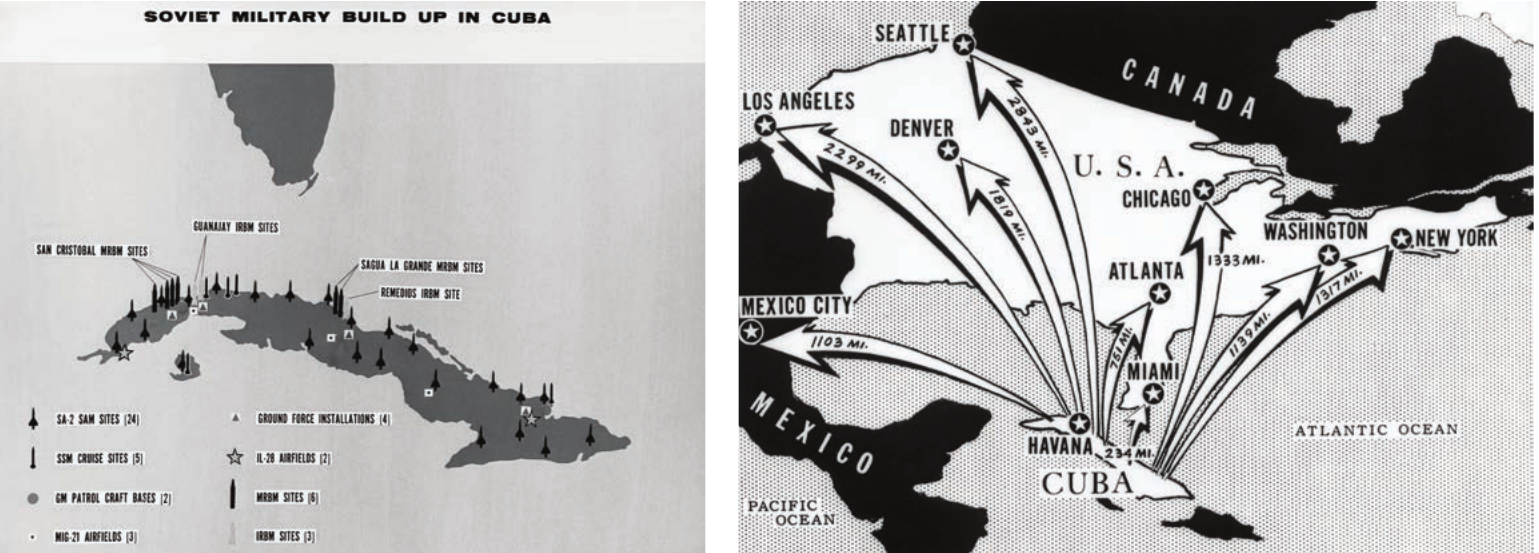
The Cuban Crisis of October 1962 is considered by many historians to be the closest the world has come to a global nuclear war of catastrophic proportions. It officially started on 16 October 1962, when a US U2 spy plane flying over Cuba took photos of what appeared to be nuclear missile launching sites. However, the crisis had deeper roots.
Background to the crisis
After the failure of the 1961 Vienna Summit, both superpowers increased their military spending and resumed nuclear testing (suspended since 1958). By resuming testing in August 1961, both leaders were sending a message.
Khrushchev's message:
- Aimed to send the biggest message by detonating a 57-megaton hydrogen bomb called the Tsar Bomba on 30 October
- Meanwhile, the United States publicly announced its nuclear forces were vastly superior to those of the Soviet Union
Important
This speech undermined Khrushchev's strategy of peaceful coexistence, as it looked like US hardliners were pushing for a first-strike against the Soviet Union.
Khrushchev's bold plan
To bolster his position at home, Khrushchev decided to secretly place Intermediate Range Ballistic Missiles (IRBMs) on Cuba and reveal this after the 1962 US congressional elections.
Note
IRBM: An Intermediate Range Ballistic Missile that can travel over continents and oceans in a very short time.
Reasons for the plan:
- Place the United States under the same pressure the Soviet Union was under with US Jupiter missiles stationed in Turkey and Italy
- Reduce budgetary pressures on the Soviet economy (cheaper than building more ICBMs)
- Defend Cuba from American invasion after the failed Bay of Pigs invasion
Castro's perspective
In Cuba, Fidel Castro was willing to host Soviet missiles and troops to ward off further American attempts to invade.
Castro's background:
- January 1959: Castro ousted dictator Batista and established a revolutionary government
- After Castro nationalised American-owned property, allied himself with the Communist Party and established close relations with the Soviet Union, the United States cut off diplomatic ties and established a trade and travel ban
- April 1961: CIA engineered an invasion of Cuban exiles at the Bay of Pigs to topple Castro (this was a disaster and Kennedy was humiliated)
- November 1961 to October 1962: United States continued covert operations called Operation Mongoose to topple Castro
Note
Exam tip: Consider to what extent the anti-Castro policies of the Kennedy administration were responsible for the Soviet Union's placement of missiles in Cuba.
The thirteen days
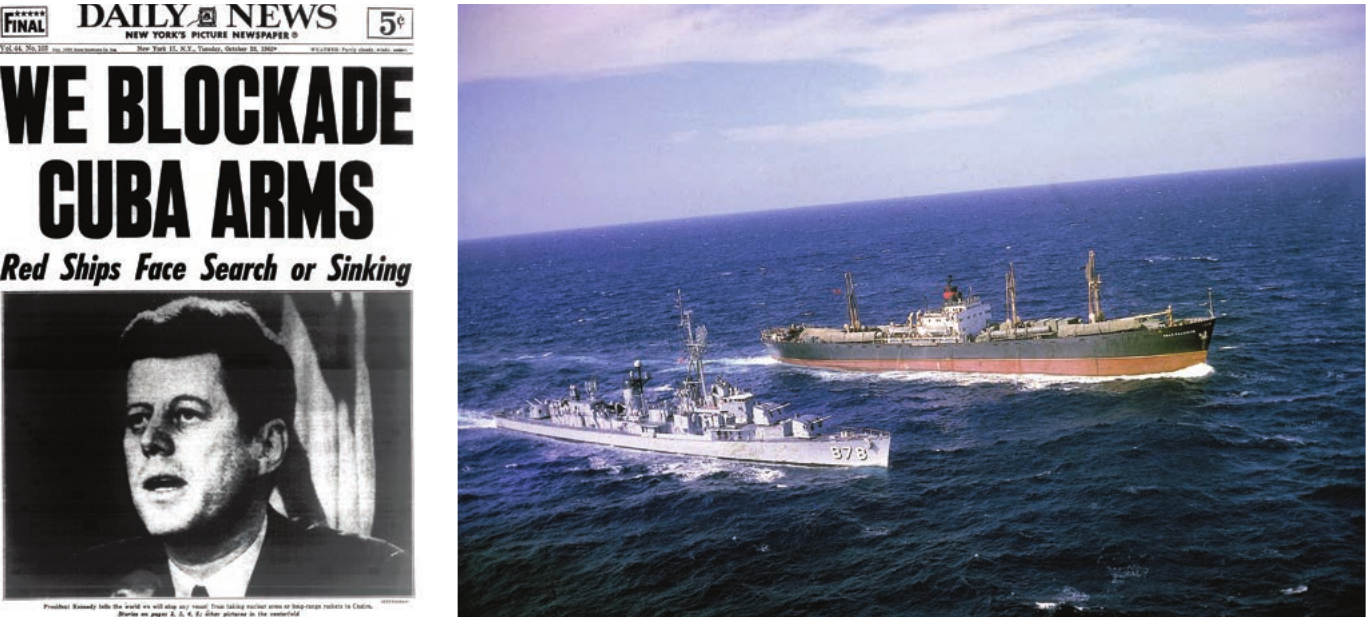
The Cuban Missile Crisis lasted 13 days, from 16 October 1962 (when Kennedy received news of Soviet missiles on Cuba) to 28 October (when Khrushchev announced the missiles would be removed).
American perspective:
From the American point of view, placing Soviet missiles on Cuba struck at the heart of the Monroe Doctrine.
Note
Monroe Doctrine: President Monroe's 1823 declaration that there should be no interference by European nations in North or South America, effectively laying down that the Western hemisphere was an American sphere of interest.
Kennedy's response
On 16 October, President Kennedy convened a meeting of the Executive Committee (ExCom) to consider options. On 18 October, Soviet Foreign Minister Gromyko denied there were missiles in Cuba.
Over the following days, various options were debated by the ExCom. The military pushed hard for air bombardment of Cuba followed by land invasion. However, Kennedy decided on a naval blockade of Cuba to stop missiles or nuclear material from being taken to Cuba.
Kennedy's announcement (22 October):
- Announced in a televised address his plans for a 'quarantine' of Cuba (because 'blockade' could be seen as an act of war)
- Urged Khrushchev to remove missiles from Cuba
- Threatened the Soviet Union with a 'full retaliatory response' if any missile was launched from Cuba
- This threat implied it would not just be Cuba that would be attacked, but the Soviet Union as well
Important
Kennedy was now using the same bluff of 'massive retaliation' that Eisenhower had used over eight years. However, Eisenhower never had Soviet missiles on his doorstep.
The stand-off
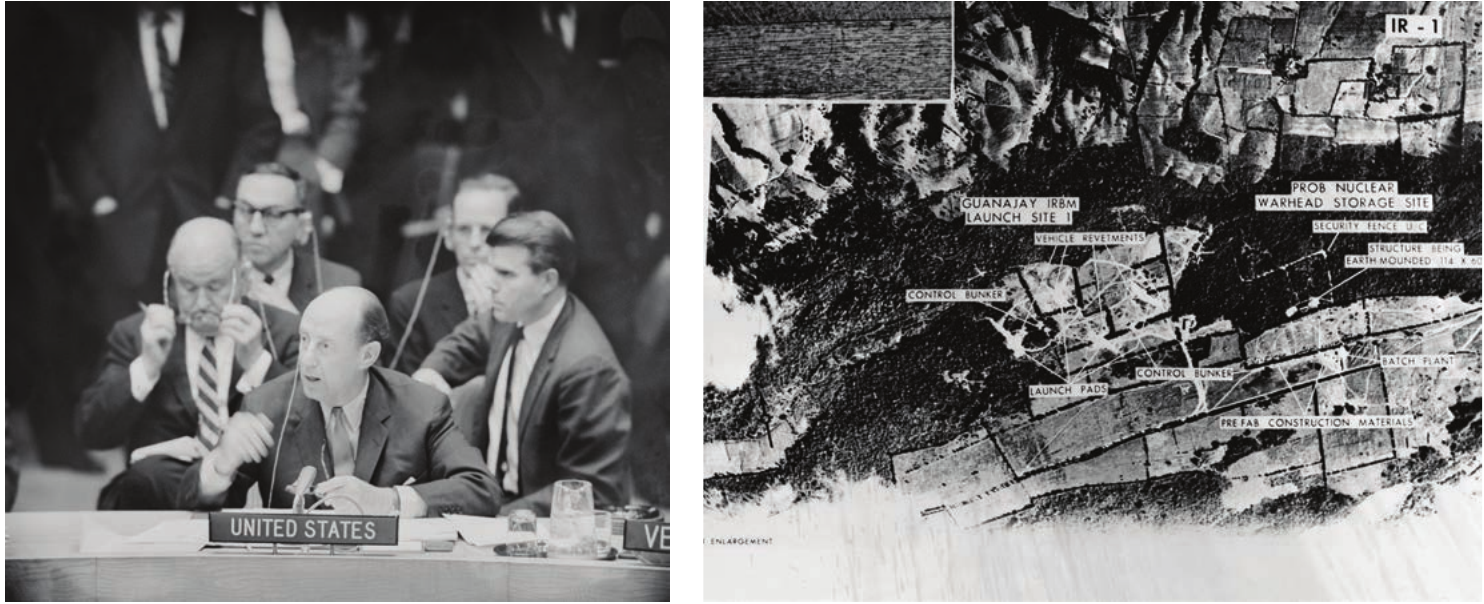
Over the following days, there was a tense stand-off as Soviet freighters approached the quarantine line. At the UN Security Council, US Ambassador Adlai Stevenson confronted the Soviets over the missiles. After the Soviet ambassador's denial, Stevenson displayed large photos from U2 flights showing missile sites in Cuba.
Note
After several tense days of serious incidents (any of which could have led to war) and communications between Khrushchev and Kennedy, the Soviet leader finally agreed to dismantle the missiles and remove them from Cuba. In return, Kennedy agreed (in a secret deal) to remove US Jupiter missiles from Turkey and Italy six months later.
Consequences
It is clear that Kennedy appeared to have won the confrontation. However, he did not rub it in or gloat, and he ordered his Executive against any displays of triumphalism.
Note
In his 2013 book, To Move the World: JFK's Quest for Peace, Jeffrey Sachs praised both leaders:
Kennedy could see things from the Soviet perspective, and was prepared to act symmetrically. Khrushchev had indeed blinked, but Kennedy had demonstrated the constructive flexibility that would further the working relationship between the two leaders.
How the crisis changed both leaders
Both leaders were changed and sobered by the events of October 1962. According to Sachs:
Both leaders were changed and sobered by events. Both realised how the world was on a hair trigger, how misunderstanding could lead to utter disaster, and how fragile their positions had been during the crisis. For those 13 days, local commanders on both sides could easily have sparked a global war by disobeying or misunderstanding orders from above, or by acting on the prerogatives granted as a result of the heightened military alert status. And despite all efforts by both sides to avoid calamitous accidents, such calamities nevertheless nearly occurred multiple times.
Note
Back-channel: Unofficial methods of communication between political rivals, especially those used by the US and USSR during the Cold War.
Kennedy and Khrushchev realised they had something in common. They both had the shared ability to destroy the world and a responsibility to prevent this from happening. They established a strong rapport and exchanged up to 100 letters via a back-channel.
What they learned:
- Both realised they had resisted pressure from hardliners who urged the use of military force in each country
- Kennedy's distrust of the military was much stronger after the Crisis
- It strengthened his confidence in his own approach to foreign policy
- Both leaders recognised they both had a genuine desire to avoid war
Important
According to Sachs, this was a 'great turning-point in the Cold War' in which both leaders turned back from the abyss, 'saved the world and left a legacy, a blueprint, and an inspiration for those who would follow,' and 'found a path back from the brink and towards the peaceful resolution of the Cold War.' They were 'determined to expand the peaceful resolution of the crisis into longer-lasting diplomatic results.'
Kennedy's peace campaign
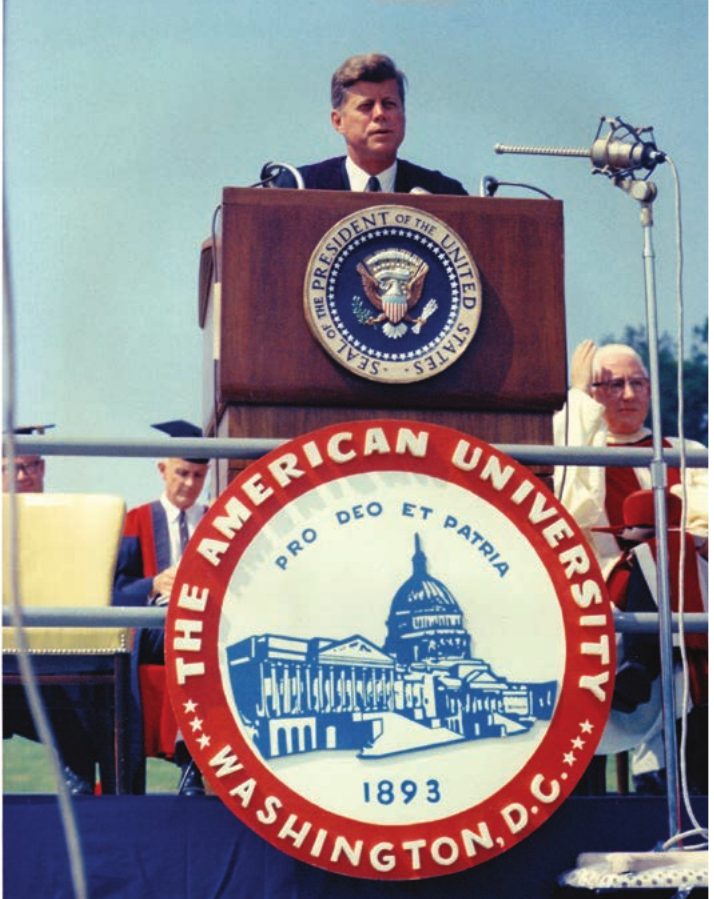
After the Cuban Missile Crisis, Kennedy pursued a peace campaign, which reached its climax on 10 June 1963. President Kennedy's speech at the American University in Washington DC, titled 'Strategy of Peace,' gave an accurate analysis of the situation the world now faced in the Cold War:
Today, should total war ever break out again - no matter how - our two countries would become the primary targets. It is an ironic but accurate fact that the two strongest powers are the two in the most danger of devastation. All we have built, all we have worked for, would be destroyed in the first 24 hours. We are both devoting massive sums of money to weapons that could be better devoted to combating ignorance, poverty, and disease. We are both caught up in a vicious and dangerous cycle in which suspicion on one side breeds suspicion on the other, and new weapons beget counter-weapons.
Khrushchev's response:
Khrushchev commented that Kennedy's American University speech was 'the greatest speech by an American President since Roosevelt'.
Concrete results:
- Ten days after the speech, a hotline was set up for direct communication between the Kremlin and the White House
- 25 July: The United States, Soviet Union and United Kingdom agreed to the Limited Nuclear Test Ban Treaty, banning testing in the atmosphere, underwater or in outer space
- 5 August 1963: The treaty was formally signed
The tragedy:
Important
The great tragedy was that Kennedy was assassinated in November 1963 and Khrushchev was removed from power in 1964.
Note
Exam tip: When researching the Cuban Missile Crisis timeline, identify events that could have caused the crisis to spiral out of control. Research five of these instances and assess how the response by personnel involved prevented events spiralling out of control. Consider to what extent luck was a factor, if at all.
Czechoslovakia, 1968
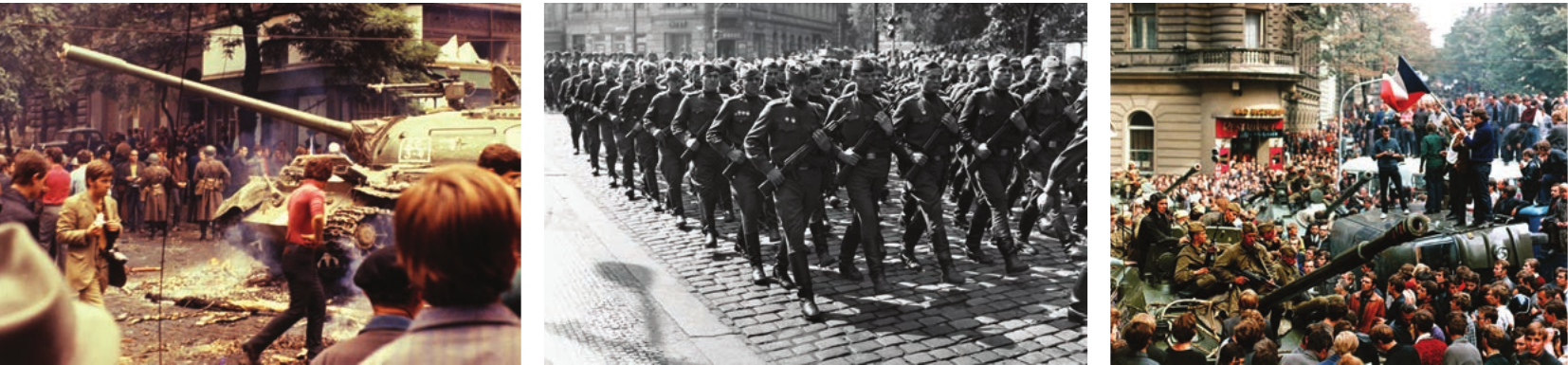
Alexander Dubcek, the leader of the Czechoslovakian Communist Party, attempted extensive economic and social reforms. He aimed to implement 'Communism with the Human Face' characterised by:
- Civil liberties
- Free elections
Many people took to the streets demanding these reforms. The 'Prague Spring' led to a heightened sense of optimism.
Soviet concerns
Important
The Soviet leadership was concerned that:
- If the reforms went too far, other Eastern European states might follow
- This could lead to a collapse of the Eastern bloc
After much debate, the Soviets decided to intervene.
The invasion
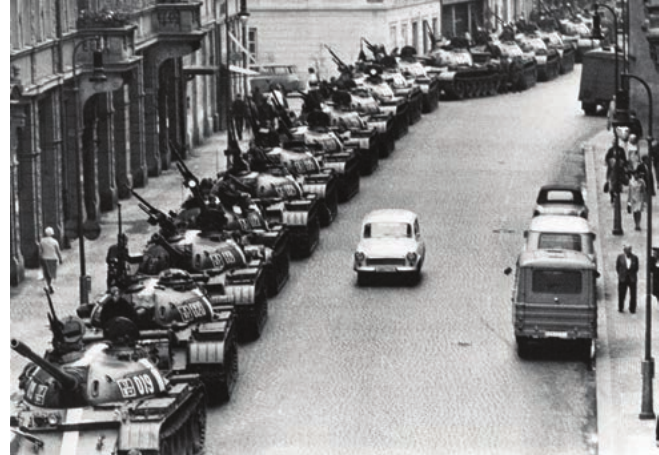
On 20 August 1968, Warsaw Pact forces entered Czechoslovakia, catching people by surprise and shocking the Western world. They swiftly:
- Took control of Prague and other cities
- Took control of communications and transport links
Despite widespread protests, the invasion was swift and successful. Dubcek was forced from power and an authoritarian leadership was re-established with harsh censorship and restrictions on freedom of movement.
International reaction
Note
Though the invasion was condemned by the United States and the Western world, no action was taken because it was considered to be within the Soviet Union's sphere of interest. It did temporarily derail progress towards détente.
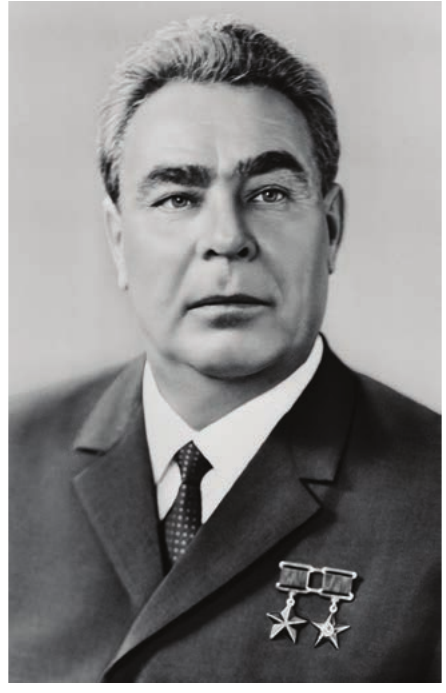
Brezhnev expected this would be the case, but for him it was a much greater priority to keep Soviet control in the Eastern bloc.
The Brezhnev Doctrine
The Soviet Union justified their action in Czechoslovakia with the Brezhnev Doctrine - the stated belief that the Soviet Union had the right to intervene in Communist bloc countries in Eastern Europe to maintain communist rule.
Note
Brezhnev Doctrine: The belief that the Soviet Union had the right to use military force in neighbouring countries in order to maintain communist rule.
Though deploring the Soviet invasion of Czechoslovakia, the United States did not challenge it. The United States was not concerned about the Brezhnev Doctrine because it was only about defending existing Soviet-controlled territory, not expanding it.
Remember!
Summary
Key takeaways:
-
Containment became the dominant US foreign policy framework throughout the Cold War, aiming to prevent Soviet expansion without direct military confrontation.
-
NSC-68 provided the blueprint for US Cold War strategy, calling for massive increases in defence spending and the build-up of both conventional and nuclear forces.
-
The Domino Theory provided a rationale for US intervention in Southeast Asia, though it later proved to be flawed thinking that led to tragedy in Vietnam.
-
Peaceful coexistence under Khrushchev brought a temporary thaw in relations, but had clear limits, as shown by the crushing of the Hungarian Revolution in 1956.
-
Superpower rivalry was fought through multiple methods beyond direct military confrontation, including ideology, economic aid, espionage, the space race, arms race, propaganda, alliances and proxy wars.
-
The arms race was complicated by the nuclear taboo - nuclear weapons became seen as unusable, yet both sides continued to build massive arsenals that threatened mutual assured destruction.
-
The space race demonstrated that the superpowers could compete whilst also cooperating on some issues, leading to important space treaties.
-
The Berlin Wall (1961) became the enduring symbol of the Cold War, representing the division between East and West.
-
The Cuban Missile Crisis (1962) brought the world to the brink of nuclear war but ultimately led both Kennedy and Khrushchev to pursue peace more seriously, resulting in the Limited Nuclear Test Ban Treaty and improved communication.
-
The invasion of Czechoslovakia (1968) showed the limits of reform within the Soviet bloc and led to the Brezhnev Doctrine, which asserted the Soviet right to intervene to maintain communist rule in Eastern Europe.