Solving Scientific Problems: Depth Studies (HSC SSCE Physics): Revision Notes
📚Revision Notes
Solving Scientific Problems: Depth Studies
Introduction to depth studies
Depth studies are extended investigations that allow you to develop and practice important scientific research skills. These studies build on your previous experience and give you opportunities to work like professional scientists do.
Through depth studies, you will:
- Use authentic research methods employed by scientists
- Analyse and evaluate scientific work for relevance and validity
- Expand your reading in areas of scientific interest
- Develop deeper thinking and understanding
- Explore questions that don't have definite answers
- Investigate controversial issues using critical thinking
- Use inquiry-based learning to enhance creative thinking
When conducting a depth study, you start by posing questions and developing a hypothesis to answer them. You then gather evidence to support or disprove your hypotheses. This evidence might come from existing scientific literature or from your own experiments. After analysing your data (often using mathematical or graphical representations), you communicate your findings to an appropriate audience.
Types of depth study
There are two main categories of depth studies:
Primary-sourced investigations
In primary-sourced investigations, you design and conduct experiments or make observations to gather your own data. These investigations include:
- Laboratory experiments
- Field work (at home, school, or other locations)
- Creating and testing models or devices
Secondary-sourced investigations
In secondary-sourced investigations, you research and evaluate information and data collected by other people. These may include:
- Undertaking a literature review
- Investigating emerging technologies
- Evaluating a hypothesis
- Developing and evaluating evidence-based arguments
Note
Primary-sourced investigations involve collecting your own experimental data, while secondary-sourced investigations focus on analyzing existing research and information. Both types require rigorous scientific thinking and evaluation skills.
Presentation formats
You can present your depth study in various forms:
- Written texts (reports, summaries, essays)
- Visual presentations (diagrams, flow charts, posters, portfolios)
- Multimedia presentations
- Physical models
- A combination of the above
Common elements
All depth studies involve:
- Data analysis: Looking for patterns and trends through graphs, tables, flow charts, and diagrams
- Evaluation: Assessing the hypothesis or question, the method's validity and appropriateness, and the data's reliability and validity
Stages in a depth study
Every depth study follows four main stages, each requiring specific working scientifically skills:
Stage 1: Initiating and planning
Questioning and predicting (PH12-1): Formulate and evaluate questions or hypotheses
Planning (PH12-2): Research background information, assess risks and ethical issues, evaluate methods and secondary sources to plan valid experiments
Stage 2: Implementation and recording
Conducting investigations (PH12-3): Safely carry out valid investigations using appropriate technology and measuring instruments
Processing data and information (PH12-4): Collect, organise, record, and process data and information
Stage 3: Analysing and interpreting
Analysing data (PH12-5): Look for trends or patterns, find mathematical relationships, and evaluate data
Problem-solving (PH12-6): Draw and justify conclusions, test hypotheses and answer questions, evaluate the study
Stage 4: Communicating
Communicating (PH12-7): Use appropriate language, visualisations, and technologies to communicate scientific ideas, procedures, and results
Note
These four stages form a continuous cycle in scientific research. You may need to revisit earlier stages as your investigation progresses and new insights emerge.
Posing questions and formulating hypotheses
The first step in any investigation is deciding on a question to explore.
The brainstorming process
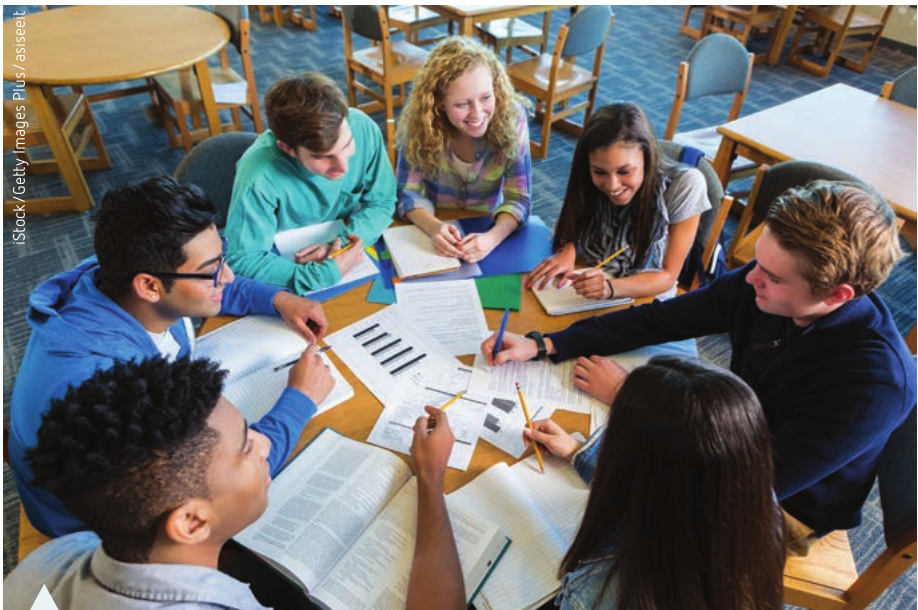
Begin by brainstorming ideas, either individually or in a group. At this initial stage:
- Write down as many ideas as possible
- Don't be critical yet
- Encourage everyone to contribute
- Record every idea
After exhausting your initial ideas, start evaluating them critically:
- Identify the most interesting questions
- Consider which investigations are actually possible given your time and resources
- Create a shortlist of questions
- Keep the longer list for reference
Refining your ideas
Because depth studies should extend beyond basic syllabus content, you need to research what's already known about your shortlisted ideas. This requires conducting a literature review.
Literature reviews
A literature review is a search and evaluation of available literature in a specific subject area, focused on your research question or hypothesis.
Purpose of literature reviews
Literature reviews are essential because they help you:
- Increase your breadth of knowledge and learn from others
- Stimulate new ideas
- Identify gaps in current knowledge
- Discover methods that could be useful
- Evaluate different viewpoints in research
- Determine whether your questions or hypotheses have already been investigated
Important
For secondary-sourced investigations, the literature review may be the investigation itself. In these cases, your depth study will focus on synthesizing and critically evaluating existing research rather than collecting new experimental data.
Conducting a literature review
The process involves:
- Define the topic: Formulate a literature review question
- List key words: Identify terms for searching
- Search for articles: Use library catalogues, databases, and the internet
- Refine your search: Use specific words to narrow results
- Record successful strategies: Note which search terms work well
Structure of a literature review
A formal written literature review should include:
Introduction
- Defines the topic
- Gives your specific focus
- Explains the structure (for lengthy reviews)
Main body
- Groups literature according to common themes
- Explains relationships between the research question and literature
- Proceeds from general to specific
- Includes information about usefulness, recency, and major authors
- Expresses your perspective on strengths and weaknesses
- Points out areas of agreement and disagreement
- Identifies remaining questions
Conclusion
- Summarises major contributions
- Explains the link between your investigation and the literature
- Evaluates the current state of knowledge
- Points out major flaws or gaps in research
The length depends on purpose. For a depth study itself, it should be detailed and evaluative. As an introduction to your own research, it will be shorter and more focused.
Evaluating sources
Always be critical of what you read. Be wary of pseudoscience and material that hasn't been peer reviewed.
The CRAAP test
Apply the CRAAP test to websites you find:
- Currency: Is the information up-to-date?
- Relevance: Does it relate to your research question?
- Authority: Who is the author? What are their credentials?
- Accuracy: Is the information correct and supported by evidence?
- Purpose: Why does this information exist?
Reliable sources
The most reliable websites come from:
- Educational institutions (particularly universities)
- Government organisations (e.g., CSIRO, NASA)
- Professional organisations (e.g., Australian Institute of Physics)
Note
Search tip: Narrow your search by including "site
" or "site" in your search terms to find only educational or government sources. This helps filter out unreliable or commercial websites.Record keeping
Start a logbook immediately to record:
- Information you find
- Complete source references
- Your thoughts and ideas
Your logbook can be hardcopy or electronic. Good record-keeping now saves significant time later and is essential for proper scientific practice.

Finally, discuss your ideas with your teacher, who can suggest information sources and advise on available equipment.
Proposing research questions and hypotheses
After researching and evaluating your ideas, narrow your shortlist to one question you want to tackle.
Characteristics of good research questions
An appropriate research question:
- Can be answered by performing experiments or making observations
- Defines the investigation clearly
- Sets boundaries for the study
- Provides direction
- Is specific enough to guide experimental design
- Identifies what will be varied and measured
- Provides criteria for judging when the question is answered
Example
Worked Example: Good vs Poor Research Questions
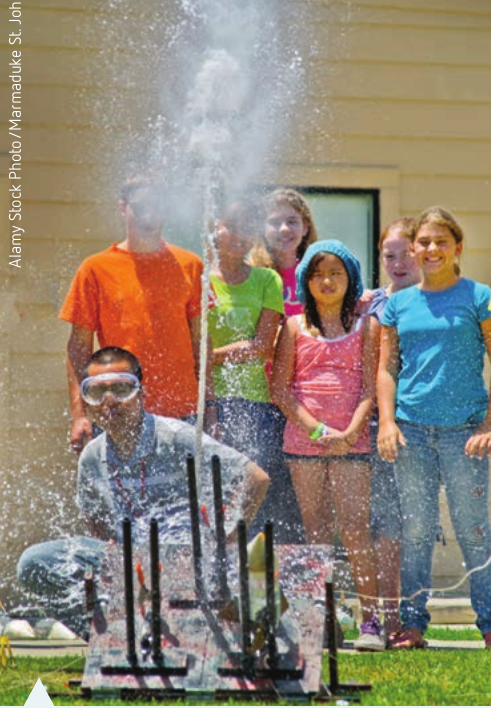
Good example: "What volume of water gives the maximum height for a water rocket?"
This question clearly states:
- What will be varied (water volume)
- What will be measured (rocket height)
- The success criterion (maximum height)
Poor example: "How can we make a water rocket fly the best?"
This question is too vague:
- Doesn't specify what will be varied
- "Best" is undefined and subjective
- Provides no clear success criteria
Characteristics of good hypotheses
A hypothesis is a tentative explanation or prediction based on an existing model or theory.
A good hypothesis:
- Is based on an existing scientific model or theory
- Makes a specific prediction that can be tested
- Is falsifiable (can potentially be proved false)
- Gives predictions sufficiently different from competing hypotheses
- Can be tested quantitatively
- Identifies the variables to be investigated
Example: "The height attained by a water rocket will increase with the amount of water contained in the rocket."
Understanding falsifiability
Important
For a hypothesis or theory to be scientific, it must be able to be disproved. However, no theory can ever be proved absolutely true.
- If experimental results agree with predictions, they support your hypothesis (increasing confidence in the model)
- If results disagree with your hypothesis, you may have disproved it (which can lead to interesting new questions)
- Never write an aim starting with "To prove..." because proving a hypothesis is impossible
Variables in hypotheses
A good research question or hypothesis identifies:
- One dependent variable (what you measure)
- One independent variable (what you change)
- In depth studies, you may have two or more independent variables
Use these criteria to evaluate and refine your research question or hypothesis. Don't be surprised if you modify your question during the investigation—this is normal in scientific research.
Planning your depth study
Careful planning ensures you collect the necessary data to test your hypothesis effectively.
Key considerations
When planning, consider:
- How much time you have available
- What space and equipment you need
- Where you'll conduct measurements or observations
- What resources you need for secondary-sourced investigations
Working in groups
Most scientists work in groups. If choosing team members:
- Don't just work with friends
- Consider people with different skills
- Think about complementary strengths
Planning checklist
| PRIMARY-SOURCED INVESTIGATION | SECONDARY-SOURCED INVESTIGATION |
|---|---|
| What data will you need to collect? | What information will you need to gather? |
| What materials and equipment will you need? | What sources will you use? |
| When and where will you collect the data? | When and where will you gather the information? |
| If you are working in a group, what tasks are assigned to which people? | If you are working in a group, what tasks are assigned to which people? |
| Who will collect the data? | Who will collect what information? |
| Who will be responsible for record-keeping? | How will record-keeping be done to avoid plagiarism? |
| How will the data be analysed? | How will the information be analysed? |
| How will sources be referenced? | How will sources be referenced? |
Important
The most common problem students face is time management. Plan sufficient time for:
- Conducting experiments (including repeats)
- Analysing data
- Writing the report
Underestimating the time needed for each stage is a common mistake that can compromise the quality of your depth study.
Depth study plan template
A comprehensive plan helps you stay on track. Your teacher may require you to submit a plan before beginning implementation.
| 1 INTRODUCTION | ||
| Title What? | Choose a title for your depth study. | |
| Rationale Why? | Explain why you have chosen this area of research. Describe what you are hoping to achieve through this investigation. Include any applications. | |
| Type of depth study Which? | State the type of depth study you intend conducting (e.g. literature review / practical investigation). Where applicable, describe any theoretical models (e.g. kinematics) that you will use. | |
| 2 TIMELINE | ||
| Action and time frame – When? | Working scientifically skills – How? | |
| 1 Initiating and planning When? (e.g. week 1 and 2) | Questioning and predicting: Formulate questions and/or a hypothesis. Planning: Wide reading – research background information; assess risks and ethical issues; plan methods; design experiments. | |
| 2 Implementation and recording When? | Conducting investigations: Carry out experiments safely; make observations and/or measurements; use appropriate technology and measuring instruments. Process and record data and information: Collect, organise, record and process information and/or data as you go. | |
| 4 Analysing and interpreting When? | Analyse data and information: Begin looking for trends or patterns or mathematical relationships. Problem-solve: Evaluate the adequacy of data (relevance, accuracy, validity and reliability) from primary and/or secondary sources; answer your research question; draw and justify conclusions. | |
| 5 Communicating When? | Present your depth study: Write the report or other presentation, using appropriate language, visualisations, and technologies. | |
| Final presentation | Due date: Allow time for proofreading and editing. | |
| 3 DATA COLLECTION | ||
| Variables What will you measure and what will you hold constant? Identify dependent and independent variables. | Measurements and uncertainties How will you make measurements? What equipment will you need? How will you minimise uncertainties? | |
| 4 DATA ANALYSIS AND PROBLEM-SOLVING | ||
| Data analysis What method(s) will you use to analyse the data and how will you represent the trends and patterns? | Conclusions How will you judge whether the experiment was valid? How will your data allow you to test your hypothesis or answer your question? |
Keep a record of your planning in your logbook, including what you plan to do and why. If working in a group, record what each person agrees to do. Remember that plans may need adjustment as you proceed.
Designing your depth study
When designing your investigation, aim for measurements with good reliability, validity, accuracy, and precision.
Key quality criteria
Reliability: The consistency of results when an experiment is repeated
Validity: Whether the experiment actually tests the intended hypothesis, with all other variables kept constant
Accuracy: How close measurements are to the true value
Precision: How close repeated measurements are to each other
Note
Think of accuracy and precision this way: accuracy is about being correct, while precision is about being consistent. You can have precise measurements that aren't accurate (consistently wrong), or accurate measurements that aren't precise (correct on average but inconsistent).
Evaluation questions
| PRIMARY INFORMATION AND DATA | SECONDARY INFORMATION AND DATA | |
|---|---|---|
| Reliability | Have I tested with repetition? | How consistent is the information with other reputable sources? Are the data presented based on repeatable processes? |
| Accuracy and precision | Have I designed my experiments to minimise uncertainties? Have I used repeat measurements to estimate random errors? Have I used the best measuring equipment available, and used it correctly? | Is this information similar to information presented in peer-reviewed scientific journals? Are the data given with uncertainties, and are these uncertainties small compared to the measured values? |
| Validity | Does my experiment actually test the hypothesis that I want it to? Have all variables apart from those being tested been kept constant? | Do the findings relate to the hypothesis or problem? Are the findings accurate and the sources reliable? |
For secondary-sourced investigations, seek resources with these same characteristics.
Selecting equipment
A well-framed question or hypothesis helps you choose appropriate equipment. For example:
- If your hypothesis predicts a temperature change of , you need a thermometer that can measure to at least this precision
When using equipment:
- Always ask if you're unsure how to use it
- Read the user manual to understand precision and safety risks
- Know that precise measurements are possible with simple equipment when using good technique
Example
Historical Example: Measuring the Speed of Light
In 1862, Léon Foucault measured the speed of light with an uncertainty of only without computers, data loggers, or digital stopwatches. This demonstrates that good experimental technique matters more than expensive equipment.
Remember: "It is a poor workman who blames his tools!"
Minimising uncertainties
Minimising uncertainty requires:
- Using appropriately precise equipment
- Employing clever experimental techniques
- Making repeat measurements
- Using the best available equipment correctly
Working safely: risk assessment
You may need to complete a risk assessment before beginning your depth study.
Three risk factors
Consider:
- Possible risks: To yourself, other people, the environment, or property
- Likelihood: How probable is injury or damage?
- Severity: How serious would the consequences be?
Risk matrix
Use a risk matrix to assess severity:
| Consequences → Likelihood ↓ | Negligible | Marginal | Severe | Catastrophic |
|---|---|---|---|---|
| Rare | Low risk | Low risk | Moderate risk | High risk |
| Unlikely | Low risk | Low risk | High risk | Extreme risk |
| Possible | Low risk | Moderate risk | Extreme risk | Extreme risk |
| Likely | Moderate risk | High risk | Extreme risk | Extreme risk |
| Certain | Moderate risk | High risk | Extreme risk | Extreme risk |
Consequence levels:
- Negligible: Minor issues (e.g., dirty clothes)
- Marginal: Small injuries or damage (e.g., bruise, broken branch)
- Severe: Substantial injury or damage (e.g., broken window)
- Catastrophic: Death or environmental toxin release
Important
Your investigation must be low risk.
Any investigation classified as moderate or high risk cannot proceed without significant modifications to reduce the risk level. Always consult with your teacher before beginning any practical work.
Risk management
After identifying risks, develop strategies to:
- Minimise the risks
- Deal with consequences if something happens
Additional safety considerations
- Consider where you'll perform experiments or observations
- Think about convenience and safety of others
- Discuss space availability with your teacher
- For secondary-sourced investigations, practice cyber safety and keep personal information private
Remember!
Summary
Key Points to Remember:
- Depth studies allow you to practice authentic scientific research methods, extending beyond basic syllabus content
- A good research question is specific, testable, and clearly defines what will be measured and varied
- A good hypothesis is based on an existing model, is falsifiable, and makes testable predictions
- Literature reviews help you understand existing knowledge, identify gaps in research, and refine your questions
- Use the CRAAP test (Currency, Relevance, Authority, Accuracy, Purpose) to evaluate sources critically
- Plan carefully considering time, resources, and whether you're collecting primary data or using secondary sources
- Design investigations that produce reliable, valid, accurate, and precise data
- Always complete a risk assessment and ensure your investigation is low risk