Sacred Texts and Writings (HSC SSCE Studies of Religion): Revision Notes
📚Revision Notes
Sacred Texts and Writings
Introduction to Buddhist sacred texts
Buddhism's sacred writings have a unique history that differs from many other world religions. Unlike traditions where texts were written down immediately, Buddhist teachings began as an oral tradition. The Buddha's followers first preserved his teachings through memory and recitation, passing them down verbally from teacher to student. This oral transmission was considered highly reliable, as monks would memorise and recite the teachings precisely.
Note
The oral tradition in Buddhism wasn't simply casual storytelling. Monks developed sophisticated memorisation techniques and would recite teachings in groups to ensure accuracy. This method of preservation was so effective that when texts were finally written down centuries later, different communities had remarkably consistent versions.
The written texts that eventually emerged form the foundation of Buddhist practice across different traditions. However, different Buddhist variants (Theravada, Mahayana, and Vajrayana) accept different collections of texts as authoritative. Understanding these texts is essential for grasping how Buddhist beliefs are preserved and transmitted.
Key term: Sutras - Sacred texts containing the actual words spoken by the Buddha during his lifetime.
The Tripitaka (Pali Canon)
Origins and language
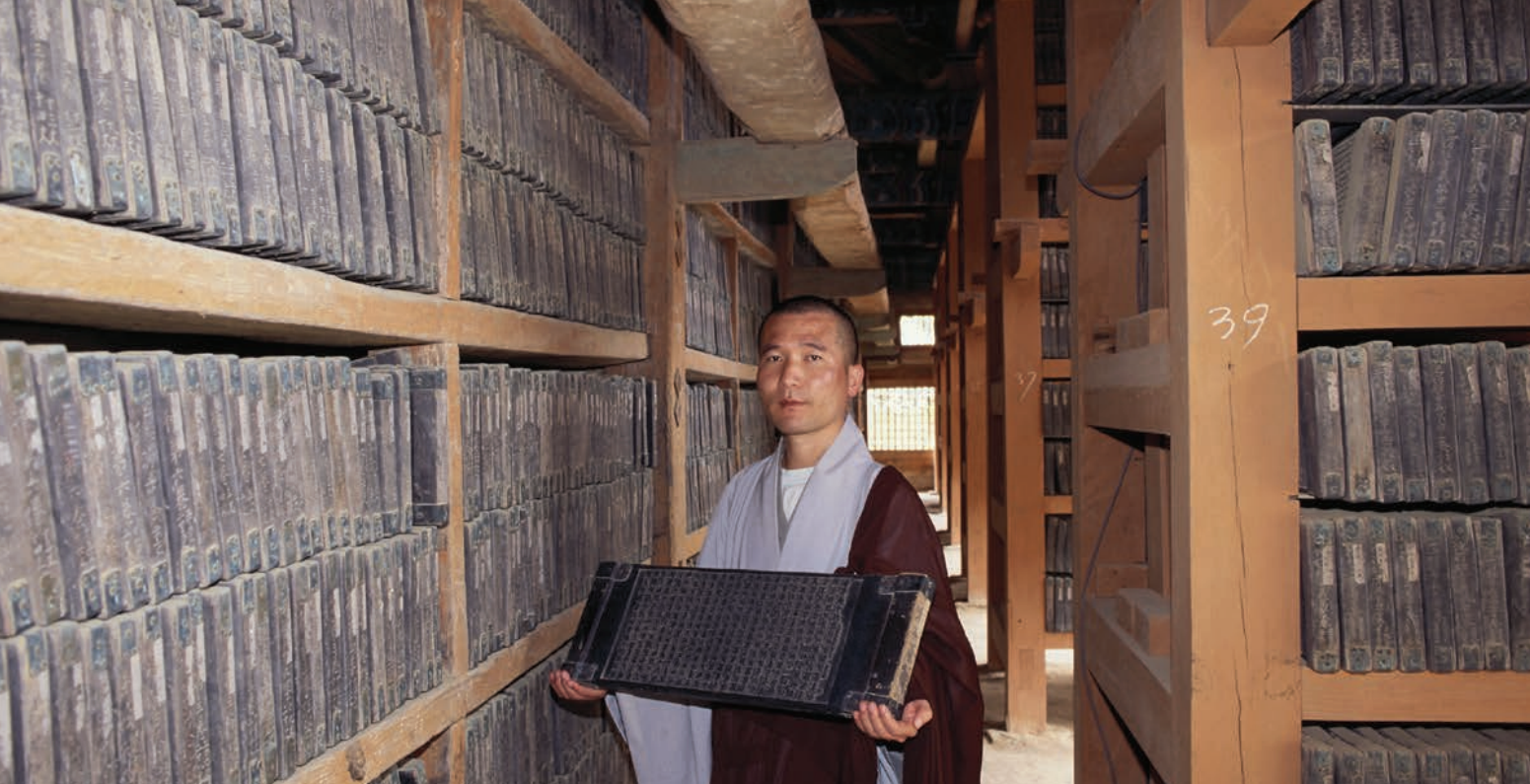
The Tripitaka, also called the Pali Canon, represents the oldest complete collection of Buddhist scriptures. This collection guides Theravada Buddhism and is accepted as sacred by all Buddhist variants, though Theravada Buddhists consider it their only authoritative text.
The Tripitaka was written down around the second century BCE in Sri Lanka, following the third Buddhist council where its content was finalised. Monks recorded it in Pali, a language related to Sanskrit (which functioned like Latin did in Europe as a classical scholarly language). Both Pali and Sanskrit remain important languages for Buddhist writings.
Structure: The three baskets
The term 'Tripitaka' literally means 'three baskets', referring to its three-part structure. Each 'basket' serves a distinct purpose in preserving different aspects of Buddhist teaching:
Important
Memory Aid: VSD for Tripitaka sections
- Vinaya (discipline)
- Sutta (sermons)
- AbhiDharmapitaka (discussion)
Remember: Three baskets = three distinct purposes
1. Vinaya Pitaka (Discipline collection)
- Contains the monastic rules developed by the Buddha
- Provides guidelines for monks' and nuns' daily conduct
- Establishes the framework for Buddhist monastic communities
- Covers ethical conduct and disciplinary procedures
2. Sutta Pitaka (Sermon collection)
- Records the Buddha's actual sermons and teachings
- Contains discourses given to various audiences
- Includes dialogues between the Buddha and his followers
- Forms the core of Buddhist doctrine and philosophy
3. Abhidharmapitaka (Philosophical collection)
- Presents philosophical and theological discussions of the Buddha's teachings
- Contains commentaries analysing the sermons
- Not directly from the Buddha himself
- Represents systematic scholarly analysis of Buddhist doctrine
- In Mahayana Buddhism, this corresponds to the Shastra collection
Significance for exam preparation
Note
When analysing the Tripitaka's importance, consider:
- It represents the earliest written record of Buddhism
- Its three-part structure reflects different aspects of Buddhist practice (ethics, teaching, philosophy)
- Theravada Buddhism relies exclusively on this text
- All Buddhist variants recognise its authority, even if they accept additional texts
Mahayana sacred texts
Additional writings beyond the Tripitaka
Mahayana Buddhism distinguishes itself by accepting additional sacred documents beyond the Pali Canon. These texts, called Shastras, are written in various languages reflecting Buddhism's spread across different cultures.
Important
Critical Mahayana Belief: The Buddha's teachings did not cease with his physical death. Therefore, additional writings continue to be added to the sacred collection. This represents a significant difference from Theravada Buddhism's closed canon.
The Lotus of the Good Law (Lotus Sutra)
The Lotus of the Good Law, commonly known as the Lotus Sutra, holds particular significance within Mahayana Buddhism. It forms the second part of three works collectively called the Threefold Lotus.
Key teachings:
- All people possess the potential to reach enlightenment
- This contrasts with traditional Theravada views that only select scholars and monks can achieve enlightenment
- Emphasises 'skilful means' and faith as paths to enlightenment
- Places less emphasis on meditation and asceticism compared to other approaches
- The earliest translation dates from approximately 300 CE
Note
Exam tip: When evaluating Mahayana texts, consider how they reflect different understandings of who can achieve enlightenment and what methods lead to spiritual progress. The democratisation of enlightenment is a key theme distinguishing Mahayana from Theravada Buddhism.
Chinese translations
Various Buddhist texts were translated from Sanskrit into Chinese as Buddhism spread eastward. When original Sanskrit versions were lost, these Chinese translations became critically important for preserving Buddhist teachings. This demonstrates how Buddhist texts evolved across cultures whilst maintaining their core teachings.
Vajrayana sacred texts
The Tibetan Book of the Dead (Bardo Thodol)
Vajrayana Buddhism's most significant text is the Tibetan Book of the Dead, though its actual Tibetan name is Bardo Thodol. Understanding this text requires knowing two key terms:
- Bardo = 'after death plane' (an intermediate state of existence)
- Thodol = 'liberation by hearing'
Together, Bardo Thodol translates as 'Great liberation upon hearing in the intermediate state'.
Origins and purpose
According to tradition, this text was written in the eighth century CE for a Tibetan king. It was composed in cryptic language and deliberately hidden until people were ready to receive its teachings. This reflects the mystical nature of Vajrayana Buddhism.
Note
The book served a practical ritual function: monks would read it aloud to people as they were dying. This practice reflects the belief that hearing these teachings at death could guide the dying person's consciousness through the intermediate state between death and rebirth.
Content and structure
The Tibetan Book of the Dead describes four bardos (phases) that a person experiences after death. It provides detailed guidance on:
- Navigating the intermediate state between death and rebirth
- Finding the heavenly realm rather than lower realms
- Avoiding continued cycles of birth and death
- Understanding consciousness during the death process
Key quote from the text: "Let virtue and goodness be perfected in every way. Be not fond of the dull smoke-coloured light from hell."
This text offers valuable insight into:
- Tibetan Buddhist cosmology (understanding of the universe)
- Teachings on consciousness and the nature of mind
- Buddhist concepts of death and rebirth
- Vajrayana mystical practices
Note
Exam guidance: When analysing this text, consider how it reflects distinctive Vajrayana beliefs about death, consciousness, and the possibility of liberation at the moment of death. This differs significantly from both Theravada and Mahayana approaches to death and rebirth.
Sacred text extracts demonstrating principal beliefs
Understanding actual passages from Buddhist texts helps demonstrate how key beliefs are expressed in scripture. The following extracts illustrate central Buddhist concepts:
Important
When studying these extracts, pay attention to:
- The specific Buddhist concept each passage illustrates
- The literary techniques used (metaphors, imagery)
- Which tradition the text comes from
- How the language conveys deeper meaning
These extracts are frequently used in exam questions about Buddhist beliefs and how they're expressed in sacred texts.
The Buddha postpones nirvana
"I will not experience final nirvana until I have disciples who are knowers of the dhamma and who will pass on what they have gained from their teacher, declare it and teach the dhamma of wondrous effect." (Digha Nikaya 16:3.7)
Analysis: This extract demonstrates the Buddha's compassion and commitment to teaching. Rather than immediately entering final nirvana, he chooses to remain and ensure his teachings will continue through properly trained disciples. This illustrates the Buddhist emphasis on transmission of knowledge and the importance of the sangha (community).
Bodhisattvas
"The bodhisattva is a great being who practises compassion, sympathy and joy, and so attains the stage of 'the beloved only child'. Parents are very happy when they see their son at peace. The bodhisattva who has reached this stage sees all beings like a parent sees his only son – seeing him practise goodness, the parent is delighted." (Mahaparinirvana Sutra 470)
Analysis: This passage explains the bodhisattva ideal central to Mahayana Buddhism. It uses the parent-child relationship as a metaphor for how bodhisattvas view all beings with compassion. The emphasis on universal compassion distinguishes Mahayana practice.
The Dharma
"Teach the dharma which is lovely at the beginning, lovely in the middle, lovely at the end. Explain with the spirit and the letter in the fashion of Brahma. In this way you will be completely fulfilled and wholly pure." (Vinaya, Mahavagga 1.11.1)
Analysis: This extract emphasises how Buddhist teaching should be presented comprehensively and beautifully. It suggests that proper understanding and teaching of the dharma leads to fulfilment and purity.
Dukkha (suffering)
"People compelled by craving crawl like snared rabbits." (Dhammapada 24:9)
Analysis: Using vivid imagery, this passage illustrates how attachment and craving trap people in suffering. The metaphor of snared rabbits powerfully conveys the loss of freedom that results from craving.
Karma
"An evil deed committed does not immediately bear fruit, just as milk does not curdle at once; but, like a smouldering fire covered with ashes, it remains with the fool until the moment it ignites and burns him." (Dhammapada 69:71)
Analysis: This extract explains the delayed nature of karmic consequences. The two metaphors (milk curdling and smouldering fire) help readers understand that actions have consequences even if not immediately apparent. This challenges simplistic understandings of karma as instant retribution.
Enlightenment
"Does a holy one say within himself, 'I have obtained perfect enlightenment?' ... 'No, world honoured one. If a holy one of perfect enlightenment said to himself 'Such am I', he would necessarily partake of the idea of an ego identity, a being separated individually." (Diamond Sutra 9)
Analysis: This passage demonstrates the paradox of enlightenment. Truly enlightened beings transcend ego, so claiming enlightenment would contradict the egoless state. This reflects the Buddhist teaching of anatta (no-self).
Nirvana
"For those in mid-stream, in great peril of the flood; for those adventuring on ageing and dying – I proclaim the isle where there is no-thing, where naught is grasped. This is the isle of no-beyond: I call it nirvana – the utter extinction of ageing and dying." (Suttanipatta 1093-4)
Analysis: Using the metaphor of an island refuge, this passage describes nirvana as liberation from the cycle of birth, ageing, and death. The phrase 'where naught is grasped' emphasises release from attachment as central to achieving nirvana.
Note
Exam tip: When analysing sacred text extracts, always explain what the passage reveals about Buddhist beliefs and how it uses language or imagery to convey meaning. Consider the context of which tradition the text comes from and how this affects interpretation.
Key differences between Buddhist traditions and their texts
| Aspect | Theravada | Mahayana | Vajrayana |
|---|---|---|---|
| Main texts | Tripitaka (Pali Canon) only | Tripitaka plus Shastras, Lotus Sutra, Heart Sutra | Tripitaka plus Tibetan Book of the Dead |
| View of canon | Closed - no additions | Open - ongoing additions | Includes mystical texts |
| Language | Pali | Sanskrit, Chinese, others | Tibetan |
| Key emphasis | Buddha's original teachings | Continued revelation | Death and rebirth guidance |
| Written date | 2nd century BCE | Various (e.g. 300 CE for Lotus Sutra) | 8th century CE onwards |
Summary
Key Points to Remember:
Origins and Structure:
- Buddhist texts began as oral tradition before being written down in the 2nd century BCE
- The Tripitaka ('three baskets') contains the Vinaya Pitaka (discipline), Sutta Pitaka (sermons), and Abhidharmapitaka (philosophy)
- Written in Pali and Sanskrit - the classical languages of Buddhism
Different Traditions:
- Theravada Buddhism accepts only the Tripitaka as authoritative
- Mahayana Buddhism accepts additional texts like the Lotus Sutra and believes teachings continue beyond Buddha's death
- Vajrayana Buddhism's most important text is the Tibetan Book of the Dead (Bardo Thodol), which guides consciousness through death
Key Terminology:
- Tripitaka - The 'three baskets' forming the Pali Canon
- Sutras - Sacred texts containing the Buddha's actual words
- Bardo - The intermediate state between death and rebirth
- Shastras - Additional Mahayana sacred writings
- Dharma/Dhamma - The Buddha's teachings
Critical Concept for Evaluation: Different Buddhist traditions have different approaches to sacred texts, reflecting their varying beliefs about enlightenment, who can achieve it, and whether Buddhist teaching is closed or continuing. When evaluating Buddhism's sacred texts, consider how each tradition's texts reflect its distinctive beliefs and practices.