Factors Affecting the Rate of Cellular Respiration (VCE SSCE Biology): Revision Notes
📚Revision Notes
Factors Affecting the Rate of Cellular Respiration
Introduction
The rate of cellular respiration is influenced by several key factors. Understanding these factors is essential because they determine how efficiently cells can produce ATP, the energy currency of life. The main factors affecting cellular respiration rate are:
- Temperature
- pH
- Glucose availability
- Oxygen concentration
- Enzyme inhibitors
All of these factors work primarily by affecting the enzymes involved in cellular respiration pathways. Since enzymes catalyse every step of both aerobic respiration and anaerobic fermentation, any factor that influences enzyme function will directly impact the rate of ATP production.
Note
Why Enzymes Are Central to Respiration Rate
Enzymes are biological catalysts that control the speed of every reaction in cellular respiration. Because each step in glycolysis, the Krebs cycle, and the electron transport chain requires specific enzymes, anything that affects enzyme function will automatically affect the overall rate of ATP production.
Temperature effects on cellular respiration
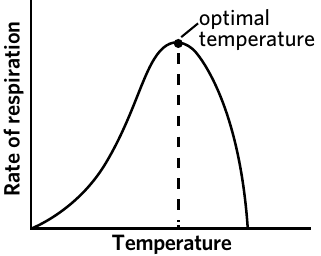
Enzymes are biological catalysts that speed up cellular respiration. Each enzyme has an optimal temperature - the point at which the maximum function of an enzyme occurs for a given condition. At this optimal temperature, cellular respiration occurs at its fastest rate and ATP production is maximised.
Below the optimal temperature
When temperature is below the optimal level, enzymes and substrate molecules have less kinetic energy. This means they move more slowly and collide less frequently. Fewer collisions between enzymes and substrates result in a lower rate of enzyme-catalysed reactions, which slows down cellular respiration.
Above the optimal temperature
When temperature rises above the optimal level, enzymes begin to denature. Denaturation is the disruption of a molecule's structure by an external factor such as heat. High temperatures break the weak bonds holding the enzyme's three-dimensional shape, causing the active site to change shape. Once denatured, enzymes can no longer bind substrates effectively, and the respiration rate drops rapidly.
Important
The Point of No Return: Enzyme Denaturation
Unlike the gradual slowdown that occurs below optimal temperature, denaturation above optimal temperature causes a rapid and often irreversible loss of enzyme function. The three-dimensional structure that took complex protein folding to create is permanently disrupted, and the enzyme can no longer catalyse reactions even if temperature returns to normal.
pH effects on cellular respiration
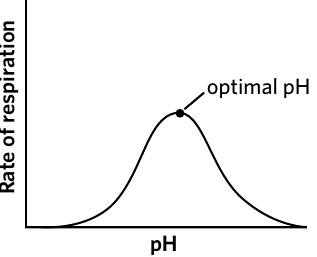
The pH is a scale used to measure the acidity or basicity of an aqueous solution. Just as with temperature, each enzyme has an optimal pH at which it functions most efficiently.
Different cellular locations have different pH values, and the enzymes in these locations are adapted to function optimally at their local pH:
- The cytoplasm typically has a pH of around 7.2, so enzymes involved in glycolysis (which occurs in the cytoplasm) function optimally at this pH
- The intermembrane space of mitochondria usually has a pH of around 7.0-7.4
- The mitochondrial matrix has a pH of around 7.8
Note
Location-Specific pH Optimization
The variation in pH across cellular compartments isn't random - it reflects the specific enzymes working in each location. Glycolytic enzymes in the cytoplasm evolved to work best at pH 7.2, while enzymes in the mitochondrial matrix are optimized for the slightly more alkaline pH 7.8. This specialization allows each pathway to operate efficiently in its specific environment.
When pH deviates from the optimal level (either too acidic or too alkaline), enzymes begin to denature. The hydrogen ion concentration affects the charges on amino acids in the enzyme, disrupting the bonds that maintain its three-dimensional structure. This causes the active site to change shape, preventing substrate binding and slowing the rate of respiration.
Glucose availability and cellular respiration
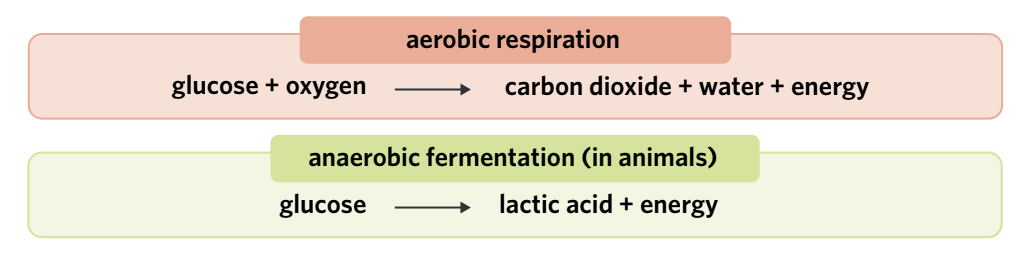
Glucose is the essential substrate (starting material) for glycolysis, which is the first stage of both aerobic respiration and anaerobic fermentation.
The relationship between glucose concentration and respiration rate
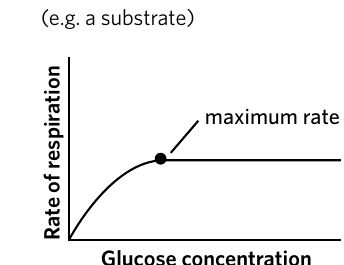
When glucose availability increases, the rate of cellular respiration increases. More substrate molecules mean more frequent collisions between glucose and the enzymes that catalyse glycolysis. This leads to faster ATP production.
Conversely, when glucose availability decreases, the rate of cellular respiration decreases, reducing ATP production. Cells with insufficient glucose cannot maintain high metabolic rates.
The saturation point
However, the respiration rate does not increase indefinitely as glucose concentration rises. Eventually, the rate reaches a maximum level and plateaus. This occurs because the enzymes have reached their saturation point - the point at which a substance (such as an enzyme) cannot receive more of another substance (such as a substrate).
At saturation, all enzyme active sites are occupied and working at maximum capacity. Adding more glucose doesn't increase the rate because there are no free enzymes available to process the additional substrate. The enzymes have become the limiting factor rather than substrate availability.
Example
Understanding Enzyme Saturation
Think of enzyme saturation like a busy restaurant with limited staff:
- Low glucose concentration: The restaurant has plenty of free waiters (enzymes), so adding more customers (glucose) means faster service (higher respiration rate)
- Moderate glucose concentration: Most waiters are busy, but adding a few more customers still increases the overall rate
- Saturation point: Every waiter is serving customers at maximum speed. Adding more customers doesn't speed up service because there are no free waiters available - the staff, not the customers, has become the limiting factor
Oxygen concentration and cellular respiration
Oxygen plays a critical role in aerobic respiration but is not required for anaerobic fermentation.
Oxygen's role in aerobic respiration
During the electron transport chain, oxygen acts as the final electron acceptor. It accepts the free protons and electrons that accumulate from ATP production, combining with them to form water molecules. Without oxygen, the electron transport chain cannot function, and aerobic respiration stops.
How oxygen concentration affects respiration pathway choice
In animal cells, oxygen availability determines which cellular respiration pathway is used:
- Low oxygen conditions: Cells switch to anaerobic fermentation, producing lactic acid and small amounts of ATP
- Presence of oxygen: Cells use aerobic respiration, producing much more ATP
The relationship between oxygen concentration and aerobic respiration rate
As oxygen concentration increases, the rate of aerobic respiration increases. More oxygen molecules mean the electron transport chain can process electrons more quickly, leading to faster ATP production.
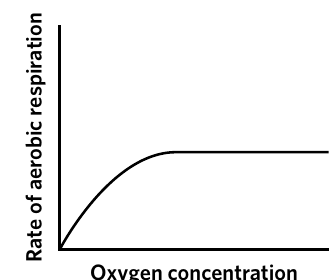
Assuming unlimited glucose availability, adding more oxygen will continue to increase respiration rate until a maximum is reached. At this point, the enzymes involved in respiration become saturated and work at maximum capacity. Further increases in oxygen concentration cannot speed up the process because the enzymes, not oxygen availability, become the limiting factor.
Real-world application: high altitude training
At high altitude, air contains a much lower percentage of oxygen than at sea level. This means less oxygen is available for aerobic respiration, causing the respiration rate to drop. As a result, ATP production decreases, making people feel tired more quickly and potentially causing altitude sickness symptoms.
However, prolonged training at high altitude triggers an adaptation. The kidneys produce more erythropoietin (EPO), a hormone that increases red blood cell production. More red blood cells allow the body to carry and transport more oxygen to cells.
Note
Athletic Performance Enhancement Through Altitude Training
When athletes return to lower altitude, their red blood cell count remains elevated. Combined with the higher oxygen percentage at sea level, this means their muscle cells receive more oxygen than typical. This increases aerobic respiration rate and ATP production, improving athletic performance. This natural adaptation is why high-altitude training camps are popular among endurance athletes preparing for sea-level competitions.
Enzyme inhibition and cellular respiration
Enzyme inhibitors are molecules that bind to and prevent an enzyme from functioning. Since enzymes catalyse every step of cellular respiration, inhibitors can significantly reduce the rate of ATP production.
Types of enzyme inhibitors
Competitive inhibitors
Competitive inhibitors are molecules that hinder an enzyme by blocking the active site and preventing the substrate from binding. They "compete" with the substrate for access to the active site. Because they have a similar shape to the substrate, competitive inhibitors can fit into the active site, but they don't undergo the chemical reaction.
The effect of competitive reversible inhibitors can be overcome by increasing substrate concentration. With more substrate molecules present, there's a greater chance that substrate (rather than inhibitor) will occupy the active site.
Non-competitive inhibitors
Non-competitive inhibitors are molecules that hinder an enzyme by binding to an allosteric site - a region on an enzyme that is not the active site. When a non-competitive inhibitor binds to the allosteric site, it causes a conformational change in the enzyme's shape. This change alters the active site so that the substrate can no longer bind effectively.
Unlike competitive inhibitors, increasing substrate concentration does not overcome non-competitive inhibition because the inhibitor and substrate bind to different sites.
Reversible vs irreversible inhibition
Reversible inhibition involves weaker bonds that can be broken, allowing the inhibitor to detach from the enzyme. The enzyme can then regain its function.
Irreversible inhibition involves stronger bonds that cannot be broken easily. The enzyme remains permanently inhibited.
Important
The Deadly Nature of Cyanide
A dangerous example is cyanide poisoning. Cyanide is a non-competitive irreversible inhibitor that binds to cytochrome c oxidase, an essential enzyme in the electron transport chain. This stops aerobic respiration and ATP production, which is why cyanide is lethal. Because the inhibition is irreversible, the enzyme cannot recover, and cells cannot produce the ATP needed for survival.
Effect of inhibitors on respiration rate
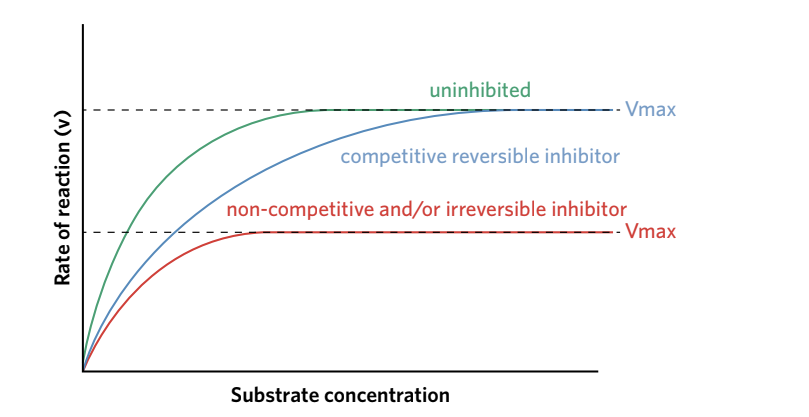
As inhibitor concentration increases, the rate of cellular respiration decreases. The graph above shows how different types of inhibitors affect the maximum possible rate of reaction (Vmax):
- Competitive reversible inhibitors: Can reach the same Vmax as uninhibited enzymes if substrate concentration is high enough
- Non-competitive or irreversible inhibitors: Reduce the maximum possible reaction rate (Vmax) because they permanently reduce the number of functional enzymes
Enzyme inhibition as a regulatory mechanism
Not all enzyme inhibition is harmful. In fact, cells use end-product inhibition (a form of inhibition where the final product in a series of reactions inhibits an enzyme in an earlier reaction in the sequence) to regulate cellular respiration efficiently.
Example
End-Product Inhibition: The ATP Feedback Loop
The third step of glycolysis involves an enzyme called phosphofructokinase. This enzyme is non-competitively and reversibly inhibited by ATP.
When ATP levels are high (cell is producing more energy than it's using):
- ATP binds to phosphofructokinase at an allosteric site
- This slows down glycolysis
- Result: Prevents wasteful production of excess ATP
When ATP levels drop (cell is using energy):
- The inhibition is released
- Glycolysis speeds up again
- Result: ATP production matches energy demand
This feedback mechanism allows cells to operate efficiently by matching respiration rate to energy needs rather than producing ATP constantly at maximum rate.
Summary of factors affecting cellular respiration
Summary
Key Factors and Their Effects
| Factor | Effect on respiration rate |
|---|---|
| Temperature | Below optimal: Low kinetic energy reduces enzyme-substrate collisions, slowing respiration. At optimal: Maximum respiration rate. Above optimal: Enzyme denaturation rapidly reduces respiration rate. |
| pH | Below optimal: Enzyme denaturation reduces respiration. At optimal pH: Maximum respiration rate. Above optimal: Enzyme denaturation reduces respiration. |
| Glucose concentration | Increased glucose increases respiration rate up to the saturation point. At saturation, enzymes work at maximum capacity and adding more glucose doesn't increase the rate. |
| Oxygen concentration | Increased oxygen increases aerobic respiration rate up to the saturation point. Low oxygen causes cells to switch to anaerobic fermentation. At saturation, enzymes work at maximum capacity. |
| Enzyme inhibitors | Competitive reversible inhibitors slow respiration but can be overcome by increasing substrate concentration. Non-competitive and irreversible inhibitors permanently reduce maximum respiration rate by reducing functional enzyme numbers. |
Remember!
Summary
Essential Points to Remember
-
Temperature and pH affect respiration by influencing enzyme function. Each enzyme has an optimal temperature and pH. Deviation from these optimal values causes enzyme denaturation and reduces respiration rate.
-
Glucose and oxygen are essential substrates for cellular respiration. Increasing their concentrations increases respiration rate, but only up to a saturation point where enzymes become the limiting factor.
-
Enzyme saturation explains why respiration rates plateau. Once all enzyme active sites are occupied and working at maximum capacity, adding more substrate (glucose or oxygen) cannot increase the rate further.
-
Enzyme inhibitors reduce respiration rate in different ways. Competitive inhibitors block active sites and can be overcome by adding more substrate. Non-competitive inhibitors bind to allosteric sites and permanently reduce the maximum possible rate.
-
End-product inhibition is a useful regulatory mechanism. Cells use feedback inhibition (like ATP inhibiting phosphofructokinase) to match their respiration rate to their energy needs, preventing wasteful overproduction of ATP.