Nature vs Nurture (VCE SSCE Biology): Revision Notes
📚Revision Notes
Nature vs Nurture
Introduction
Have you ever wondered how identical twins can look different as they grow older? Identical twins share exactly the same DNA because they develop from a single fertilised egg. Despite this genetic similarity, these twins will begin to show noticeable differences in their physical appearance and characteristics as they age.

Note
This raises an important question: how is it possible for two people with identical DNA sequences to display different phenotypes? The answer lies in understanding that genes are not the only factor determining how we look and function. The environment and molecular processes called epigenetics also play crucial roles.
The effect of the environment on phenotype
How genes create phenotype
Your genes contain instructions for making proteins. These proteins then work together in complex ways to create your observable traits and characteristics. While we often talk about "a gene for eye colour" or "a gene for height", it's rarely that simple. Most traits are controlled by multiple genes, each producing different proteins that interact with one another.
It is these protein interactions - such as binding together to speed up or slow down chemical reactions - that contribute to your overall phenotype.
Environmental influences
As well as being shaped by genes and proteins, an organism's phenotype can be influenced by environmental factors including:
- Temperature
- Light exposure
- Nutrition
- Predation
- Chemical exposure
For example, when your skin is exposed to high levels of UV radiation, your skin colour may change or you may develop moles.
Proportionate heritability
Proportionate heritability refers to the amount of phenotypic variance that can be explained by genes in a given population.
This concept recognises that an individual's phenotype results from both genetic material and environmental factors working together. The contribution of each factor can vary:
- 100% environmental: Some traits are entirely due to environment. If you dye your hair a completely different colour, this change has nothing to do with your genes.
- 100% genetic: Other traits are determined solely by genes. Your blood type (e.g. O-positive) remains the same regardless of your environment.
- Mixed influence: Most traits result from a combination of genetic and environmental factors. For instance, you might inherit genes that increase your risk of obesity, but remain a healthy weight through proper nutrition and exercise.
How environmental factors work
Important
Important distinction: Environmental factors typically modify the performance or function of proteins that have already been made, rather than affecting gene expression itself (the amount of protein produced).
In other words, the environment usually influences how well proteins do their job, not how many proteins are created in the first place.
Case study: Height in humans
Scientists have investigated how much of human height variation is due to genes versus environment (particularly nutrition).
Example
Case Study: Proportionate Heritability in Human Height
Research findings show that differences in height between individuals are approximately:
- 70-80% genetic factors
- 20-30% environmental factors (mainly nutrition and diet)
These proportions can vary between different ethnic populations because of differences in genetic background, diet, and lifestyle.
Worked calculation for Australian men:
Studies show about 80% heritability with an average height of 178 cm.
If an Australian man is 185 cm tall (7 cm above average):
- Approximately 80% of that extra 7 cm comes from genetic variation = cm
- The remaining 1.4 cm is due to environmental influences, mainly nutrition
Case study: Himalayan rabbits
Himalayan rabbits provide an excellent example of environmental effects on phenotype.
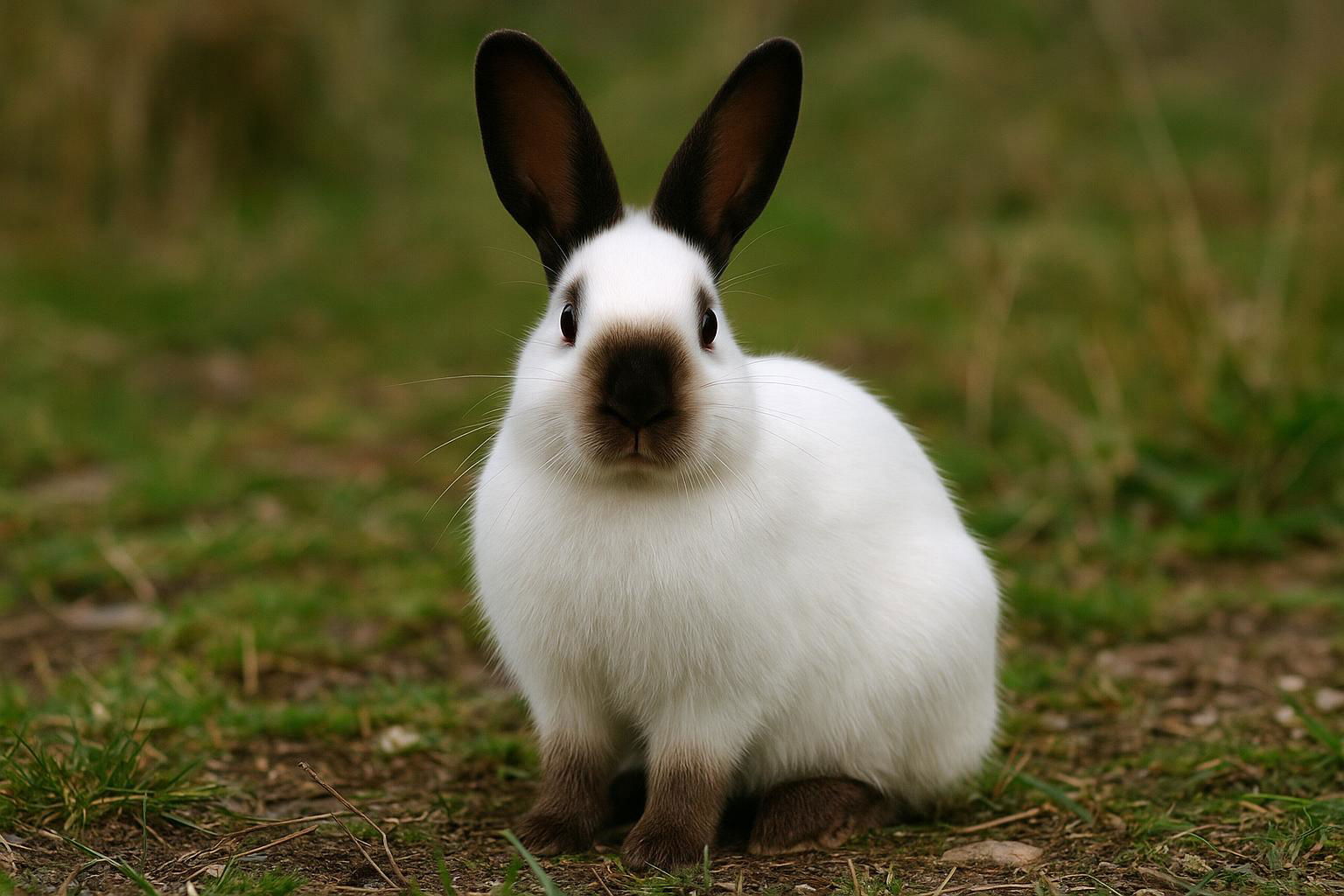
These rabbits possess an allele coding for the enzyme tyrosinase, which speeds up melanin production (the pigment that creates dark colouration).
Example
Case Study: Temperature-Sensitive Tyrosinase in Himalayan Rabbits
The key feature: Tyrosinase is heat-sensitive.
How it works:
- At normal body temperature, tyrosinase is inactive → no melanin is produced → the rabbit has white fur
- At low temperatures, tyrosinase becomes activated → melanin is produced → black fur forms
This explains why Himalayan rabbits have dark fur around their extremities (ears, nose, paws) - these areas are cooler than the rest of the body.
Important: In this example, temperature doesn't limit the expression of the gene that makes tyrosinase. The gene still produces the enzyme. Instead, temperature affects how well the tyrosinase protein functions - it either activates or inactivates the enzyme.
Epigenetics
What is epigenetics?
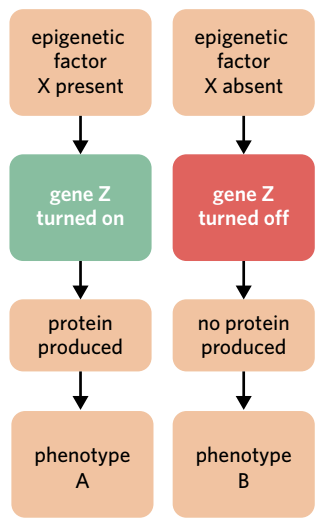
Epigenetics refers to changes to an organism's phenotype resulting from modifications to gene expression.
You've learned that phenotype results from interactions between genes and environment. Environmental factors usually modify protein performance. However, in some cases, environmental factors can cause changes that activate or deactivate gene expression itself. This affects the amount of protein produced, which then alters the phenotype.
Important
These changes are called epigenetic modifications. Think of epigenetics as a bridge between environment and genotype - environmental signals are translated into biochemical changes inside cells that increase or decrease gene expression.
Crucial point: Epigenetic factors influence gene expression by determining which genes are "turned on or off", but they do NOT alter the actual DNA sequence.
How does epigenetics work?
To understand epigenetics, you need to know the basics of gene expression:
Gene expression is the process of reading the information stored within a gene to create a functional product, typically a protein.
This occurs through two processes:
- Transcription: The process whereby a sequence of DNA is used to produce a complementary sequence of mRNA. The gene sequence is copied from DNA to create mRNA, which then moves from the nucleus to ribosomes.
- Translation: The process whereby an mRNA sequence is used to produce a protein. The mRNA instructs ribosomes how to build the specific protein.
Note
Epigenetic changes alter the transcription process. They are caused by molecules that increase or decrease how much transcription occurs for a particular gene, thereby altering protein production.
Two types of epigenetic modifications
DNA methylation
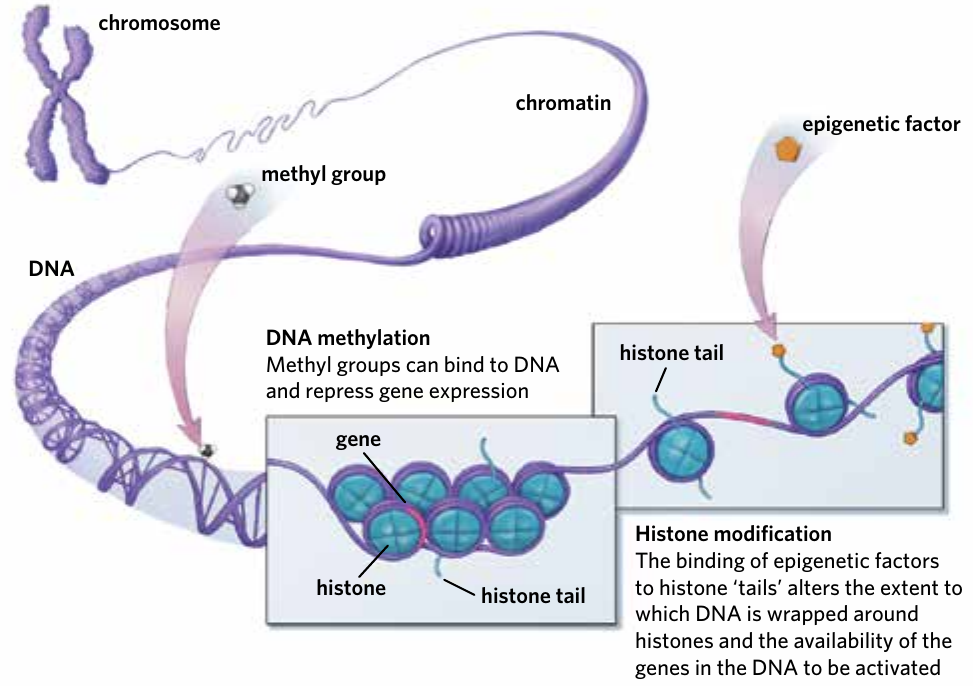
DNA methylation is the process by which methyl (-CH₃) groups are added to particular nucleotides in a DNA segment so as to modify the expression of a gene.
When methyl groups attach to certain nucleotides within a gene's DNA sequence, they typically silence that gene - reducing or stopping its expression.
Note
Think of methyl groups like molecular "OFF switches". When they attach to DNA, they tell cells "don't read this section", which means the associated proteins are not created.

DNA demethylation refers to the removal of methyl groups from DNA. This typically leads to gene activation and increased expression.
Histone modification
Histone modification occurs when specialised enzymes (called histone methyltransferases or HMT) attach methyl groups to histone tails. This changes how tightly DNA wraps around histones.
Remember that histone proteins act as spools around which DNA wraps to form chromatin structures.
Note
The effect of histone modification:
- DNA condensed tighter around histones → genes harder to transcribe → less likely to be expressed
- DNA less tightly packed around histones → genes easier to transcribe → more likely to be expressed
The importance of epigenetics
Epigenetics plays several essential roles in living organisms:
Controlling cell differentiation
Despite containing identical DNA, not all cells in your body are the same. Skin cells, bone cells, and muscle cells all look different and perform different functions.
The development of these specialised cell types is regulated largely by epigenetic mechanisms. These mechanisms:
- Turn off genes that aren't needed for that cell type
- Promote expression of genes required for specific functions
Enabling environmental responses
Epigenetic modifications provide a rapid feedback mechanism for organisms to respond to environmental changes.
Example
Example: Plant Heat Response
During hot weather, plants need proteins that reduce heat shock damage. High temperatures stimulate the genes for these proteins to demethylate, activating transcription and ensuring more heat-protective proteins are synthesised.
Case study: Fruit ripening
Epigenetic factors play important roles in agriculture, particularly in fruit growth and ripening.
Example
Case Study: Methylation Changes During Fruit Ripening
Research has found that during ripening, methyl group levels in fruit genomes drop by approximately 30%. This promotes the expression of genes involved in the ripening process.
The chemical trigger controlling this process in many fruits is the hormone ethylene, which can be manufactured as a gas for commercial use by farms.
Epigenetics across generations
Somatic heritability
Somatically heritable refers to genetic traits or alterations to a cell which are inherited by daughter cells during the course of regular mitotic cell division.
Epigenetic changes can be passed onto daughter cells during mitosis. This means they can affect an individual organism throughout its entire life.
Important
This is why identical twins become increasingly different as they age. Not only are their genes being switched on or off by exposure to different environmental factors, but those epigenetic changes are also passed onto new cells as the twins grow and regenerate tissues.
Inheritance through reproduction
Most epigenetic changes are erased when gametes (sex cells) are formed. This makes sense because epigenetic features aren't caused by alterations to the DNA sequence itself.
However, current research suggests that a small proportion of epigenetic changes accumulated over a lifetime may remain during gamete production. This means:
- Some epigenetic traits could pass to the next generation
- Your upbringing and life choices as a young adult might potentially impact your future children
Note
The ethical and legal implications of this research are significant, as we learn more about how environmental exposures can physically alter gene expression, cellular processes, phenotypes, and potentially gametes.
Theory summary
An organism's phenotype is determined by complex interactions between genes, environment, and epigenetic factors. Each has a proportionate influence over an individual's physical and biochemical characteristics.
| Factor | How it influences phenotype | Heritable? |
|---|---|---|
| Genes | • Genes carry the instructions necessary for the creation of proteins • These proteins, once created, will interact with each other and will contribute to the overall phenotype of the organism | Yes |
| Environment | • Environmental factors such as temperature, nutrition, and sunlight affect phenotype • They might directly affect physical appearance (e.g. dying hair a new colour) or affect the performance of proteins (e.g. tyrosinase in Himalayan rabbits) | No |
| Epigenetics | • Environmental factors can cause epigenetic modifications • These epigenetic modifications influence levels of transcription of a gene, often by methylation or histone modification • By affecting transcription, epigenetic modifications influence how much of a protein product is made | Somatically heritable, although some epigenetic changes may also be passed onto offspring during reproduction |
Summary
Key Differences Between Genes, Environment, and Epigenetics:
Genes carry instructions for protein creation. These proteins interact to produce the organism's phenotype. Genes are heritable - passed from parents to offspring.
Environment includes factors like temperature, nutrition, and sunlight. Environmental influences can directly affect appearance (like dyeing hair) or modify protein performance (like tyrosinase in Himalayan rabbits). Environmental changes are NOT heritable.
Epigenetics involves environmental factors causing epigenetic modifications that influence gene transcription levels, often through methylation or histone modification. By affecting transcription, epigenetics controls how much protein is made. Epigenetic changes are somatically heritable (passed to daughter cells during mitosis), and some may potentially be passed to offspring during reproduction.
Remember!
Summary
Key Points to Remember:
-
Phenotype = Genes + Environment + Epigenetics: Your observable traits result from complex interactions between your genetic material, environmental factors, and epigenetic modifications.
-
Proportionate heritability: Different traits have different balances of genetic versus environmental influence. Some traits are entirely environmental (hair dye), some entirely genetic (blood type), and most are a mixture (height, obesity risk).
-
Environmental factors usually modify protein function, not gene expression: Temperature, nutrition, and other environmental factors typically affect how well proteins work rather than how many proteins are made. The Himalayan rabbit is a perfect example - temperature affects tyrosinase enzyme activity, not tyrosinase production.
-
Epigenetics = molecular switches: DNA methylation and histone modification act as molecular switches that turn genes on or off without changing the DNA sequence. Methyl groups attached to DNA tell cells "don't read this section".
-
Epigenetic changes can last a lifetime and beyond: Epigenetic modifications are passed to daughter cells during mitosis (somatically heritable), which is why identical twins become more different as they age. Some epigenetic changes might even be passed to offspring, meaning your life experiences could potentially affect your children's gene expression.