Cloning (VCE SSCE Biology): Revision Notes
📚Revision Notes
Cloning
Introduction to reproductive cloning technologies
Reproductive cloning technologies are artificially induced human interventions designed to produce genetically identical clones. Unlike asexual reproduction, which is a natural process that creates genetic copies, reproductive cloning requires deliberate human involvement using completely different techniques. This artificial nature raises important ethical questions that must be carefully considered.
A clone is defined as a genetically identical organism or section of DNA.
Note
Whilst asexual reproduction and reproductive cloning both produce genetically identical offspring, reproductive cloning is distinguished by being an artificial process rather than a natural one.
Reproductive cloning technologies in animals
There are two primary methods used to clone animals: somatic cell nuclear transfer and embryo splitting.
Somatic cell nuclear transfer (SCNT)
Somatic cell nuclear transfer (SCNT) is the transference of a somatic cell nucleus into an enucleated egg cell.
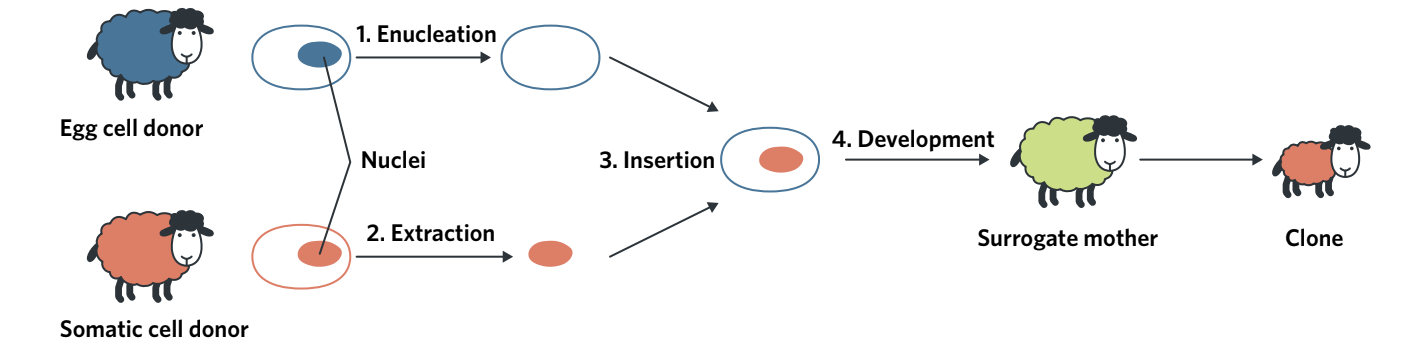
The SCNT process
This technique requires two different cells from separate animals: an egg cell and a somatic cell. The procedure follows four distinct stages:
- Enucleation – The nucleus is removed or destroyed from the donated egg cell, creating an enucleated egg cell (a cell that has had its nucleus removed or destroyed).
- Extraction – The nucleus is removed from the donated somatic cell.
- Insertion – The somatic cell nucleus is transferred into the enucleated egg cell.
- Development – The reconstructed cell begins dividing and developing into an embryo. This embryo is then implanted into a surrogate mother, where the pregnancy proceeds normally.
Note
The offspring produced through this method is genetically identical to the animal that donated the somatic cell, as both share the same nuclear genetic material.
Applications of SCNT
Scientists have successfully used SCNT to clone various living and recently deceased animals, including sheep, dogs, and monkeys. The most renowned example is Dolly the sheep, who became the first mammal cloned using SCNT in 1997.
Beyond cloning living animals, researchers are exploring the possibility of reviving extinct species. For instance, scientists attempted to bring back the Pyrenean ibex, which became extinct in 2000. Unfortunately, the cloned animal survived only a few minutes after birth due to lung defects. Such attempts continue to generate debate about which extinct species should be cloned and whether we should attempt this at all.
Note
Therapeutic cloning represents another application of SCNT. Instead of creating a whole organism, embryonic stem cells are harvested from the developing embryo. These pluripotent stem cells can differentiate into many specialised cell types, offering potential medical treatments that carry minimal rejection risk since the tissues are genetic clones of the patient.
Complications of SCNT
Despite the success of Dolly, SCNT technology remains relatively new with significant room for improvement. Several unresolved issues continue to surround its use:
Important
Animal suffering: SCNT attempts frequently fail, producing non-viable embryos or resulting in miscarriage. Animals that survive to birth often suffer severe developmental abnormalities and have much shorter life expectancies than naturally conceived offspring. This occurs because the somatic cell nucleus must be reprogrammed back to an embryonic state. However, since the somatic cell is fully differentiated, it contains epigenetic alterations and DNA damage that must be reversed to match embryonic conditions. This reprogramming rarely occurs correctly, making SCNT inefficient and prone to causing developmental abnormalities. For example, over 250 attempts were required before successfully cloning Dolly. These high failure rates have led some to argue against SCNT due to the suffering it may inflict on offspring.
Important
Human cloning: The application of SCNT in humans is currently illegal in many countries, including Australia. Ethical arguments against human SCNT include concerns about the mass destruction of egg cells and embryos from failed attempts, as well as issues surrounding the unethical sourcing of eggs.
Note
Premature ageing: Although sheep of Dolly's species typically live up to 12 years, Dolly was euthanised after only 6 years when she developed a severe lung infection. She also developed arthritis during her lifetime, a disease more common in older animals. This led many scientists to suggest that clones age faster due to telomere shortening. However, recent scientific evidence questions whether cloned animals actually age at a greater rate than non-cloned animals, despite their apparent susceptibility to age-related diseases.
Embryo splitting
Embryo splitting is the division of an early embryo into several individual embryos.
The embryo splitting process
After successful fertilisation of an egg cell, the cell typically begins dividing to form an embryo and then a complete organism. However, if an embryo is divided during early embryonic development, each individual section will develop as an independent embryo. This makes it possible to produce two or more genetically identical offspring.
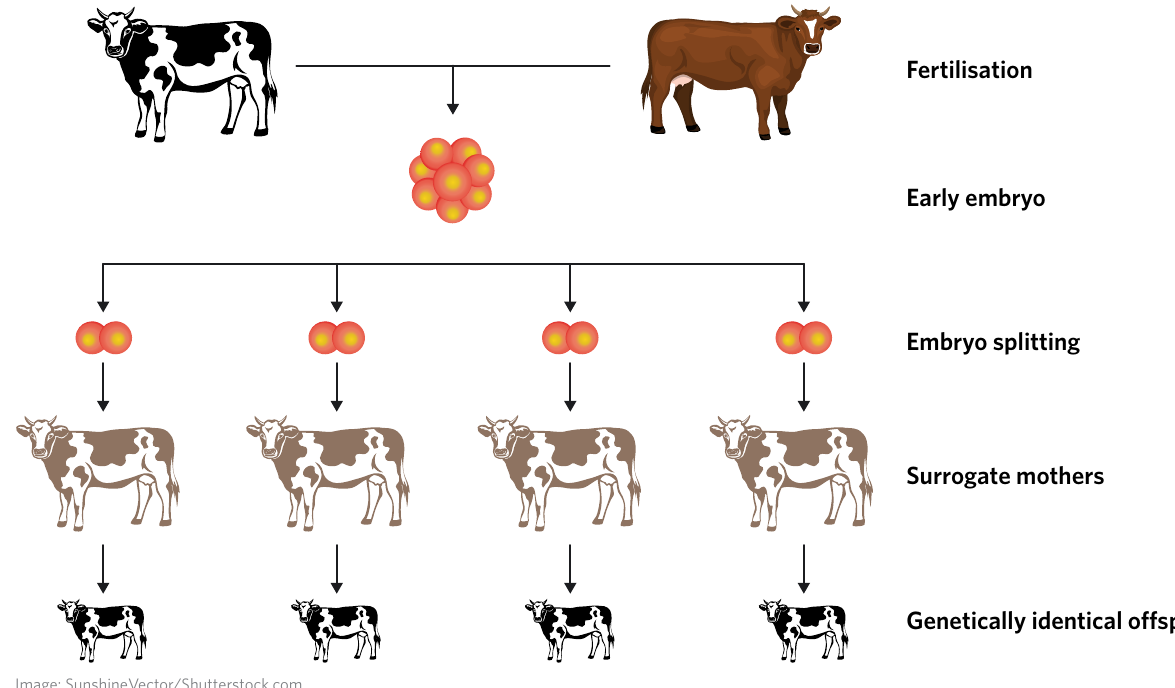
Whilst this process occurs naturally in humans when identical twins form, embryos are often artificially split for agricultural purposes. The ideal time for splitting is when the early embryo consists of 6-8 cells. At this stage, the cells are still totipotent, meaning they are capable of developing into viable embryos.
The split embryos are implanted into surrogate mothers where embryonic development continues. Each individual is genetically identical to the original embryo.
Applications of embryo splitting
In agriculture, embryo splitting is frequently combined with in-vitro fertilisation (IVF) – the fertilisation of an egg outside of the body. This allows scientists to selectively choose eggs and sperm from parents with desirable characteristics and fertilise them in a laboratory setting.
Example
Agricultural Application: Selective Breeding
Farmers may select cows and bulls based on desirable traits such as high milk production or increased muscle mass. The resulting embryo can then be split to produce multiple genetically identical offspring, all possessing the desirable characteristics.
Complications of embryo splitting
The use of embryo splitting raises several ethical concerns:
Important
Alteration of embryos: There is disagreement about whether embryo alteration is acceptable. Some believe it is permissible, whilst others argue that embryos are sacred and should never be altered.
Important
Genetic diversity: Producing genetically identical offspring decreases the genetic diversity of a population. This reduction can potentially make the population more susceptible to disease and environmental changes.
Note
Research animals: The ability to produce large numbers of cloned animals could lead to the commercialisation and objectification of research animals, where they are treated more as objects than living beings. This may result in increased levels of abuse and mistreatment. Additionally, research animals with higher levels of cognitive functioning may experience more stress as they are more conscious of researchers' actions.
Reproductive cloning technologies in plants
There are three main reproductive cloning technologies used in plants: plant tissue culturing, cutting, and grafting.
Plant tissue culturing
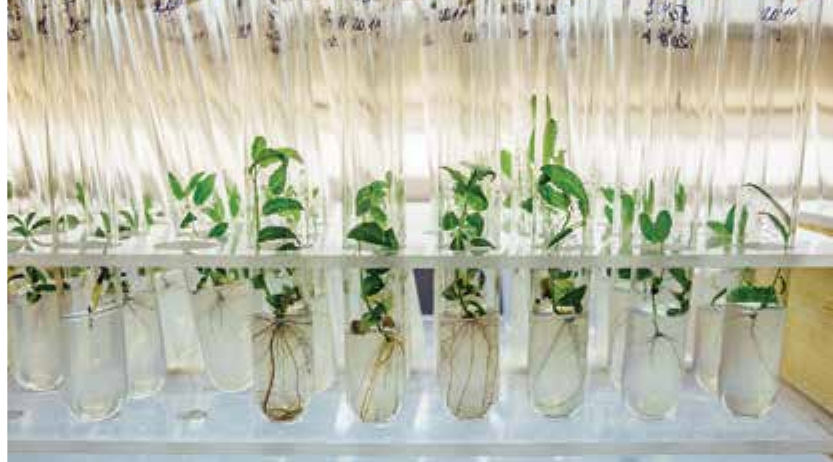
Plant tissue culturing, also known as micropropagation, is the cloning of plant cells on a nutrient culture medium in a controlled environment.
Plant cells obtained from a leaf, shoot, or stem are grown on a nutrient culture medium under sterile conditions. The environment is carefully regulated, with close monitoring of lighting, temperature, and hormone and nutrient availability. As the tissue culture develops, a callus (a mass of plant cells) begins to form. This callus can then be separated into several individual cultures and stimulated to grow into clones of the original plant.
Applications of plant tissue culturing
Unlike plants grown in the wild, those produced from plant tissue cultures have their environment closely monitored and regulated. This enables year-round plant production in a disease-free environment. Applications include producing clones for agricultural research and allowing conservation groups to clone rare and endangered plants to prevent extinction.
Plant cuttings
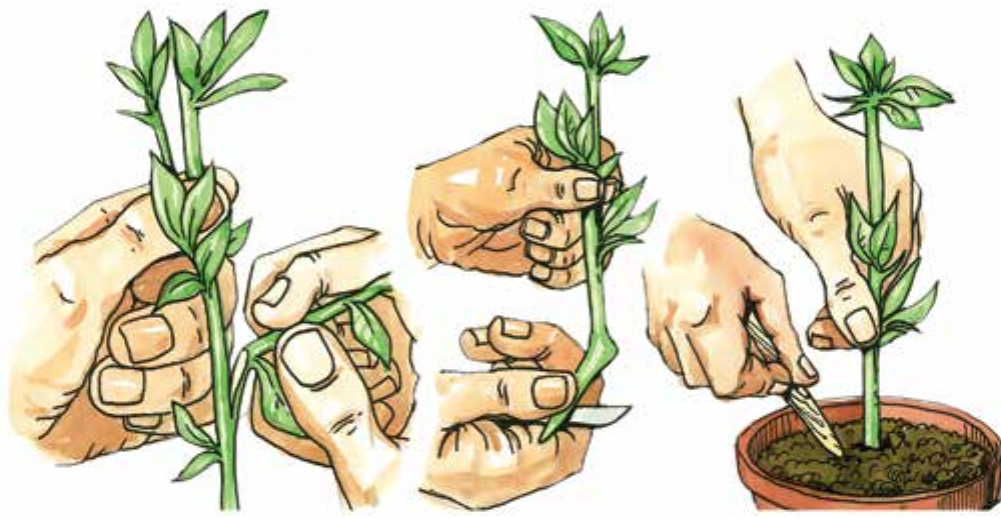
Plant cutting is the growth of plants using a fragment of the original.
A fragment of a plant, such as a leaf, stem, or root, is removed and planted in soil or water. Under the correct conditions, the cutting will grow and produce a clone of the original plant.
Plant grafting
Plant grafting is the attachment of two individual plant stems together.
This technique involves attaching the stem of one plant (the scion – the upper stem of a plant used in grafting) to the stem of another plant with an already developed root system (the rootstock – the lower stem of a plant with a well-developed root system). Eventually, the two sections of the individual plants grow and fuse together, producing a clone of the plant from which the scion was taken.
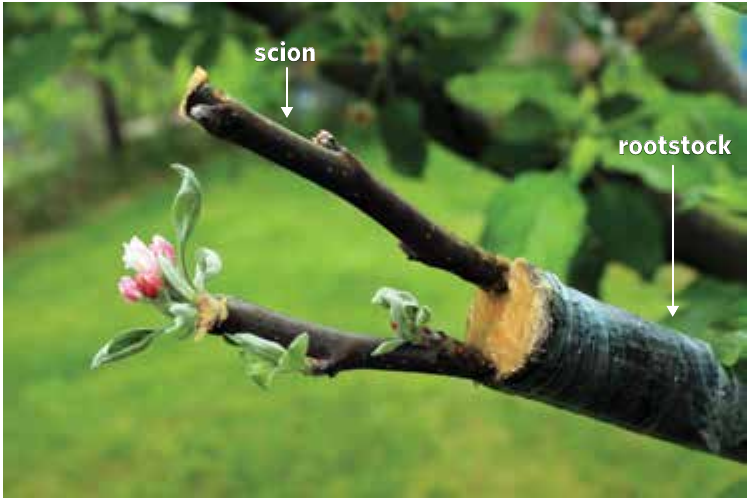
Applications of cutting and grafting
Compared with other plant cloning technologies, cutting and grafting are relatively old techniques. Both methods allow for rapid growth of a desired plant. Grafting offers additional benefits, often providing plants with cold tolerance, resistance to disease, and increased productivity.
Biological implications of plant cloning
Important
Similar to reproductive cloning technologies in animals, unrestrained plant cloning could lead to reduced genetic diversity. Consequently, a cloned plant population is more susceptible to disease, pests, and environmental change than a natural population with high genetic diversity.
Case study: Bananas and Panama disease
Panama disease is a lethal fungal disease caused by Fusarium oxysporum which affects banana trees. It interferes with water movement within the xylem, leading to wilting and death of entire banana plantations.
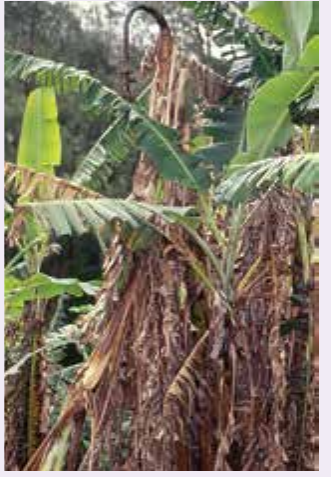
Note
Two races of F. oxysporum affect banana trees: 'Race 1' and 'Tropical Race 4' (TR4).
Until the 1950s, the main commercial banana sold was the Gros Michel banana. However, the appearance of 'Race 1' completely devastated banana plantations, prompting farmers to cultivate another species – Cavendish bananas – which are found on supermarket shelves today.
Recently, the emergence of 'Tropical Race 4' has begun to worry researchers who fear history will repeat itself. Currently, there are no effective pesticides or antifungals to combat the infection. In 2015, TR4 reached Australia, affecting one of the largest banana plantations in Queensland's Tully Valley. This led to the farm's closure and destruction of all infected banana plants to prevent further transmission. Since then, TR4 has reappeared multiple times.
Important
Why are bananas so susceptible to disease?
Commercial bananas are seedless and cannot reproduce sexually. Instead, they must be produced through reproductive cloning techniques. Banana trees are produced either through tissue culturing or by dividing an existing banana tree into many separate segments for planting. Therefore, virtually all Cavendish bananas grown today are genetically identical, leaving them exceptionally vulnerable to disease.
Remember!
Summary
Key Points to Remember:
-
Reproductive cloning technologies are artificial human interventions that produce genetically identical organisms, unlike natural asexual reproduction.
-
Animal cloning uses two main techniques: SCNT (transferring a somatic cell nucleus into an enucleated egg cell) and embryo splitting (dividing early embryos into multiple identical embryos).
-
Plant cloning employs three methods: tissue culturing (growing plant cells in controlled conditions), cuttings (growing plants from fragments), and grafting (fusing a scion to a rootstock).
-
Ethical concerns surround cloning technologies, including animal suffering, human cloning debates, embryo alteration, and research animal welfare.
-
Genetic diversity reduction is a major consequence of cloning, making cloned populations more vulnerable to disease, pests, and environmental changes – as demonstrated by Cavendish bananas' susceptibility to Panama disease.