Stem Cells (VCE SSCE Biology): Revision Notes
📚Revision Notes
Stem Cells
Introduction
Cells in our body, such as heart cells, skin cells, and neurons, don't simply appear out of nowhere. Every cell in your body started as a stem cell. Through a process called differentiation, these unspecialised cells develop into the many different types of specialised cells that make up your tissues and organs.
Note
Consider this example: red blood cells lack a nucleus, which means they cannot divide through mitosis to create more red blood cells. Yet your body constantly produces new red blood cells to replace those that die. Where do these replacement cells come from? The answer lies in stem cells found in your bone marrow.
What is a stem cell?
A stem cell is an undifferentiated cell with the capability of differentiating into specialised cells. Differentiation is the development of a stem cell into a specialised cell with a particular function. Specialised cells serve a unique, particular function in the body.
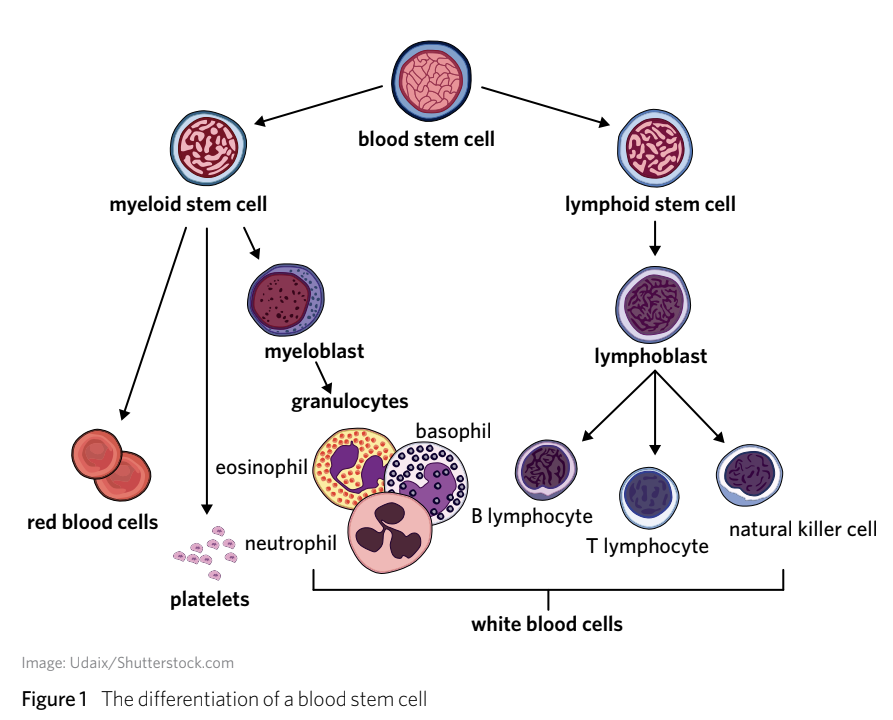
For instance, blood stem cells in your bone marrow can give rise to several different types of blood cells, including platelets, red blood cells, and white blood cells. The diagram below shows this differentiation pathway.
Two key properties of stem cells
To be classified as a stem cell, a cell must possess two essential characteristics:
| Property | Description |
|---|---|
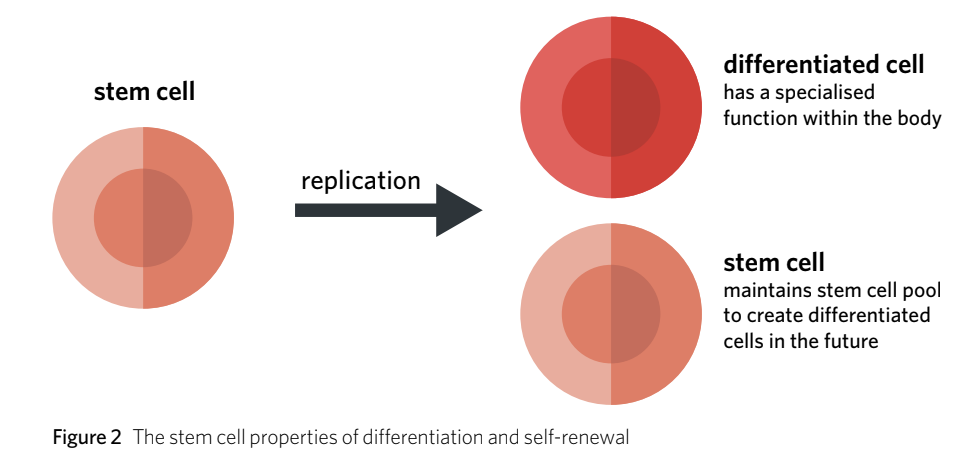
| Self-renewal | Stem cells have the capacity to replicate without disrupting their ability to differentiate. When a stem cell divides, it produces both a differentiated cell and a copy of itself. This maintains the stem cell pool for future use. |
| Potency | Stem cells are undifferentiated cells which can give rise to differentiated cells with a specialised function. Potency refers to the range of cell types a stem cell can become. |
Important
The process of self-renewal is crucial because it means that even as stem cells produce specialised cells, they also maintain a reserve population of stem cells for future needs. When a stem cell replicates, one daughter cell differentiates into a specialised cell with a specific function, whilst the other daughter cell remains as a stem cell to continue producing more cells in the future.
Potency of stem cells
Not all stem cells have the same capabilities. Some can develop into any type of cell in the body, whilst others are more limited in their potential. We categorise stem cells based on their potency, which measures their capacity to differentiate into different cell types. The greater the number of cell types a stem cell can produce, the higher its potency.
There are three main categories of stem cell potency:
| Potency | Description | Examples |
|---|---|---|
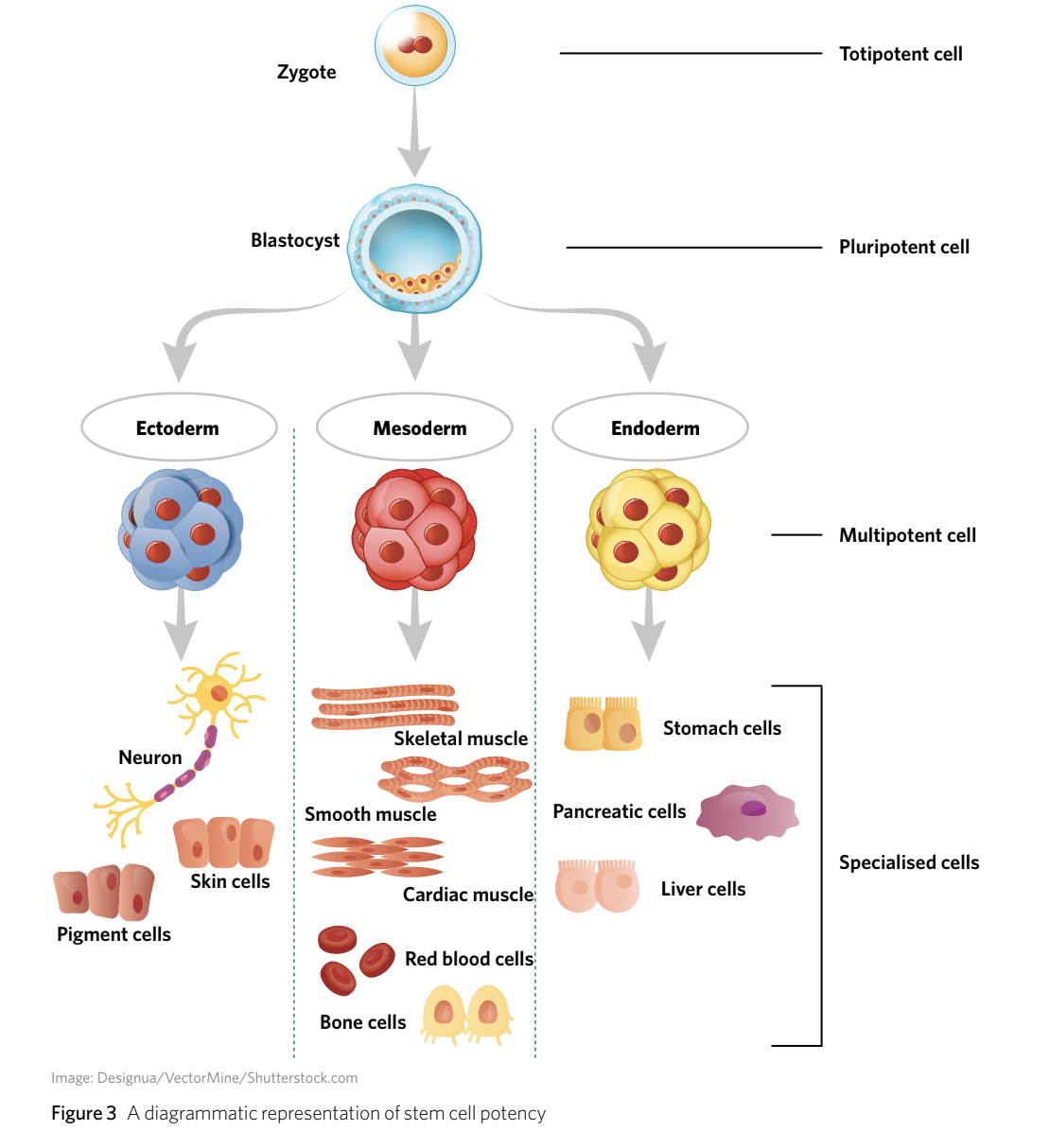
| Totipotent | Stem cells that can differentiate into any cell type | The zygote, which is the diploid cell formed by the combination of two haploid gamete cells. This single cell, produced when sperm fertilises an egg, can differentiate into placental cells and any of the cells required to build a foetus (a human embryo after 8 weeks of development). |
| Pluripotent | Stem cells that can differentiate into multiple cell types | Embryonic stem cells, which are pluripotent stem cells present during the early stages of human development. These cells can differentiate into all cell types of the body (except the placenta) via three distinct germ layers called the mesoderm, endoderm, and ectoderm. |
| Multipotent | Stem cells that can differentiate into a limited number of specialised cell types belonging to a specific tissue or organ | Blood stem cells (haematopoietic stem cells) in the bone marrow (semi-solid tissue found within bones that serves as the primary site of the creation of red blood cells and leukocytes). These can differentiate into various blood cells including red blood cells, white blood cells, and platelets. Mesenchymal stem cells, also in bone marrow, can differentiate into bone cells, cartilage cells, muscle cells, and fat cells. |
Note
Potency Hierarchy: Remember that potency decreases as cells become more specialised:
- Totipotent → can become any cell type (including placenta)
- Pluripotent → can become many cell types (all body cells except placenta)
- Multipotent → can become a limited number of related cell types
Totipotent and pluripotent stem cells
The most versatile stem cells are totipotent cells. The zygote, formed at fertilisation, is the only truly totipotent cell in human development. It can develop into any cell type needed to create a complete organism, including both the embryo and the placental tissues.
As the zygote divides and develops into a blastocyst (an early-stage embryo), the cells become pluripotent rather than totipotent. Pluripotent embryonic stem cells cannot form placental tissue, but they can still differentiate into all other cell types in the body.
Multipotent stem cells and germ layers
Pluripotent embryonic stem cells differentiate through three primary germ layers:
- Ectoderm: gives rise to neurons, skin cells, and pigment cells
- Mesoderm: develops into skeletal muscle, smooth muscle, cardiac muscle, red blood cells, and bone cells
- Endoderm: forms stomach cells, pancreatic cells, and liver cells
Multipotent stem cells are more specialised than pluripotent cells. They can only differentiate into a limited range of cell types, usually within a specific tissue or organ system. For example, blood stem cells in your bone marrow are multipotent—they can produce different types of blood cells, but they cannot become nerve cells or muscle cells.
Example
Real-World Application: Red Blood Cell Replacement
Red blood cells die at a rate of approximately two million cells per second, and stem cells in the bone marrow constantly replenish them at an equal rate. This demonstrates why stem cells are so vital for maintaining healthy body function.
Summary
Key Points to Remember:
- Stem cells are undifferentiated cells that can develop into specialised cells through the process of differentiation.
- Self-renewal allows stem cells to divide and produce both a specialised cell and another stem cell, maintaining the stem cell population.
- Potency describes the range of cell types a stem cell can become: totipotent cells can become any cell type, pluripotent cells can become many cell types, and multipotent cells can become a limited number of related cell types.
- The zygote is the only totipotent cell in human development and can form all cell types including placental tissue.
- Embryonic stem cells are pluripotent and differentiate through three germ layers (ectoderm, mesoderm, and endoderm) to form all body tissues except the placenta.