Testing for Salts in Water (VCE SSCE Chemistry): Revision Notes
📚Revision Notes
Testing for Salts in Water
Introduction to salinity
Salinity refers to the concentration of salts dissolved in water. While sodium chloride (NaCl) is commonly called "salt," in the context of water and soil chemistry, the term salt refers to any ionic compounds present in the system.
Note
Lake Eyre: An Extreme Example
Lake Eyre in South Australia provides a dramatic demonstration of salinity. This large inland salt lake sits approximately 15 metres below sea level, making it Australia's lowest natural point. When the lake contains water (which happens rarely), the salt concentration is extremely high. When the lake dries up, thick salt deposits remain on the lake bed.
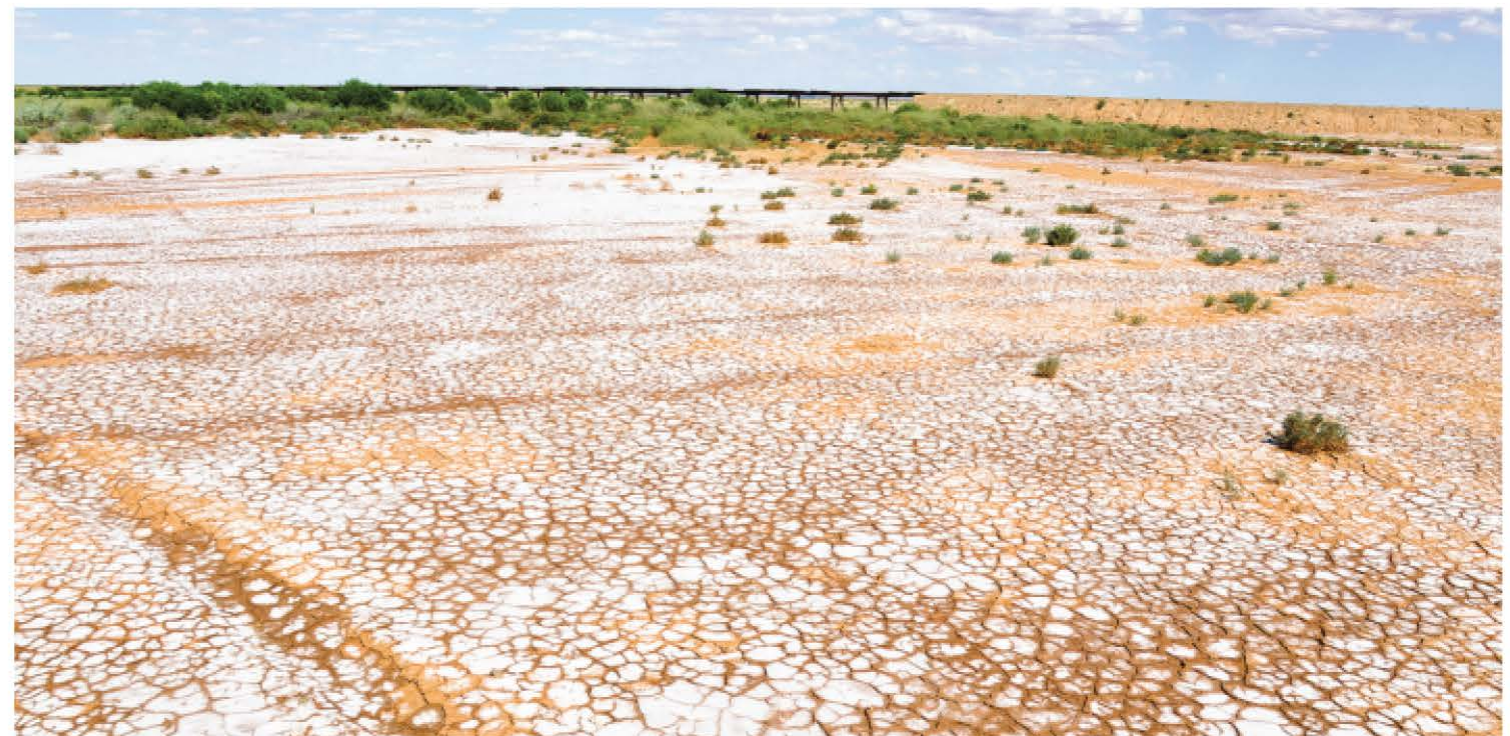
The centre of Australia was once submerged under an ancient ocean, which explains the presence of salt in locations like Lake Eyre.
Understanding where salts in water come from, and how to test for them, is essential for managing water quality and environmental health.
Sources of salts in water
Salts enter water and soil systems through both natural processes and human activities. The main sources include minerals, heavy metals, and organometallic substances.
Salts from minerals
Salts occur naturally in water and soil systems. As part of the water cycle, water flows through soil and rocks, dissolving solid mineral deposits. These dissolved salts are then transported into lakes, rivers, creeks, and other water bodies.
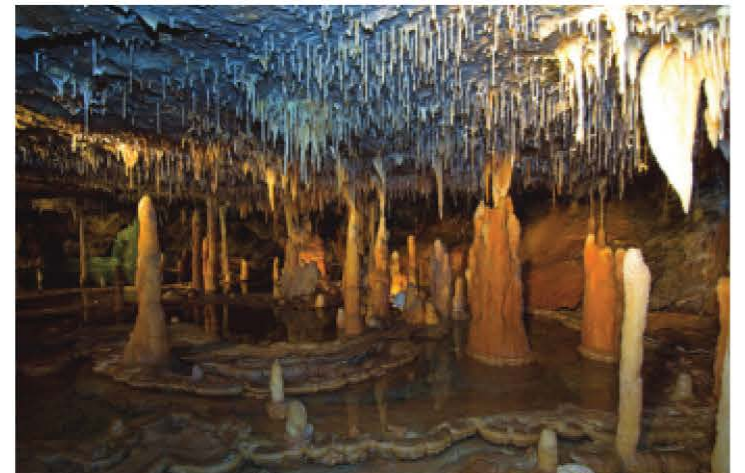
The region near Buchan in Gippsland, Victoria, was submerged under the ocean millions of years ago. During that time, remains of marine organisms containing calcium carbonate () accumulated. These deposits eventually formed limestone. Spectacular caves formed when underground rivers cut through the limestone rock. The formations in these caves were created by rainwater dissolving and redepositing limestone over time.
Note
Victorian Examples of High Mineral Concentrations
-
Hepburn Springs: Famous for mineral water springs where tourists bathe in hot pools containing high levels of minerals. The ions present include , , , , , , and .
-
Wimmera Mineral Sands: The sandy soil in north-west Victoria contains significant levels of zirconium and titanium minerals, which are commercially extracted by Iluka Mines.
-
Pittong clay mine: The soil near Pittong in Central Victoria contains high levels of clay minerals. Pittong clay is a mixture of pittongite (a clay mineral containing tungsten) and kaolin (a white clay used in cosmetics and pottery).
Salts from human activity
Human activities can significantly increase salt levels in water and soil. In most cases, this addition is considered pollution. The main sources include:
Mining
Mining industries use large volumes of water to process extracted materials. Some of this water, still containing various ions, may be discharged back into local waterways. Dust from mining sites can also be carried by wind and rain onto land, contaminating soil.
Agriculture
Most farms use fertilisers to improve crop yields. When rain falls, some fertiliser dissolves and may be transported to waterways through runoff. Common fertilisers used in Australia include:
- Ammonium nitrate ()
- Ammonium sulfate ()
- Superphosphate ()
These fertilisers can contribute to excess nutrients in waterways, particularly rivers and lakes.
Important
Salinisation from Irrigation
Excessive irrigation can cause groundwater levels to rise to the surface. Salt from ancient inland seas deep underground dissolves into the groundwater, leading to salty water accumulating on the soil surface. The soil then becomes too saline to grow crops.
Domestic sources
Until recently, most detergents contained softening agents made from phosphate compounds. Discharge from washing machines and sinks therefore added metal cations and anions (such as phosphate) to water systems.
Phosphate is a nutrient for plants and leads to excessive algae growth in waterways, known as algal blooms. The growth of algal blooms due to excess nutrients causes a significant problem called eutrophication.
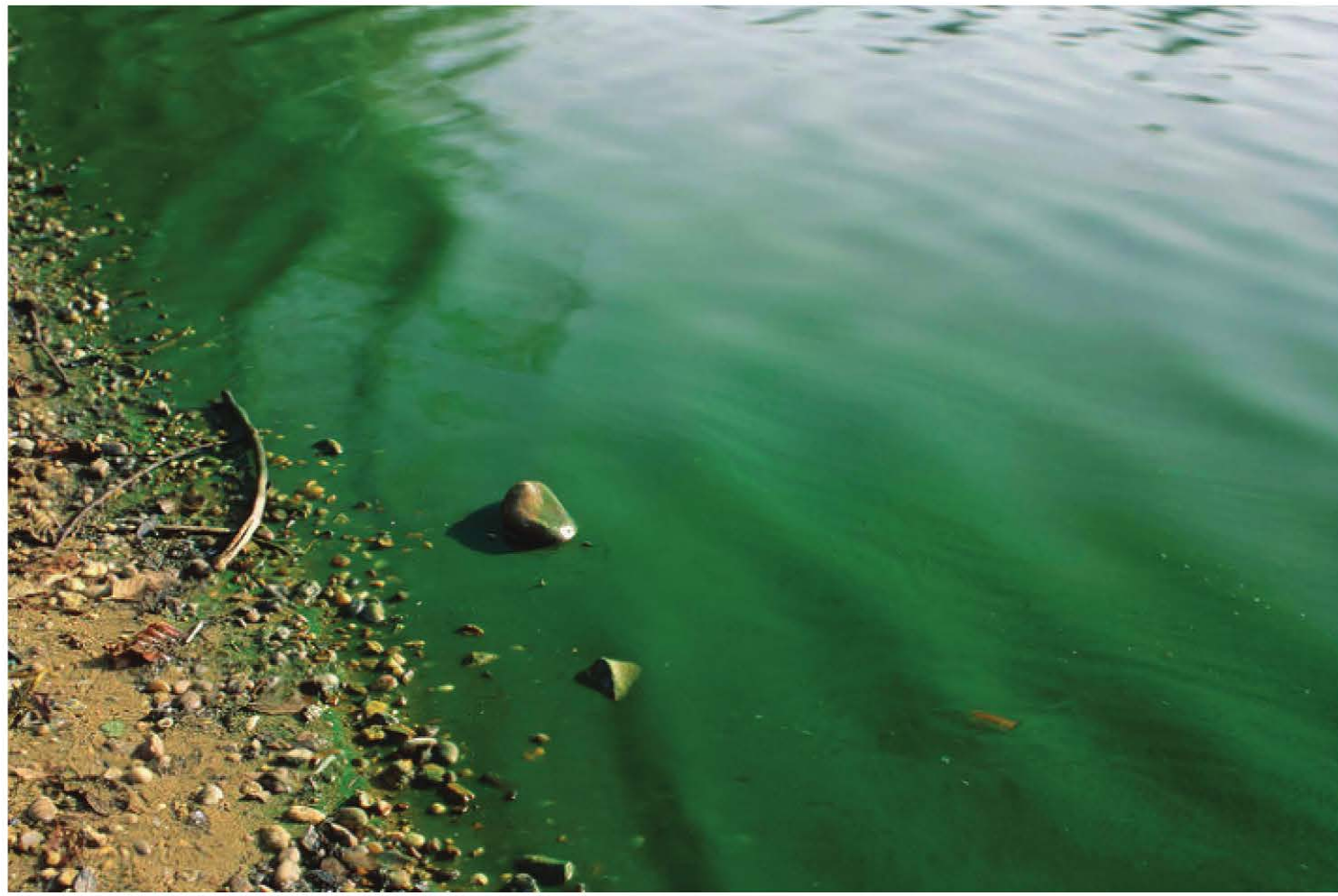
When eutrophication occurs in waterways, oxygen concentration drops below the levels fish need to survive, leading to mass fish deaths. Blue-green algal blooms, such as Nodularia, can produce highly toxic substances that make water unusable.
Note
Good News: Phosphate-Free Detergents
Most Australian laundry detergents became phosphate-free by 2014. Major companies and supermarkets agreed to phase out the environmentally damaging ion from their products. Zeolites are now widely used as replacements. These are aluminosilicate minerals with large numbers of small pores (diameters smaller than 2 nm) and extremely high surface areas. Calcium and magnesium in hard water bind to the zeolite surface, removing these cations from the water.
Sewage treatment plants
All cities have treatment plants to process effluent (sewage) and grey water (non-sewage water waste from homes and businesses). Although this water is treated to remove harmful contaminants, the discharged water may still contain various ions similar to those from domestic sources.
Stormwater
In urban environments, rainfall lands on hard surfaces such as car parks, rooftops, and roads. Any material on these surfaces is transported by rain into waterways through stormwater pipes. This can include physical rubbish, soil, dust, animal faeces, and petrochemicals.
Industry
Industrial processes commonly produce wastes containing salts. Unfortunately, these wastes have sometimes been inappropriately disposed of in waterways or soil, especially in the past when environmental impacts were unknown or ignored. Many sites around Victoria have contaminated soil, some dating back to industries from the late 1800s and early 1900s.
Heavy metal salts
What are heavy metals?
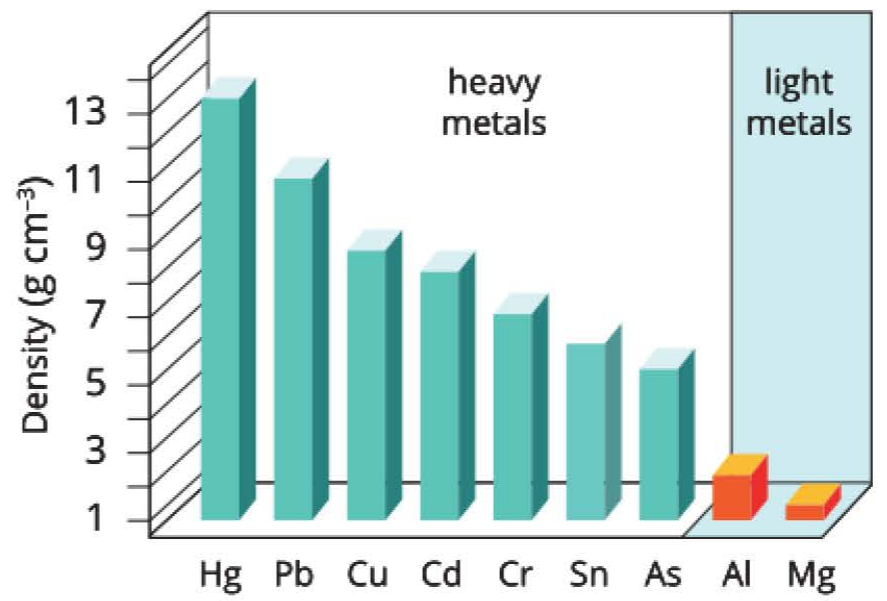
Heavy metals are usually described as metals with high density that have toxic effects on living organisms. Examples include cadmium, lead, chromium, copper, and mercury. Some metalloids, including arsenic, are also commonly included in lists of heavy metals due to their high toxicity. Some scientists also regard aluminium ions in solution as toxic.
The diagram below compares the densities of heavy metals with lighter, non-toxic elements such as aluminium and magnesium.
Heavy metals occur naturally within the Earth's crust. Their salts can dissolve into rivers and groundwater, making their way into drinking water supplies. Usually, concentrations from natural sources are very low. However, heavy metals are often used in industry, and various human activities can result in elevated levels in the environment.
Sources and health effects
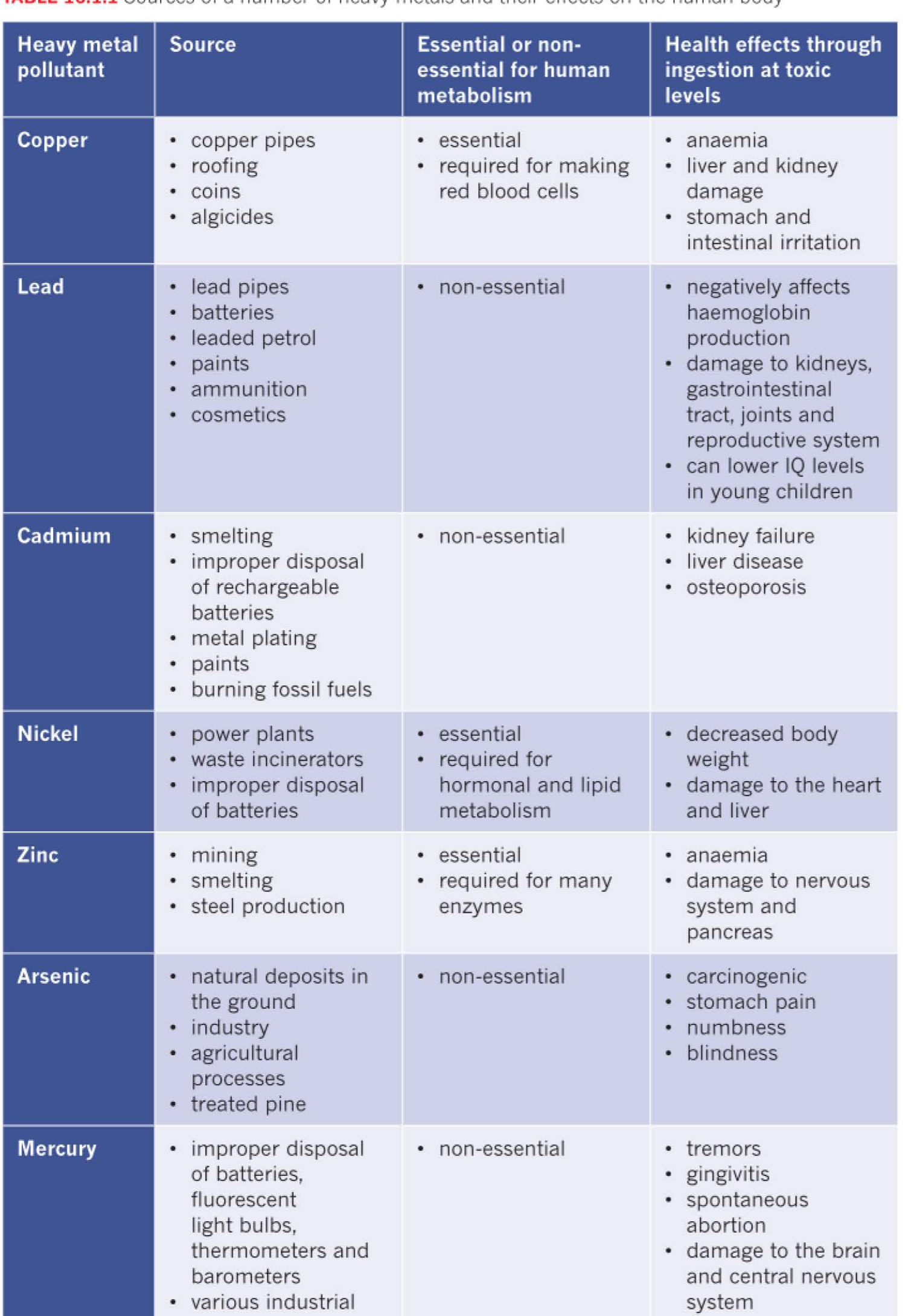
The table below shows common heavy metal pollutants, their sources, whether they are essential for human metabolism, and their health effects when ingested at toxic levels.
Important
Key Health Effects of Heavy Metals
-
Copper is essential for making red blood cells but causes anaemia, liver and kidney damage, and intestinal irritation at toxic levels.
-
Lead is non-essential and negatively affects haemoglobin production. It causes damage to kidneys, gastrointestinal tract, joints, and reproductive system, and can lower IQ levels in young children.
-
Cadmium is non-essential and causes kidney failure, liver disease, and osteoporosis.
-
Nickel is essential for hormonal and lipid metabolism but causes decreased body weight and damage to heart and liver at toxic levels.
-
Zinc is essential for many enzymes but causes anaemia and damage to nervous system and pancreas at toxic levels.
-
Arsenic is non-essential, carcinogenic, and causes stomach pain, numbness, and blindness.
-
Mercury is non-essential and causes tremors, gingivitis, spontaneous abortion, and damage to brain and central nervous system.
Heavy metal ions are released into the environment in two main ways:
- Directly through human activity: Released directly into waterways through waste from industries such as metal processing and mining. Other sources include leachate (water containing toxic substances) from landfill sites and agricultural runoff.
- Via atmospheric reactions: Combustion of fuels and wastes containing heavy metals releases these ions into the atmosphere where they interact with water molecules. Rain then carries the dissolved salts into soils, rivers, and groundwater.
Important
Critical Warning
Once released into the environment, heavy metals persist and accumulate. They are only toxic to living organisms when present as cations in water-soluble compounds, or as organometallic compounds.
Bioaccumulation
Problems caused by heavy metals in the environment worsen when they increase in concentration through food chains. The build-up of heavy metals in higher-order predators is called bioaccumulation.
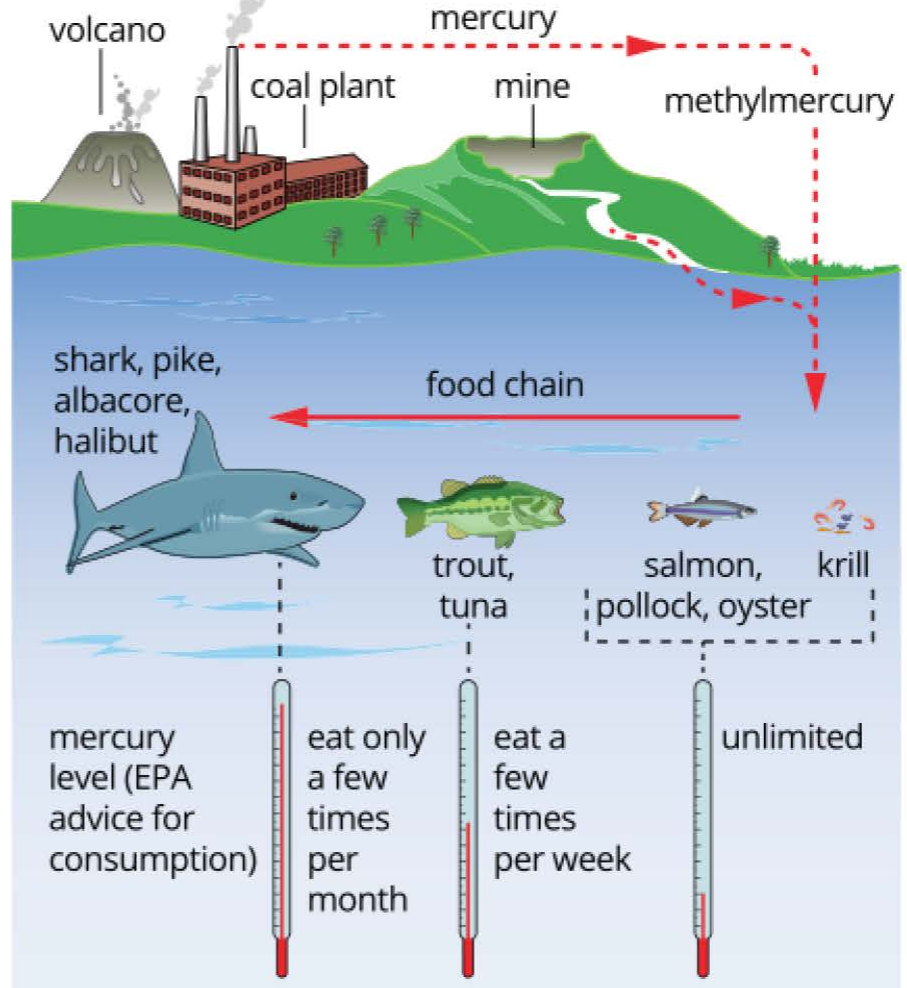
As living organisms have no way of removing heavy metals from their cells, the concentration increases in species higher up the food chain. The diagram shows how mercury from sources like volcanic eruptions, fossil fuel burning, and mining accumulates through the aquatic food chain, from krill to small fish to larger predatory fish.
Note
EPA Consumption Guidelines for Seafood
The US Environmental Protection Agency (EPA) provides consumption advice based on mercury levels:
- Low-mercury seafood (salmon, pollock, oyster): unlimited consumption
- Medium-mercury fish (trout, tuna): eat a few times per week
- High-mercury predatory fish (shark, pike, albacore, halibut): eat only a few times per month
Case study: Lasting impact of heavy metals
Example
Case Study: The Minamata Disaster
The Minamata disaster in Japan during the 1950s clearly demonstrated the wide-ranging and long-term effects of heavy metal poisoning. A factory in the small fishing village of Minamata discharged toxic waste containing methylmercury into the local bay. The main diet of local people consisted of seafood caught in the contaminated bay.
First Signs: The first indication of a problem was the erratic behaviour of local cats that were seen "dancing" down the streets before collapsing and dying. This strange behaviour resulted directly from mercury poisoning, which causes neurological disorders and eventually death.
Human Impact: Neurological symptoms also appeared in the local population, with many residents suffering irreversible brain and organ damage. Many people died from the high levels of mercury they unknowingly ingested. Originally referred to as "Minamata disease," the neurological effects were eventually determined to be the direct result of mercury poisoning.
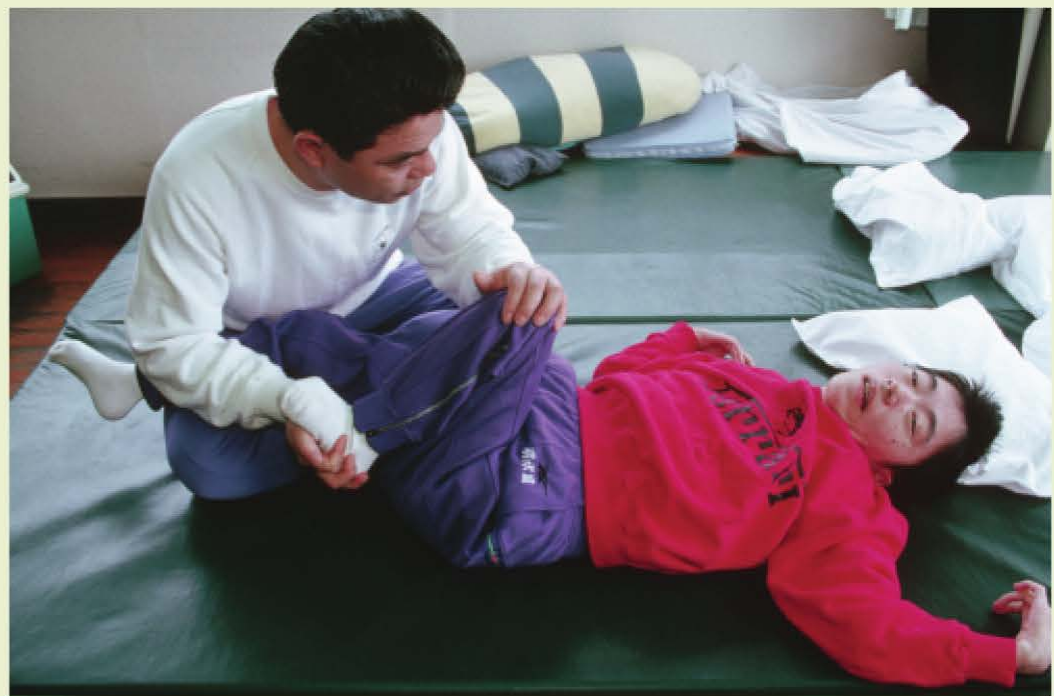
Long-term Consequences: The Minamata area residents still struggle with highly toxic mercury levels today. The accumulated mercury in people also led to the development of congenital disorders in children born to parents suffering from Minamata disease.
Important
Exam Tip
Even amounts as small as 24.8 ppm (24.8 mg L⁻¹) of heavy metals can be deadly. Governments closely monitor heavy metal levels in waterways because of their severe health impacts.
Organometallic compounds
Organometallic compounds are substances that have at least one direct bond between a metal atom (or ion) and a carbon atom. If the metal has very low electronegativity, this bond may be very polar, almost ionic. These compounds are usually synthetic substances used in industry as catalysts or reagents in chemical processes.
Tetraethyl lead
An example of an organometallic compound is tetraethyl lead (), shown below. This molecule has four bonds between a lead atom and the carbon atom of an ethyl group.
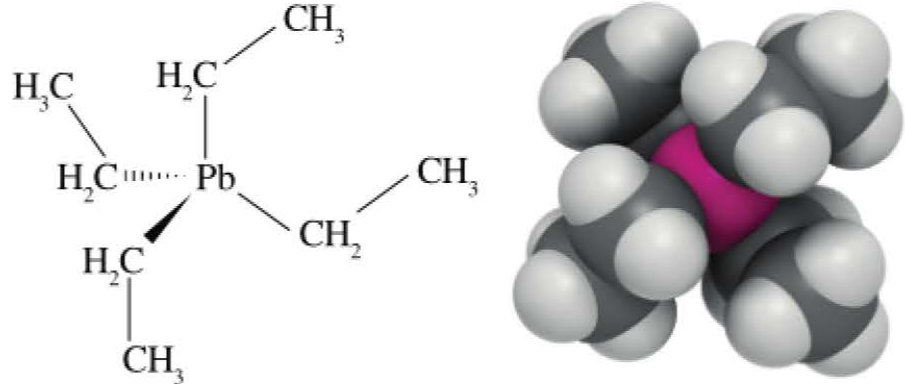
Tetraethyl lead was added to petrol in Australia for many years to improve the smoothness of combustion in car engines. It is now banned because lead levels near busy roads were affecting the health of local residents. Lead emissions from cars deposit on nearby soils and can enter nearby waterways.
Important
The toxicity of tetraethyl lead results from the toxic lead it contains and the ease with which the molecule enters cells.
Methylmercury
Methylmercury is an organometallic cation with the formula . In methylmercury, a methyl group is bonded to a mercury(II) ion. Methylmercury combines with anions to form organometallic salts such as methylmercury chloride and methylmercury hydroxide.
Methylmercury compounds are formed in some industrial processes, such as ethyne production, but they also form when mercury-containing compounds are burnt. Methylmercury compounds are more toxic than mercury itself because they can be easily transported around the human body in the same way as proteins.
Hard water
Hard water describes water that requires a lot of soap to obtain a lather or froth. Hardness in water is caused by the presence of certain metal ions, mainly calcium, magnesium, manganese, and iron. These metal ions are due mainly to dissolved minerals, and they interfere with the washing action of soaps and some detergents.
Chemistry of hard water
One essential ingredient in soap is sodium stearate (). When dissolved in water, soap provides the stearate ion (), which acts as a dirt remover. Metal ions in hard water react with this ion to produce a precipitate, removing the stearate ions from solution and reducing the amount of lather produced.
Note
The Hard Water Reaction
The reaction can be described using the following equation:
These precipitates accumulate on the inside of water pipes. The deposits, called limescale, can eventually block the pipes completely.
Testing for salinity
One of the most common methods for testing salinity levels of water and soil samples is to measure the electrical conductivity (EC) of the sample. Electrical conductivity is the degree to which a specified material conducts electricity.
Basic conductivity test
If two electrodes in a circuit containing a light globe and a battery are placed into a water sample, the intensity of light emitted from the globe provides an indication of the salinity level.
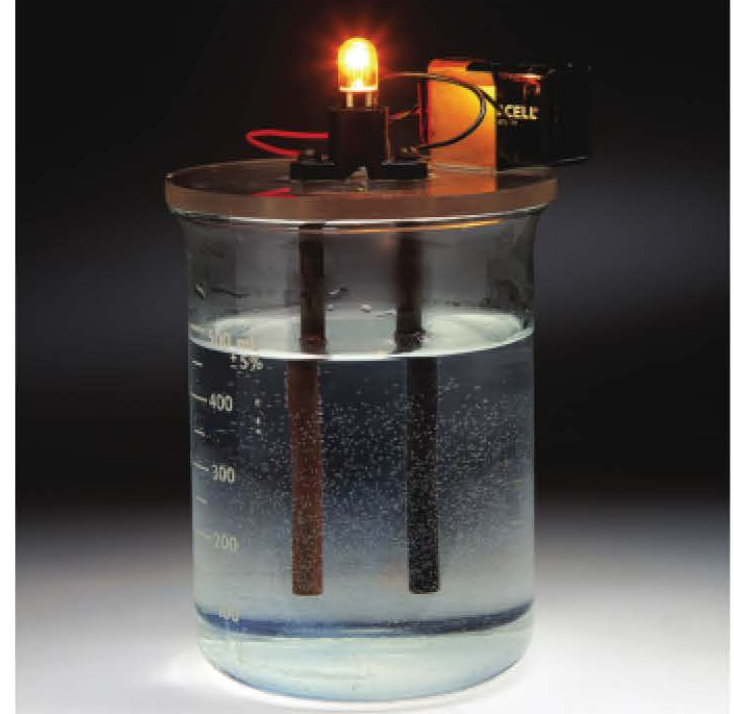
How conductivity testing works
Pure water contains very few ions and is a poor conductor of electricity. As soluble salts are added to water, the ion concentration increases, which increases the conductivity of the solution. It is the flow of ions towards the electrodes that is responsible for the conductivity.
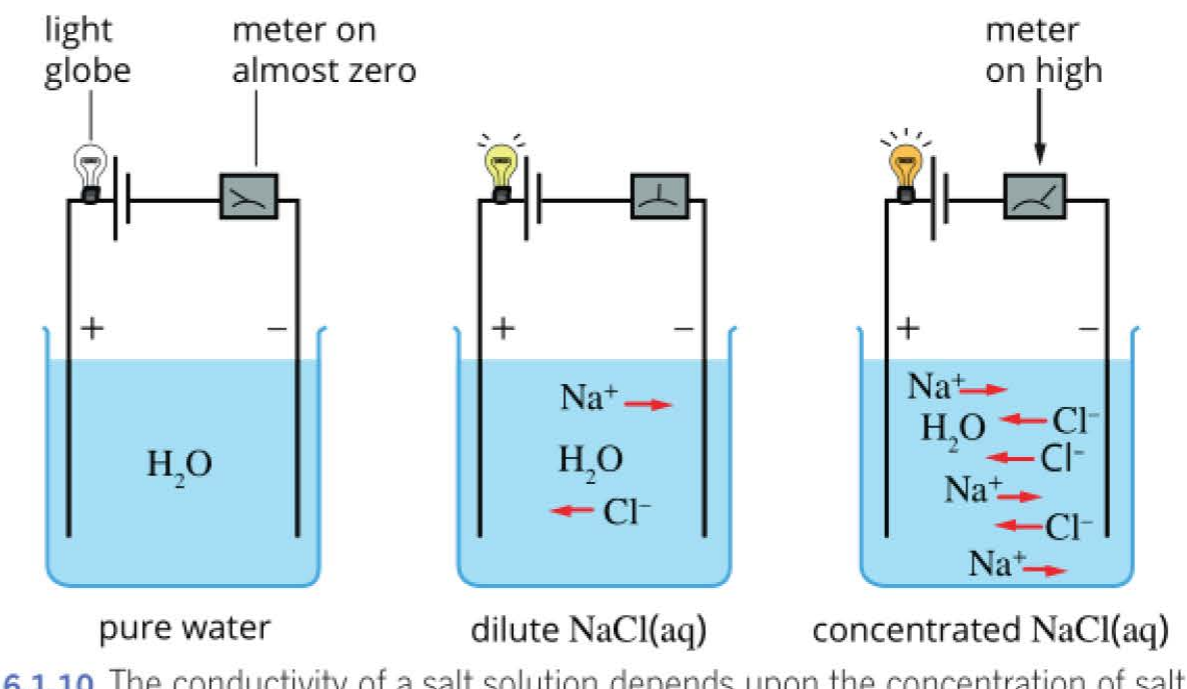
The diagram shows three scenarios:
- Pure water: Contains almost no ions, so the metre reads almost zero and the light bulb doesn't glow.
- Dilute NaCl solution: Contains some and ions, so the metre shows a moderate reading and the bulb glows dimly.
- Concentrated NaCl solution: Contains many and ions, so the metre shows a high reading and the bulb glows brightly.
Important
Key Principle
Pure water is a poor conductor of electricity. As the concentration of ions in solution increases, so does the conductivity.
Relationship between conductivity and concentration
At low salt concentrations, there is a direct relationship between conductivity and concentration. A graph of conductivity against concentration of salt solutions is linear.
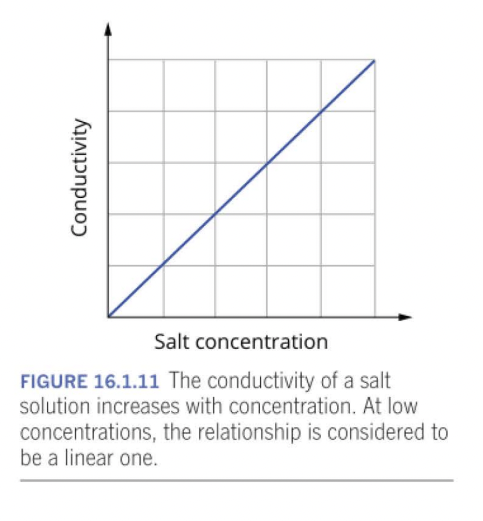
Measurement units and conditions
Electrical conductivity is the inverse of electrical resistance. It is measured in units of micro-Siemens per centimetre ().
Note
Standardisation of EC Measurements
The electrical conductivity of a solution increases as temperature increases. To ensure consistency, readings are generally taken at 25°C and at constant voltage. The distance between electrodes is standardised, allowing comparison between different brands and types of electrodes.
EC guidelines for water use
The table below shows typical guidelines for electrical conductivity of water for different uses.
| Electrical conductivity (EC) µS cm⁻¹ | Water use |
|---|---|
| 0-800 | Good drinking water, suitable for irrigation and livestock |
| 800-2500 | Unpleasant to drink; use in irrigation needs to be managed |
| 2500-10000 | Not recommended for human consumption; suitable for salt-tolerant vegetation only |
| >10000 | Not suitable for any plants or animals |
| 40000-56000 | Range measured in ocean waters |
Portable salinity meters
Handheld, portable salinity testing probes are widely used by agricultural experts and water authorities who want quick and reliable salinity estimates on site. Because these readings are often completed in the field, the probes are calibrated to account for temperature differences.
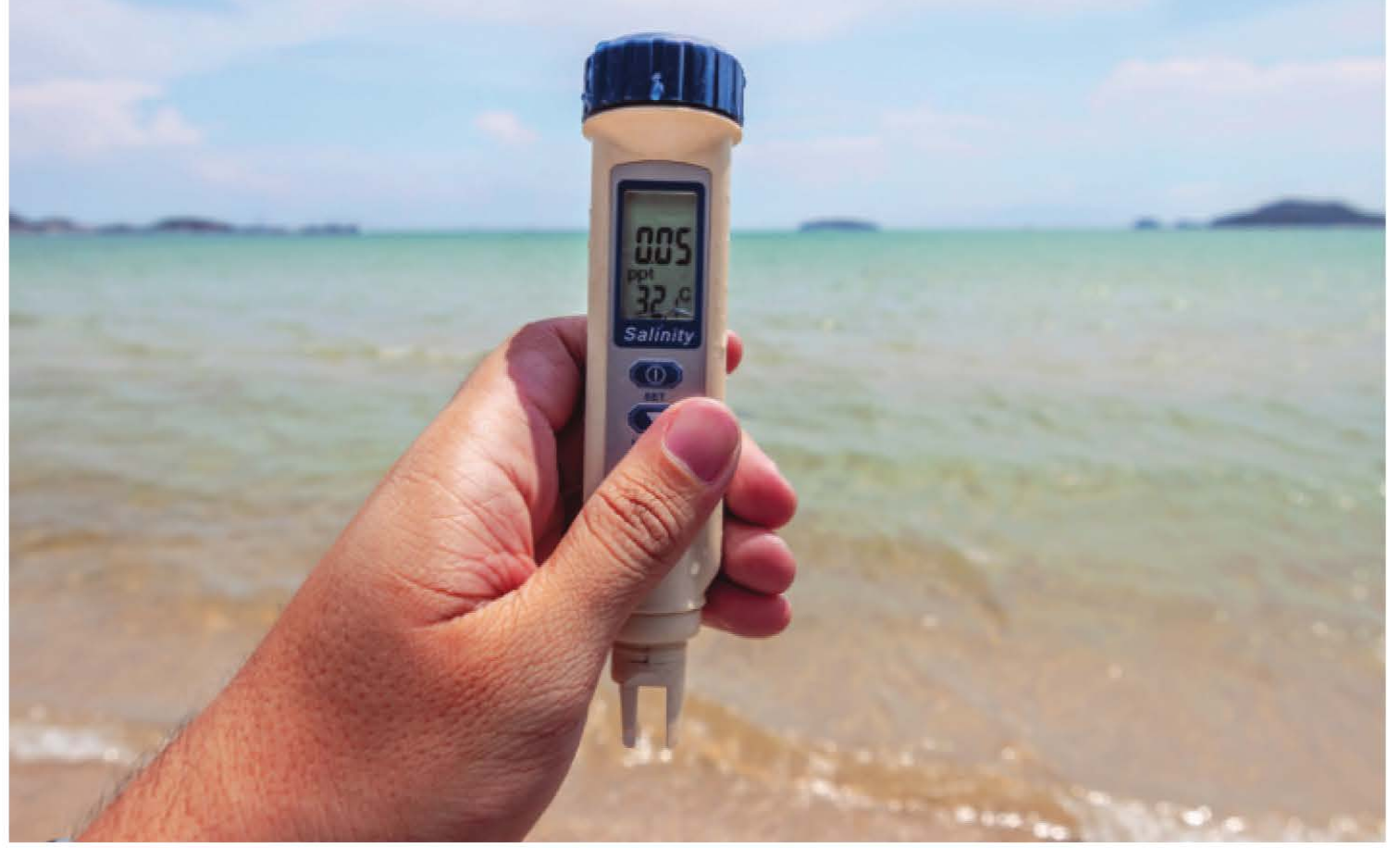
Soil salinity testing
Example
Worked Example: The 1:5 Weight to Volume Method
Soil salinity is determined using a standardised procedure:
Step 1: Prepare the sample Mix one part dried soil (in grams) with five parts distilled water (in millilitres). Typically, 20 g of dried soil is mixed with 100 mL of distilled water and stirred well. Once the soil has settled, measure the salinity of the water () using a portable salinity probe.
Step 2: Calculate soil salinity Determine the soil salinity by multiplying the by the conversion value (see table below) based on soil texture. Soil texture is the percentage of sand, silt, and clay in a soil sample.
| Soil texture | Conversion value |
|---|---|
| Sandy | 17 |
| Silty sand | 14 |
| Silty | 10 |
| Silty clay | 9 |
| Clay | 7 |
Example calculation: The of a clay soil sample would be multiplied by 7 to determine the soil salinity.
Remember!
Summary
Key Points to Remember
-
Salinity refers to the concentration of salts (any ionic compounds) in water, not just sodium chloride. Natural sources include mineral dissolution from rocks, while human activities like mining, agriculture, and industry also contribute significantly.
-
Heavy metals (cadmium, lead, chromium, copper, mercury, arsenic) are toxic elements with high density. They bioaccumulate in food chains and persist in the environment. They are only toxic when present as cations in water-soluble compounds or as organometallic compounds.
-
Organometallic compounds contain at least one direct metal-carbon bond. Examples include tetraethyl lead (formerly used in petrol) and methylmercury (highly toxic). These compounds are particularly dangerous because they can easily enter cells.
-
Hard water contains dissolved calcium, magnesium, iron, or manganese ions. These ions react with soap to form precipitates, reducing lather and causing limescale deposits in pipes.
-
Electrical conductivity (EC) is the most common method for testing salinity. Pure water conducts electricity poorly, but as ion concentration increases, conductivity increases proportionally. EC is measured in µS cm⁻¹ at 25°C.