Polarity in Molecules (VCE SSCE Chemistry): Revision Notes
📚Revision Notes
Polarity in Molecules
Introduction
Have you ever noticed how water behaves strangely around static electricity? When you bring a statically charged balloon near a stream of water, the water actually bends towards the balloon. This fascinating phenomenon occurs because water molecules have an uneven distribution of electrons, making them partially charged. In this note, you'll learn how the shape of molecules and the electronegativity of atoms create these charge distributions.
What is electronegativity?
Electronegativity describes how strongly an atom attracts electrons when it forms a chemical bond. Think of it as a tug-of-war between atoms—the more electronegative an atom is, the harder it pulls on the shared electrons.
Note
The tug-of-war analogy is helpful: imagine two people pulling on a rope with different strengths. The stronger person (more electronegative atom) pulls the rope (electrons) closer to their side. If both people have equal strength (same electronegativity), the rope stays in the middle.
Trends in electronegativity
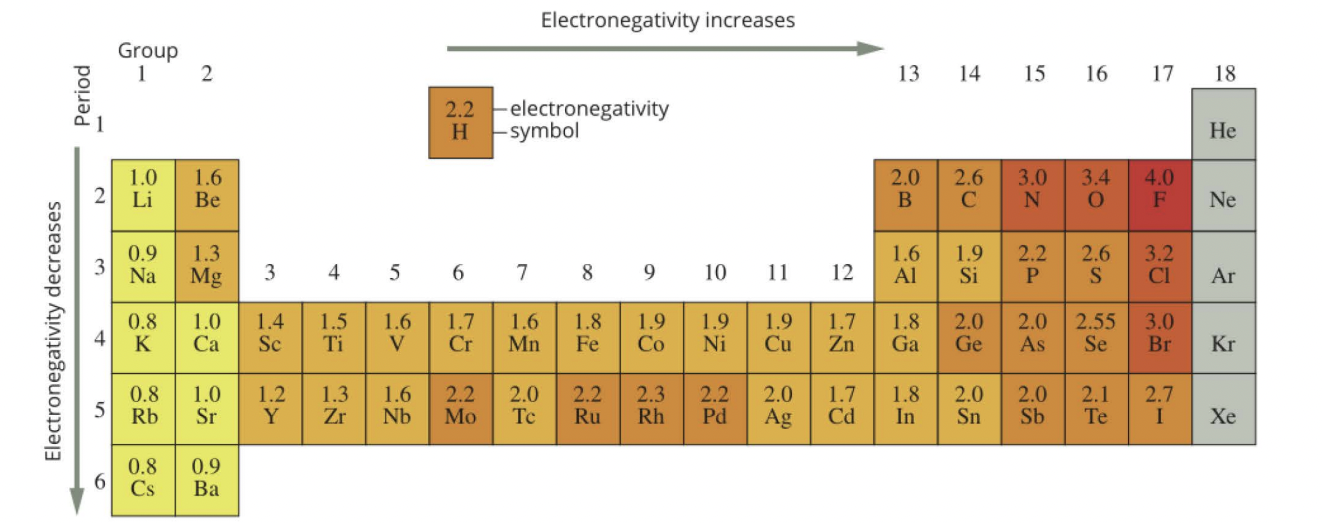
Electronegativity follows clear patterns across the periodic table:
- Increases from left to right across each period
- Decreases down each group
This means fluorine (in the top right of the periodic table) is the most electronegative element, whilst elements like caesium (bottom left) have very low electronegativity values.
Note
Electronegativity is measured on a relative scale, so it has no units. The Pauling scale is most commonly used, where fluorine has the highest value of 4.0.
Understanding polar and non-polar bonds
Non-polar bonds
When two identical atoms form a covalent bond, they have equal electronegativity. This means the bonding electrons are shared equally between them. We call these non-polar bonds because there's no charge difference across the bond.
Examples of non-polar bonds occur in diatomic molecules like:
- Chlorine ()
- Oxygen ()
- Hydrogen ()
- Nitrogen ()
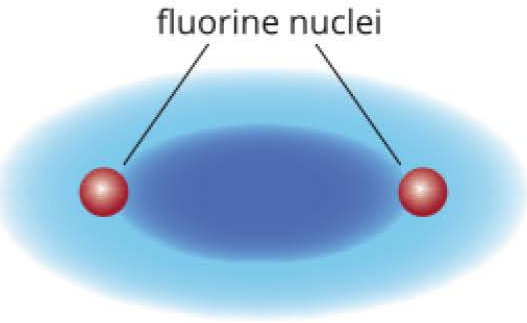
Electron density refers to the probability of finding an electron at a particular location. In non-polar molecules like fluorine (), the electron density is distributed symmetrically between the two atoms.
Polar bonds
When two different atoms form a covalent bond, they usually have different electronegativities. The more electronegative atom pulls the shared electrons closer to itself, creating an unequal distribution. These are called polar bonds.
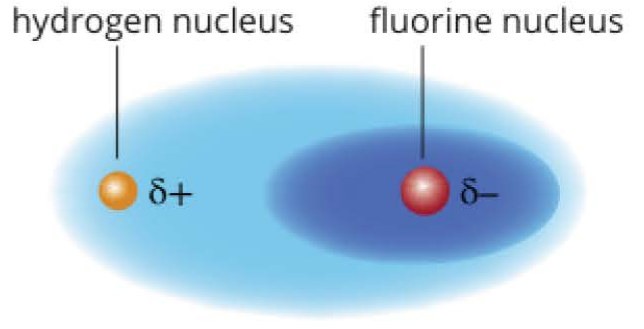
Consider hydrogen fluoride (HF). Fluorine is much more electronegative than hydrogen, so the bonding electrons spend more time near the fluorine atom. This creates:
- A partial negative charge () on the fluorine atom
- A partial positive charge () on the hydrogen atom
Note
This separation of charges is called a dipole—literally meaning "two poles" of opposite charge. The Greek letter delta () indicates that these are partial charges, not full ionic charges.
Comparing bond polarity
The greater the electronegativity difference between two bonded atoms, the more polar the bond becomes. You can calculate and compare bond polarity using electronegativity values.
Example
Worked Example: Comparing Bond Polarity in HF and CO
To compare the polarity of HF and CO bonds:
Step 1: Find electronegativity values
- H = 2.2, F = 4.0, C = 2.6, O = 3.4
Step 2: Calculate differences
- HF = 4.0 - 2.2 = 1.8
- CO = 3.4 - 2.6 = 0.8
Step 3: Compare HF has a larger electronegativity difference, so it's more polar than CO
The spectrum of bond types
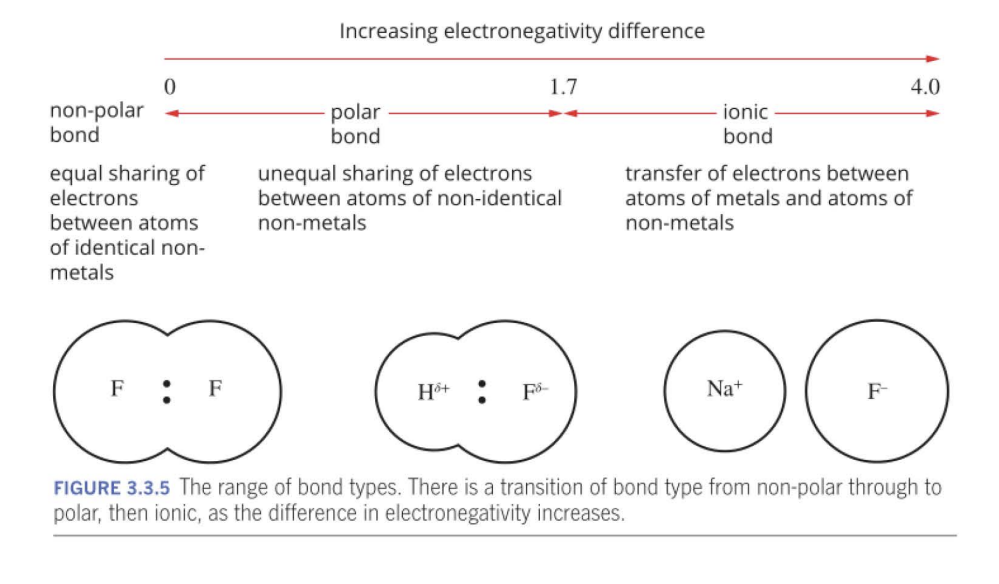
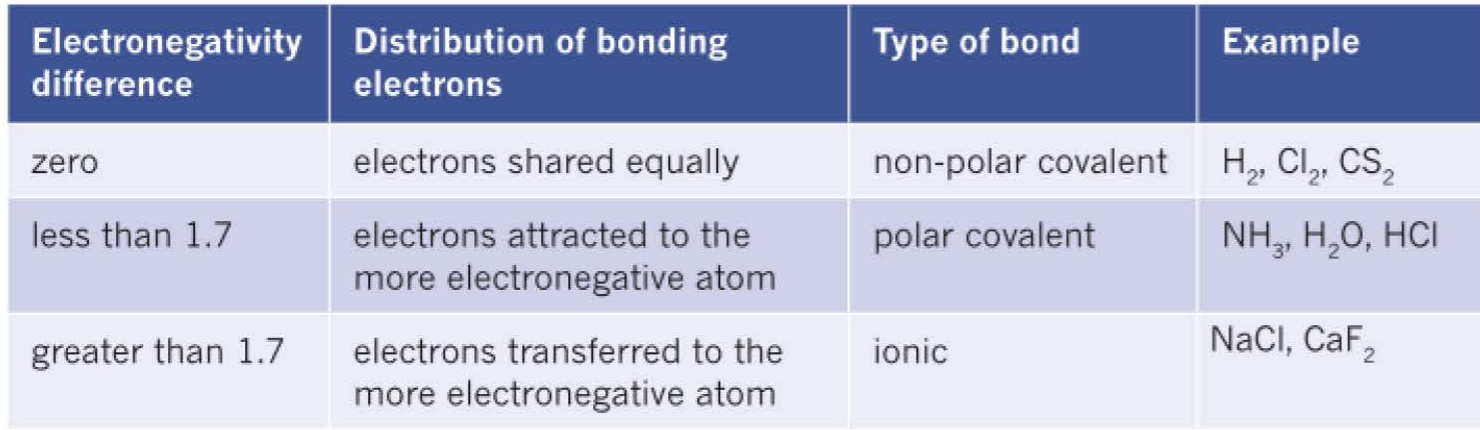
Chemical bonds exist on a continuum from non-polar covalent through polar covalent to ionic bonding. The electronegativity difference between atoms determines where a bond falls on this spectrum.
Non-polar covalent bonds
- Electronegativity difference: Zero
- Electron behaviour: Shared equally
- Examples: , , (carbon and sulfur both have electronegativity 2.6)
Polar covalent bonds
- Electronegativity difference: Between 0 and 1.7
- Electron behaviour: Attracted more strongly to the more electronegative atom
- Examples: , , HCl
Ionic bonds
- Electronegativity difference: Greater than 1.7
- Electron behaviour: Completely transferred from one atom to another
- Examples: NaCl,
Important
The 1.7 Cutoff is Approximate
The value of 1.7 is used as an approximate cutoff between polar covalent and ionic bonding. However, this isn't a sharp boundary—compounds like aluminium chloride () with electronegativity differences around 1.7 show characteristics of both bond types. Bonding is better thought of as a continuum rather than discrete categories.
Polarity in polyatomic molecules
For molecules with more than two atoms, determining polarity becomes more complex. The overall polarity depends on both the polarity of individual bonds AND the shape of the molecule.
Key principles
- Molecules containing only non-polar bonds are always non-polar
- Symmetrical molecules with polar bonds are non-polar because the individual dipoles cancel out
- Asymmetrical molecules with polar bonds are polar because they have a net dipole
Important
Common Misconception: Polar Bonds ≠ Polar Molecules
Many students assume that if a molecule contains polar bonds, it must be a polar molecule. This is not true! The shape and symmetry of the molecule are just as important as bond polarity. A perfectly symmetrical molecule can have polar bonds but still be non-polar overall if the dipoles cancel out.
Non-polar polyatomic molecules
Methane () provides an excellent example. Carbon is more electronegative than hydrogen, so each C-H bond is polar with on carbon and on hydrogen. However, methane has a tetrahedral shape that's perfectly symmetrical.
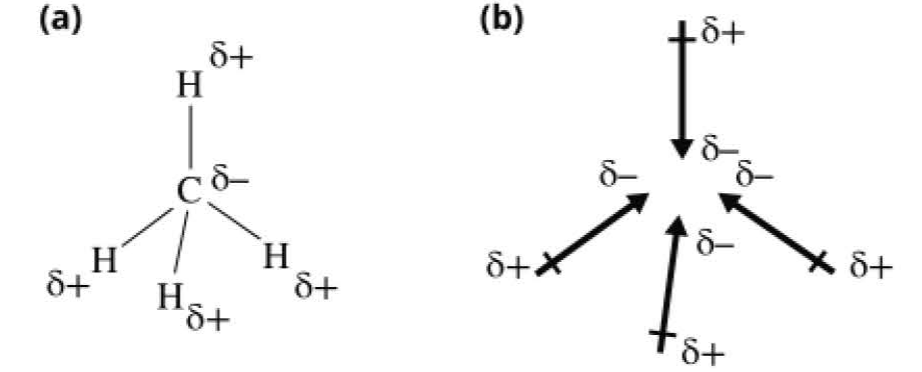
When you represent each bond dipole as an arrow (pointing from positive to negative), these arrows point symmetrically in all directions. They cancel each other out completely, resulting in no net dipole. Therefore, methane is non-polar despite having polar bonds.
Other examples of symmetrical non-polar molecules include:
- Carbon dioxide () - linear shape
- Tetrafluoromethane () - tetrahedral shape
Note
In symmetrical molecules, the individual bond dipoles are like forces acting in opposite directions with equal magnitude—they balance out perfectly, just like two people pulling equally hard on opposite ends of a rope.
Polar polyatomic molecules
In asymmetrical molecules, the individual bond dipoles don't cancel out. This creates a net dipole, making the molecule polar overall.
Chloromethane () demonstrates this well. The chlorine atom is more electronegative than carbon, which is more electronegative than hydrogen. The molecule has a tetrahedral shape, but it's not symmetrical because one position has chlorine instead of hydrogen.
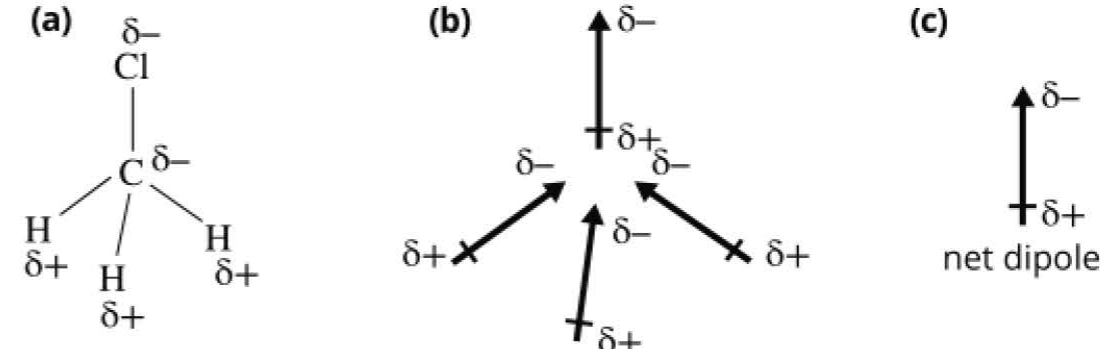
When you add up all the individual bond dipoles, they don't cancel completely. The result is a net dipole pointing from the hydrogen end towards the chlorine end, making chloromethane a polar molecule.
Examples of polar and non-polar molecules
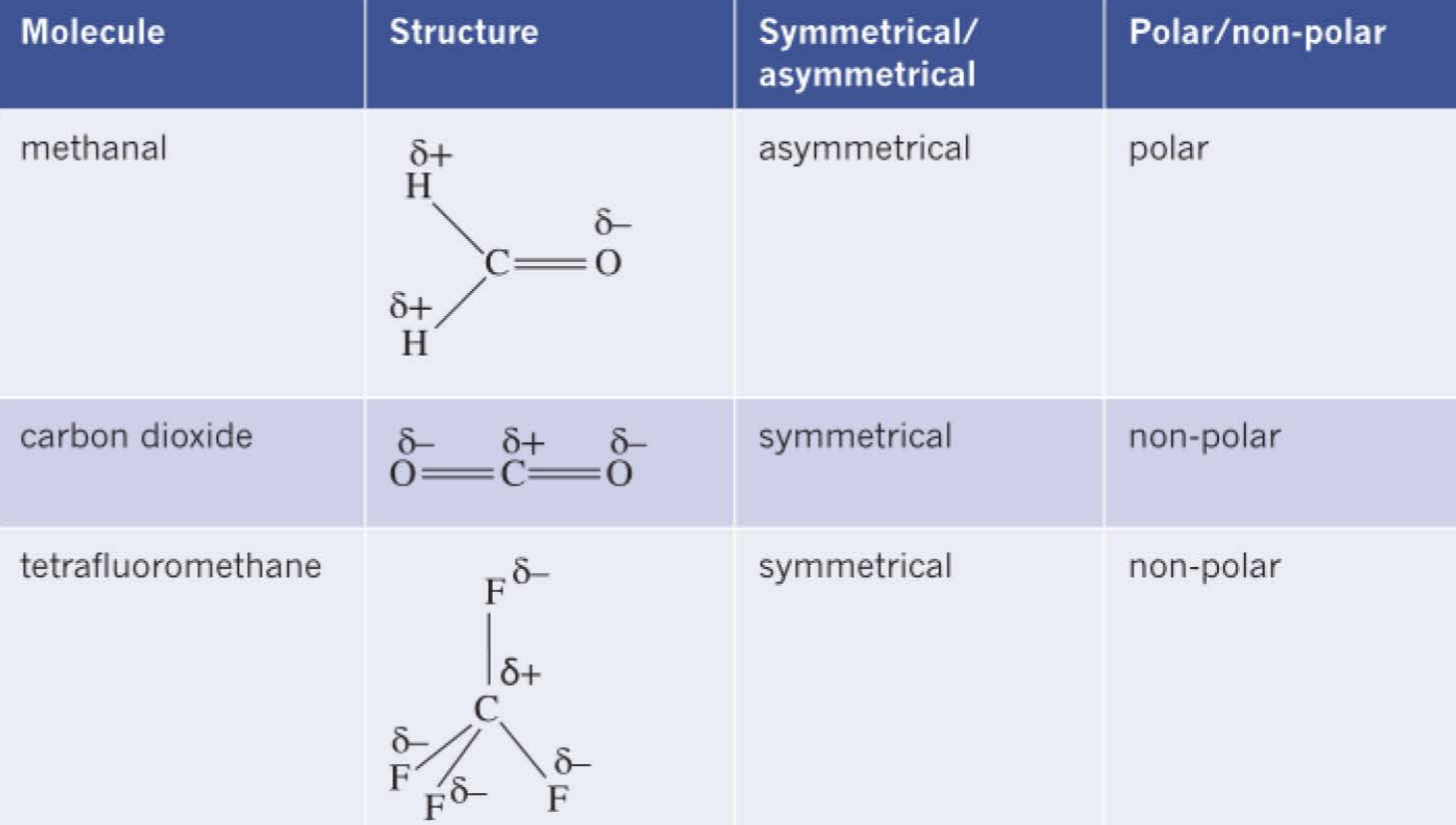
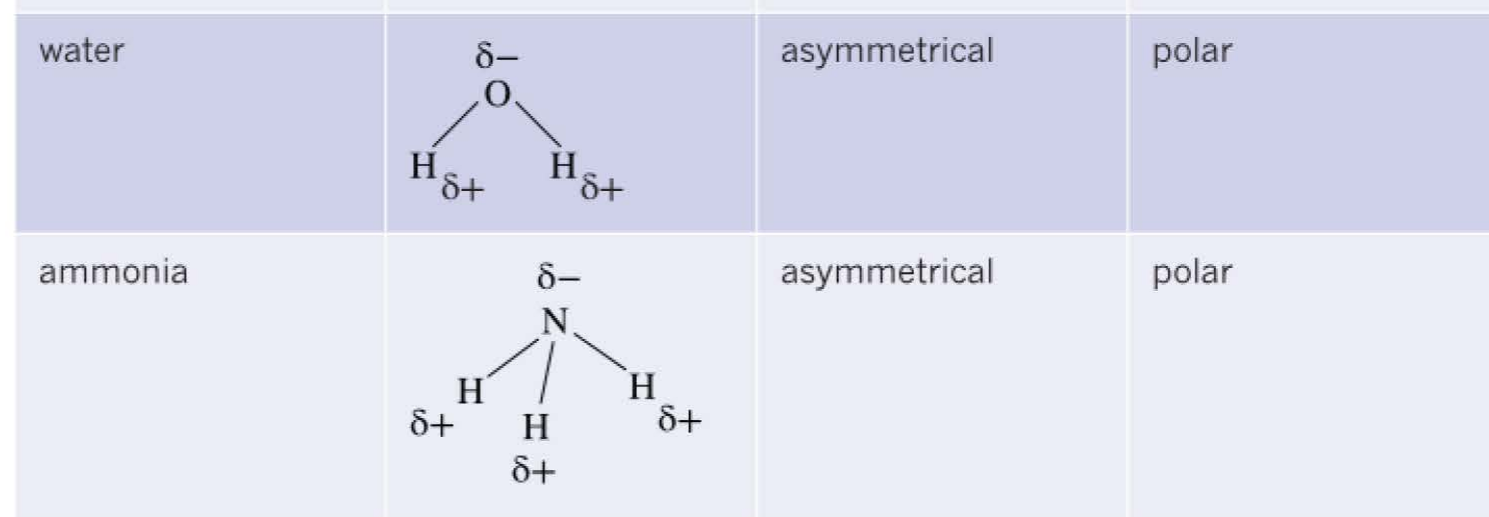
Water () and ammonia () are both asymmetrical and polar:
Real-world application: microwave ovens
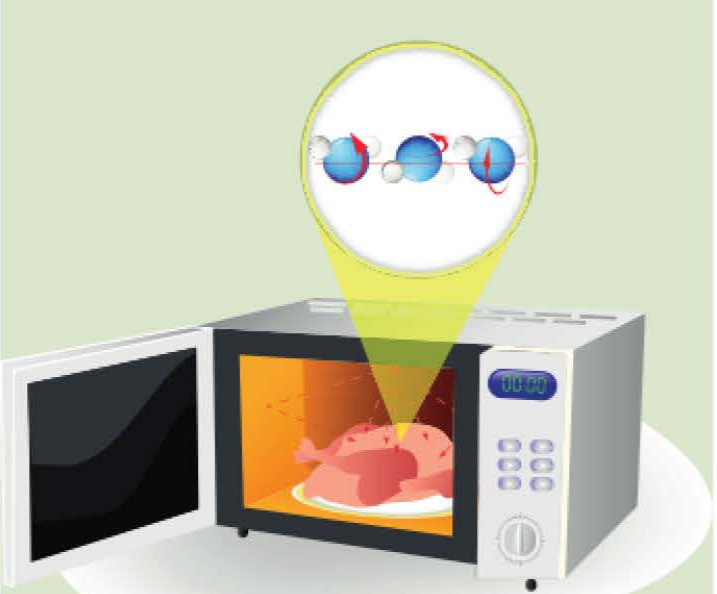
Microwave ovens use the polarity of molecules to heat food. The microwaves create an electric field that interacts with polar molecules, especially water. This electric field causes the polar molecules to rotate billions of times per second, increasing their kinetic energy. As kinetic energy increases, temperature rises, heating and cooking the food.
Note
Why Microwaves Heat Food Efficiently
This is why foods with high water content heat more efficiently in a microwave than dry foods. The polar water molecules act like tiny magnets that spin rapidly in the alternating electric field, converting electromagnetic energy into thermal energy. Non-polar molecules don't respond to the electric field in the same way, which is why oils and fats heat more slowly than water.
Remember!
Summary
Key Points to Remember:
-
Electronegativity measures an atom's ability to attract bonding electrons. It increases left to right across periods and decreases down groups.
-
Polar bonds form when atoms with different electronegativities share electrons unequally, creating partial charges ( and ).
-
Non-polar bonds occur between identical atoms or atoms with the same electronegativity, where electrons are shared equally.
-
An electronegativity difference of 1.7 approximately separates polar covalent from ionic bonding.
-
Molecular polarity depends on both bond polarity AND molecular shape. Symmetrical molecules with polar bonds can still be non-polar if dipoles cancel out.
-
Asymmetrical molecules with polar bonds are polar overall because they have a net dipole.