Rate of Reaction and Collision Theory (VCE SSCE Chemistry): Revision Notes
📚Revision Notes
Rate of Reaction and Collision Theory
Introduction to rates of chemical reactions
Chemical reactions are constantly occurring all around us - in the soil beneath our feet, in the air we breathe, inside every living organism, and in our homes and workplaces. These reactions proceed at vastly different speeds.

Some reactions happen almost instantaneously. For example, when a car experiences a collision, the chemical reactions that inflate airbags must occur within milliseconds to protect passengers. In contrast, other reactions like the rusting of exposed metal on a scratched car surface can take years to become noticeable.
Note
The dramatic difference in reaction speeds - from milliseconds to years - demonstrates that reaction rate is a fundamental property that varies enormously between different chemical processes. Understanding what controls these rates is essential in chemistry.
The chemical equation for a reaction tells us which reactants are consumed and which products are formed, but it provides no information about how quickly the reaction proceeds. For example, the decomposition of hydrogen peroxide:
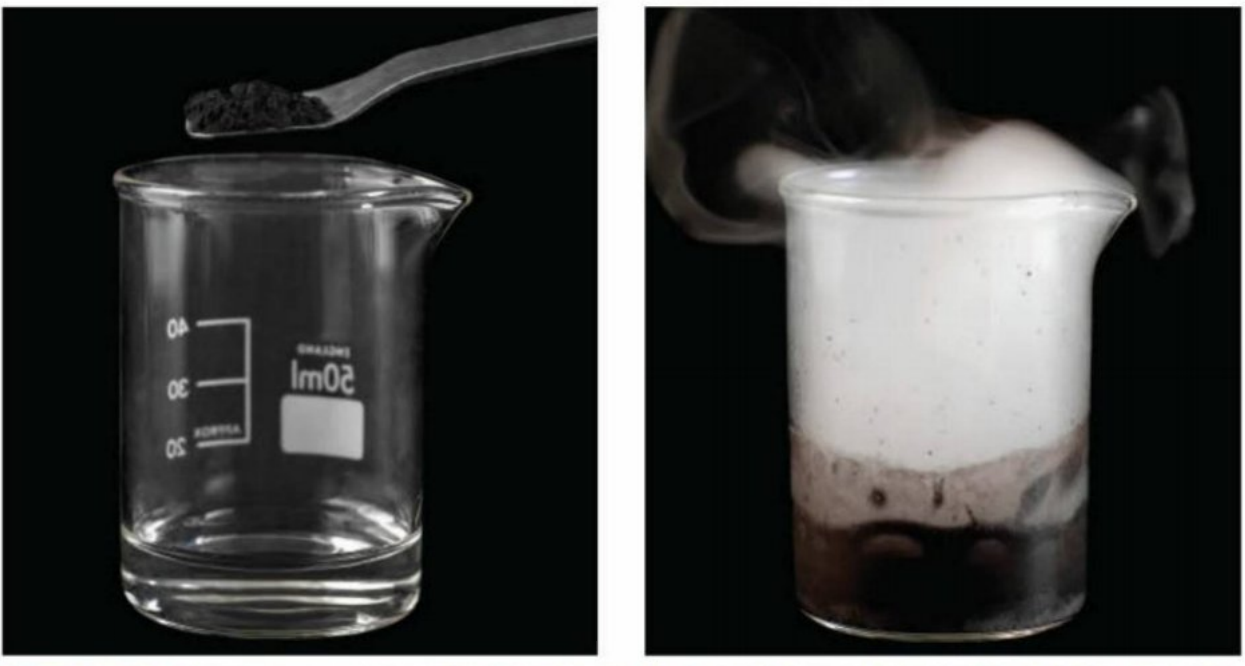
This equation alone doesn't indicate whether the reaction happens rapidly or slowly. In reality, this decomposition normally occurs very slowly at room temperature. However, when a catalyst such as solid manganese dioxide () is added to hydrogen peroxide solution, the reaction rate increases dramatically. The oxygen gas is produced so rapidly, and so much heat is released, that the reaction mixture foams vigorously and some water vaporises.
What is rate of reaction?
The rate of reaction is defined as the change in concentration of a reactant or product per unit time. This can be expressed mathematically as:
The standard unit for measuring reaction rate is moles per litre per second (mol L⁻¹ s⁻¹), which can also be written as M s⁻¹.
Measuring rates of reaction experimentally
To determine the rate of a reaction experimentally, you need to monitor either:
- How much reactant is being consumed over time, or
- How much product is being formed over time
The method chosen depends on the properties of the reactants and products involved. For reactions involving gases, you might measure changes in gas volume or mass. For other reactions, you could monitor changes in pH using a pH probe connected to data-logging equipment, or changes in colour using colorimetry.
Using volume of gas produced
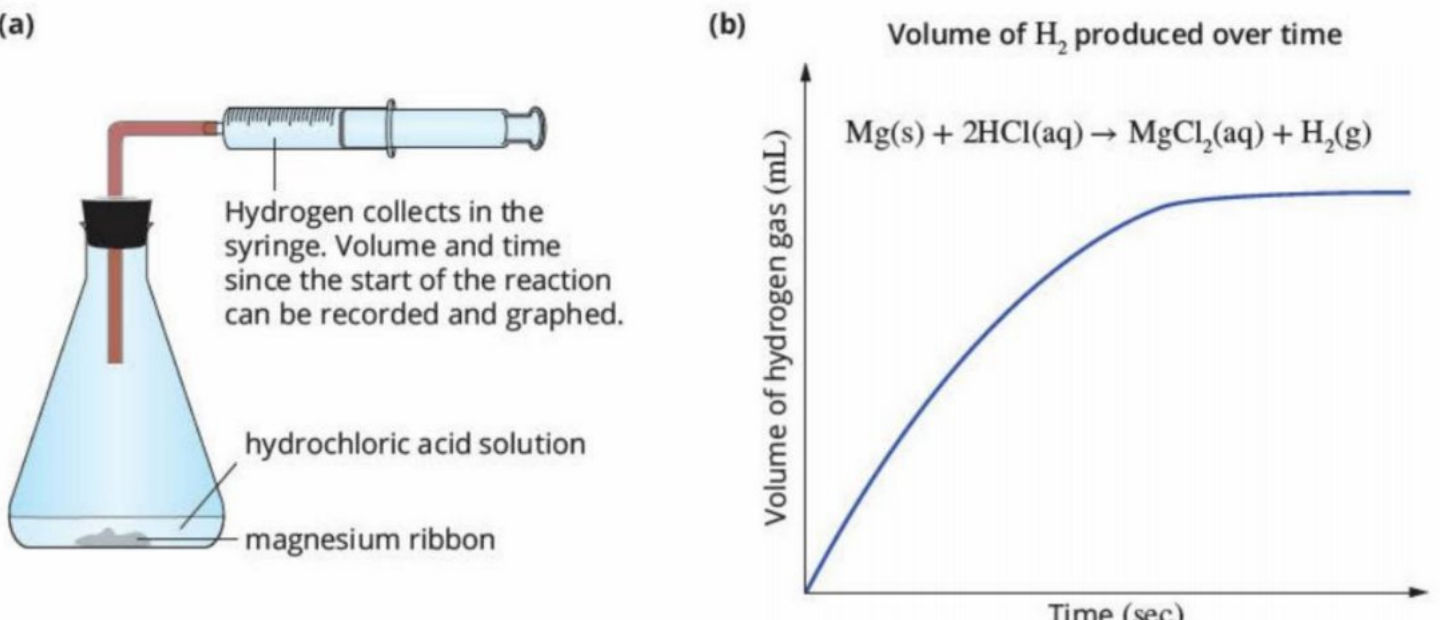
One practical method involves measuring the volume of gas produced during a reaction. Consider the reaction between magnesium ribbon and hydrochloric acid:
The hydrogen gas produced can be collected and measured using a gas syringe connected to a conical flask containing the reactants. As the reaction proceeds, hydrogen gas pushes into the syringe. By recording the volume of gas at fixed time intervals, you can construct a graph showing how the volume of product increases over time.
Example
Worked Example: Determining Reaction Rate from Volume Data
To calculate the rate of reaction from a volume-time graph:
Step 1: Draw a tangent to the curve at the point where you want to find the rate
Step 2: Calculate the gradient of the tangent:
Step 3: Interpret the gradient - a steeper gradient indicates a faster reaction rate
The initial gradient is typically steepest, showing that the reaction starts off fastest and then gradually slows down as reactants are consumed.
The rate of reaction can be calculated by measuring the gradient (slope) of the graph. A steeper gradient indicates a faster reaction rate. This volume measurement method can be applied to any reaction that produces a gas, including the decomposition of hydrogen peroxide mentioned earlier.
Using mass loss
Another technique for monitoring gas-producing reactions involves measuring the mass of the reaction mixture over time. The apparatus is placed on a digital balance, and a cotton wool plug in the flask allows gas to escape while preventing liquid from splashing out.
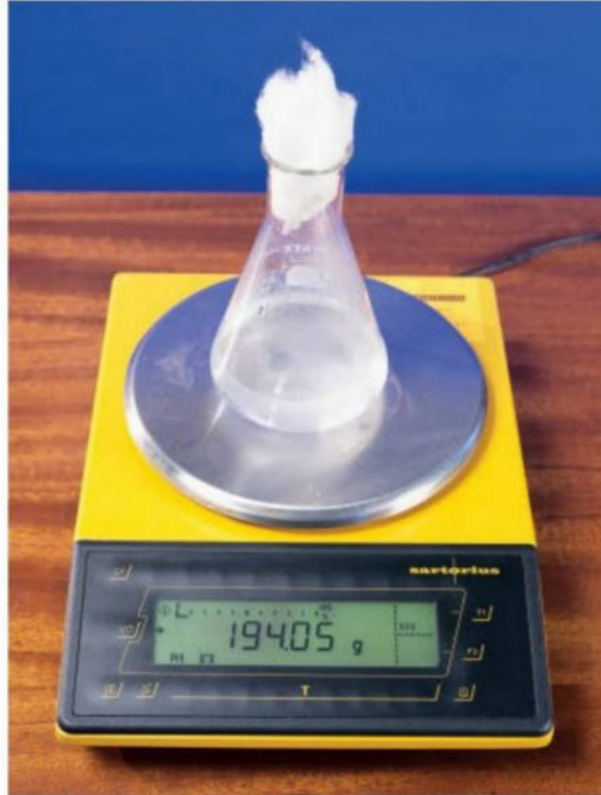
As gas escapes from the reaction vessel, the total mass decreases. By recording the mass at regular time intervals, you can plot a graph of mass of gas released against time.
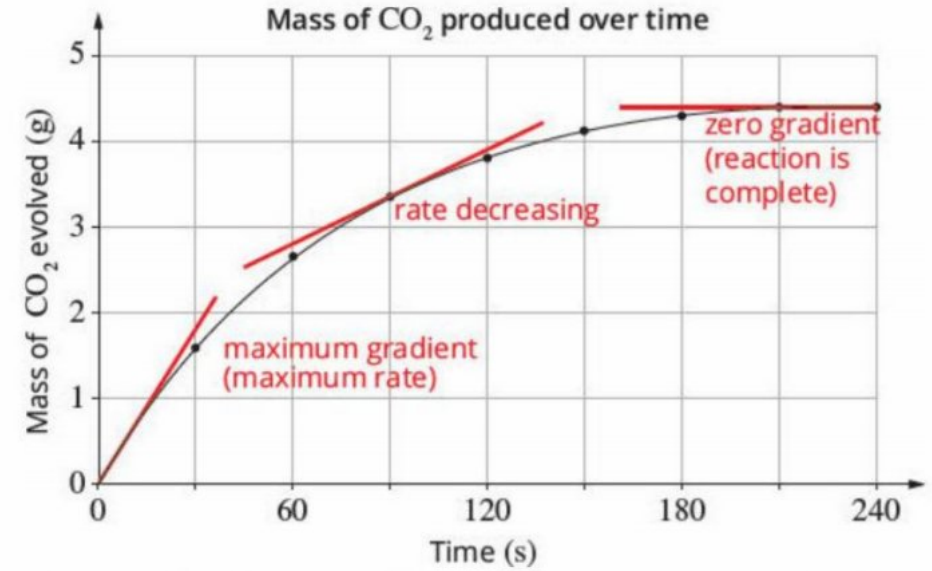
To calculate the rate of reaction at different points, you draw tangents to the curve at those points. The gradient of each tangent gives the rate at that moment:
- The maximum gradient occurs at the start of the reaction, indicating the maximum rate
- The gradient decreases as the reaction progresses, showing the rate is slowing down
- At completion, the gradient becomes zero, indicating the reaction has stopped
Important
The reaction rate decreases over time because the concentration of reactants decreases as they are consumed. This relationship between concentration and rate is fundamental to understanding chemical kinetics.
Exam tip: When analysing reaction rate graphs, remember that the gradient tells you the rate. Changes in the gradient reveal how the rate changes during the reaction.
Case study: Airbag deployment - a life-saving fast reaction
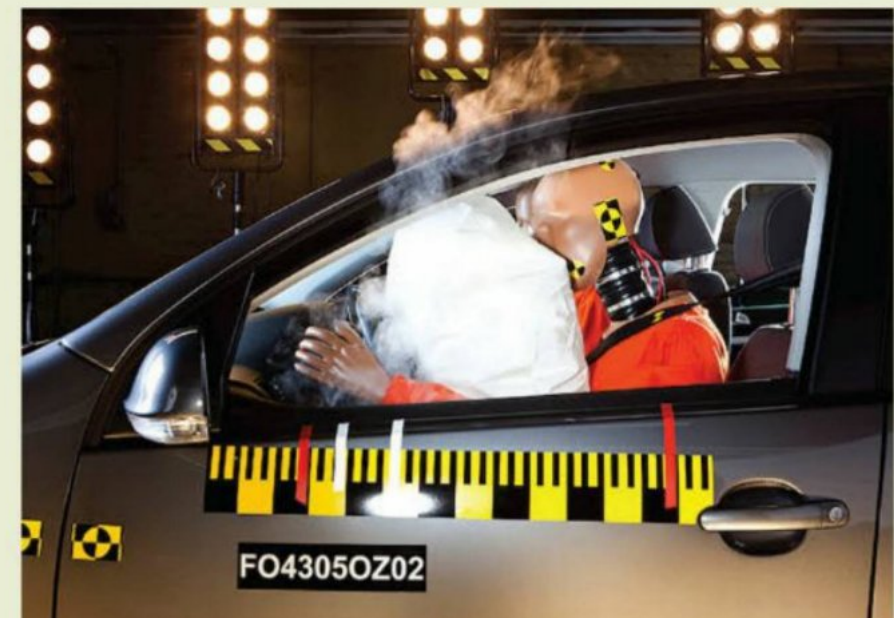
Airbags provide a dramatic real-world example of an extremely fast chemical reaction. When a car collision occurs, sensors detect the impact and trigger chemical reactions that must inflate the airbag within just 30 milliseconds - faster than the blink of an eye.
Airbags contain a mixture of crystalline solids stored in a canister:
- Sodium azide ()
- Potassium nitrate ()
- Silica ()
When sensors detect a serious collision, an electronic signal "ignites" the sodium azide, which undergoes a rapid decomposition:
This energy-releasing reaction produces hot nitrogen gas and molten sodium metal. The nitrogen gas begins inflating the airbag immediately.
The molten sodium then reacts with potassium nitrate, producing more nitrogen gas along with metal oxides:
A filtration system prevents the white powdery metal oxides from entering the airbag. Finally, a third reaction occurs where the oxides combine with silica to form a harmless glassy solid:
The complete reaction sequence can be represented by the combined equation:
Within 100 milliseconds of impact, the cushion of nitrogen gas is forced out through tiny vents in the airbag, and deflation is complete. This remarkably fast sequence of chemical reactions saves lives by preventing occupants from striking hard surfaces inside the vehicle.
Note
Key learning: Explosive reactions are characterised by producing large volumes of gas in very short time periods. The speed of these reactions makes them suitable for emergency safety devices like airbags.
Collision theory
Chemical reactions occur as a result of collisions between reacting particles - atoms, molecules, or ions. The collision theory explains the relationship between molecular collisions and chemical reactions.
When a reaction takes place, particles collide and are rearranged to form new products. Consider again the decomposition of hydrogen peroxide:
The first step involves a collision between two hydrogen peroxide molecules. For this collision to result in the formation of water and oxygen molecules, it must occur in a way that breaks the covalent bonds in the hydrogen peroxide molecules. Breaking bonds requires energy.
Important
Three Essential Requirements for a Reaction to Occur
According to collision theory, reactant particles must meet all three of these requirements:
- Collide with each other - particles must make physical contact
- Collide with sufficient energy - the collision must provide enough energy to break bonds in the reactants
- Collide with the correct orientation - particles must be aligned properly so that the right bonds can break and new bonds can form
If a collision fails to meet any of these requirements, no reaction occurs - the particles simply bounce off each other unchanged.
Activation energy
For reactant molecules to undergo a chemical reaction, they must collide with at least a certain minimum amount of energy. If the collision energy is below this threshold, the molecules will simply rebound from each other without reacting.
The minimum energy that a collision must possess for a reaction to occur is called the activation energy, denoted by the symbol . When the collision energy is greater than or equal to the activation energy, a reaction can proceed.
Important
Key point: The reactant particles must collide with energy greater than or equal to the activation energy before a reaction can occur.
Energy profile diagrams
Activation energy is represented using energy profile diagrams. These diagrams show the potential energies of reactants and products throughout the course of a reaction.
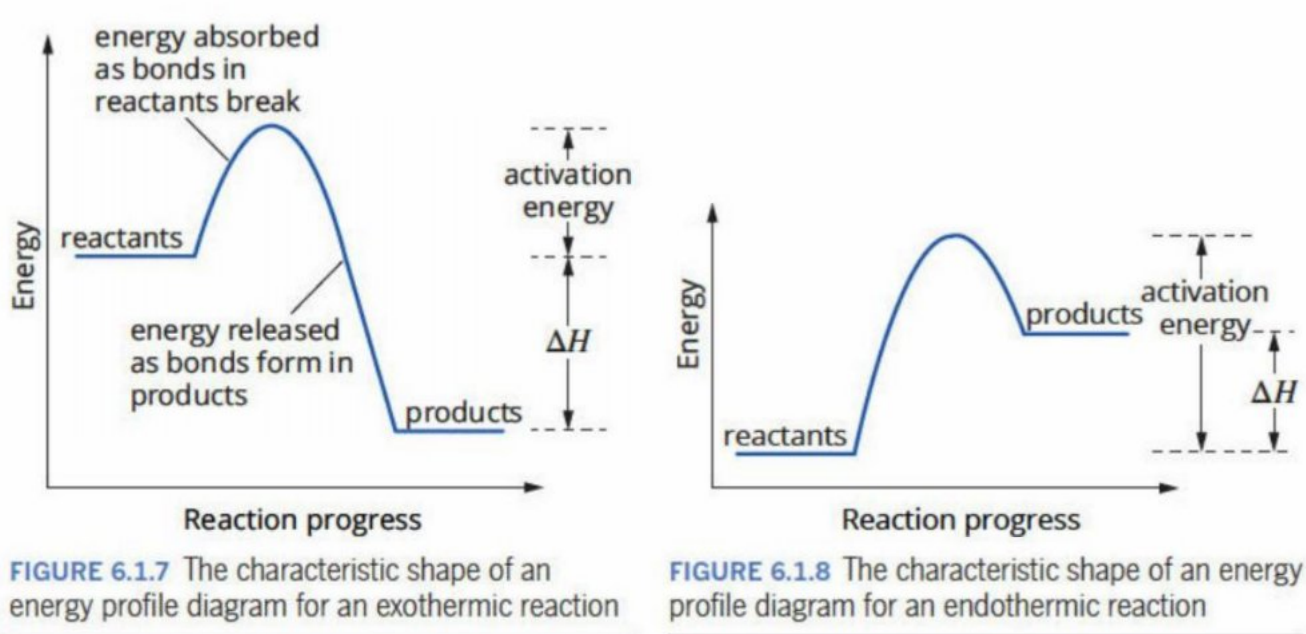
Energy profile diagrams can represent two types of reactions:
Note
Exothermic reactions (left diagram):
- Release more energy than they absorb
- Products have lower energy than reactants
- Temperature of surroundings increases
- is negative (arrow points downward)
Endothermic reactions (right diagram):
- Absorb more energy than they release
- Products have higher energy than reactants
- Temperature of surroundings decreases
- is positive (arrow points upward)
Both types of energy profile diagrams have a characteristic peak representing the activation energy barrier. This peak shows the minimum energy that must be absorbed to break the bonds in the reactants before the reaction can progress. The activation energy is measured vertically from the energy level of the reactants to the top of the peak.
Transition state
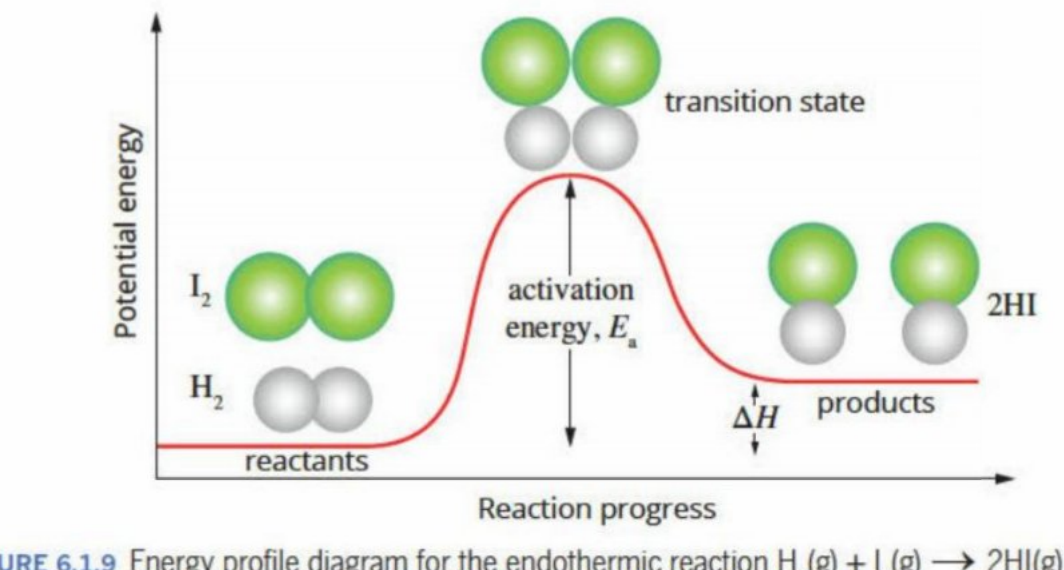
When reactant molecules absorb the activation energy, they form an unstable arrangement of atoms called the transition state. This occurs at the stage of maximum potential energy in the reaction - at the top of the activation energy barrier.
Note
At the transition state, both bond-breaking and bond-forming are occurring simultaneously. The arrangement of atoms is highly unstable and exists only momentarily. As the reaction progresses beyond this point, the atoms in the transition state rearrange to form the products, and the system moves to a lower energy state.
How activation energy affects reaction rate
The magnitude of the activation energy determines how easily a reaction can occur. A lower activation energy means that more collisions will have sufficient energy to react, resulting in a faster reaction rate. Conversely, a higher activation energy means fewer successful collisions and a slower reaction rate.
The existence of activation energy explains why not all collisions between reactants lead to chemical change. For example, nitrogen () and oxygen () molecules collide constantly in the air at room temperature, yet no reaction occurs under normal conditions. The activation energy barrier is too high for these collisions at room temperature to produce nitrogen monoxide.
Example
Worked Example: Overcoming Activation Energy
Consider nitrogen and oxygen molecules in the air:
At room temperature:
- N₂ and O₂ molecules collide constantly
- Collision energy < activation energy ()
- Result: No reaction occurs
With additional energy (spark or lightning):
- Additional energy increases collision energy
- Collision energy ≥ activation energy ()
- Result: Nitrogen monoxide forms
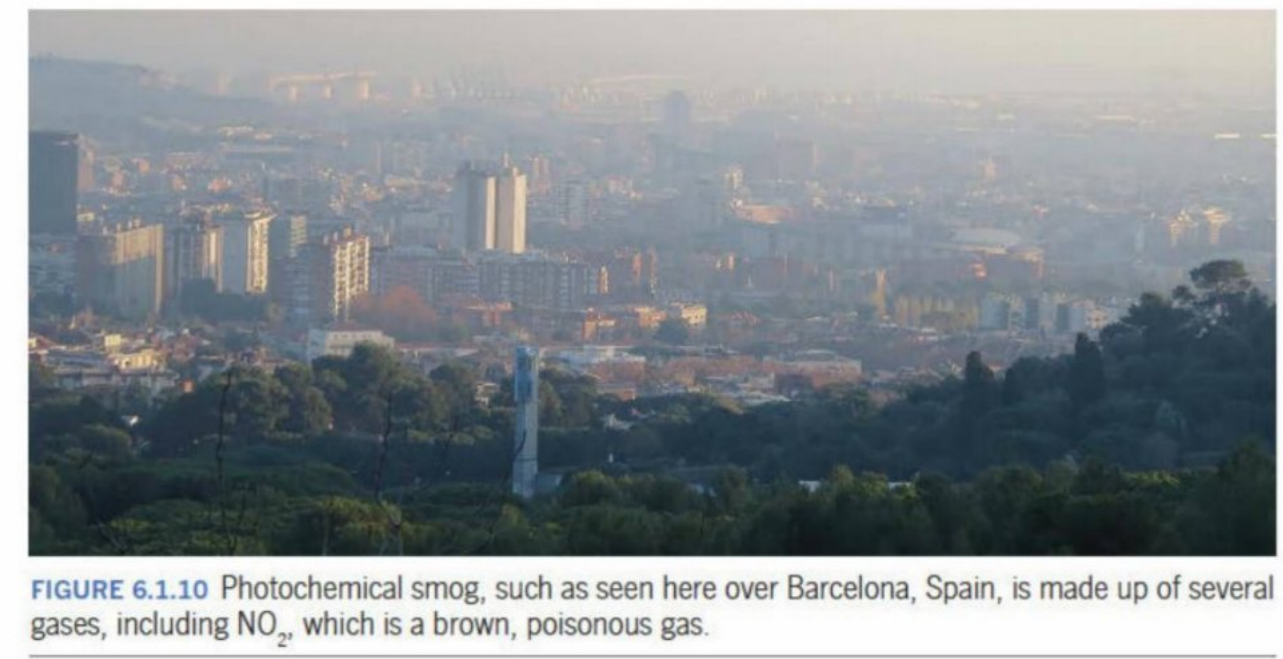
The nitrogen monoxide can then react further to form brown nitrogen dioxide (), a poisonous gas that contributes to photochemical smog.
Important
Exam tip: When comparing reactions, remember that reactions with lower activation energies proceed faster than those with higher activation energies, assuming other conditions are equal.
Orientation of colliding molecules
Having sufficient energy is necessary but not sufficient for a reaction to occur. Reacting molecules must also collide with the correct orientation. The molecules need to be aligned so that the appropriate bonds in the reactants can break, allowing new bonds to form in the products.
Consider the decomposition of hydrogen iodide gas:
For this reaction to occur, two hydrogen iodide molecules must collide with:
- Sufficient energy (at least equal to )
- Correct orientation - with hydrogen and iodine atoms oriented towards each other
If the collision orientation is unfavourable - for example, if two hydrogen atoms collide or two iodine atoms collide - the particles will simply bounce off each other without reacting, even if they have sufficient energy.
Important
Key concept: Both sufficient collision energy AND correct orientation are required for a successful reaction. This explains why not all high-energy collisions result in reactions.
A little too reactive: Nitroglycerin
Nitroglycerin provides a striking example of a substance with extremely low activation energy. In 1846, Italian chemist Ascanio Sobrero created this explosive liquid by reacting glycerol with a mixture of sulfuric and nitric acids.
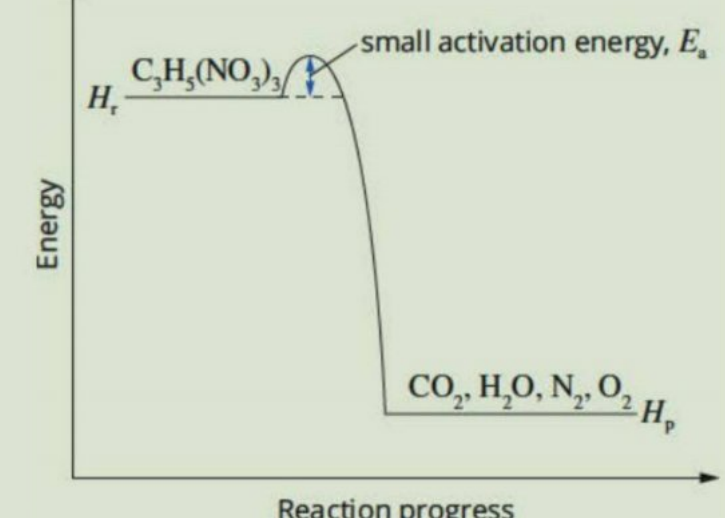
Nitroglycerin is so unstable that even a small bump can trigger its explosive decomposition:
While nitroglycerin was far more powerful than conventional gunpowder, it was far too dangerous for practical use in its pure form. Later, Swedish scientist Alfred Nobel developed a safer way to handle nitroglycerin through his invention of dynamite - nitroglycerin absorbed into an inert material called diatomaceous earth, formed into sticks and wrapped in greased, waterproof paper.
Note
The reason for nitroglycerin's extreme instability is its very small activation energy. The energy profile diagram shows that only a tiny amount of energy is needed to initiate the decomposition reaction. Once started, the reaction is highly exothermic, releasing enormous amounts of energy. This combination of low activation energy and high energy release makes the reaction rate extremely large - resulting in an explosion.
Important
Key learning: The activation energy of a reaction is a crucial factor in determining its stability and rate. Very low activation energies can make substances dangerously unstable.
Remember!
Summary
Key Points to Remember:
-
Rate of reaction is defined as the change in concentration of a reactant or product per unit time, measured in mol L⁻¹ s⁻¹
-
Reaction rates can be measured experimentally by monitoring volume of gas produced or mass loss over time, then calculating the gradient of graphs
-
Collision theory states that for a reaction to occur, particles must: (1) collide with each other, (2) collide with sufficient energy to overcome the activation energy, and (3) collide with correct orientation
-
Activation energy () is the minimum energy required for a collision to result in a reaction - reactions with lower activation energies proceed faster
-
The transition state is the unstable arrangement of atoms at maximum potential energy where both bond-breaking and bond-forming occur simultaneously
-
Energy profile diagrams show the energy changes during a reaction, with the peak representing activation energy and the difference between reactants and products representing