Metal Displacement Reactions (VCE SSCE Chemistry): Revision Notes
📚Revision Notes
Metal Displacement Reactions
Introduction
Metal displacement reactions are a specific type of redox reaction where one metal displaces another metal from a solution of its ions. Understanding these reactions requires knowledge of how reactive different metals are and how to predict which metals will react with which metal ions.
The reactivity series of metals
The reactivity series is a ranked list of metals arranged according to their reactivity, or their ability to act as reducing agents. This series is fundamental for predicting metal displacement reactions.
The reactivity series shows reduction half-equations for metal cations, with each equation showing how a metal ion gains electrons to form the corresponding metal:
Understanding the arrangement
The metals appear on the right-hand side of each equation. Gold (Au) at the top is the least reactive metal, while potassium (K) and lithium (Li) at the bottom are the most reactive. The further down the series a metal appears, the more reactive it is.
Metals have a small number of valence electrons, which makes them naturally suited to act as reducing agents (substances that donate electrons). The amount of energy needed to remove these valence electrons varies between metals. Generally, the less energy required to remove the valence electrons, the more readily a metal will act as a reducing agent.
Trends in the reactivity series
Note
As you move down the reactivity series, there are important patterns to observe in both the metals and their corresponding cations.
As you move down the reactivity series:
- Metals (on the right-hand side) become more reactive, meaning they lose electrons more easily and are therefore stronger reducing agents
- Metal cations (on the left-hand side) become increasingly difficult to reduce and are therefore weaker oxidising agents
Important
Key points to remember:
- The strongest reducing agents are found at the bottom of the series on the right-hand side
- The strongest oxidising agents are found at the top of the series on the left-hand side
Examples of metal reactivity
Some metals oxidise very readily. Sodium is so reactive that it must be stored under paraffin oil to prevent it from reacting with oxygen in the atmosphere. Similarly, magnesium reacts vigorously with acids. The oxidation of iron can eventually lead to rust formation, which is an expensive problem in many applications.
Other metals are much less reactive. Platinum and gold are so unreactive (inert) that they can be found as pure elements in nature, rather than combined with other elements in compounds.
Understanding metal displacement reactions
A metal displacement reaction occurs when a more reactive metal displaces a less reactive metal from a solution containing ions of the less reactive metal. These are spontaneous redox reactions that happen naturally without requiring external energy.
In a metal displacement reaction:
- The more reactive metal acts as the reducing agent (it donates electrons and becomes oxidised)
- The metal ions of the less reactive metal act as the oxidising agent (they accept electrons and become reduced)
The key rule for prediction
Important
For a spontaneous metal displacement reaction to occur, the metal must be positioned below the metal ions in the reactivity series.
A metal ion higher in the reactivity series (oxidising agent) will react with a metal lower in the reactivity series (reducing agent).
If the metal is not below the metal ion in the series, no reaction will occur.
Examples of metal displacement reactions
Example 1: Copper and silver nitrate
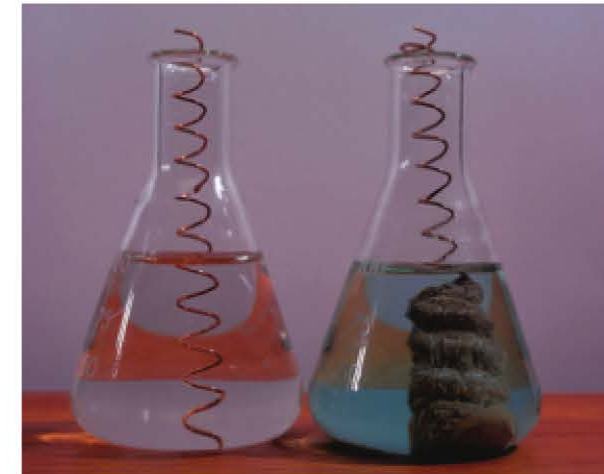
When a strip of copper wire is placed in a solution of silver nitrate, a displacement reaction occurs.
Example
Worked Example: Copper Displacing Silver
Observations:
- Silver ions are reduced to silver atoms by copper atoms
- Silver atoms deposit as silver crystals on the copper wire
- Copper atoms are oxidised to form copper(II) ions
- The solution turns blue due to the presence of copper(II) ions
Half-equations:
Reduction:
Oxidation:
Overall equation:
This reaction occurs because copper is below silver ions in the reactivity series. The silver ions oxidise the copper atoms, consistent with their positions in the series.
Example 2: Zinc and copper sulfate
According to the reactivity series, a displacement reaction is predicted when zinc is added to copper(II) sulfate solution.
Example
Worked Example: Zinc Displacing Copper
Observations:
- A brown deposit of copper metal forms on the zinc
- The blue copper(II) sulfate solution gradually becomes colourless
- The colour change indicates decreasing concentration of ions
Overall equation:
This reaction occurs because zinc is below copper ions in the reactivity series, making zinc the reducing agent and copper ions the oxidising agent.
Predicting metal displacement reactions step-by-step
To predict whether a metal displacement reaction will occur and write the balanced equation, follow this systematic approach:
Step 1: Locate the metal and metal ions in the reactivity series
- Metals (reducing agents) are on the right-hand side
- Metal ions (oxidising agents) are on the left-hand side
Step 2: Determine whether the metal is below the metal ion in the series
- If the metal is below the metal ion, a reaction will occur
- If the metal is above or at the same level, no reaction occurs
Step 3: Write the reduction half-equation for the metal ion
- Copy it directly from the reactivity series
- Include state symbols
- Use a one-way arrow (→) instead of the equilibrium arrow
Step 4: Write the oxidation half-equation for the metal
- Write the metal on the left-hand side (as a reactant)
- Write the metal ion and electrons on the right-hand side (as products)
- Include state symbols and use a one-way arrow
Step 5: Combine the two half-equations
- Balance the electrons transferred
- Add the equations to give the overall redox equation
- Cancel out the electrons
Example
Worked Example: Will Zinc Displace Copper?
Question: Will zinc displace copper from a solution containing copper(II) ions?
Solution:
From the reactivity series, we can locate:
Zinc metal (Zn) is on the right-hand side and appears below in the series. Therefore, a reaction will occur.
Reduction half-equation:
Oxidation half-equation:
Overall equation (combining both half-equations):
The electrons are already balanced (2 electrons in each half-equation), so we can add the equations directly.
Historical context: Discovery of metals through the ages
The discovery and extraction of metals throughout human history closely relates to their position in the reactivity series. This historical pattern demonstrates the practical importance of metal reactivity.
Note
The timeline of metal discovery directly corresponds to the reactivity series - less reactive metals were discovered first because they required simpler extraction methods, while highly reactive metals required advanced technology like electricity.
Unreactive metals - discovered first:
The first metals discovered were those low in reactivity. Gold, being extremely unreactive, was found as pure metal in nature. Copper and tin, which are relatively unreactive, were discovered when they were accidentally reduced from their ores in campfire ashes. The discovery of bronze (an alloy of copper and tin) initiated the Bronze Age. Bronze was valuable because it could be shaped into tools and weapons that held a sharper edge than stone.
Moderately reactive metals - required higher temperatures:
Lead and iron are more reactive metals that required higher temperatures for extraction from their ores. Wood burning alone couldn't provide sufficient heat, so the production of manufactured charcoal was necessary. This development led to the cheap manufacture of iron weapons, which could be produced at a fraction of the cost of bronze weapons, ushering in the Iron Age.
Highly reactive metals - required electricity:
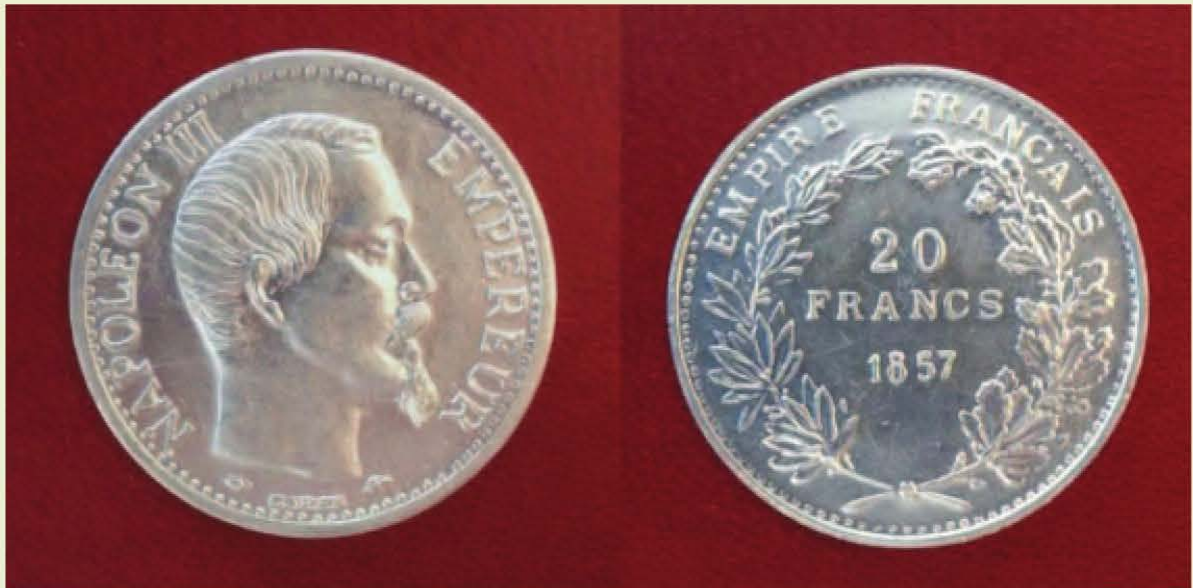
Highly reactive metals like aluminium and sodium are so easily oxidised that they form very stable cations. The invention of electricity in the late 1800s was required to extract them from their mineral ores. Before efficient extraction methods existed, aluminium was extremely valuable. Napoleon III displayed a small bar of aluminium with his crown jewels in 1855 and had special items made from it, including a rattle for his son and commemorative coins.
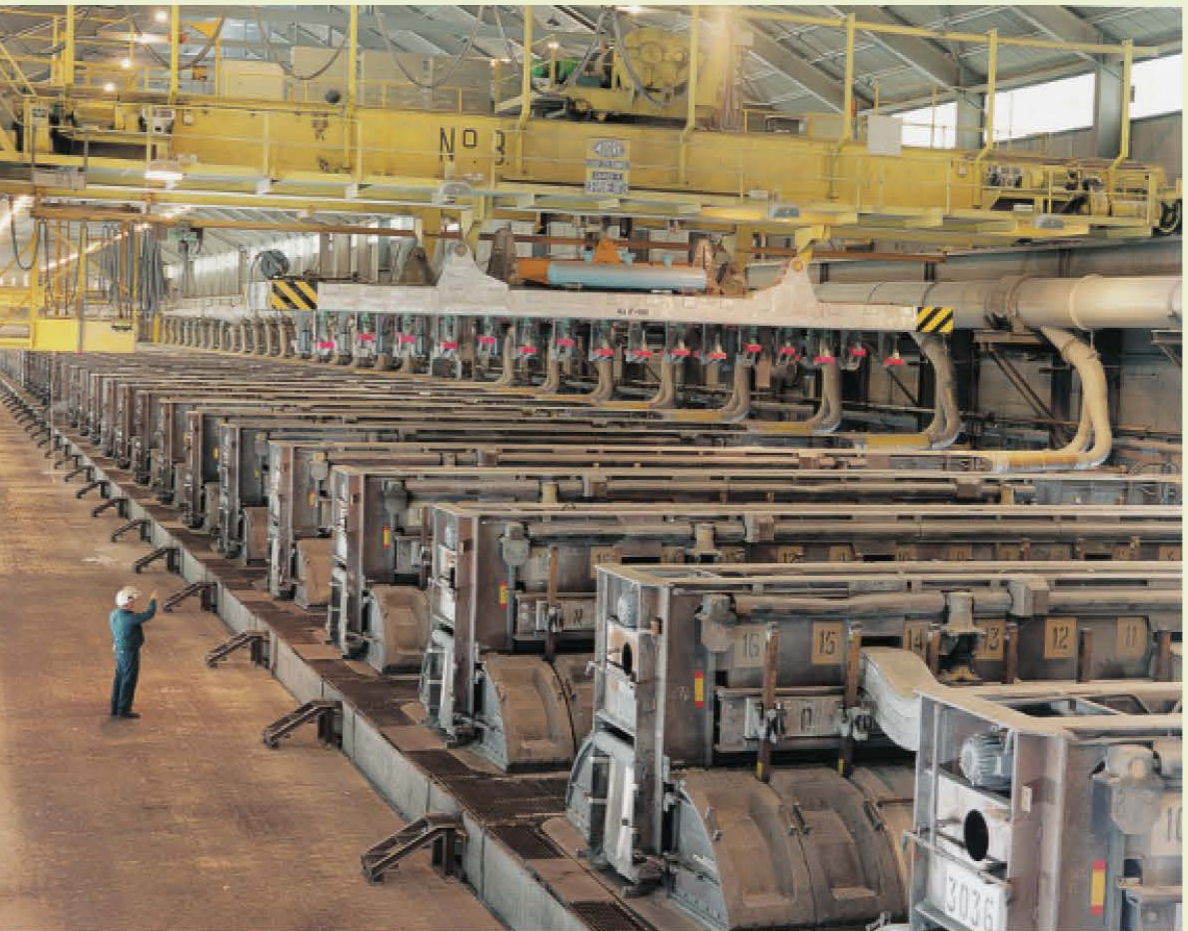
Modern production of aluminium uses vast quantities of electricity in electrolytic cells. The great expense of producing aluminium from its ore (alumina) makes recycling of aluminium products essential for economic and environmental reasons.
Summary
Key Points to Remember:
- The reactivity series ranks metals from least reactive (top) to most reactive (bottom), showing reduction half-equations for metal cations
- Strongest reducing agents (most reactive metals) are at the bottom right of the series; strongest oxidising agents (metal ions most easily reduced) are at the top left
- A metal displacement reaction occurs when a more reactive metal displaces a less reactive metal from a solution of its ions
- For a reaction to occur, the metal must be below the metal ion in the reactivity series
- When predicting reactions: locate both species in the series, check if the metal is below the metal ion, then write and balance the half-equations to get the overall equation
- Visual observations during displacement reactions often include colour changes (e.g., blue copper(II) ions forming) and metal deposits forming on the solid metal surface