Hydrocarbons (VCE SSCE Chemistry): Revision Notes
📚Revision Notes
Hydrocarbons
Introduction to hydrocarbons
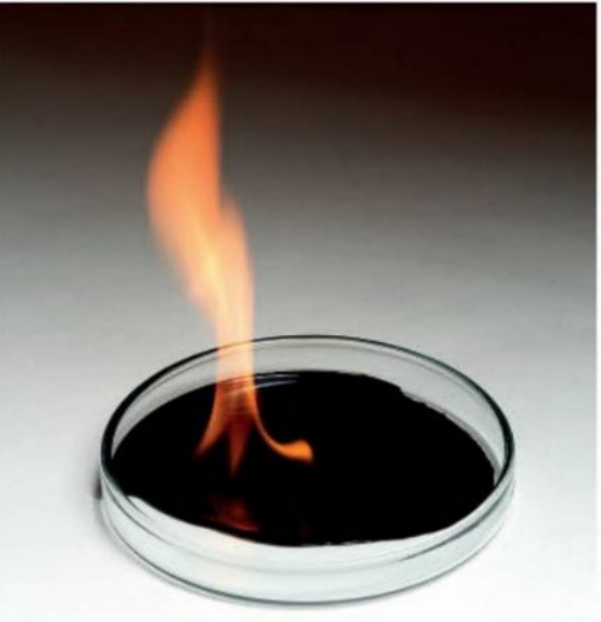
Hydrocarbons represent the simplest category of organic molecules, containing only carbon and hydrogen atoms. Despite having just two elements, the different ways these atoms can be arranged create an enormous diversity of compounds. Crude oil is a naturally occurring mixture of many different hydrocarbons used throughout industry.
Note
Crude oil is one of the most important natural sources of hydrocarbons, containing hundreds of different compounds that can be separated and refined for various industrial applications, from fuels to plastics.
The main families of hydrocarbons you will study are alkanes and alkenes, each with distinctive properties and uses. Understanding how to name these compounds and represent their structures is fundamental to organic chemistry.
Homologous series
To simplify the study of millions of organic compounds, chemists group related molecules into families called homologous series. Within a homologous series, compounds share four key characteristics:
- Similar molecular structures
- Similar chemical properties
- The same general formula
- A pattern in their physical properties
An important feature of homologous series is that each successive member differs from the previous one by a single unit. This regular pattern makes it easier to predict properties and understand relationships between compounds. Both alkanes and alkenes are examples of hydrocarbon homologous series.
Note
The increment between members of a homologous series means that physical properties like boiling point and melting point change gradually and predictably as the carbon chain lengthens.
Alkanes
What are alkanes?
Alkanes are saturated hydrocarbons, meaning all the carbon-carbon bonds in the molecule are single bonds. This saturation distinguishes them from other hydrocarbon families. Alkanes follow the general formula:
Important
General Formula for Alkanes:
where represents the number of carbon atoms in the molecule.
This formula is crucial for determining whether a hydrocarbon is an alkane and for calculating the number of hydrogen atoms for any given number of carbons.
Naming straight-chain alkanes
The systematic naming of alkanes uses a prefix that indicates the number of carbon atoms in the main chain (called the parent molecule), followed by the suffix "-ane" to show that all carbon-carbon bonds are single bonds.
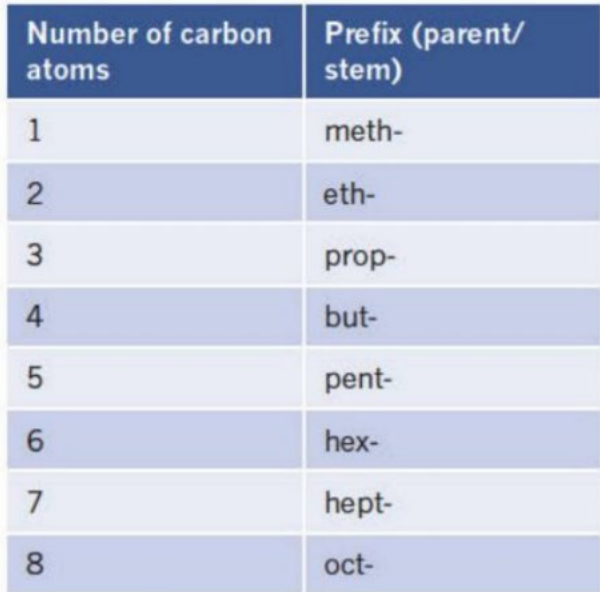
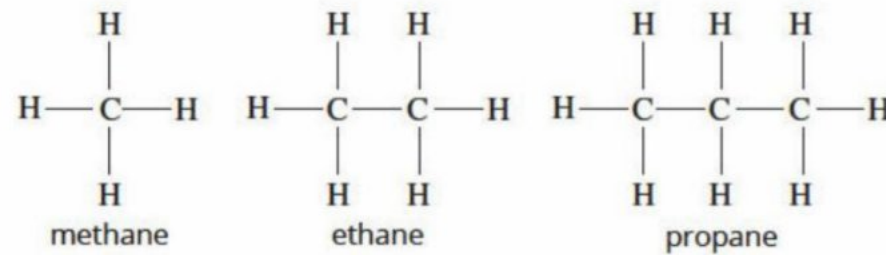
The prefixes used for carbon chains are shown in the table above. For example:
- Methane: one carbon atom
- Ethane: two carbon atoms
- Propane: three carbon atoms
Note
Memory Tip for Prefixes: A helpful mnemonic for remembering the carbon number prefixes is: "Many Elephants Prefer Big Peanuts, Heavy Oats" (Meth-, Eth-, Prop-, But-, Pent-, Hex-, Oct-)
Representing alkane structures
Alkanes can be represented in several different ways, each providing different levels of detail:
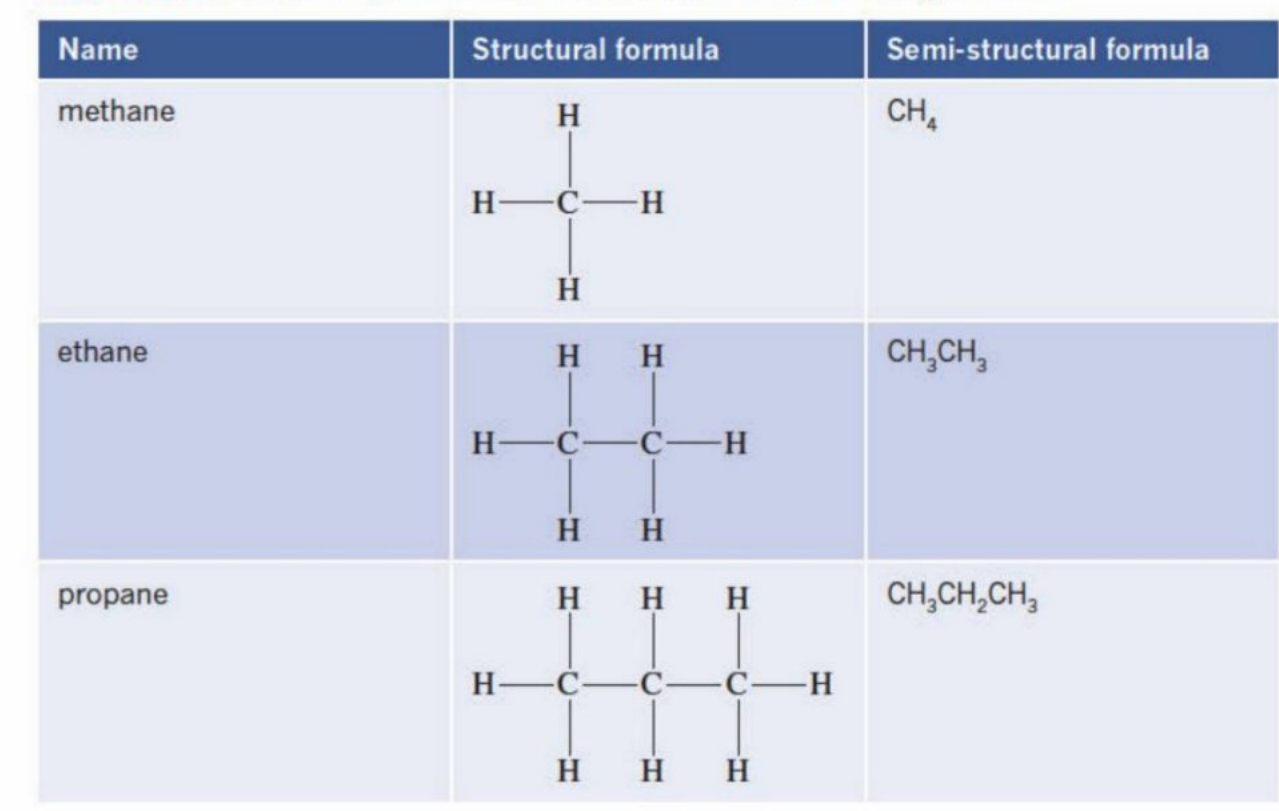
- Molecular formula: Shows only the types and numbers of atoms (e.g. )
- Structural formula: Shows all atoms and how they are bonded together
- Semi-structural formula: A condensed representation (e.g. )
Notice that each successive member of the alkane series differs by one unit, confirming their membership in the same homologous series.
Alkyl groups
When alkanes lose one hydrogen atom, they form alkyl groups or alkyl side chains. These groups act as branches on the main carbon chain. Alkyl groups are named after their parent alkane but with a "-yl" ending instead of "-ane". They have one less hydrogen atom than the corresponding alkane, giving them the general formula:
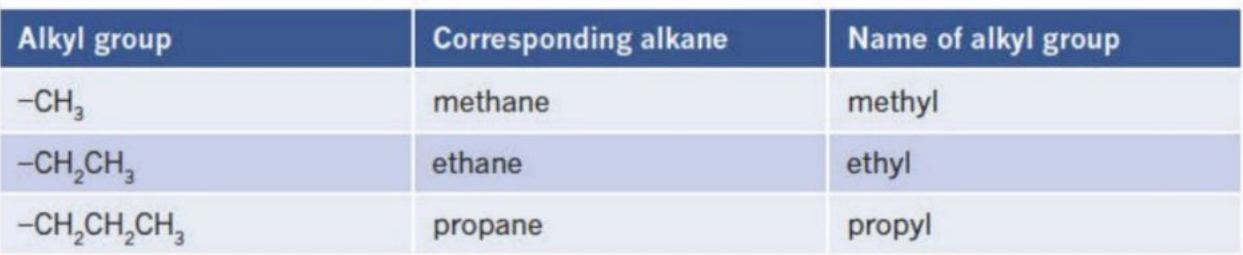
Understanding alkyl groups is essential for naming branched alkanes.
Naming branched alkanes
When alkanes contain more than three carbon atoms, they can form isomers with branches. These branched structures are named systematically using the following steps:
Important
Key Conventions for Naming Branched Alkanes:
- Identify the longest continuous carbon chain - this determines the parent name, which ends in "-ane"
- Name each alkyl group and place it before the parent name
- List multiple different alkyl groups in alphabetical order
- Use prefixes (di-, tri-, tetra-) when the same alkyl group appears more than once
- Number the carbon atoms in the main chain to give the lowest possible numbers to the positions where alkyl groups are attached
- Include the position number before each alkyl group name
- Use dashes to separate numbers from words and commas to separate numbers from other numbers, with no spaces in the complete name
A common mistake is numbering from the wrong end of the chain - always choose the direction that gives the smallest position numbers!
Worked example: naming branched alkanes
Example
Worked Example: Naming a Branched Alkane
Let's apply the systematic naming rules to name the molecule shown below.
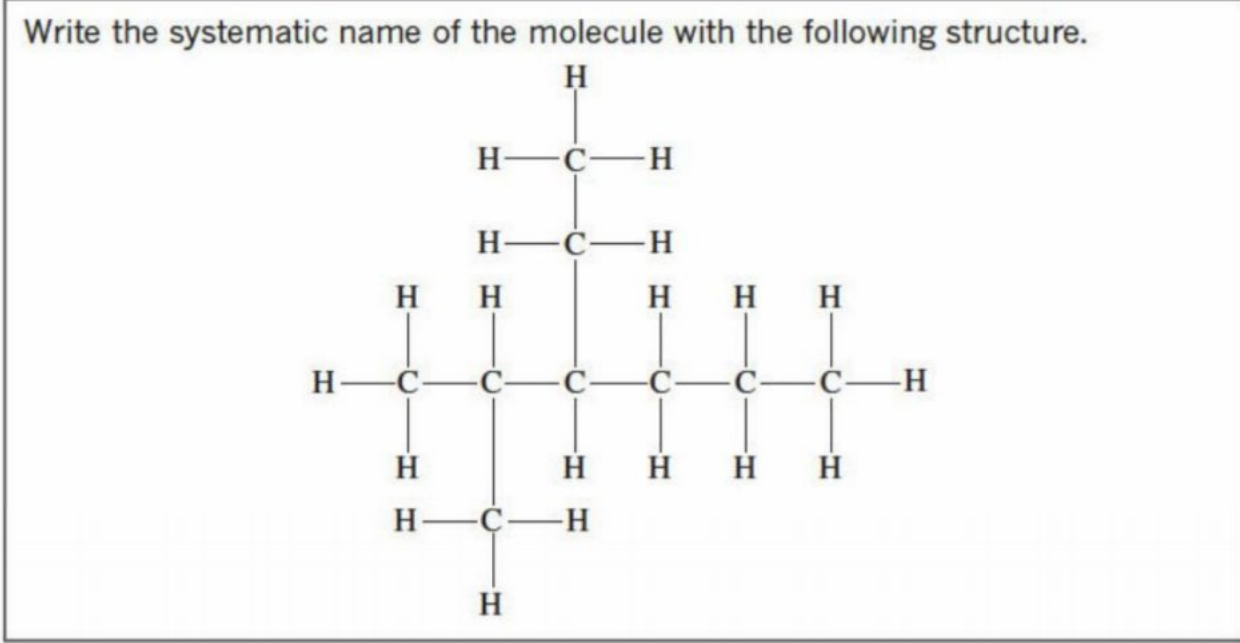
Problem: Write the systematic name for the molecule shown above.
Solution:
Step 1: Identify the longest continuous carbon chain:
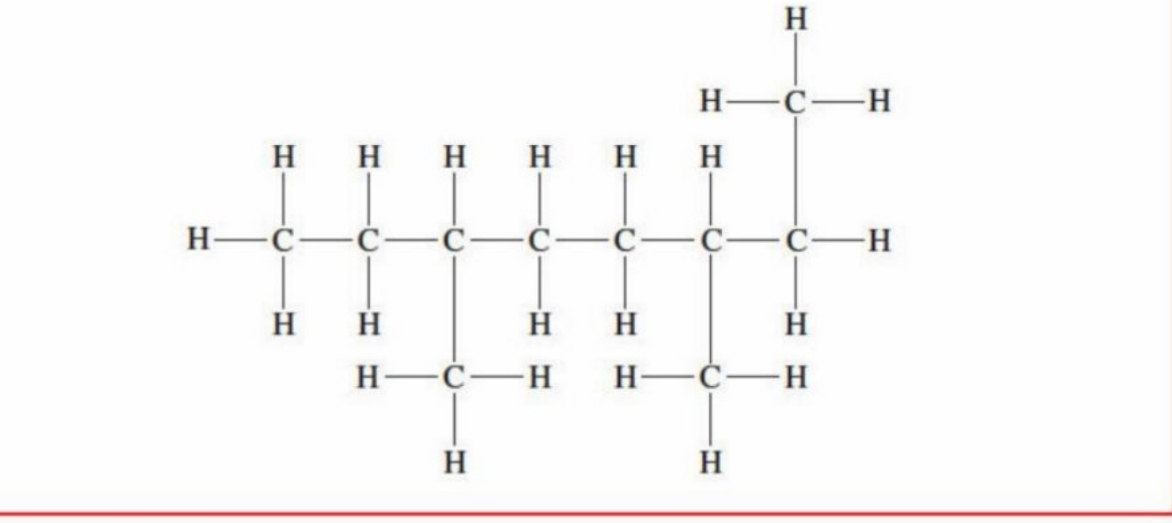
The longest chain contains six carbon atoms, so the parent name is hexane.
Step 2: Identify the alkyl side chains. There is one branch with a single carbon atom (a methyl group) and another branch with two carbon atoms (an ethyl group).
Step 3: Number the carbon atoms in the main chain. Start from the end that gives the lowest numbers to the attachment points:
- The methyl group is attached to carbon number 2
- The ethyl group is attached to carbon number 3
Step 4: Assemble the name by listing the alkyl groups in alphabetical order with their position numbers:
Answer: 3-ethyl-2-methylhexane
Notice that "ethyl" comes before "methyl" alphabetically, even though the methyl group is on carbon 2.
Cycloalkanes
Carbon atoms can also form ring structures. Cycloalkanes are saturated hydrocarbons arranged in a ring. The most common example is cyclohexane:
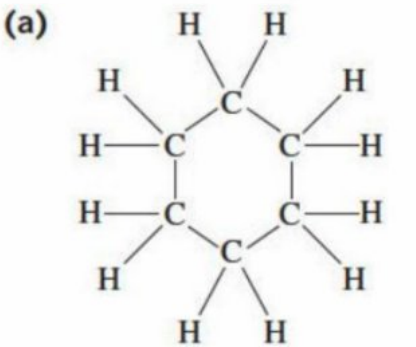
Cyclohexane contains six carbon atoms arranged in a hexagonal ring. Because an additional carbon-carbon bond is needed to close the ring, cyclohexane has two fewer hydrogen atoms than straight-chain hexane. This gives cyclohexane the molecular formula , compared to for hexane.
Note
Cyclohexane is widely used as a solvent in industry, including in paint strippers and as a starting material for making nylon. Its ring structure gives it unique physical and chemical properties compared to straight-chain alkanes.
Alkenes
What are alkenes?
The alkenes are a homologous series of unsaturated hydrocarbons that contain one carbon-carbon double bond. Because the double bond must be shared between two carbon atoms, all alkene molecules contain at least two carbon atoms.
Important
General Formula for Alkenes:
Notice that alkenes have two fewer hydrogen atoms than the corresponding alkane with the same number of carbons. This is due to the presence of the double bond.
Ethene and its applications
Ethene (also called ethylene) is the first member of the alkene series and has important industrial applications:
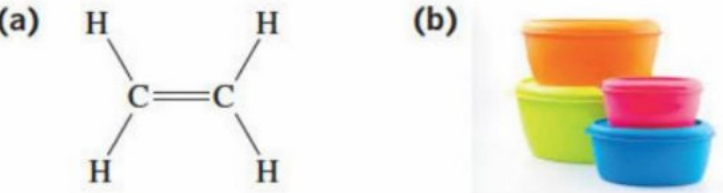
Ethene serves as the starting material for manufacturing many polymers, including the plastics used in food storage containers shown in the image above.
Note
Ethene is one of the most important industrial chemicals in the world, with global production exceeding 150 million tonnes per year. It's the building block for polyethylene, one of the most widely used plastics.
Representing alkene structures
Like alkanes, alkenes can be represented in multiple ways:

The table above shows ethene represented as:
- Molecular formula:
- Structural formula: Shows all atoms and the double bond
- Semi-structural formula: or
- Skeletal formula: A simple line representing the double bond
Here are examples of the first three alkenes:
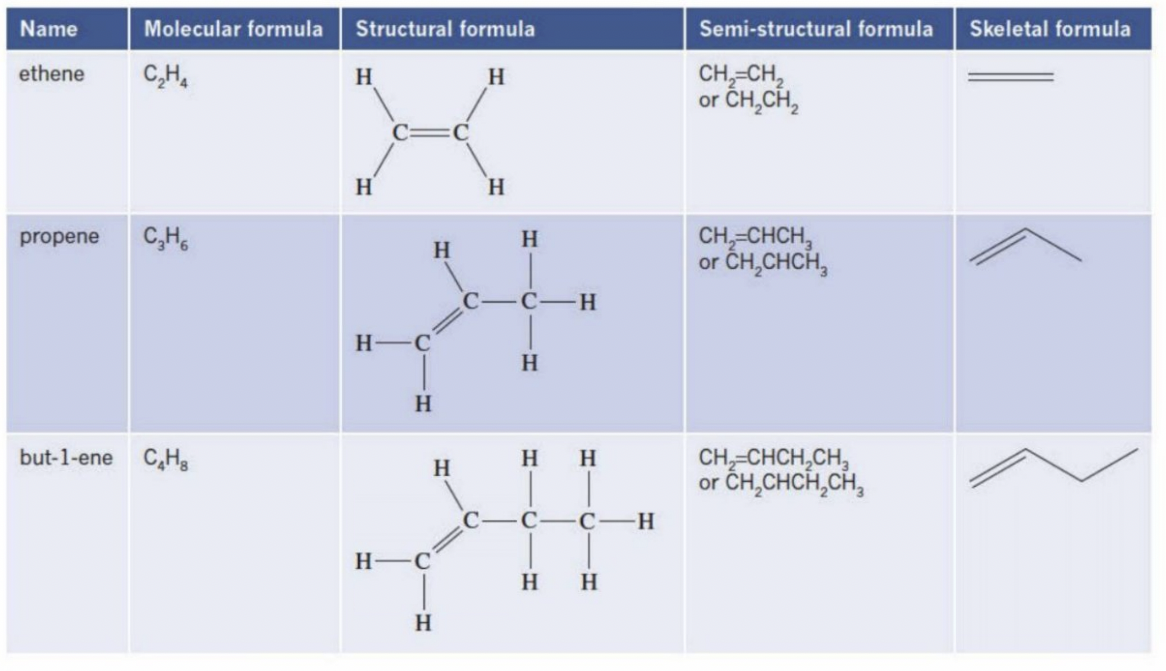
Each successive member differs by one unit, characteristic of a homologous series.
Naming alkenes
The rules for naming alkenes build on the rules used for alkanes, with these additional conventions:
- Use the suffix "-ene" for the parent name (instead of "-ane")
- Number the carbon atoms from the end of the chain closest to the carbon-carbon double bond
- Indicate the position of the double bond by including the number of the first carbon in the double bond
- Place this number immediately before "-ene" in the parent name
- Name and number any alkyl side chains at the beginning of the molecule's name, following the same rules as for alkanes
For example, but-1-ene indicates a four-carbon chain with the double bond starting at carbon 1.
Note
The position number for the double bond is crucial for distinguishing between structural isomers. For instance, but-1-ene and but-2-ene have the same molecular formula () but the double bond is in different positions.
Structural isomers of alkenes
When alkenes contain four or more carbon atoms, structural isomers can exist where the double bond is located at different positions in the carbon chain. These isomers are distinguished by the numbering system in their names.
Degree of unsaturation
Understanding the concept
When determining the structure of an unknown molecule, the degree of unsaturation (also called the index of hydrogen deficiency) provides valuable information. This concept is based on the observation that every time a molecule forms a double bond or a ring structure, it contains two fewer hydrogen atoms than the fully saturated equivalent.
The degree of unsaturation tells you how many combinations of double bonds and/or rings are present in a molecule.
Important
Key Concept: Each degree of unsaturation represents either:
- One double bond, OR
- One ring structure
Therefore, a degree of unsaturation of 2 could mean:
- Two double bonds
- Two rings
- One double bond AND one ring
Calculating degree of unsaturation
To calculate the degree of unsaturation, compare the molecular formula to what a fully saturated alkane would have:
The maximum number of hydrogen atoms possible is calculated using the alkane general formula: , where is the number of carbon atoms.
Worked example: calculating degree of unsaturation
Example
Worked Example: Calculating Degree of Unsaturation
Problem: Calculate the degree of unsaturation for a molecule with molecular formula .
Solution:
Step 1: Determine how many hydrogen atoms a fully saturated molecule with 8 carbon atoms would have:
- Number of carbon atoms = 8
- Using the formula : hydrogen atoms
Step 2: Calculate the degree of unsaturation:
Answer: The degree of unsaturation for is 2.
Interpretation: This means the molecule contains a combination of 2 double bonds and/or rings. For example, it could have:
- Two double bonds
- One ring and one double bond
- Two rings
Benzene
Structure and bonding
Benzene is a special unsaturated cyclic hydrocarbon consisting of six carbon atoms arranged in a ring. What makes benzene unique is its bonding structure:
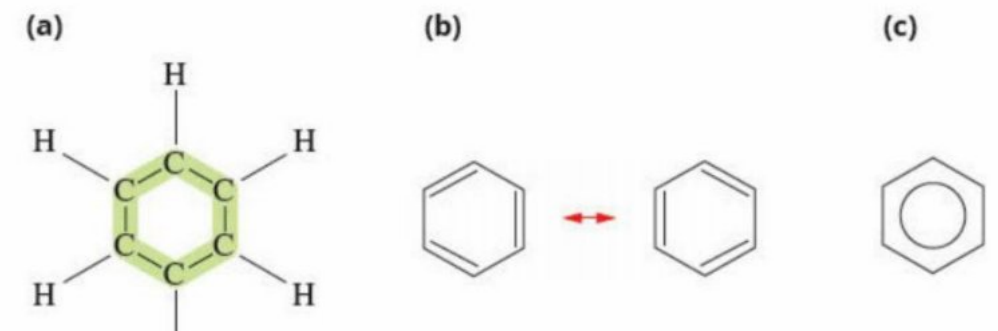
Three of the four outer-shell electrons from each carbon atom form normal covalent bonds. The fourth electron from each carbon is delocalised (shared) around all six carbon atoms, creating a ring of electrons above and below the plane of the molecule.
Important
Benzene's Unique Structure:
All the carbon-carbon bonds in benzene are identical and have properties intermediate between single and double bonds. Each carbon has what can be described as "one-and-a-half bonds" to each neighbouring carbon.
This is why benzene is sometimes drawn with alternating single and double bonds, but this representation is not accurate. The most accurate representation uses a circle inside the hexagon of carbon atoms, symbolising the delocalised ring of electrons.
Representing benzene
Benzene is sometimes drawn with alternating single and double bonds (as shown in part b of the figure above), but this is not the most accurate representation. In reality, all the carbon-carbon bonds in benzene are identical and have properties intermediate between single and double bonds.
The most accurate representation uses a circle inside the hexagon of carbon atoms (part c), symbolising the delocalised ring of electrons.
Historical context: Kathleen Lonsdale
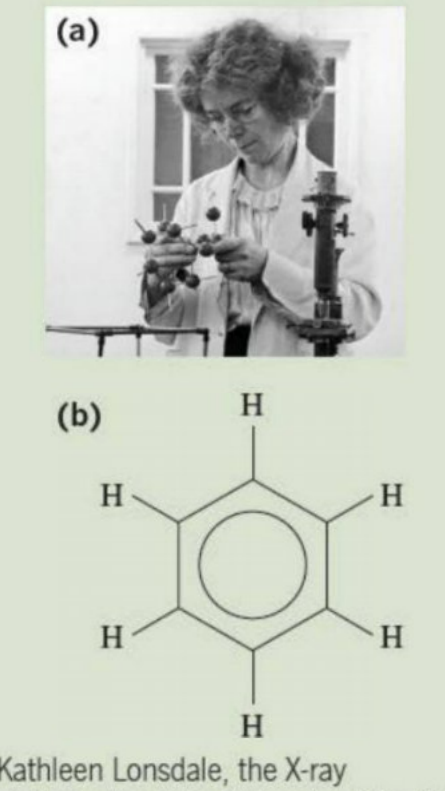
Although Michael Faraday first isolated benzene in 1825 and August Kekulé proposed a ring structure in 1865, the true three-dimensional structure remained a mystery. In 1929, Kathleen Lonsdale used X-ray crystallography to determine that benzene has a planar, hexagonal structure with all carbon-carbon bonds of equal length.
Note
Groundbreaking Discovery:
Kathleen Lonsdale's measurements showed that the bond lengths were intermediate between typical single and double bonds, providing experimental proof of the delocalised electron structure. This work was groundbreaking and resolved a puzzle that had challenged chemists for over a century.
Lonsdale became one of the first two women elected as Fellows of the Royal Society in 1945, recognizing her pioneering contributions to chemistry and crystallography.
The phenyl group
When a benzene ring is bonded to an alkyl group or functional group, the ring structure is called a phenyl functional group with the formula . This notation indicates that one hydrogen has been removed from benzene to allow attachment to another structure.
Summary
Summary
Key Points to Remember:
-
Hydrocarbons are organic compounds containing only carbon and hydrogen atoms
-
Homologous series are families of compounds with similar structures, properties, and the same general formula, differing by units
-
Alkanes () are saturated hydrocarbons with only single bonds; named with prefixes indicating carbon number and the suffix "-ane"
-
Alkenes () are unsaturated hydrocarbons containing one carbon-carbon double bond; named using "-ene" suffix with a number indicating the double bond position
-
Degree of unsaturation equals the number of double bonds and/or rings in a molecule, calculated by comparing actual hydrogen atoms to the maximum possible for that number of carbons
-
Benzene is a cyclic hydrocarbon with six carbons and delocalised electrons, giving all carbon-carbon bonds equal intermediate character between single and double bonds
-
Understanding nomenclature and structural representations is fundamental to mastering organic chemistry